
Verwandte Artikel zu Visual Typology in Early Modern Europe: Continuity...
Visual Typology in Early Modern Europe: Continuity and Expansion (Art History (Outside a Series)) - Hardcover
Inhaltsangabe
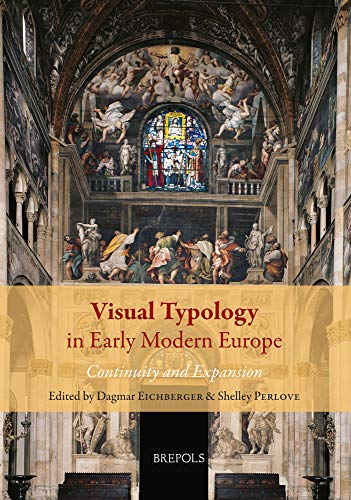
Visual Typology in early Modern Europe: Continuity and Expansion is the first study that examines the varied manifestations of typological thinking in diverse media of the visual arts from the Late Middle Ages through the seventeenth century in Germany, The Netherlands, Italy, and France. This study counteracts the underlying misconception that typology was in decline or even ceased to exist in the sixteenth century. The studies within this volume offer new interpretations that redefine what is meant by typological thinking in the early modern period. Typological thinking informs traditional pre-figurations, as well as more broadly associative interconnections between the Old Testament, classical texts, and even natural history, in relation to the New Testament. Typological thought permeates religious and secular visual culture during the period under consideration and this collection of essays reveals the continuing relevance and expansion of typological patterns for the visual arts, with particular emphasis on innovations in the sixteenth century. In the course of the sixteenth century typology became more complex and flexible, and came under the influence of the writings of Protestant and Catholic reformers, and also derived new secular and political analogies. Each essay offers a different interpretation of typological thinking. The typological manuals that were written in the course of the Late Middle Ages remain the basis for many artistic projects in illuminated manuscripts, stained glass windows, sculpture, and painting. By the sixteenth century, the notion of type and antitype was so well embedded in thought that artists such as Brueghel and Lucas van Leyden implicitly evoked typological relationships. Before the Council of Trent, more allusive interpretations led to unorthodox pairings of images from secular and religious contexts. In the first half of the sixteenth century new relationships were developed by Protestant commentators. After the Council of Trent the Catholic Church returned to more traditional typological forms and established new guidelines for reading devotional images. Nonetheless, artists continued to pursue unorthodox, innovative pairings.
Die Inhaltsangabe kann sich auf eine andere Ausgabe dieses Titels beziehen.
Suchergebnisse für Visual Typology in Early Modern Europe: Continuity...

Beispielbild für diese ISBN
Visual Typology in Early Modern Europe. Continuity and Expansion (Schriften Zur Politischen Kommunikation) [Hardcover] Dagmar Eichberger and Shelley Perlove
Anbieter: The Scholar's Choice, Wolcott, NY, USA
Verkäuferbewertung 4 von 5 Sternen

hardcover. Zustand: As New. Hardcover with jacket and little to no shelf wear. Pages are clean, unmarked and unread. Bestandsnummer des Verkäufers W19-022ARLIS60
Gebraucht kaufen
EUR 102,06
EUR 4,87 Versand
Versand innerhalb von USA
Versand innerhalb von USA
Anzahl: 1 verfügbar
Beispielbild für diese ISBN
Visual Typology in Early Modern Europe
Verlag:
Brepols Publishers, 2018
ISBN 10: 2503545505
ISBN 13: 9782503545509
Neu
Hardcover
Erstausgabe
Anbieter: ISD LLC, Bristol, CT, USA
Verkäuferbewertung 5 von 5 Sternen

hardcover. Zustand: New. 1st. Bestandsnummer des Verkäufers 571581
Beispielbild für diese ISBN
Visual Typology in Early Modern Europe: Continuity and Expansion
Anbieter: Revaluation Books, Exeter, Vereinigtes Königreich
Verkäuferbewertung 5 von 5 Sternen
Hardcover. Zustand: Brand New. 01 edition. 371 pages. 10.25x7.50x1.00 inches. In Stock. Bestandsnummer des Verkäufers __2503545505
Neu kaufen
EUR 121,86
EUR 17,72 Versand
Versand von Vereinigtes Königreich nach USA
Versand von Vereinigtes Königreich nach USA
Anzahl: 2 verfügbar
Foto des Verkäufers
Visual Typology in Early Modern Europe : Continuity and Expansion
Anbieter: GreatBookPrices, Columbia, MD, USA
Verkäuferbewertung 5 von 5 Sternen
Zustand: New. Bestandsnummer des Verkäufers 26420514-n
Neu kaufen
EUR 141,33
EUR 2,36 Versand
Versand innerhalb von USA
Versand innerhalb von USA
Anzahl: 8 verfügbar
Foto des Verkäufers
Visual Typology in Early Modern Europe : Continuity and Expansion
Anbieter: GreatBookPrices, Columbia, MD, USA
Verkäuferbewertung 5 von 5 Sternen
Zustand: As New. Unread book in perfect condition. Bestandsnummer des Verkäufers 26420514
Gebraucht kaufen
EUR 167,36
EUR 2,36 Versand
Versand innerhalb von USA
Versand innerhalb von USA
Anzahl: 8 verfügbar
Beispielbild für diese ISBN
Visual Typology in Early Modern Europe: Continuity and Expansion
Verlag:
Brepols Publishers, 2018
ISBN 10: 2503545505
ISBN 13: 9782503545509
Neu
Hardcover
Erstausgabe
Anbieter: Kennys Bookshop and Art Galleries Ltd., Galway, GY, Irland
Verkäuferbewertung 5 von 5 Sternen
Zustand: New. 2018. 1st Edition. hardcover. . . . . . Bestandsnummer des Verkäufers V9782503545509
Neu kaufen
EUR 174,14
EUR 9,50 Versand
Versand von Irland nach USA
Versand von Irland nach USA
Anzahl: 2 verfügbar
Beispielbild für diese ISBN
Visual Typology in Early Modern Europe: Continuity and Expansion
Anbieter: Kennys Bookstore, Olney, MD, USA
Verkäuferbewertung 5 von 5 Sternen
Zustand: New. 2018. 1st Edition. hardcover. . . . . . Books ship from the US and Ireland. Bestandsnummer des Verkäufers V9782503545509
Neu kaufen
EUR 226,24
EUR 9,37 Versand
Versand innerhalb von USA
Versand innerhalb von USA
Anzahl: 2 verfügbar
Beispielbild für diese ISBN
Visual Typology in Early Modern Europe. Continuity and Expansion (Schriften Zur Politischen Kommunikation)
Anbieter: Mispah books, Redhill, SURRE, Vereinigtes Königreich
Verkäuferbewertung 4 von 5 Sternen
Hardcover. Zustand: New. NEW. SHIPS FROM MULTIPLE LOCATIONS. book. Bestandsnummer des Verkäufers ERICA82925035455056
Neu kaufen
EUR 293,27
EUR 29,54 Versand
Versand von Vereinigtes Königreich nach USA
Versand von Vereinigtes Königreich nach USA
Anzahl: 1 verfügbar