
Verwandte Artikel zu Plant Microbe Interface
Inhaltsangabe
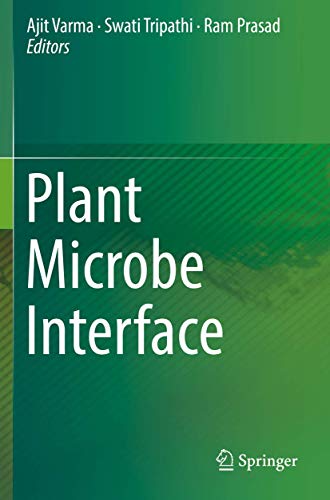
This book shares the latest insights into the genetic basis of molecular communication between plants and their microbial consortia. Further, the book highlights the capabilities of the rhizosphere and endosphere, which help manage ecosystem responses to climate change, nutrient cycling and sequestration of carbon; and discusses their application to the development and management of renewable energy sources.
In their natural environments, plants are surrounded by a tremendous number of microorganisms. Some microbes directly interact with plants in a mutually beneficial fashion, while others colonize plants solely for their own advantage. In addition, microbes can indirectly affect plants by drastically altering their environments. Understanding the complex nature of the plant-microbe interface (PMI) can pave the way for novel strategies to improve plant productivity in an eco-friendly manner.
The PMI approach focuses on understanding the physical, molecular, and chemical interactions between organisms in order to determine their functional roles in biological, physical, chemical and environmental systems. Although several metabolites from plants and microbes have now been fully characterized, their roles in chemical interactions between these associates remain poorly understood, and require further investigation.
Die Inhaltsangabe kann sich auf eine andere Ausgabe dieses Titels beziehen.
Über die Autorin bzw. den Autor
Prof Dr Ajit Varma: Professor Varma completed his PhD at Allahabad University and is a former Professor at the School of Life Sciences, Jawaharlal Nehru University, India. Presently, he is Group Dy. Vice Chancellor at Amity University, Uttar Pradesh, India. He is Distinguished Scientist & Professor of Eminence at the Amity Institute of Microbial Technology; and Vice Chairman of the Amity Science, Technology & Innovation Foundation at Amity University, Uttar Pradesh, India. He has published more than 374 papers in respected journals and has served as Editor in Chief of the Soil Biology Series, Springer Verlag Germany. Dr Varma is a Fellow of the Alexander-von-Humboldt Society, Germany, elected Fellow of the National Academy Agricultural Sciences, and Fellow of the Microbiology Society of India.
Dr Swati Tripathi: Assistant Professor at Amity Institute of Microbial Technology, Amity University, Noida, India. She is working on plant microbe interaction, andmicrobial biotechnology. Dr Tripathi has a number of research papers and review articles to her credit in the journals of international repute. She has her post doctoral experience from South Korea and has been awarded Early Career Research Award recently.
Dr Ram Prasad: Assistant Professor at Amity Institute of Microbial Technology, Amity University, Noida, India. He is working on plant microbe interaction, nanobiotechnology, and microbial biotechnology. Dr Prasad has edited several books and has a number of research papers and review articles to his credit in the journals of international repute. During 2014, Dr Prasad has been awarded American Cancer Society UICC International Fellowship for Beginning Investigator, USA. Presently, he is working as Research Associate Professor at School of Environmental Sciences and Engineering, Sun Yat-Sen University, China.
Von der hinteren Coverseite
This book shares the latest insights into the genetic basis of molecular communication between plants and their microbial consortia. Further, the book highlights the capabilities of the rhizosphere and endosphere, which help manage ecosystem responses to climate change, nutrient cycling and sequestration of carbon; and discusses their application to the development and management of renewable energy sources.
In their natural environments, plants are surrounded by a tremendous number of microorganisms. Some microbes directly interact with plants in a mutually beneficial fashion, while others colonize plants solely for their own advantage. In addition, microbes can indirectly affect plants by drastically altering their environments. Understanding the complex nature of the plant-microbe interface (PMI) can pave the way for novel strategies to improve plant productivity in an eco-friendly manner.
The PMI approach focuses on understanding the physical, molecular, and chemical interactions between organisms in order to determine their functional roles in biological, physical, chemical and environmental systems. Although several metabolites from plants and microbes have now been fully characterized, their roles in chemical interactions between these associates remain poorly understood, and require further investigation.
„Über diesen Titel“ kann sich auf eine andere Ausgabe dieses Titels beziehen.
Suchergebnisse für Plant Microbe Interface

Beispielbild für diese ISBN
Plant Microbe Interface (eng)
Print-on-DemandAnbieter: Brook Bookstore On Demand, Napoli, NA, Italien
Verkäuferbewertung 5 von 5 Sternen

Zustand: new. Questo è un articolo print on demand. Bestandsnummer des Verkäufers 0647914cc9743f4921fe0cbf4257b4dd
Neu kaufen
EUR 110,26
EUR 6,80 Versand
Versand von Italien nach USA
Versand von Italien nach USA
Anzahl: Mehr als 20 verfügbar
Foto des Verkäufers
Plant Microbe Interface
Anbieter: GreatBookPrices, Columbia, MD, USA
Verkäuferbewertung 5 von 5 Sternen
Zustand: As New. Unread book in perfect condition. Bestandsnummer des Verkäufers 41765125
Gebraucht kaufen
EUR 158,07
EUR 2,35 Versand
Versand innerhalb von USA
Versand innerhalb von USA
Anzahl: Mehr als 20 verfügbar
Foto des Verkäufers
Plant Microbe Interface
Verlag:
Springer International Publishing Aug 2020, 2020
ISBN 10: 3030198332
ISBN 13: 9783030198336
Neu
Taschenbuch
Anbieter: BuchWeltWeit Ludwig Meier e.K., Bergisch Gladbach, Deutschland
Verkäuferbewertung 5 von 5 Sternen
Taschenbuch. Zustand: Neu. This item is printed on demand - it takes 3-4 days longer - Neuware -This book shares the latest insights into the genetic basis of molecular communication between plants and their microbial consortia. Further, the book highlights the capabilities of the rhizosphere and endosphere, which help manage ecosystem responses to climate change, nutrient cycling and sequestration of carbon; and discusses their application to the development and management of renewable energy sources.In their natural environments, plants are surrounded by a tremendous number of microorganisms. Some microbes directly interact with plants in a mutually beneficial fashion, while others colonize plants solely for their own advantage. In addition, microbes can indirectly affect plants by drastically altering their environments. Understanding the complex nature of the plant-microbe interface (PMI) can pave the way for novel strategies to improve plant productivity in an eco-friendly manner.The PMI approach focuses on understanding the physical, molecular, and chemical interactions between organisms in order to determine their functional roles in biological, physical, chemical and environmental systems. Although several metabolites from plants and microbes have now been fully characterized, their roles in chemical interactions between these associates remain poorly understood, and require further investigation. 424 pp. Englisch. Bestandsnummer des Verkäufers 9783030198336
Neu kaufen
EUR 139,09
EUR 23,00 Versand
Versand von Deutschland nach USA
Versand von Deutschland nach USA
Anzahl: 2 verfügbar
Foto des Verkäufers
Plant Microbe Interface
Verlag:
Springer International Publishing, 2020
ISBN 10: 3030198332
ISBN 13: 9783030198336
Neu
Softcover
Anbieter: moluna, Greven, Deutschland
Verkäuferbewertung 5 von 5 Sternen
Zustand: New. Dieser Artikel ist ein Print on Demand Artikel und wird nach Ihrer Bestellung fuer Sie gedruckt. Shares the latest findings on the plant-microbe interface and its application in plant productivity and food sustainabilityAddresses microbial technology, environmental microbiology, agricultural science, the health sciences, biological sciences a. Bestandsnummer des Verkäufers 448674910
Neu kaufen
EUR 118,61
EUR 48,99 Versand
Versand von Deutschland nach USA
Versand von Deutschland nach USA
Anzahl: Mehr als 20 verfügbar
Foto des Verkäufers
Plant Microbe Interface
Anbieter: GreatBookPricesUK, Woodford Green, Vereinigtes Königreich
Verkäuferbewertung 5 von 5 Sternen
Zustand: New. Bestandsnummer des Verkäufers 41765125-n
Neu kaufen
EUR 152,00
EUR 17,87 Versand
Versand von Vereinigtes Königreich nach USA
Versand von Vereinigtes Königreich nach USA
Anzahl: Mehr als 20 verfügbar
Foto des Verkäufers
Plant Microbe Interface
Anbieter: GreatBookPrices, Columbia, MD, USA
Verkäuferbewertung 5 von 5 Sternen
Zustand: New. Bestandsnummer des Verkäufers 41765125-n
Neu kaufen
EUR 168,82
EUR 2,35 Versand
Versand innerhalb von USA
Versand innerhalb von USA
Anzahl: Mehr als 20 verfügbar
Beispielbild für diese ISBN
Plant Microbe Interface
Anbieter: Ria Christie Collections, Uxbridge, Vereinigtes Königreich
Verkäuferbewertung 5 von 5 Sternen
Zustand: New. In English. Bestandsnummer des Verkäufers ria9783030198336_new
Neu kaufen
EUR 158,61
EUR 13,45 Versand
Versand von Vereinigtes Königreich nach USA
Versand von Vereinigtes Königreich nach USA
Anzahl: Mehr als 20 verfügbar
Beispielbild für diese ISBN
Plant Microbe Interface
Anbieter: Kennys Bookshop and Art Galleries Ltd., Galway, GY, Irland
Verkäuferbewertung 5 von 5 Sternen
Zustand: New. Bestandsnummer des Verkäufers V9783030198336
Neu kaufen
EUR 164,15
EUR 9,50 Versand
Versand von Irland nach USA
Versand von Irland nach USA
Anzahl: 15 verfügbar
Foto des Verkäufers
Plant Microbe Interface
Anbieter: GreatBookPricesUK, Woodford Green, Vereinigtes Königreich
Verkäuferbewertung 5 von 5 Sternen
Zustand: As New. Unread book in perfect condition. Bestandsnummer des Verkäufers 41765125
Gebraucht kaufen
EUR 159,67
EUR 17,87 Versand
Versand von Vereinigtes Königreich nach USA
Versand von Vereinigtes Königreich nach USA
Anzahl: Mehr als 20 verfügbar
Foto des Verkäufers
Plant Microbe Interface
Anbieter: preigu, Osnabrück, Deutschland
Verkäuferbewertung 5 von 5 Sternen
Taschenbuch. Zustand: Neu. Plant Microbe Interface | Ajit Varma (u. a.) | Taschenbuch | vi | Englisch | 2020 | Springer | EAN 9783030198336 | Verantwortliche Person für die EU: Springer Verlag GmbH, Tiergartenstr. 17, 69121 Heidelberg, juergen[dot]hartmann[at]springer[dot]com | Anbieter: preigu. Bestandsnummer des Verkäufers 118880487
Neu kaufen
EUR 122,20
EUR 70,00 Versand
Versand von Deutschland nach USA
Versand von Deutschland nach USA
Anzahl: 5 verfügbar