
Verwandte Artikel zu Biocommunication of Phages
Inhaltsangabe
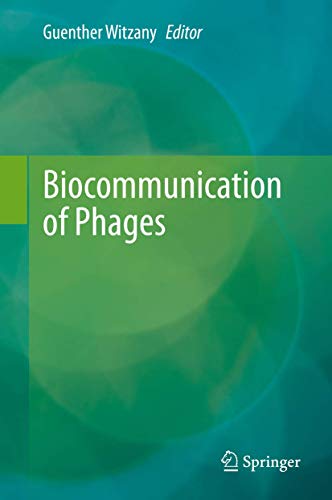
This is the first book to systemize all levels of communicative behavior of phages. Phages represent the most diverse inhabitants on this planet. Until today they are completely underestimated in their number, skills and competences and still remain the dark matter of biology.
Phages have serious effects on global energy and nutrient cycles. Phages actively compete for host. They can distinguish between ‘self’ and ‘non-self’ (complement same, preclude others). They process and evaluate available information and then modify their behaviour accordingly. These diverse competences show us that this capacity to evaluate information is possible owing to communication processes within phages (intra-organismic), between the same, related and different phage species (interorganismic), and between phages and non-phage organisms (transorganismic). This is crucial in coordinating infection strategies (lytic vs. lysogenic) and recombination in phage genomes.
In 22 chapters, expert contributors review current research into the varying forms of phage biocommunication and Phagetherapy.
Biocommunication of Phages aims to assess the current state of research, to orient further investigations on how phages communicate with each other to coordinate their behavioral patterns, and to inspire further investigation of the role of non-phage viruses (non-lytic, non-prokaryotic) in these highly dynamic interactional networks.
Die Inhaltsangabe kann sich auf eine andere Ausgabe dieses Titels beziehen.
Über die Autorin bzw. den Autor
Guenther Witzany is philosopher and developed a new philosophy of biology based on the current empirical data in all domains of cellular life, virology and RNA-biology. In a series of books he applied his theory of biocommunication to all organismic kingdoms. Theory of biocommunication is the first and only theory that integrates all living agents empiristically in a non-reductionistic and non-mechanistic way and opens a ground breaking understanding of life through analyses of sign-mediated interactions within and between cells, tissues, organs, and organisms.
Von der hinteren Coverseite
This is the first book to systemize all levels of communicative behavior of phages. Phages represent the most diverse inhabitants on this planet. Until today they are completely underestimated in their number, skills and competences and still remain the dark matter of biology.
Phages have serious effects on global energy and nutrient cycles. Phages actively compete for host. They can distinguish between ‘self’ and ‘non-self’ (complement same, preclude others). They process and evaluate available information and then modify their behaviour accordingly. These diverse competences show us that this capacity to evaluate information is possible owing to communication processes within phages (intra-organismic), between the same, related and different phage species (interorganismic), and between phages and non-phage organisms (transorganismic). This is crucial in coordinating infection strategies (lytic vs. lysogenic) and recombination in phage genomes.
In 22 chapters, expert contributors review current research into the varying forms of phage biocommunication and Phagetherapy.
Biocommunication of Phages aims to assess the current state of research, to orient further investigations on how phages communicate with each other to coordinate their behavioral patterns, and to inspire further investigation of the role of non-phage viruses (non-lytic, non-prokaryotic) in these highly dynamic interactional networks.
„Über diesen Titel“ kann sich auf eine andere Ausgabe dieses Titels beziehen.
Suchergebnisse für Biocommunication of Phages

Beispielbild für diese ISBN
Biocommunication of Phages (eng)
Print-on-DemandAnbieter: Brook Bookstore On Demand, Napoli, NA, Italien
Verkäuferbewertung 5 von 5 Sternen

Zustand: new. Questo è un articolo print on demand. Bestandsnummer des Verkäufers 4NISC5Q0HP
Neu kaufen
EUR 150,28
EUR 11,00 Versand
Versand von Italien nach USA
Versand von Italien nach USA
Anzahl: Mehr als 20 verfügbar
Foto des Verkäufers
Biocommunication of Phages
Verlag:
Springer International Publishing, 2020
ISBN 10: 3030458849
ISBN 13: 9783030458843
Neu
Hardcover
Anbieter: moluna, Greven, Deutschland
Verkäuferbewertung 5 von 5 Sternen
Gebunden. Zustand: New. Bestandsnummer des Verkäufers 458546311
Neu kaufen
EUR 162,51
EUR 48,99 Versand
Versand von Deutschland nach USA
Versand von Deutschland nach USA
Anzahl: Mehr als 20 verfügbar
Foto des Verkäufers
Biocommunication of Phages
Verlag:
Springer International Publishing Jun 2020, 2020
ISBN 10: 3030458849
ISBN 13: 9783030458843
Neu
Hardcover
Anbieter: BuchWeltWeit Ludwig Meier e.K., Bergisch Gladbach, Deutschland
Verkäuferbewertung 5 von 5 Sternen
Buch. Zustand: Neu. This item is printed on demand - it takes 3-4 days longer - Neuware -This is the first book to systemize all levels of communicative behavior of phages. Phages represent the most diverse inhabitants on this planet. Until today they are completely underestimated in their number, skills and competences and still remain the dark matter of biology.Phages have serious effects on global energy and nutrient cycles. Phages actively compete for host. They can distinguish between 'self' and 'non-self' (complement same, preclude others). They process and evaluate available information and then modify their behaviour accordingly. These diverse competences show us that this capacity to evaluate information is possible owing to communication processes within phages (intra-organismic), between the same, related and different phage species (interorganismic), and between phages and non-phage organisms (transorganismic). This is crucial in coordinating infection strategies (lytic vs. lysogenic) and recombination in phage genomes.In 22 chapters, expert contributors review current research into the varying forms of phage biocommunication and Phagetherapy.Biocommunication of Phages aims to assess the current state of research, to orient further investigations on how phages communicate with each other to coordinate their behavioral patterns, and to inspire further investigation of the role of non-phage viruses (non-lytic, non-prokaryotic) in these highly dynamic interactional networks. 508 pp. Englisch. Bestandsnummer des Verkäufers 9783030458843
Neu kaufen
EUR 192,59
EUR 23,00 Versand
Versand von Deutschland nach USA
Versand von Deutschland nach USA
Anzahl: 2 verfügbar
Foto des Verkäufers
Biocommunication of Phages
ISBN 10: 3030458849
ISBN 13: 9783030458843
Neu
Hardcover
Anbieter: buchversandmimpf2000, Emtmannsberg, BAYE, Deutschland
Verkäuferbewertung 5 von 5 Sternen
Buch. Zustand: Neu. This item is printed on demand - Print on Demand Titel. Neuware -This is the first book to systemize all levels of communicative behavior of phages. Phages represent the most diverse inhabitants on this planet. Until today they are completely underestimated in their number, skills and competences and still remain the dark matter of biology.Phages have serious effects on global energy and nutrient cycles. Phages actively compete for host. They can distinguish between ¿self¿ and ¿non-self¿ (complement same, preclude others). They process and evaluate available information and then modify their behaviour accordingly. These diverse competences show us that this capacity to evaluate information is possible owing to communication processes within phages (intra-organismic), between the same, related and different phage species (interorganismic), and between phages and non-phage organisms (transorganismic). This is crucial in coordinating infection strategies (lytic vs. lysogenic) and recombination in phage genomes.In 22 chapters, expert contributors review current research into the varying forms of phage biocommunication and Phagetherapy.Biocommunication of Phages aims to assess the current state of research, to orient further investigations on how phages communicate with each other to coordinate their behavioral patterns, and to inspire further investigation of the role of non-phage viruses (non-lytic, non-prokaryotic) in these highly dynamic interactional networks.Springer Verlag GmbH, Tiergartenstr. 17, 69121 Heidelberg 508 pp. Englisch. Bestandsnummer des Verkäufers 9783030458843
Neu kaufen
EUR 192,59
EUR 60,00 Versand
Versand von Deutschland nach USA
Versand von Deutschland nach USA
Anzahl: 1 verfügbar
Foto des Verkäufers
Biocommunication of Phages
Verlag:
Springer International Publishing, 2020
ISBN 10: 3030458849
ISBN 13: 9783030458843
Neu
Hardcover
Anbieter: AHA-BUCH GmbH, Einbeck, Deutschland
Verkäuferbewertung 5 von 5 Sternen
Buch. Zustand: Neu. Druck auf Anfrage Neuware - Printed after ordering - This is the first book to systemize all levels of communicative behavior of phages. Phages represent the most diverse inhabitants on this planet. Until today they are completely underestimated in their number, skills and competences and still remain the dark matter of biology.Phages have serious effects on global energy and nutrient cycles. Phages actively compete for host. They can distinguish between 'self' and 'non-self' (complement same, preclude others). They process and evaluate available information and then modify their behaviour accordingly. These diverse competences show us that this capacity to evaluate information is possible owing to communication processes within phages (intra-organismic), between the same, related and different phage species (interorganismic), and between phages and non-phage organisms (transorganismic). This is crucial in coordinating infection strategies (lytic vs. lysogenic) and recombination in phage genomes.In 22 chapters, expert contributors review current research into the varying forms of phage biocommunication and Phagetherapy.Biocommunication of Phages aims to assess the current state of research, to orient further investigations on how phages communicate with each other to coordinate their behavioral patterns, and to inspire further investigation of the role of non-phage viruses (non-lytic, non-prokaryotic) in these highly dynamic interactional networks. Bestandsnummer des Verkäufers 9783030458843
Neu kaufen
EUR 192,59
EUR 65,07 Versand
Versand von Deutschland nach USA
Versand von Deutschland nach USA
Anzahl: 1 verfügbar
Beispielbild für diese ISBN
Biocommunication of Phages
Anbieter: Books Puddle, New York, NY, USA
Verkäuferbewertung 4 von 5 Sternen

Zustand: New. Bestandsnummer des Verkäufers 26377664987
Neu kaufen
EUR 258,12
EUR 3,45 Versand
Versand innerhalb von USA
Versand innerhalb von USA
Anzahl: 4 verfügbar
Beispielbild für diese ISBN
Biocommunication of Phages
Print-on-DemandAnbieter: Majestic Books, Hounslow, Vereinigtes Königreich
Verkäuferbewertung 4 von 5 Sternen
Zustand: New. Print on Demand. Bestandsnummer des Verkäufers 385157636
Neu kaufen
EUR 271,36
EUR 7,60 Versand
Versand von Vereinigtes Königreich nach USA
Versand von Vereinigtes Königreich nach USA
Anzahl: 4 verfügbar
Beispielbild für diese ISBN
Biocommunication of Phages
Print-on-DemandAnbieter: Biblios, Frankfurt am main, HESSE, Deutschland
Verkäuferbewertung 4 von 5 Sternen
Zustand: New. PRINT ON DEMAND. Bestandsnummer des Verkäufers 18377664977
Neu kaufen
EUR 276,74
EUR 9,95 Versand
Versand von Deutschland nach USA
Versand von Deutschland nach USA
Anzahl: 4 verfügbar
Beispielbild für diese ISBN
Biocommunication of Phages
Anbieter: Mispah books, Redhill, SURRE, Vereinigtes Königreich
Verkäuferbewertung 4 von 5 Sternen
Hardcover. Zustand: New. NEW. SHIPS FROM MULTIPLE LOCATIONS. book. Bestandsnummer des Verkäufers ERICA80030304588496
Neu kaufen
EUR 304,52
EUR 29,21 Versand
Versand von Vereinigtes Königreich nach USA
Versand von Vereinigtes Königreich nach USA
Anzahl: 1 verfügbar