
Verwandte Artikel zu The Evolution and Fossil Record of Parasitism: Coevolution...
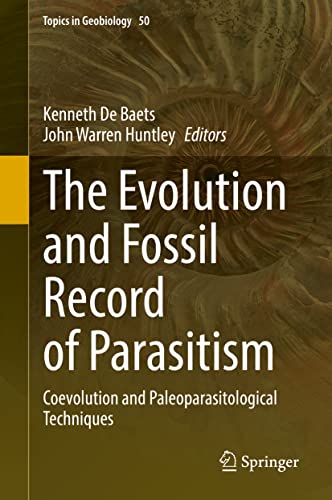
The Evolution and Fossil Record of Parasitism: Coevolution and Paleoparasitological Techniques (Topics in Geobiology, 50, Band 50) - Hardcover
Inhaltsangabe
This two-volume edited book highlights and reviews the potential of the fossil record to calibrate the origin and evolution of parasitism, and the techniques to understand the development of parasite-host associations and their relationships with environmental and ecological changes. The book deploys a broad and comprehensive approach, aimed at understanding the origins and developments of various parasite groups, in order to provide a wider evolutionary picture of parasitism as part of biodiversity. This is in contrast to most contributions by parasitologists in the literature that focus on circular lines of evidence, such as extrapolating from current host associations or distributions, to estimate constraints on the timing of the origin and evolution of various parasite groups. This approach is narrow and fails to provide the wider evolutionary picture of parasitism on, and as part of, biodiversity.
Volume two focuses on the importance of direct host associations and hostresponses such as pathologies in the geological record to constrain the role of antagonistic interactions in driving the diversification and extinction of parasite-host relationships and disease. To better understand the impact on host populations, emphasis is given to arthropods, colonial metazoans, echinoderms, mollusks and vertebrates as hosts. In addition, novel techniques used to constrain interactions in deep time are discussed ranging from chemical and microscopic investigations of host remains, such as blood and coprolites, to the statistical inference of lateral transfer of transposons and host-parasite coevolutionary dynamics using molecular divergence time estimation.
Die Inhaltsangabe kann sich auf eine andere Ausgabe dieses Titels beziehen.
Über die Autorin bzw. den Autor
Dr. Kenneth De Baets is a paleobiologist at the Geozentrum Nordbayern in the faculty of Natural Sciences at Friedrich-Alexander University Erlangen-Nurnberg. He graduated from Ghent University with a Masters in Geology and earned his PhD in Evolutionary Biology at the University of Zürich. His main research focuses on documenting and interpreting the relative contributions of abiotic (e.g., climate) and biotic factors (e.g., parasitism) in driving large-scale patterns in the evolution of life and biomineralization.
Dr. John Huntley is an Associate Professor in the Department of Geological Sciences at the University of Missouri. He graduated from Appalachian State University with a Bachelors of Science in Geology in 2000, then earned his Masters in Geology at the University of North Carolina at Wilmington in 2003, and his PhD in Geosciences at Virginia Polytechnic Institute and State University in 2007. His main research interests include the fossil record of biotic interactions, stratigraphic and conservation paleobiology, and the evolution of morphological disparity.
Von der hinteren Coverseite
This two-volume edited book highlights and reviews the potential of the fossil record to calibrate the origin and evolution of parasitism, and the techniques to understand the development of parasite-host associations and their relationships with environmental and ecological changes. The book deploys a broad and comprehensive approach, aimed at understanding the origins and developments of various parasite groups, in order to provide a wider evolutionary picture of parasitism as part of biodiversity. This is in contrast to most contributions by parasitologists in the literature that focus on circular lines of evidence, such as extrapolating from current host associations or distributions, to estimate constraints on the timing of the origin and evolution of various parasite groups. This approach is narrow and fails to provide the wider evolutionary picture of parasitism on, and as part of, biodiversity.
Volume two focuses on the importance of direct host associations and host responses such as pathologies in the geological record to constrain the role of antagonistic interactions in driving the diversification and extinction of parasite-host relationships and disease. To better understand the impact on host populations, emphasis is given to arthropods, colonial metazoans, echinoderms, mollusks and vertebrates as hosts. In addition, novel techniques used to constrain interactions in deep time are discussed ranging from chemical and microscopic investigations of host remains, such as blood and coprolites, to the statistical inference of lateral transfer of transposons and host-parasite coevolutionary dynamics using molecular divergence time estimation.
„Über diesen Titel“ kann sich auf eine andere Ausgabe dieses Titels beziehen.
Suchergebnisse für The Evolution and Fossil Record of Parasitism: Coevolution...

Beispielbild für diese ISBN
The Evolution and Fossil Record of Parasitism (eng)
Print-on-DemandAnbieter: Brook Bookstore On Demand, Napoli, NA, Italien
Verkäuferbewertung 5 von 5 Sternen

Zustand: new. Questo è un articolo print on demand. Bestandsnummer des Verkäufers 0a81dad9525b56cc4e9086db84f7ef7d
Neu kaufen
EUR 126,26
EUR 8,00 Versand
Versand von Italien nach USA
Versand von Italien nach USA
Anzahl: Mehr als 20 verfügbar
Beispielbild für diese ISBN
The Evolution and Fossil Record of Parasitism: Coevolution and Paleoparasitological Techniques: 50 (Topics in Geobiology, 50) [Hardcover] [Dec 12, 2021] De Baets, Kenneth and Huntley, John Warren
Anbieter: StainesBookhub, Weybridge, SURRE, Vereinigtes Königreich
Verkäuferbewertung 2 von 5 Sternen

Zustand: New. A brand new book in pristine condition. Showing zero signs of shelf wear, creases, or damage. Bestandsnummer des Verkäufers SPRINGERNEWLISTING140269
Neu kaufen
EUR 111,92
EUR 35,61 Versand
Versand von Vereinigtes Königreich nach USA
Versand von Vereinigtes Königreich nach USA
Anzahl: 1 verfügbar
Foto des Verkäufers
The Evolution and Fossil Record of Parasitism
Verlag:
Springer International Publishing Dez 2021, 2021
ISBN 10: 3030522326
ISBN 13: 9783030522322
Neu
Hardcover
Anbieter: BuchWeltWeit Ludwig Meier e.K., Bergisch Gladbach, Deutschland
Verkäuferbewertung 5 von 5 Sternen
Buch. Zustand: Neu. This item is printed on demand - it takes 3-4 days longer - Neuware -This two-volume edited book highlights and reviews the potential of the fossil record to calibrate the origin and evolution of parasitism, and the techniques to understand the development of parasite-host associations and their relationships with environmental and ecological changes. The book deploys a broad and comprehensive approach, aimed at understanding the origins and developments of various parasite groups, in order to provide a wider evolutionary picture of parasitism as part of biodiversity. This is in contrast to most contributions by parasitologists in the literature that focus on circular lines of evidence, such as extrapolating from current host associations or distributions, to estimate constraints on the timing of the origin and evolution of various parasite groups. This approach is narrow and fails to provide the wider evolutionary picture of parasitism on, and as part of, biodiversity.Volume two focuses on the importance of direct host associations and hostresponses such as pathologies in the geological record to constrain the role of antagonistic interactions in driving the diversification and extinction of parasite-host relationships and disease. To better understand the impact on host populations, emphasis is given to arthropods, colonial metazoans, echinoderms, mollusks and vertebrates as hosts. In addition, novel techniques used to constrain interactions in deep time are discussed ranging from chemical and microscopic investigations of host remains, such as blood and coprolites, to the statistical inference of lateral transfer of transposons and host-parasite coevolutionary dynamics using molecular divergence time estimation. 496 pp. Englisch. Bestandsnummer des Verkäufers 9783030522322
Neu kaufen
EUR 160,49
EUR 23,00 Versand
Versand von Deutschland nach USA
Versand von Deutschland nach USA
Anzahl: 2 verfügbar
Foto des Verkäufers
The Evolution and Fossil Record of Parasitism
Verlag:
Springer International Publishing, 2021
ISBN 10: 3030522326
ISBN 13: 9783030522322
Neu
Hardcover
Anbieter: moluna, Greven, Deutschland
Verkäuferbewertung 5 von 5 Sternen
Zustand: New. Dieser Artikel ist ein Print on Demand Artikel und wird nach Ihrer Bestellung fuer Sie gedruckt. Reviews the fossil record to calibrate the origin, evolution and extinction of parasite-host associationsHighlights and provides examples of fossilizable host responses and parasitic disease in host populationsDiscusses data and techniques t. Bestandsnummer des Verkäufers 458548032
Neu kaufen
EUR 136,16
EUR 48,99 Versand
Versand von Deutschland nach USA
Versand von Deutschland nach USA
Anzahl: Mehr als 20 verfügbar
Foto des Verkäufers
The Evolution and Fossil Record of Parasitism : Coevolution and Paleoparasitological Techniques
Anbieter: AHA-BUCH GmbH, Einbeck, Deutschland
Verkäuferbewertung 5 von 5 Sternen
Buch. Zustand: Neu. Druck auf Anfrage Neuware - Printed after ordering - This two-volume edited book highlights and reviews the potential of the fossil record to calibrate the origin and evolution of parasitism, and the techniques to understand the development of parasite-host associations and their relationships with environmental and ecological changes. The book deploys a broad and comprehensive approach, aimed at understanding the origins and developments of various parasite groups, in order to provide a wider evolutionary picture of parasitism as part of biodiversity. This is in contrast to most contributions by parasitologists in the literature that focus on circular lines of evidence, such as extrapolating from current host associations or distributions, to estimate constraints on the timing of the origin and evolution of various parasite groups. This approach is narrow and fails to provide the wider evolutionary picture of parasitism on, and as part of, biodiversity.Volume two focuses on the importance of direct host associations and hostresponses such as pathologies in the geological record to constrain the role of antagonistic interactions in driving the diversification and extinction of parasite-host relationships and disease. To better understand the impact on host populations, emphasis is given to arthropods, colonial metazoans, echinoderms, mollusks and vertebrates as hosts. In addition, novel techniques used to constrain interactions in deep time are discussed ranging from chemical and microscopic investigations of host remains, such as blood and coprolites, to the statistical inference of lateral transfer of transposons and host-parasite coevolutionary dynamics using molecular divergence time estimation. Bestandsnummer des Verkäufers 9783030522322
Neu kaufen
EUR 183,30
EUR 35,00 Versand
Versand von Deutschland nach USA
Versand von Deutschland nach USA
Anzahl: 1 verfügbar
Foto des Verkäufers
The Evolution and Fossil Record of Parasitism
Print-on-DemandAnbieter: buchversandmimpf2000, Emtmannsberg, BAYE, Deutschland
Verkäuferbewertung 5 von 5 Sternen
Buch. Zustand: Neu. This item is printed on demand - Print on Demand Titel. Neuware -This two-volume edited book highlights and reviews the potential of the fossil record to calibrate the origin and evolution of parasitism, and the techniques to understand the development of parasite-host associations and their relationships with environmental and ecological changes. The book deploys a broad and comprehensive approach, aimed at understanding the origins and developments of various parasite groups, in order to provide a wider evolutionary picture of parasitism as part of biodiversity. This is in contrast to most contributions by parasitologists in the literature that focus on circular lines of evidence, such as extrapolating from current host associations or distributions, to estimate constraints on the timing of the origin and evolution of various parasite groups. This approach is narrow and fails to provide the wider evolutionary picture of parasitism on, and as part of, biodiversity.Volume two focuses on the importance of direct host associations and hostresponses such as pathologies in the geological record to constrain the role of antagonistic interactions in driving the diversification and extinction of parasite-host relationships and disease. To better understand the impact on host populations, emphasis is given to arthropods, colonial metazoans, echinoderms, mollusks and vertebrates as hosts. In addition, novel techniques used to constrain interactions in deep time are discussed ranging from chemical and microscopic investigations of host remains, such as blood and coprolites, to the statistical inference of lateral transfer of transposons and host-parasite coevolutionary dynamics using molecular divergence time estimation.Springer-Verlag KG, Sachsenplatz 4-6, 1201 Wien 496 pp. Englisch. Bestandsnummer des Verkäufers 9783030522322
Neu kaufen
EUR 160,49
EUR 60,00 Versand
Versand von Deutschland nach USA
Versand von Deutschland nach USA
Anzahl: 1 verfügbar
Beispielbild für diese ISBN
The Evolution and Fossil Record of Parasitism: Coevolution and Paleoparasitological Techniques (Topics in Geobiology, 50)
Anbieter: Books Puddle, Woodside, NY, USA
Verkäuferbewertung 4 von 5 Sternen

Zustand: New. Bestandsnummer des Verkäufers 26383140051
Neu kaufen
EUR 241,78
EUR 3,56 Versand
Versand innerhalb von USA
Versand innerhalb von USA
Anzahl: 4 verfügbar
Beispielbild für diese ISBN
The Evolution and Fossil Record of Parasitism: Coevolution and Paleoparasitological Techniques (Topics in Geobiology, 50)
Print-on-DemandAnbieter: Majestic Books, Hounslow, Vereinigtes Königreich
Verkäuferbewertung 4 von 5 Sternen
Zustand: New. Print on Demand. Bestandsnummer des Verkäufers 379715340
Neu kaufen
EUR 253,11
EUR 7,71 Versand
Versand von Vereinigtes Königreich nach USA
Versand von Vereinigtes Königreich nach USA
Anzahl: 4 verfügbar
Beispielbild für diese ISBN
The Evolution and Fossil Record of Parasitism: Coevolution and Paleoparasitological Techniques (Topics in Geobiology, 50)
Print-on-DemandAnbieter: Biblios, Frankfurt am main, HESSE, Deutschland
Verkäuferbewertung 4 von 5 Sternen
Zustand: New. PRINT ON DEMAND. Bestandsnummer des Verkäufers 18383140057
Neu kaufen
EUR 251,49
EUR 9,95 Versand
Versand von Deutschland nach USA
Versand von Deutschland nach USA
Anzahl: 4 verfügbar