
Verwandte Artikel zu Disaster Risk Reduction for Resilience: Climate Change...
Inhaltsangabe
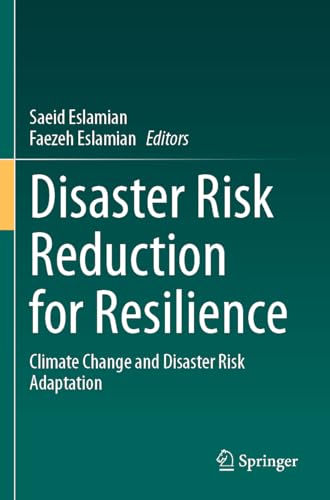
This book is part of a six-volume series on Disaster Risk Reduction and Resilience. The series aims to fill in gaps in theory and practice in the Sendai Framework, and provides additional resources, methodologies, and communication strategies to enhance the plan for action and targets proposed by the Sendai Framework. The series will appeal to a broad range of researchers, academics, students, policy makers, and practitioners in engineering, environmental science and geography, geoscience, emergency management, finance, community adaptation, atmospheric science, and information technology.
This volume offers indigenous approaches to disaster risk reduction, community sustainability and climate change resilience, as well as agro-ecological innovations for improving resilience to climate change. The focus is on adaptation strategies for sustainable terrestrial and marine ecosystems to reduce the impacts of anthropogenic factors that exacerbate disaster risk, including hydro-meteorological services for climate resilience, food security measures in agriculture and livestock, flood mitigation plans, and increased climate change education and awareness. The book concludes with three case studies in Africa detailing the impacts of strengthened climate change resilience measures, adaptive social protections, and improved water availability through hydro-electric technologies.Die Inhaltsangabe kann sich auf eine andere Ausgabe dieses Titels beziehen.
Über die Autorin bzw. den Autor
Dr. Saeid Eslamian received his PhD from the Department of Civil Engineering, University of New South Wales, Australia, in 1995. He is now a Full Professor of Hydrology and Water Resources Sustainability at Isfahan University of Technology, the Director of the Excellence Center in Risk Analysis and Natural Hazards, and Chief of the Specialized Group on Water Resources Policy and Management, Research Center of Water and Wastewater. Formerly, he was a V. Professor at Princeton University, United States, University of ETH Zurich, Switzerland, and McGill University, Montreal, Quebec, Canada. Recently, he has been awarded as one of the World's Top 2% Scientists from Stanford University and is being Awarded as a High-level Jury Member and Invited Dialogue Person for the related organizations of the United Nations. Prof. Eslamian is the Founder and Chief Editor of the International Journal of Hydrological Science and Technology (Interscience) and Water Productivity Journal. Prof. Eslamian is also an editorial board member and reviewer for more than 150 Web of Science (ISI) Journals. He has contributed to more than 1K publications in journals, books, and technical reports, including publications from Elsevier, Springer, Wiley, Taylor and Francis, and IWA.
Von der hinteren Coverseite
This book is part of a six-volume series on Disaster Risk Reduction and Resilience. The series aims to fill in gaps in theory and practice in the Sendai Framework, and provides additional resources, methodologies, and communication strategies to enhance the plan for action and targets proposed by the Sendai Framework. The series will appeal to a broad range of researchers, academics, students, policy makers, and practitioners in engineering, environmental science and geography, geoscience, emergency management, finance, community adaptation, atmospheric science, and information technology.
This volume offers indigenous approaches to disaster risk reduction, community sustainability and climate change resilience, as well as agro-ecological innovations for improving resilience to climate change. The focus is on adaptation strategies for sustainable terrestrial and marine ecosystems to reduce the impacts of anthropogenic factors that exacerbate disaster risk, including hydro-meteorological services for climate resilience, food security measures in agriculture and livestock, flood mitigation plans, and increased climate change education and awareness. The book concludes with three case studies in Africa detailing the impacts of strengthened climate change resilience measures, adaptive social protections, and improved water availability through hydro-electric technologies.„Über diesen Titel“ kann sich auf eine andere Ausgabe dieses Titels beziehen.
Suchergebnisse für Disaster Risk Reduction for Resilience: Climate Change...

Beispielbild für diese ISBN
Disaster Risk Reduction for Resilience: Climate Change and Disaster Risk Adaptation (eng)
Print-on-DemandAnbieter: Brook Bookstore On Demand, Napoli, NA, Italien
Verkäuferbewertung 5 von 5 Sternen

Zustand: new. Questo è un articolo print on demand. Bestandsnummer des Verkäufers NWUMQVG9YJ
Neu kaufen
EUR 134,27
EUR 8,00 Versand
Versand von Italien nach USA
Versand von Italien nach USA
Anzahl: Mehr als 20 verfügbar
Foto des Verkäufers
Disaster Risk Reduction for Resilience
ISBN 10: 3031221141
ISBN 13: 9783031221149
Neu
Softcover
Anbieter: moluna, Greven, Deutschland
Verkäuferbewertung 5 von 5 Sternen
Zustand: New. Dieser Artikel ist ein Print on Demand Artikel und wird nach Ihrer Bestellung fuer Sie gedruckt. This book is part of a six-volume series on Disaster Risk Reduction and Resilience. The series aims to fill in gaps in theory and practice in the Sendai Framework, and provides additional resources, methodologies, and communication strategies to enhance . Bestandsnummer des Verkäufers 1553476207
Neu kaufen
EUR 144,94
EUR 48,99 Versand
Versand von Deutschland nach USA
Versand von Deutschland nach USA
Anzahl: Mehr als 20 verfügbar
Beispielbild für diese ISBN
Disaster Risk Reduction for Resilience
Verlag:
Springer International Publishing Apr 2023, 2023
ISBN 10: 3031221141
ISBN 13: 9783031221149
Neu
Taschenbuch
Anbieter: BuchWeltWeit Ludwig Meier e.K., Bergisch Gladbach, Deutschland
Verkäuferbewertung 5 von 5 Sternen
Taschenbuch. Zustand: Neu. This item is printed on demand - it takes 3-4 days longer - Neuware 476 pp. Englisch. Bestandsnummer des Verkäufers 9783031221149
Neu kaufen
EUR 171,19
EUR 23,00 Versand
Versand von Deutschland nach USA
Versand von Deutschland nach USA
Anzahl: 2 verfügbar
Foto des Verkäufers
Disaster Risk Reduction for Resilience : Climate Change and Disaster Risk Adaptation
Anbieter: AHA-BUCH GmbH, Einbeck, Deutschland
Verkäuferbewertung 5 von 5 Sternen
Taschenbuch. Zustand: Neu. Druck auf Anfrage Neuware - Printed after ordering - This book is part of a six-volume series on Disaster Risk Reduction and Resilience. The series aims to fill in gaps in theory and practice in the Sendai Framework, and provides additional resources, methodologies, and communication strategies to enhance the plan for action and targets proposed by the Sendai Framework. The series will appeal to a broad range of researchers, academics, students, policy makers, and practitioners in engineering, environmental science and geography, geoscience, emergency management, finance, community adaptation, atmospheric science, and information technology.This volume offers indigenous approaches to disaster risk reduction, community sustainability and climate change resilience, as well as agro-ecological innovations for improving resilience to climate change. The focus is on adaptation strategies for sustainable terrestrial and marine ecosystems to reduce the impacts of anthropogenic factors that exacerbate disaster risk, including hydro-meteorological services for climate resilience, food security measures in agriculture and livestock, flood mitigation plans, and increased climate change education and awareness. The book concludes with three case studies in Africa detailing the impacts of strengthened climate change resilience measures, adaptive social protections, and improved water availability through hydro-electric technologies. Bestandsnummer des Verkäufers 9783031221149
Neu kaufen
EUR 181,43
EUR 35,00 Versand
Versand von Deutschland nach USA
Versand von Deutschland nach USA
Anzahl: 1 verfügbar
Foto des Verkäufers
Disaster Risk Reduction for Resilience | Climate Change and Disaster Risk Adaptation
Anbieter: preigu, Osnabrück, Deutschland
Verkäuferbewertung 5 von 5 Sternen
Taschenbuch. Zustand: Neu. Disaster Risk Reduction for Resilience | Climate Change and Disaster Risk Adaptation | Saeid Eslamian (u. a.) | Taschenbuch | xvi | Englisch | 2024 | Springer | EAN 9783031221149 | Verantwortliche Person für die EU: Springer Verlag GmbH, Tiergartenstr. 17, 69121 Heidelberg, juergen[dot]hartmann[at]springer[dot]com | Anbieter: preigu. Bestandsnummer des Verkäufers 128855601
Neu kaufen
EUR 149,10
EUR 70,00 Versand
Versand von Deutschland nach USA
Versand von Deutschland nach USA
Anzahl: 5 verfügbar
Foto des Verkäufers
Disaster Risk Reduction for Resilience
Verlag:
Springer, Palgrave Macmillan Mär 2024, 2024
ISBN 10: 3031221141
ISBN 13: 9783031221149
Neu
Taschenbuch
Anbieter: buchversandmimpf2000, Emtmannsberg, BAYE, Deutschland
Verkäuferbewertung 5 von 5 Sternen
Taschenbuch. Zustand: Neu. This item is printed on demand - Print on Demand Titel. Neuware -This book is part of a six-volume series on Disaster Risk Reduction and Resilience. The series aims to fill in gaps in theory and practice in the Sendai Framework, and provides additional resources, methodologies, and communication strategies to enhance the plan for action and targets proposed by the Sendai Framework. The series will appeal to a broad range of researchers, academics, students, policy makers, and practitioners in engineering, environmental science and geography, geoscience, emergency management, finance, community adaptation, atmospheric science, and information technology.This volume offers indigenous approaches to disaster risk reduction, community sustainability and climate change resilience, as well as agro-ecological innovations for improving resilience to climate change. The focus is on adaptation strategies for sustainable terrestrial and marine ecosystems to reduce the impacts of anthropogenic factors that exacerbate disaster risk, including hydro-meteorological services for climate resilience, food security measures in agriculture and livestock, flood mitigation plans, and increased climate change education and awareness. The book concludes with three case studies in Africa detailing the impacts of strengthened climate change resilience measures, adaptive social protections, and improved water availability through hydro-electric technologies.Springer-Verlag KG, Sachsenplatz 4-6, 1201 Wien 476 pp. Englisch. Bestandsnummer des Verkäufers 9783031221149
Neu kaufen
EUR 171,19
EUR 60,00 Versand
Versand von Deutschland nach USA
Versand von Deutschland nach USA
Anzahl: 1 verfügbar
Beispielbild für diese ISBN
Disaster Risk Reduction for Resilience: Climate Change and Disaster Risk Adaptation
Anbieter: Books Puddle, Woodside, NY, USA
Verkäuferbewertung 4 von 5 Sternen

Zustand: New. 2023rd edition NO-PA16APR2015-KAP. Bestandsnummer des Verkäufers 26401132693
Neu kaufen
EUR 248,81
EUR 3,56 Versand
Versand innerhalb von USA
Versand innerhalb von USA
Anzahl: 4 verfügbar
Beispielbild für diese ISBN
Disaster Risk Reduction for Resilience: Climate Change and Disaster Risk Adaptation
Print-on-DemandAnbieter: Biblios, Frankfurt am main, HESSE, Deutschland
Verkäuferbewertung 4 von 5 Sternen
Zustand: New. PRINT ON DEMAND. Bestandsnummer des Verkäufers 18401132703
Neu kaufen
EUR 258,72
EUR 9,95 Versand
Versand von Deutschland nach USA
Versand von Deutschland nach USA
Anzahl: 4 verfügbar
Beispielbild für diese ISBN
Disaster Risk Reduction for Resilience: Climate Change and Disaster Risk Adaptation
Print-on-DemandAnbieter: Majestic Books, Hounslow, Vereinigtes Königreich
Verkäuferbewertung 4 von 5 Sternen
Zustand: New. Print on Demand. Bestandsnummer des Verkäufers 396325706
Neu kaufen
EUR 263,48
EUR 7,67 Versand
Versand von Vereinigtes Königreich nach USA
Versand von Vereinigtes Königreich nach USA
Anzahl: 4 verfügbar