
Verwandte Artikel zu Invisible Languages in the Nineteenth Century (Historical...
Inhaltsangabe
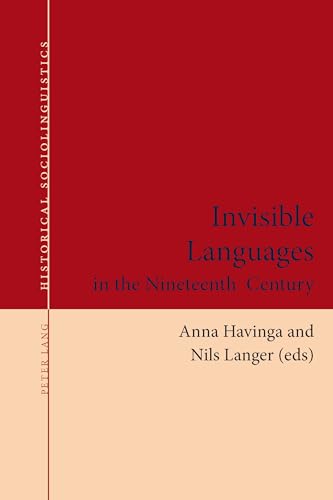
The great linguistic diversity of spoken languages contrasts greatly with the much smaller number of languages used in written discourse. Many linguistic varieties – in particular, regional and minority languages – are not deemed suitable for writing because they do not possess the necessary lexical wealth or grammatical complexity. Such prejudices are commonplace amongst non-linguists and they have their origin in the sociolinguistic history of their speaker communities. This book focuses on the nineteenth century as the time when language became an important part of the cultural identity of speakers, communities and nations. It comprises fourteen chapters on a variety of languages and countries and seeks to explore why and how certain linguistic varieties were excluded from written discourse – in other words, why they remain invisible to contemporary readers and modern historians. The case studies in this book illustrate the factors involved in the invisibilisation of languages in the nineteenth century; the metalinguistic debates about the suppression or promotion of regional, minority and non-standard languages; and the ways in which a careful study of informal writing can visibilise the linguistic diversity of spoken languages.
Die Inhaltsangabe kann sich auf eine andere Ausgabe dieses Titels beziehen.
Über die Autorin bzw. den Autor
Anna Havinga is a doctoral student in historical sociolinguistics at the University of Bristol. Her PhD thesis investigates the standardisation process of German in eighteenth-century Austria, with a particular focus on the role of education. Further research interests include folk linguistics, language attitudes and language contact phenomena. Nils Langer is Professor of Germanic Linguistics at the University of Bristol. Born and raised in Schleswig-Holstein, he studied German and English linguistics at the University of Newcastle upon Tyne, where he completed his PhD on the effectiveness of seventeenth-century German grammarians. He researches a broad range of topics in historical sociolinguistics and currently works on language contact phenomena and language politics in the German–Danish borderlands.
„Über diesen Titel“ kann sich auf eine andere Ausgabe dieses Titels beziehen.
Suchergebnisse für Invisible Languages in the Nineteenth Century (Historical...

Foto des Verkäufers
Invisible Languages in the Nineteenth Century
Verlag:
Peter Lang AG, Internationaler Verlag der Wissenschaften, 2015
ISBN 10: 3034319681
ISBN 13: 9783034319683
Neu
Softcover
Anbieter: GreatBookPrices, Columbia, MD, USA
Verkäuferbewertung 5 von 5 Sternen

Zustand: New. Bestandsnummer des Verkäufers 25041931-n
Neu kaufen
EUR 75,88
EUR 2,26 Versand
Versand innerhalb von USA
Versand innerhalb von USA
Anzahl: Mehr als 20 verfügbar
Beispielbild für diese ISBN
Invisible Languages in the Nineteenth Century
Verlag:
Peter Lang AG, Internationaler Verlag der Wissenschaften, 2015
ISBN 10: 3034319681
ISBN 13: 9783034319683
Neu
PAP
Anbieter: PBShop.store US, Wood Dale, IL, USA
Verkäuferbewertung 5 von 5 Sternen
PAP. Zustand: New. New Book. Shipped from UK. Established seller since 2000. Bestandsnummer des Verkäufers CX-9783034319683
Beispielbild für diese ISBN
Invisible Languages in the Nineteenth Century
Verlag:
Peter Lang AG, Internationaler Verlag der Wissenschaften, 2015
ISBN 10: 3034319681
ISBN 13: 9783034319683
Neu
PAP
Anbieter: PBShop.store UK, Fairford, GLOS, Vereinigtes Königreich
Verkäuferbewertung 5 von 5 Sternen
PAP. Zustand: New. New Book. Shipped from UK. Established seller since 2000. Bestandsnummer des Verkäufers CX-9783034319683
Neu kaufen
EUR 74,89
EUR 4,86 Versand
Versand von Vereinigtes Königreich nach USA
Versand von Vereinigtes Königreich nach USA
Anzahl: 15 verfügbar
Foto des Verkäufers
Invisible Languages in the Nineteenth Century
ISBN 10: 3034319681
ISBN 13: 9783034319683
Neu
Paperback
Anbieter: Rarewaves.com USA, London, LONDO, Vereinigtes Königreich
Verkäuferbewertung 5 von 5 Sternen
Paperback. Zustand: New. The great linguistic diversity of spoken languages contrasts greatly with the much smaller number of languages used in written discourse. Many linguistic varieties - in particular, regional and minority languages - are not deemed suitable for writing because they do not possess the necessary lexical wealth or grammatical complexity. Such prejudices are commonplace amongst non-linguists and they have their origin in the sociolinguistic history of their speaker communities. This book focuses on the nineteenth century as the time when language became an important part of the cultural identity of speakers, communities and nations. It comprises fourteen chapters on a variety of languages and countries and seeks to explore why and how certain linguistic varieties were excluded from written discourse - in other words, why they remain invisible to contemporary readers and modern historians. The case studies in this book illustrate the factors involved in the invisibilisation of languages in the nineteenth century; the metalinguistic debates about the suppression or promotion of regional, minority and non-standard languages; and the ways in which a careful study of informal writing can visibilise the linguistic diversity of spoken languages. Bestandsnummer des Verkäufers LU-9783034319683
Neu kaufen
EUR 86,71
Versand gratis
Versand von Vereinigtes Königreich nach USA
Versand von Vereinigtes Königreich nach USA
Anzahl: 12 verfügbar
Foto des Verkäufers
Invisible Languages in the Nineteenth Century
Verlag:
Peter Lang AG, Internationaler Verlag der Wissenschaften, 2015
ISBN 10: 3034319681
ISBN 13: 9783034319683
Gebraucht
Softcover
Anbieter: GreatBookPrices, Columbia, MD, USA
Verkäuferbewertung 5 von 5 Sternen
Zustand: As New. Unread book in perfect condition. Bestandsnummer des Verkäufers 25041931
Gebraucht kaufen
EUR 85,60
EUR 2,26 Versand
Versand innerhalb von USA
Versand innerhalb von USA
Anzahl: Mehr als 20 verfügbar
Beispielbild für diese ISBN
Invisible Languages in the Nineteenth Century (Historical Sociolinguistics)
Verlag:
Peter Lang AG, Internationaler Verlag der Wissenschaften, 2015
ISBN 10: 3034319681
ISBN 13: 9783034319683
Neu
Softcover
Anbieter: Ria Christie Collections, Uxbridge, Vereinigtes Königreich
Verkäuferbewertung 5 von 5 Sternen
Zustand: New. In. Bestandsnummer des Verkäufers ria9783034319683_new
Neu kaufen
EUR 75,26
EUR 13,99 Versand
Versand von Vereinigtes Königreich nach USA
Versand von Vereinigtes Königreich nach USA
Anzahl: Mehr als 20 verfügbar
Beispielbild für diese ISBN
Invisible Languages in the Nineteenth Century (Historical Sociolinguistics)
ISBN 10: 3034319681
ISBN 13: 9783034319683
Neu
Paperback
Anbieter: Chiron Media, Wallingford, Vereinigtes Königreich
Verkäuferbewertung 5 von 5 Sternen
Paperback. Zustand: New. Bestandsnummer des Verkäufers 6666-IUK-9783034319683
Neu kaufen
EUR 71,90
EUR 18,09 Versand
Versand von Vereinigtes Königreich nach USA
Versand von Vereinigtes Königreich nach USA
Anzahl: 10 verfügbar
Beispielbild für diese ISBN
Invisible Languages in the Nineteenth Century
Verlag:
Peter Lang AG, Internationaler Verlag der Wissenschaften, 2015
ISBN 10: 3034319681
ISBN 13: 9783034319683
Neu
Softcover
Anbieter: GreatBookPricesUK, Woodford Green, Vereinigtes Königreich
Verkäuferbewertung 5 von 5 Sternen
Zustand: New. Bestandsnummer des Verkäufers 25041931-n
Neu kaufen
EUR 74,88
EUR 17,52 Versand
Versand von Vereinigtes Königreich nach USA
Versand von Vereinigtes Königreich nach USA
Anzahl: Mehr als 20 verfügbar
Beispielbild für diese ISBN
Invisible Languages in the Nineteenth Century
Verlag:
Peter Lang AG, Internationaler Verlag der Wissenschaften, 2015
ISBN 10: 3034319681
ISBN 13: 9783034319683
Neu
Softcover
Anbieter: Kennys Bookshop and Art Galleries Ltd., Galway, GY, Irland
Verkäuferbewertung 5 von 5 Sternen
Zustand: New. This book focuses on the nineteenth century as the time when language became an important part of the cultural identity of speakers, communities and nations. It seeks to explore why and how certain linguistic varieties were excluded from written discourse, in other words, why they remain invisible to contemporary readers and modern historians. Editor(s): Havinga, Anna; Langer, Nils. Series: Historical Sociolinguistics Studies on Language and Society in the Past. Num Pages: 310 pages. BIC Classification: CFB; CFF; GTB; HBLL. Category: (P) Professional & Vocational. Dimension: 226 x 151 x 19. Weight in Grams: 460. . 2015. New ed. Paperback. . . . . Bestandsnummer des Verkäufers V9783034319683
Neu kaufen
EUR 84,43
EUR 9,50 Versand
Versand von Irland nach USA
Versand von Irland nach USA
Anzahl: Mehr als 20 verfügbar
Beispielbild für diese ISBN
Invisible Languages in the Nineteenth Century (Paperback)
ISBN 10: 3034319681
ISBN 13: 9783034319683
Neu
Paperback
Anbieter: Grand Eagle Retail, Bensenville, IL, USA
Verkäuferbewertung 5 von 5 Sternen
Paperback. Zustand: new. Paperback. The great linguistic diversity of spoken languages contrasts greatly with the much smaller number of languages used in written discourse. Many linguistic varieties in particular, regional and minority languages are not deemed suitable for writing because they do not possess the necessary lexical wealth or grammatical complexity. Such prejudices are commonplace amongst non-linguists and they have their origin in the sociolinguistic history of their speaker communities. This book focuses on the nineteenth century as the time when language became an important part of the cultural identity of speakers, communities and nations. It comprises fourteen chapters on a variety of languages and countries and seeks to explore why and how certain linguistic varieties were excluded from written discourse in other words, why they remain invisible to contemporary readers and modern historians. The case studies in this book illustrate the factors involved in the invisibilisation of languages in the nineteenth century; the metalinguistic debates about the suppression or promotion of regional, minority and non-standard languages; and the ways in which a careful study of informal writing can visibilise the linguistic diversity of spoken languages. This book focuses on the nineteenth century as the time when language became an important part of the cultural identity of speakers, communities and nations. It seeks to explore why and how certain linguistic varieties were excluded from written discourse, in other words, why they remain invisible to contemporary readers and modern historians. Shipping may be from multiple locations in the US or from the UK, depending on stock availability. Bestandsnummer des Verkäufers 9783034319683