
Verwandte Artikel zu Charging the Internal Combustion Engine (Powertrain)
Inhaltsangabe
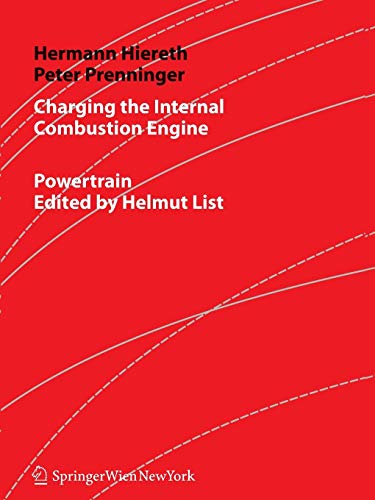
Supercharging the reciprocating piston internal combustion engine is as old as the engine itself. Early on, it was used to improve the high-altitude performance of aircraft engines and later to increase the short-term peak performance in sporty or very expensive automobiles. It took nearly 30 years until it reached economic importance in the form of the ef?ciency-improving exhaust gas turbocharging of slow- and medium-speed diesel engines. It took 30 more years until it entered high-volume automotive engine production, in the form of both mechanically driven displacement compressors and modern exhaust gas turbocharging systems. Since, in spite of promising alternative developments for mobile applications, the internal combustion engine will remain dominant for the foreseeable future, its further development is essential. Today many demands are placed on automobile engines: on the one hand, consumers insistonextremeef?ciency,andontheotherhandlawsestablishstrictstandardsfor,e.g.,noiseandexhaust gas emissions. It would be extremely dif?cult for an internal combustion engine to meet these demands without the advantages afforded by supercharging. The purpose of this book is to facilitate a better understanding of the characteristics of superchargers in respect to their physical operating principles, as well as their interaction with piston engines. This applies both to the displacementcompressorandtoexhaustgasturbochargingsystems,whichoftenareverycomplex. It is not intended to cover the layout, calculation, and design of supercharging equipment as such–thisspecialareaisreservedforthepertinenttechnicalliterature–buttocoverthosequestions which are important for an ef?cient interaction between engine and supercharging system, as well as the description of the tools necessary to obtain an optimal engine–supercharger combination.
Die Inhaltsangabe kann sich auf eine andere Ausgabe dieses Titels beziehen.
Suchergebnisse für Charging the Internal Combustion Engine (Powertrain)

Beispielbild für diese ISBN
Charging the Internal Combustion Engine (eng)
Print-on-DemandAnbieter: Brook Bookstore On Demand, Napoli, NA, Italien
Verkäuferbewertung 5 von 5 Sternen

Zustand: new. Questo è un articolo print on demand. Bestandsnummer des Verkäufers RAELLD3Q5C
Neu kaufen
EUR 94,25
EUR 6,80 Versand
Versand von Italien nach USA
Versand von Italien nach USA
Anzahl: Mehr als 20 verfügbar
Foto des Verkäufers
Charging the Internal Combustion Engine
Anbieter: GreatBookPrices, Columbia, MD, USA
Verkäuferbewertung 5 von 5 Sternen
Zustand: New. Bestandsnummer des Verkäufers 12222203-n
Neu kaufen
EUR 104,48
EUR 2,35 Versand
Versand innerhalb von USA
Versand innerhalb von USA
Anzahl: 1 verfügbar
Beispielbild für diese ISBN
Charging the Internal Combustion Engine
Anbieter: PBShop.store US, Wood Dale, IL, USA
Verkäuferbewertung 5 von 5 Sternen
PAP. Zustand: New. New Book. Shipped from UK. Established seller since 2000. Bestandsnummer des Verkäufers DB-9783211998847
Beispielbild für diese ISBN
Charging the Internal Combustion Engine
Anbieter: PBShop.store UK, Fairford, GLOS, Vereinigtes Königreich
Verkäuferbewertung 5 von 5 Sternen
PAP. Zustand: New. New Book. Shipped from UK. Established seller since 2000. Bestandsnummer des Verkäufers DB-9783211998847
Neu kaufen
EUR 102,01
EUR 5,92 Versand
Versand von Vereinigtes Königreich nach USA
Versand von Vereinigtes Königreich nach USA
Anzahl: 1 verfügbar
Foto des Verkäufers
Charging the Internal Combustion Engine
Anbieter: GreatBookPrices, Columbia, MD, USA
Verkäuferbewertung 5 von 5 Sternen
Zustand: As New. Unread book in perfect condition. Bestandsnummer des Verkäufers 12222203
Gebraucht kaufen
EUR 117,16
EUR 2,35 Versand
Versand innerhalb von USA
Versand innerhalb von USA
Anzahl: 1 verfügbar
Beispielbild für diese ISBN
Charging the Internal Combustion Engine
Anbieter: GreatBookPricesUK, Woodford Green, Vereinigtes Königreich
Verkäuferbewertung 5 von 5 Sternen
Zustand: New. Bestandsnummer des Verkäufers 12222203-n
Neu kaufen
EUR 102,00
EUR 17,68 Versand
Versand von Vereinigtes Königreich nach USA
Versand von Vereinigtes Königreich nach USA
Anzahl: 1 verfügbar
Beispielbild für diese ISBN
Charging the Internal Combustion Engine (Powertrain)
Anbieter: Chiron Media, Wallingford, Vereinigtes Königreich
Verkäuferbewertung 5 von 5 Sternen
Paperback. Zustand: New. Bestandsnummer des Verkäufers 6666-LBR-9783211998847
Neu kaufen
EUR 108,09
EUR 18,26 Versand
Versand von Vereinigtes Königreich nach USA
Versand von Vereinigtes Königreich nach USA
Anzahl: 1 verfügbar
Foto des Verkäufers
Charging the Internal Combustion Engine
Anbieter: GreatBookPricesUK, Woodford Green, Vereinigtes Königreich
Verkäuferbewertung 5 von 5 Sternen
Zustand: As New. Unread book in perfect condition. Bestandsnummer des Verkäufers 12222203
Gebraucht kaufen
EUR 118,73
EUR 17,68 Versand
Versand von Vereinigtes Königreich nach USA
Versand von Vereinigtes Königreich nach USA
Anzahl: 1 verfügbar
Foto des Verkäufers
Charging the Internal Combustion Engine
Verlag:
Springer Vienna, Springer Okt 2010, 2010
ISBN 10: 3211998845
ISBN 13: 9783211998847
Neu
Taschenbuch
Anbieter: BuchWeltWeit Ludwig Meier e.K., Bergisch Gladbach, Deutschland
Verkäuferbewertung 5 von 5 Sternen
Taschenbuch. Zustand: Neu. This item is printed on demand - it takes 3-4 days longer - Neuware -Supercharging the reciprocating piston internal combustion engine is as old as the engine itself. Early on, it was used to improve the high-altitude performance of aircraft engines and later to increase the short-term peak performance in sporty or very expensive automobiles. It took nearly 30 years until it reached economic importance in the form of the ef ciency-improving exhaust gas turbocharging of slow- and medium-speed diesel engines. It took 30 more years until it entered high-volume automotive engine production, in the form of both mechanically driven displacement compressors and modern exhaust gas turbocharging systems. Since, in spite of promising alternative developments for mobile applications, the internal combustion engine will remain dominant for the foreseeable future, its further development is essential. Today many demands are placed on automobile engines: on the one hand, consumers insistonextremeef ciency,andontheotherhandlawsestablishstrictstandardsfor,e.g.,noiseandexhaust gas emissions. It would be extremely dif cult for an internal combustion engine to meet these demands without the advantages afforded by supercharging. The purpose of this book is to facilitate a better understanding of the characteristics of superchargers in respect to their physical operating principles, as well as their interaction with piston engines. This applies both to the displacementcompressorandtoexhaustgasturbochargingsystems,whichoftenareverycomplex. It is not intended to cover the layout, calculation, and design of supercharging equipment as such-thisspecialareaisreservedforthepertinenttechnicalliterature-buttocoverthosequestions which are important for an ef cient interaction between engine and supercharging system, as well as the description of the tools necessary to obtain an optimal engine-supercharger combination. 288 pp. Englisch. Bestandsnummer des Verkäufers 9783211998847
Neu kaufen
EUR 117,69
EUR 23,00 Versand
Versand von Deutschland nach USA
Versand von Deutschland nach USA
Anzahl: 1 verfügbar
Foto des Verkäufers
Charging the Internal Combustion Engine
Verlag:
Springer Vienna, Springer Okt 2010, 2010
ISBN 10: 3211998845
ISBN 13: 9783211998847
Neu
Taschenbuch
Anbieter: Rheinberg-Buch Andreas Meier eK, Bergisch Gladbach, Deutschland
Verkäuferbewertung 5 von 5 Sternen
Taschenbuch. Zustand: Neu. This item is printed on demand - it takes 3-4 days longer - Neuware -Supercharging the reciprocating piston internal combustion engine is as old as the engine itself. Early on, it was used to improve the high-altitude performance of aircraft engines and later to increase the short-term peak performance in sporty or very expensive automobiles. It took nearly 30 years until it reached economic importance in the form of the ef ciency-improving exhaust gas turbocharging of slow- and medium-speed diesel engines. It took 30 more years until it entered high-volume automotive engine production, in the form of both mechanically driven displacement compressors and modern exhaust gas turbocharging systems. Since, in spite of promising alternative developments for mobile applications, the internal combustion engine will remain dominant for the foreseeable future, its further development is essential. Today many demands are placed on automobile engines: on the one hand, consumers insistonextremeef ciency,andontheotherhandlawsestablishstrictstandardsfor,e.g.,noiseandexhaust gas emissions. It would be extremely dif cult for an internal combustion engine to meet these demands without the advantages afforded by supercharging. The purpose of this book is to facilitate a better understanding of the characteristics of superchargers in respect to their physical operating principles, as well as their interaction with piston engines. This applies both to the displacementcompressorandtoexhaustgasturbochargingsystems,whichoftenareverycomplex. It is not intended to cover the layout, calculation, and design of supercharging equipment as such-thisspecialareaisreservedforthepertinenttechnicalliterature-buttocoverthosequestions which are important for an ef cient interaction between engine and supercharging system, as well as the description of the tools necessary to obtain an optimal engine-supercharger combination. 288 pp. Englisch. Bestandsnummer des Verkäufers 9783211998847
Neu kaufen
EUR 117,69
EUR 23,00 Versand
Versand von Deutschland nach USA
Versand von Deutschland nach USA
Anzahl: 1 verfügbar