
Verwandte Artikel zu Teaching and Learning English at Primary Level. Songs...
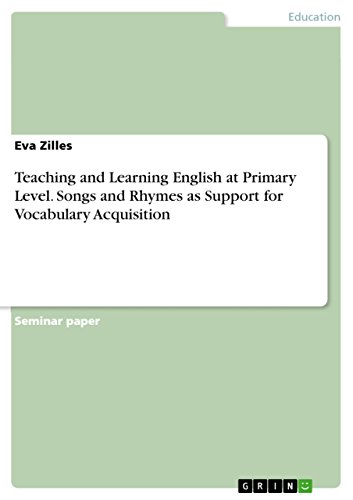
Teaching and Learning English at Primary Level. Songs and Rhymes as Support for Vocabulary Acquisition - Softcover
Inhaltsangabe
Seminar paper from the year 2015 in the subject Didactics - English - Pedagogy, Literature Studies, grade: 1,7, University of Koblenz-Landau, language: English, abstract: Looking back, many adults remember school not only as a place and time of friendships and personal development but also as a time of boredom, restrictions and even fear. It does not take today's neurobiological knowledge of the brain to guess that a boring and fearful atmosphere is not the best learning environment. Instead, children1 should be taught in a way that is inspiring, fun and caring. A good opportunity for providing this type of teaching is through language classes in primary school. Some years ago, the governments of the German federal states decided to establish English as a first foreign language to be taught from as early as first grade. This enables English teachers to introduce children to the English language in a playful and natural way. Games, art activities, outdoor action and other activities can be combined with learning English. In addition, songs and rhymes can be used as age-appropriate teaching modules. This paper examines how songs and rhymes in primary school English classes support learning and focuses on vocabulary learning: Why and how is vocabulary taught? What is the role of songs and rhymes in teaching English? These two aspects will then lead to the main research question: How do songs and rhymes support vocabulary learning? The approach is to examine relevant literature on primary school education and English lessons with a focus on vocabulary learning and on songs and rhymes. According to the research concern, the paper first gives insight into vocabulary teaching (chapter 2). Next, it explores why and how songs and rhymes can be part of teaching English. Chapter 4 then examines songs and rhymes as a means of teaching vocabulary. The conclusion summarizes the findings concerning the research question. Should the paper arrive at the result that songs and rh
Die Inhaltsangabe kann sich auf eine andere Ausgabe dieses Titels beziehen.
Von der hinteren Coverseite
Seminar paper from the year 2015 in the subject Didactics for the subject English - Pedagogy, Literature Studies, grade: 1,7, University of Koblenz-Landau, language: English, abstract: Looking back, many adults remember school not only as a place and time of friendships and personal development but also as a time of boredom, restrictions and even fear. It does not take today's neurobiological knowledge of the brain to guess that a boring and fearful atmosphere is not the best learning environment. Instead, children1 should be taught in a way that is inspiring, fun and caring. A good opportunity for providing this type of teaching is through language classes in primary school. Some years ago, the governments of the German federal states decided to establish English as a first foreign language to be taught from as early as first grade. This enables English teachers to introduce children to the English language in a playful and natural way. Games, art activities, outdoor action and other activities can be combined with learning English. In addition, songs and rhymes can be used as age-appropriate teaching modules. This paper examines how songs and rhymes in primary school English classes support learning and focuses on vocabulary learning: Why and how is vocabulary taught? What is the role of songs and rhymes in teaching English? These two aspects will then lead to the main research question: How do songs and rhymes support vocabulary learning? The approach is to examine relevant literature on primary school education and English lessons with a focus on vocabulary learning and on songs and rhymes. According to the research concern, the paper first gives insight into vocabulary teaching (chapter 2). Next, it explores why and how songs and rhymes can be part of teaching English. Chapter 4 then examines songs and rhymes as a means of teaching vocabulary. The conclusion summarizes the findings concerning the research question. Should the paper arrive at the result that songs and rhymes are a motivating and inspiring way of learning vocabulary, it could be an encouraging message for teachers to apply that method.
„Über diesen Titel“ kann sich auf eine andere Ausgabe dieses Titels beziehen.
Suchergebnisse für Teaching and Learning English at Primary Level. Songs...

Foto des Verkäufers
Teaching and Learning English at Primary Level. Songs and Rhymes as Support for Vocabulary Acquisition
Anbieter: GreatBookPrices, Columbia, MD, USA
Verkäuferbewertung 5 von 5 Sternen

Zustand: New. Bestandsnummer des Verkäufers 25404948-n
Neu kaufen
EUR 20,73
EUR 2,28 Versand
Versand innerhalb von USA
Versand innerhalb von USA
Anzahl: Mehr als 20 verfügbar
Beispielbild für diese ISBN
Teaching and Learning English at Primary Level. Songs and Rhymes as Support for Vocabulary Acquisition
Anbieter: California Books, Miami, FL, USA
Verkäuferbewertung 4 von 5 Sternen

Zustand: New. Bestandsnummer des Verkäufers I-9783668099326
Neu kaufen
EUR 23,09
Versand gratis
Versand innerhalb von USA
Versand innerhalb von USA
Anzahl: Mehr als 20 verfügbar
Foto des Verkäufers
Teaching and Learning English at Primary Level. Songs and Rhymes as Support for Vocabulary Acquisition
Anbieter: GreatBookPrices, Columbia, MD, USA
Verkäuferbewertung 5 von 5 Sternen
Zustand: As New. Unread book in perfect condition. Bestandsnummer des Verkäufers 25404948
Gebraucht kaufen
EUR 21,25
EUR 2,28 Versand
Versand innerhalb von USA
Versand innerhalb von USA
Anzahl: Mehr als 20 verfügbar
Beispielbild für diese ISBN
Teaching and Learning English at Primary Level. Songs and Rhymes as Support for Vocabulary Acquisition
Print-on-DemandAnbieter: Majestic Books, Hounslow, Vereinigtes Königreich
Verkäuferbewertung 4 von 5 Sternen
Zustand: New. Print on Demand pp. 24. Bestandsnummer des Verkäufers 388927556
Neu kaufen
EUR 21,52
EUR 7,58 Versand
Versand von Vereinigtes Königreich nach USA
Versand von Vereinigtes Königreich nach USA
Anzahl: 4 verfügbar
Foto des Verkäufers
Teaching and Learning English at Primary Level. Songs and Rhymes as Support for Vocabulary Acquisition
Anbieter: GreatBookPricesUK, Woodford Green, Vereinigtes Königreich
Verkäuferbewertung 5 von 5 Sternen
Zustand: As New. Unread book in perfect condition. Bestandsnummer des Verkäufers 25404948
Gebraucht kaufen
EUR 25,95
EUR 17,49 Versand
Versand von Vereinigtes Königreich nach USA
Versand von Vereinigtes Königreich nach USA
Anzahl: Mehr als 20 verfügbar
Foto des Verkäufers
Teaching and Learning English at Primary Level. Songs and Rhymes as Support for Vocabulary Acquisition
Anbieter: GreatBookPricesUK, Woodford Green, Vereinigtes Königreich
Verkäuferbewertung 5 von 5 Sternen
Zustand: New. Bestandsnummer des Verkäufers 25404948-n
Neu kaufen
EUR 26,17
EUR 17,49 Versand
Versand von Vereinigtes Königreich nach USA
Versand von Vereinigtes Königreich nach USA
Anzahl: Mehr als 20 verfügbar
Foto des Verkäufers
Teaching and Learning English at Primary Level. Songs and Rhymes as Support for Vocabulary Acquisition
Verlag:
GRIN Verlag, GRIN Verlag Dez 2015, 2015
ISBN 10: 3668099324
ISBN 13: 9783668099326
Neu
Taschenbuch
Anbieter: buchversandmimpf2000, Emtmannsberg, BAYE, Deutschland
Verkäuferbewertung 5 von 5 Sternen
Taschenbuch. Zustand: Neu. This item is printed on demand - Print on Demand Titel. Neuware -Seminar paper from the year 2015 in the subject Didactics for the subject English - Pedagogy, Literature Studies, grade: 1,7, University of Koblenz-Landau, language: English, abstract: Looking back, many adults remember school not only as a place and time of friendships and personal development but also as a time of boredom, restrictions and even fear. It does not take today¿s neurobiological knowledge of the brain to guess that a boring and fearful atmosphere is not the best learning environment. Instead, children1 should be taught in a way that is inspiring, fun and caring. A good opportunity for providing this type of teaching is through language classes in primary school.Some years ago, the governments of the German federal states decided to establish English as a first foreign language to be taught from as early as first grade. This enables English teachers to introduce children to the English language in a playful and natural way. Games, art activities, outdoor action and other activities can be combined with learning English. In addition, songs and rhymes can be used as age-appropriate teaching modules.This paper examines how songs and rhymes in primary school English classes support learning and focuses on vocabulary learning: Why and how is vocabulary taught What is the role of songs and rhymes in teaching English These two aspects will then lead to the main research question: How do songs and rhymes support vocabulary learning The approach is to examine relevant literature on primary school education and English lessons with a focus on vocabulary learning and on songs and rhymes.According to the research concern, the paper first gives insight into vocabulary teaching (chapter 2). Next, it explores why and how songs and rhymes can be part of teaching English. Chapter 4 then examines songs and rhymes as a means of teaching vocabulary. The conclusion summarizes the findings concerning the research question. Should the paper arrive at the result that songs and rhymes are a motivating and inspiring way of learning vocabulary, it could be an encouraging message for teachers to apply that method.Books on Demand GmbH, Überseering 33, 22297 Hamburg 20 pp. Englisch. Bestandsnummer des Verkäufers 9783668099326
Neu kaufen
EUR 15,95
EUR 60,00 Versand
Versand von Deutschland nach USA
Versand von Deutschland nach USA
Anzahl: 1 verfügbar
Foto des Verkäufers
Teaching and Learning English at Primary Level. Songs and Rhymes as Support for Vocabulary Acquisition
Anbieter: AHA-BUCH GmbH, Einbeck, Deutschland
Verkäuferbewertung 5 von 5 Sternen
Taschenbuch. Zustand: Neu. Druck auf Anfrage Neuware - Printed after ordering - Seminar paper from the year 2015 in the subject Didactics for the subject English - Pedagogy, Literature Studies, grade: 1,7, University of Koblenz-Landau, language: English, abstract: Looking back, many adults remember school not only as a place and time of friendships and personal development but also as a time of boredom, restrictions and even fear. It does not take today's neurobiological knowledge of the brain to guess that a boring and fearful atmosphere is not the best learning environment. Instead, children1 should be taught in a way that is inspiring, fun and caring. A good opportunity for providing this type of teaching is through language classes in primary school. Some years ago, the governments of the German federal states decided to establish English as a first foreign language to be taught from as early as first grade. This enables English teachers to introduce children to the English language in a playful and natural way. Games, art activities, outdoor action and other activities can be combined with learning English. In addition, songs and rhymes can be used as age-appropriate teaching modules.This paper examines how songs and rhymes in primary school English classes support learning and focuses on vocabulary learning: Why and how is vocabulary taught What is the role of songs and rhymes in teaching English These two aspects will then lead to the main research question: How do songs and rhymes support vocabulary learning The approach is to examine relevant literature on primary school education and English lessons with a focus on vocabulary learning and on songs and rhymes. According to the research concern, the paper first gives insight into vocabulary teaching (chapter 2). Next, it explores why and how songs and rhymes can be part of teaching English. Chapter 4 then examines songs and rhymes as a means of teaching vocabulary. The conclusion summarizes the findings concerning the research question. Should the paper arrive at the result that songs and rhymes are a motivating and inspiring way of learning vocabulary, it could be an encouraging message for teachers to apply that method. Bestandsnummer des Verkäufers 9783668099326
Neu kaufen
EUR 15,95
EUR 60,23 Versand
Versand von Deutschland nach USA
Versand von Deutschland nach USA
Anzahl: 1 verfügbar
Foto des Verkäufers
Teaching and Learning English at Primary Level. Songs and Rhymes as Support for Vocabulary Acquisition
Print-on-DemandAnbieter: preigu, Osnabrück, Deutschland
Verkäuferbewertung 5 von 5 Sternen
Taschenbuch. Zustand: Neu. Teaching and Learning English at Primary Level. Songs and Rhymes as Support for Vocabulary Acquisition | Eva Zilles | Taschenbuch | 20 S. | Englisch | 2015 | GRIN Verlag | EAN 9783668099326 | Verantwortliche Person für die EU: GRIN Publishing GmbH, Waltherstr. 23, 80337 München, info[at]grin[dot]com | Anbieter: preigu Print on Demand. Bestandsnummer des Verkäufers 104081723
Neu kaufen
EUR 15,95
EUR 70,00 Versand
Versand von Deutschland nach USA
Versand von Deutschland nach USA
Anzahl: 5 verfügbar
Beispielbild für diese ISBN
Teaching and Learning English at Primary Level. Songs and Rhymes as Support for Vocabulary Acquisition
Anbieter: Buchpark, Trebbin, Deutschland
Verkäuferbewertung 5 von 5 Sternen
Zustand: Sehr gut. Zustand: Sehr gut | Sprache: Englisch | Produktart: Bücher | Seminar paper from the year 2015 in the subject Didactics for the subject English - Pedagogy, Literature Studies, grade: 1,7, University of Koblenz-Landau, language: English, abstract: Looking back, many adults remember school not only as a place and time of friendships and personal development but also as a time of boredom, restrictions and even fear. It does not take today¿s neurobiological knowledge of the brain to guess that a boring and fearful atmosphere is not the best learning environment. Instead, children1 should be taught in a way that is inspiring, fun and caring. A good opportunity for providing this type of teaching is through language classes in primary school. Some years ago, the governments of the German federal states decided to establish English as a first foreign language to be taught from as early as first grade. This enables English teachers to introduce children to the English language in a playful and natural way. Games, art activities, outdoor action and other activities can be combined with learning English. In addition, songs and rhymes can be used as age-appropriate teaching modules. This paper examines how songs and rhymes in primary school English classes support learning and focuses on vocabulary learning: Why and how is vocabulary taught? What is the role of songs and rhymes in teaching English? These two aspects will then lead to the main research question: How do songs and rhymes support vocabulary learning? The approach is to examine relevant literature on primary school education and English lessons with a focus on vocabulary learning and on songs and rhymes. According to the research concern, the paper first gives insight into vocabulary teaching (chapter 2). Next, it explores why and how songs and rhymes can be part of teaching English. Chapter 4 then examines songs and rhymes as a means of teaching vocabulary. The conclusion summarizes the findings concerning the research question. Should the paper arrive at the result that songs and rhymes are a motivating and inspiring way of learning vocabulary, it could be an encouraging message for teachers to apply that method. Bestandsnummer des Verkäufers 26341730/2
Gebraucht kaufen
EUR 12,31
EUR 105,00 Versand
Versand von Deutschland nach USA
Versand von Deutschland nach USA
Anzahl: 1 verfügbar