
Verwandte Artikel zu Valentin Carron: Katalog zur Ausstellung der Overbeck-Gesell...
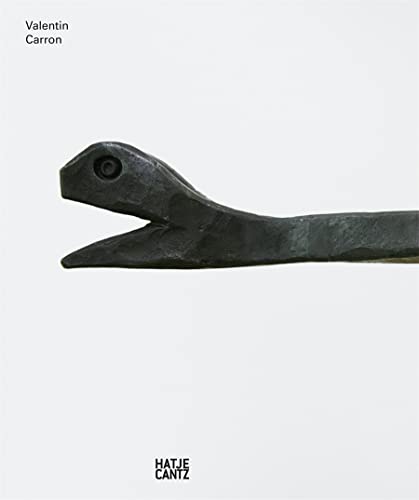
Valentin Carron: Katalog zur Ausstellung der Overbeck-Gesellschaft Lübeck, 2015/2016 (Zeitgenössische Kunst) - Hardcover
Inhaltsangabe
Als Valentin Carron (*1977 in Martigny) im Jahr 2013 den Schweizer Pavillon auf der Biennale von Venedig mit seinen Skulpturen bespielen durfte, war der internationalen Kunstszene längst klar, dass er zu den herausragenden Schweizer Künstlern seiner Generation zählt. Doch was macht das Werk des jungen Wallisers aus? Zum Großteil sicher seine innige Heimatverbundenheit, die als eine der entscheidenden Inspirationsquellen gelten kann im Wallis ist Carron aufgewachsen, hier lebt und arbeitet er. Dabei entfalten seine Arbeiten noch eine zweite entscheidende Komponente: Carrons Werk provoziert immer wieder die Frage nach Original und Kopie, danach, was Tradition und Identität sein können. Indem er bekannte und traditionelle Formen seines Landes durch neue Materialien nachbildet, lässt er ihrer ikonischen Bedeutung und Wirkung Raum, um sie mit ironischem Gestus auszustellen. Das Edelweiß wird hierdurch auch immer wieder als Edelkitsch entlarvt.
Ausstellung: Overbeck-Gesellschaft, Lübeck 22.11.2015 31.1.2016
Die Inhaltsangabe kann sich auf eine andere Ausgabe dieses Titels beziehen.
Über die Autorin bzw. den Autor
Lionel Bovier, art critic and historian, is editor of Les Presses du Reel and JRP editions. He has written and edited many works on the subject of contemporary art.
Von der hinteren Coverseite
When Valentin Carron (*1977 in Martigny) was free to install his sculptures in the Swiss Pavilion in the Venice Giardini within the scope of the 2013 Biennale, the international art scene long since knew that he was one of the outstanding Swiss artists of his generation. Yet what constitutes the young Valaisian’s oeuvre? For the most part surely his profound affinity for his home, which can be considered one of his crucial sources of inspiration―Carron grew up in Valais and still lives and works there. At the same time, Carron’s works develop a second, defining component: they repeatedly ignite the issue of original and copy, of what tradition and identity can be. By reproducing familiar and traditional forms from his country using new materials, he allows space for their iconic meaning and impact in order to exhibit them with an ironic gesture. By doing so, the pristine white edelweiss is time and again exposed as being pristine white kitsch.
„Über diesen Titel“ kann sich auf eine andere Ausgabe dieses Titels beziehen.
Suchergebnisse für Valentin Carron: Katalog zur Ausstellung der Overbeck-Gesell...

Beispielbild für diese ISBN
Valentin Carron
Anbieter: Paradou Books, Richmond, VA, USA
Verkäuferbewertung 5 von 5 Sternen

Soft cover. Zustand: New. 1st Edition. Softcover, 80 pgs. Text in English & German. Sealed, new. Bestandsnummer des Verkäufers ABE-1701140304605
Foto des Verkäufers
Valentin Carron: Katalog zur Ausstellung der Overbeck-Gesellschaft Lübeck, 2015/2016 (Zeitgenössische Kunst). Overbeck-Preis für bildende Kunst der Gemeinnützigen zu Lübeck.
Verlag:
Hatje Cantz Verlag, 2016
ISBN 10: 3775741232
ISBN 13: 9783775741231
Gebraucht
Broschur, Gr. 8°
Anbieter: ANTIQUARIAT Franke BRUDDENBOOKS, Lübeck, Deutschland
Verkäuferbewertung 5 von 5 Sternen
Broschur, Gr. 8°. Zustand: Sehr gut. 1. 112 S. Das Buch ist in sehr gutem, sauberen Zustand. Einband minimal berieben. Sonst sauberes und wohlerhaltenes Exemplar. -----Inhalt:. Als Valentin Carron (*1977 in Martigny) im Jahr 2013 den Schweizer Pavillon auf der Biennale von Venedig mit seinen Skulpturen bespielen durfte, war der internationalen Kunstszene längst klar, dass er zu den herausragenden Schweizer Künstlern seiner Generation zählt. Doch was macht das Werk des jungen Wallisers aus? Zum Großteil sicher seine innige Heimatverbundenheit, die als eine der entscheidenden Inspirationsquellen gelten kann im Wallis ist Carron aufgewachsen, hier lebt und arbeitet er. Dabei entfalten seine Arbeiten noch eine zweite entscheidende Komponente: Carrons Werk provoziert immer wieder die Frage nach Original und Kopie, danach, was Tradition und Identität sein können. Indem er bekannte und traditionelle Formen seines Landes durch neue Materialien nachbildet, lässt er ihrer ikonischen Bedeutung und Wirkung Raum, um sie mit ironischem Gestus auszustellen. Das Edelweiß wird hierdurch auch immer wieder als Edelkitsch entlarvt.Ausstellung: Overbeck-Gesellschaft, Lübeck 22.11.20157.2.2016. ISBN: 9783775741231 Due to new EU packaging regulations, we are currently unable to ship to many EU countries. Shipping to Germany, the Netherlands, Ireland, Finland, and the Baltic states is possible. Deliveries to border-based parcel lockers or cross-border parcel forwarding services remain possible. Shipping to all countries outside the EU also remains possible. Sprache: Englisch Gewicht in Gramm: 299. Bestandsnummer des Verkäufers 695556
Gebraucht kaufen
EUR 3,80
EUR 11,96 Versand
Versand von Deutschland nach USA
Versand von Deutschland nach USA
Anzahl: 1 verfügbar
Foto des Verkäufers
Valentin Carron: Katalog zur Ausstellung der Overbeck-Gesellschaft Lübeck, 2015/2016 (Zeitgenössische Kunst)
Anbieter: artbook-service, Berlin, Deutschland
Verkäuferbewertung 5 von 5 Sternen
gebunden. Zustand: Neu. Neu -Als Valentin Carron (Jg. 1977 in Martigny) im Jahr 2013 den Schweizer Pavillon auf der Biennale von Venedig mit seinen Skulpturen bespielen durfte, war der internationalen Kunstszene längst klar, dass er zu den herausragenden Schweizer Künstlern seiner Generation zählt. Doch was macht das Werk des jungen Wallisers aus Zum Großteil sicher seine innige Heimatverbundenheit, die als eine der entscheidenden Inspirationsquellen gelten kann - im Wallis ist Carron aufgewachsen, hier lebt und arbeitet er. Dabei entfalten seine Arbeiten noch eine zweite entscheidende Komponente: Carrons Werk provoziert immer wieder die Frage nach Original und Kopie, danach, was Tradition und Identität sein können. Indem er bekannte und traditionelle Formen seines Landes durch neue Materialien nachbildet, lässt er ihrer ikonischen Bedeutung und Wirkung Raum, um sie mit ironischem Gestus auszustellen. Das Edelweiß wird hierdurch auch immer wieder als Edelkitsch entlarvt. (Text dt., engl.) 79 pp. Deutsch, Englisch. Bestandsnummer des Verkäufers 1061526
Neu kaufen
EUR 11,26
EUR 22,99 Versand
Versand von Deutschland nach USA
Versand von Deutschland nach USA
Anzahl: 13 verfügbar
Beispielbild für diese ISBN
Valentin Carron: Overbeck-preis Fur Bildende Kunst Der Gemeinnutzigen Zu Lubeck / Overbeck Prize for Visual Arts of the Gemeinnutzige in Lubeck [Hardcover] [Apr 01, 2016] Carmine, Giovanni and Zybok, Oliver
Anbieter: Hay-on-Wye Booksellers, Hay-on-Wye, HEREF, Vereinigtes Königreich
Verkäuferbewertung 4 von 5 Sternen

Zustand: As New. Bestandsnummer des Verkäufers 038043-13a
Gebraucht kaufen
EUR 10,45
EUR 29,15 Versand
Versand von Vereinigtes Königreich nach USA
Versand von Vereinigtes Königreich nach USA
Anzahl: 1 verfügbar
Beispielbild für diese ISBN
Valentin Carron [Hardcover] Carmine, Giovanni and Zybok, Oliver
Anbieter: Hay-on-Wye Booksellers, Hay-on-Wye, HEREF, Vereinigtes Königreich
Verkäuferbewertung 4 von 5 Sternen
Zustand: As New. Bestandsnummer des Verkäufers 107069-8
Gebraucht kaufen
EUR 16,97
EUR 29,15 Versand
Versand von Vereinigtes Königreich nach USA
Versand von Vereinigtes Königreich nach USA
Anzahl: 1 verfügbar
Beispielbild für diese ISBN
Valentin Carron (German/English)
Verlag:
Hatje Cantz, Stuttgart, 2016
ISBN 10: 3775741232
ISBN 13: 9783775741231
Gebraucht
Softcover
Erstausgabe
Anbieter: Antiquariat UEBUE, Zürich, Schweiz
Verkäuferbewertung 5 von 5 Sternen
Softcover. Zustand: Sehr gut. 1. Auflage. Z : 79 Seiten, 24 Abb. - Als Valentin Carron (*1977 in Martigny) im Jahr 2013 den Schweizer Pavillon auf der Biennale von Venedig mit seinen Skulpturen bespielen durfte, war der internationalen Kunstszene längst klar, dass er zu den herausragenden Schweizer Künstlern seiner Generation zählt. Bestandsnummer des Verkäufers ABE-1581441380320
Gebraucht kaufen
EUR 30,54
EUR 26,90 Versand
Versand von Schweiz nach USA
Versand von Schweiz nach USA
Anzahl: 2 verfügbar
Beispielbild für diese ISBN
Valentin Carron
Anbieter: BWS BKS, Ferndale, NY, USA
Verkäuferbewertung 2 von 5 Sternen

Hardcover. Zustand: New. Bestandsnummer des Verkäufers 126043
Neu kaufen
EUR 1.771,96
EUR 2,61 Versand
Versand innerhalb von USA
Versand innerhalb von USA
Anzahl: 1 verfügbar