
Verwandte Artikel zu Monet: Light, Shadow, and Reflection (Klassische Moderne)
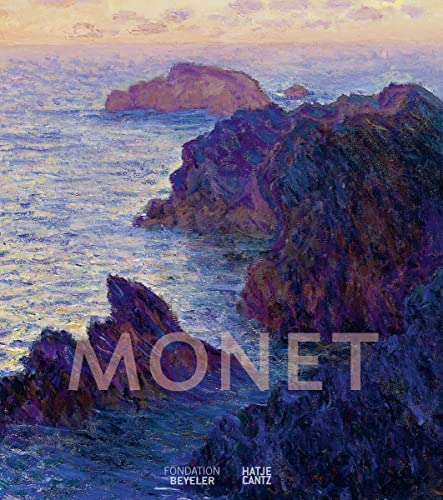
Inhaltsangabe
»Das Aussehen der Welt würde für uns erschüttert, wenn es uns gelänge, die Zwischenräume zwischen den Dingen als Dinge zu sehen«. Diese Worte des Philosophen Maurice Merleau-Ponty treffen den Kern von Claude Monets Kunst in den Jahren von 1880 und dem Beginn des 20. Jahrhunderts. Während sich das Interesse gewöhnlich ausschließlich auf das Früh- und Spätwerk des Ausnahmekünstlers richtet, zeichnet der Katalog mit über 50 Werken die Entwicklung zwischen diesen beiden Perioden nach. Begleitet von Texten bekannter Kunsthistoriker verfolgt man Monets außergewöhnliche Behandlung von Spiegelung und Schatten in seinen Bildern. Sie erlaubte ihm, sich von den Modalitäten einer repräsentativen Logik und vom Bildgegenstand zu lösen. Und sie machte Platz für eine Ästhetik, die der Wahrnehmung selbst zu ihrem Recht und dem Bild zu einem selbstreflexiven Moment verhelfen konnte.
Die Inhaltsangabe kann sich auf eine andere Ausgabe dieses Titels beziehen.
Über die Autorin bzw. den Autor
Claude Monet (1840-1926) trained with the plein-air painter Eugene Boudin among others, continuing his studies from 1859 onward in Paris, where he met Pissarro, Bazille, Sisley and Renoir. At their first exhibition in Paris in 1874, Monet's painting Impression, soleil levant prompted critics to mockingly describe him as an impressionist.
Von der hinteren Coverseite
The painter of light, newly discovered
"The world's appearance would be shaken if we succeeded in perceiving the spaces in between things as things." These words from the philosopher Maurice Merleau-Ponty apply to the core of Claude Monet's art in the years between 1880 and the beginning of the twentieth century. While interest usually lies only on the early and late work of this exceptional artist, the catalogue, containing more than fifty works of art, traces the development between these two periods. Accompanied by texts by well-known art historians, the reader is invited to follow Monet's unusual treatment of reflections and shadows in his paintings. It allowed him to break loose from the modalities of representational logic and the pictorial object. And they made room for an aesthetic that helped to do justice to perception itself and to enforce a painting's self-reflexive momentum.
„Über diesen Titel“ kann sich auf eine andere Ausgabe dieses Titels beziehen.
Suchergebnisse für Monet: Light, Shadow, and Reflection (Klassische Moderne)

Beispielbild für diese ISBN
Monet: Reflections and Shadows
Anbieter: Midtown Scholar Bookstore, Harrisburg, PA, USA
Verkäuferbewertung 5 von 5 Sternen

Hardcover. Zustand: Good. Good - Bumped and creased book with tears to the extremities, but not affecting the text block, may have remainder mark or previous owner's name - GOOD Oversized. Bestandsnummer des Verkäufers M3775742395Z3
Gebraucht kaufen
EUR 62,26
EUR 5,33 Versand
Versand innerhalb von USA
Versand innerhalb von USA
Anzahl: 11 verfügbar
Beispielbild für diese ISBN
Monet: Light, Shadow, and Reflection
Verlag:
Hatje Cantz Verlag, 2017
ISBN 10: 3775742395
ISBN 13: 9783775742399
Gebraucht
Hardcover
Erstausgabe
Anbieter: Church Street Bookshop, London, Vereinigtes Königreich
Verkäuferbewertung 5 von 5 Sternen
Hardcover. Zustand: Good. 1st Edition. 180 pages. Exhibition catalogue, Fondation Beyeler, 2017. Text in English. Pictorial board cover with wear to edges and corners. Internally unmarked. Bestandsnummer des Verkäufers 010315
Gebraucht kaufen
EUR 33,94
EUR 42,18 Versand
Versand von Vereinigtes Königreich nach USA
Versand von Vereinigtes Königreich nach USA
Anzahl: 1 verfügbar