
Verwandte Artikel zu Urban Development Challenges, Risks and Resilience...
Urban Development Challenges, Risks and Resilience in Asian Mega Cities (Advances in Geographical and Environmental Sciences) - Softcover
Buch 4 von 51: Advances in Geographical and Environmental Sciences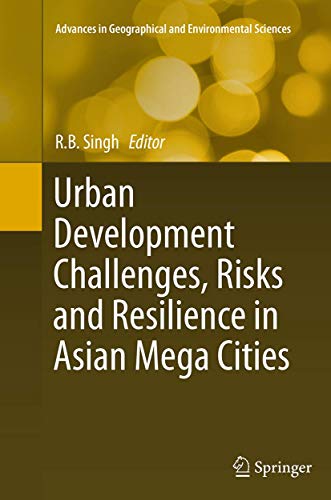
Inhaltsangabe
In this book, an interdisciplinary research group of faculty members, researchers, professionals, and planners contributed to an understanding of the dynamics and dimensions of emerging challenges and risks in megacities in the rapidly changing urban environments in Asia and examined emerging resilience themes from the point of view of sustainability and public policy. The world’s urban population in 2009 was approximately 3.4 billion and Asia’s urban population was about 1.72 billion. Between 2010 and 2020, 411 million people will be added to Asian cities (60 % of the growth in the world’s urban population). By 2020, of the world’s urban population of 4.2 billion, approximately 2.2 billion will be in Asia. China and India will contribute 31.3 % of the total world urban population by 2025. Developing Asia’s projected global share of CO2 emissions for energy consumption will increase from 30 % in 2006 to 43 % by 2030. City regions serve as magnets for people, enterprise, and culture, but with urbanisation , the worst form of visible poverty becomes prominent. The Asian region, with a slum population of an estimated 505.5 million people, remains host to over half of the world’s slum population . The book provides information on a comprehensive range of environmental threats faced by the inhabitants of megacities. It also offers a wide and multidisciplinary group of case studies from rapidly growing megacities (with populations of more than 5 million) from developed and developing countries of Asia.
Die Inhaltsangabe kann sich auf eine andere Ausgabe dieses Titels beziehen.
Von der hinteren Coverseite
In this book, an interdisciplinary research group of faculty members, researchers, professionals, and planners contributed to an understanding of the dynamics and dimensions of emerging challenges and risks in megacities in the rapidly changing urban environments in Asia and examined emerging resilience themes from the point of view of sustainability and public policy. The world’s urban population in 2009 was approximately 3.4 billion and Asia’s urban population was about 1.72 billion. Between 2010 and 2020, 411 million people will be added to Asian cities (60% of the growth in the world’s urban population). By 2020, of the world’s urban population of 4.2 billion, approximately 2.2 billion will be in Asia. China and India will contribute 31.3% of the total world urban population by 2025. Developing Asia’s projected global share of CO2 emissions from energy consumption will increase from 30% in 2006 to 43% by 2030. City regions serve as magnets for people, enterprise, and culture, but with urbanisation, the worst form of visible poverty becomes prominent. The Asian region, with a slum population of an estimated 505.5 million people, remains host to over half of the world’s slum population. The book provides information on a comprehensive range of environmental threats faced by the inhabitants of megacities. It also offers a wide range of case studies with transdisciplinary approach to rapidly growing megacities (with populations of more than 5 million) from developed and developing countries of Asia.
„Über diesen Titel“ kann sich auf eine andere Ausgabe dieses Titels beziehen.
Suchergebnisse für Urban Development Challenges, Risks and Resilience...

Beispielbild für diese ISBN
Urban Development Challenges, Risks and Resilience in Asian Mega Cities (eng)
Print-on-DemandAnbieter: Brook Bookstore On Demand, Napoli, NA, Italien
Verkäuferbewertung 5 von 5 Sternen

Zustand: new. Questo è un articolo print on demand. Bestandsnummer des Verkäufers 6963631615a1d79fa1395e8af18f175f
Neu kaufen
EUR 142,27
EUR 51,00 Versand
Versand von Italien nach USA
Versand von Italien nach USA
Anzahl: Mehr als 20 verfügbar
Foto des Verkäufers
Urban Development Challenges, Risks and Resilience in Asian Mega Cities
Print-on-DemandAnbieter: moluna, Greven, Deutschland
Verkäuferbewertung 5 von 5 Sternen
Zustand: New. Dieser Artikel ist ein Print on Demand Artikel und wird nach Ihrer Bestellung fuer Sie gedruckt. Offers a wide and multidisciplinary group of case studies from rapidly growing megacities (with a population of more than 5 million) from developed and developing countries of AsiaExamines issues related to the problems of Japanese, Indian, and Ch. Bestandsnummer des Verkäufers 458786123
Neu kaufen
EUR 153,73
EUR 48,99 Versand
Versand von Deutschland nach USA
Versand von Deutschland nach USA
Anzahl: Mehr als 20 verfügbar
Foto des Verkäufers
Urban Development Challenges, Risks and Resilience in Asian Mega Cities
Print-on-DemandAnbieter: BuchWeltWeit Ludwig Meier e.K., Bergisch Gladbach, Deutschland
Verkäuferbewertung 5 von 5 Sternen
Taschenbuch. Zustand: Neu. This item is printed on demand - it takes 3-4 days longer - Neuware -In this book, an interdisciplinary research group of faculty members, researchers, professionals, and planners contributed to an understanding of the dynamics and dimensions of emerging challenges and risks in megacities in the rapidly changing urban environments in Asia and examined emerging resilience themes from the point of view of sustainability and public policy. The world's urban population in 2009 was approximately 3.4 billion and Asia's urban population was about 1.72 billion. Between 2010 and 2020, 411 million people will be added to Asian cities (60 % of the growth in the world's urban population). By 2020, of the world's urban population of 4.2 billion, approximately 2.2 billion will be in Asia. China and India will contribute 31.3 % of the total world urban population by 2025. Developing Asia's projected global share of CO2 emissions for energy consumption will increase from 30 % in 2006 to 43 % by 2030. City regions serve as magnets for people, enterprise, and culture, but with urbanisation , the worst form of visible poverty becomes prominent. The Asian region, with a slum population of an estimated 505.5 million people, remains host to over half of the world's slum population . The book provides information on a comprehensive range of environmental threats faced by the inhabitants of megacities. It also offers a wide and multidisciplinary group of case studies from rapidly growing megacities (with populations of more than 5 million) from developed and developing countries of Asia. 500 pp. Englisch. Bestandsnummer des Verkäufers 9784431562115
Neu kaufen
EUR 181,89
EUR 23,00 Versand
Versand von Deutschland nach USA
Versand von Deutschland nach USA
Anzahl: 2 verfügbar
Foto des Verkäufers
Urban Development Challenges, Risks and Resilience in Asian Mega Cities
Anbieter: AHA-BUCH GmbH, Einbeck, Deutschland
Verkäuferbewertung 5 von 5 Sternen
Taschenbuch. Zustand: Neu. Druck auf Anfrage Neuware - Printed after ordering - In this book, an interdisciplinary research group of faculty members, researchers, professionals, and planners contributed to an understanding of the dynamics and dimensions of emerging challenges and risks in megacities in the rapidly changing urban environments in Asia and examined emerging resilience themes from the point of view of sustainability and public policy. The world's urban population in 2009 was approximately 3.4 billion and Asia's urban population was about 1.72 billion. Between 2010 and 2020, 411 million people will be added to Asian cities (60 % of the growth in the world's urban population). By 2020, of the world's urban population of 4.2 billion, approximately 2.2 billion will be in Asia. China and India will contribute 31.3 % of the total world urban population by 2025. Developing Asia's projected global share of CO2 emissions for energy consumption will increase from 30 % in 2006 to 43 % by 2030. City regions serve as magnets for people, enterprise, and culture, but with urbanisation , the worst form of visible poverty becomes prominent. The Asian region, with a slum population of an estimated 505.5 million people, remains host to over half of the world's slum population . The book provides information on a comprehensive range of environmental threats faced by the inhabitants of megacities. It also offers a wide and multidisciplinary group of case studies from rapidly growing megacities (with populations of more than 5 million) from developed and developing countries of Asia. Bestandsnummer des Verkäufers 9784431562115
Neu kaufen
EUR 192,68
EUR 35,00 Versand
Versand von Deutschland nach USA
Versand von Deutschland nach USA
Anzahl: 1 verfügbar
Foto des Verkäufers
Urban Development Challenges, Risks and Resilience in Asian Mega Cities
Anbieter: preigu, Osnabrück, Deutschland
Verkäuferbewertung 5 von 5 Sternen
Taschenbuch. Zustand: Neu. Urban Development Challenges, Risks and Resilience in Asian Mega Cities | R. B. Singh | Taschenbuch | Advances in Geographical and Environmental Sciences | xi | Englisch | 2016 | Springer | EAN 9784431562115 | Verantwortliche Person für die EU: Springer Verlag GmbH, Tiergartenstr. 17, 69121 Heidelberg, juergen[dot]hartmann[at]springer[dot]com | Anbieter: preigu. Bestandsnummer des Verkäufers 102995251
Neu kaufen
EUR 158,05
EUR 70,00 Versand
Versand von Deutschland nach USA
Versand von Deutschland nach USA
Anzahl: 5 verfügbar
Foto des Verkäufers
Urban Development Challenges, Risks and Resilience in Asian Mega Cities
Verlag:
Springer, Springer Sep 2016, 2016
ISBN 10: 4431562117
ISBN 13: 9784431562115
Neu
Taschenbuch
Anbieter: buchversandmimpf2000, Emtmannsberg, BAYE, Deutschland
Verkäuferbewertung 5 von 5 Sternen
Taschenbuch. Zustand: Neu. This item is printed on demand - Print on Demand Titel. Neuware -In this book, an interdisciplinary research group of faculty members, researchers, professionals, and planners contributed to an understanding of the dynamics and dimensions of emerging challenges and risks in megacities in the rapidly changing urban environments in Asia and examined emerging resilience themes from the point of view of sustainability and public policy. The world¿s urban population in 2009 was approximately 3.4 billion and Asiäs urban population was about 1.72 billion. Between 2010 and 2020, 411 million people will be added to Asian cities (60 % of the growth in the world¿s urban population). By 2020, of the world¿s urban population of 4.2 billion, approximately 2.2 billion will be in Asia. China and India will contribute 31.3 % of the total world urban population by 2025. Developing Asiäs projected global share of CO2 emissions for energy consumption will increase from 30 % in 2006 to 43 % by 2030. City regions serve as magnets for people, enterprise, and culture, but with urbanisation , the worst form of visible poverty becomes prominent. The Asian region, with a slum population of an estimated 505.5 million people, remains host to over half of the world¿s slum population . The book provides information on a comprehensive range of environmental threats faced by the inhabitants of megacities. It also offers a wide and multidisciplinary group of case studies from rapidly growing megacities (with populations of more than 5 million) from developed and developing countries of Asia.Springer-Verlag KG, Sachsenplatz 4-6, 1201 Wien 500 pp. Englisch. Bestandsnummer des Verkäufers 9784431562115
Neu kaufen
EUR 181,89
EUR 60,00 Versand
Versand von Deutschland nach USA
Versand von Deutschland nach USA
Anzahl: 1 verfügbar
Beispielbild für diese ISBN
Urban Development Challenges, Risks and Resilience in Asian Mega Cities (Advances in Geographical and Environmental Sciences)
Anbieter: Books Puddle, Woodside, NY, USA
Verkäuferbewertung 4 von 5 Sternen

Zustand: New. pp. 488. Bestandsnummer des Verkäufers 26375090726
Neu kaufen
EUR 264,85
EUR 3,55 Versand
Versand innerhalb von USA
Versand innerhalb von USA
Anzahl: 4 verfügbar
Beispielbild für diese ISBN
Urban Development Challenges, Risks and Resilience in Asian Mega Cities
Anbieter: Revaluation Books, Exeter, Vereinigtes Königreich
Verkäuferbewertung 5 von 5 Sternen
Paperback. Zustand: Brand New. reprint edition. 500 pages. 9.00x6.00x1.00 inches. In Stock. Bestandsnummer des Verkäufers __4431562117
Neu kaufen
EUR 237,96
EUR 41,18 Versand
Versand von Vereinigtes Königreich nach USA
Versand von Vereinigtes Königreich nach USA
Anzahl: 1 verfügbar
Beispielbild für diese ISBN
Urban Development Challenges, Risks and Resilience in Asian Mega Cities (Advances in Geographical and Environmental Sciences)
Print-on-DemandAnbieter: Biblios, Frankfurt am main, HESSE, Deutschland
Verkäuferbewertung 4 von 5 Sternen
Zustand: New. PRINT ON DEMAND pp. 488. Bestandsnummer des Verkäufers 18375090732
Neu kaufen
EUR 276,09
EUR 9,95 Versand
Versand von Deutschland nach USA
Versand von Deutschland nach USA
Anzahl: 4 verfügbar
Beispielbild für diese ISBN
Urban Development Challenges, Risks and Resilience in Asian Mega Cities (Advances in Geographical and Environmental Sciences)
Print-on-DemandAnbieter: Majestic Books, Hounslow, Vereinigtes Königreich
Verkäuferbewertung 4 von 5 Sternen
Zustand: New. Print on Demand pp. 488. Bestandsnummer des Verkäufers 372036089
Neu kaufen
EUR 279,90
EUR 7,65 Versand
Versand von Vereinigtes Königreich nach USA
Versand von Vereinigtes Königreich nach USA
Anzahl: 4 verfügbar