
Verwandte Artikel zu The Holocaust and Other Genocides: An Introduction
Inhaltsangabe
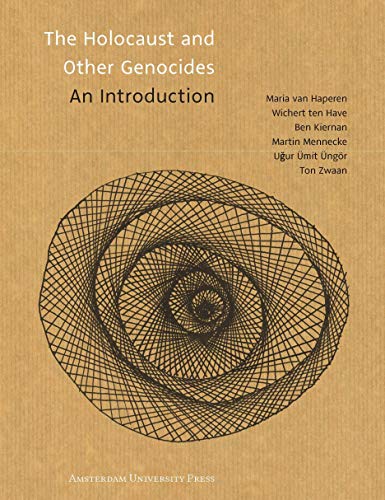
After the unthinkable horrors of the Holocaust, the United Nations signed the Genocide Convention in 1948. Although this convention aimed for the prevention of genocide in the future, large-scale mass murder nonetheless returned in Rwanda and Cambodia, among other nations. Genocide is incredibly difficult to fight, as its causes are complex and deeply rooted, but international courts and tribunals have begun to play an increasing role in bringing perpetrators to justice. This book offers concise information about five twentieth-century cases of genocide, while analyzing overarching issues in international justice.
Die Inhaltsangabe kann sich auf eine andere Ausgabe dieses Titels beziehen.
Über die Autorinnen und Autoren
Wichert ten Have is director of Holocaust and Genocide Studies at the NIOD. Barbara Boender is public events and education coordinator at the NIOD.
During the research, the authors – Eveline Buchheim, Martijn Eickhoff, Jeroen Kemperman, Remco Raben, Peter Romijn and Stephanie Welvaart – were all affiliated with the NIOD Institute for War, Holocaust and Genocide Studies.
Von der hinteren Coverseite
Ook verkrijgbaar in het Nederlands met ISBN 9789089643803 Naar aanleiding van de Holocaust beschreef Raphael Lemkin het verschijnsel genocide. De Verenigde Naties tekenden in 1948 een verdrag ter voorkoming van genocide in de
Aus dem Klappentext
Also available in Dutch: ISBN 9789089643803Since Raphael Lemkin coined the term genocide after the destruction of the European Jewry during World War II, the United Nations signed the Genocide Convention in 1948. Though the Convention aimed at preventing genocide in the future, large-scale mass murder returned on all continents, in Cambodia and Rwanda as some of the most notorious cases. As demonstrated in this guidebook, the genocidal processes are complex and deeply rooted in society. International courts and tribunals play an important role in bringing suspected perpetrators to justice. To deal effectively with learning about the Holocaust and other genocides in a classroom situation, reliable knowledge about the courses of history is needed.This unique guidebook offers concise information about five 20th-century cases of genocide, as well as the response of international justice. By relevant use of illustrations and references, and by using the most recent literature, this is an indispensable work offering new insight in the processes of genocide.NIOD Institute for War, Holocaust and Genocide Studies www.holocaustandgenocide.nl.
„Über diesen Titel“ kann sich auf eine andere Ausgabe dieses Titels beziehen.
Suchergebnisse für The Holocaust and Other Genocides: An Introduction

Beispielbild für diese ISBN
Holocaust and Other Genocides: An Introduction
Anbieter: ThriftBooks-Atlanta, AUSTELL, GA, USA
Verkäuferbewertung 5 von 5 Sternen

Paperback. Zustand: Good. No Jacket. Former library book; Pages can have notes/highlighting. Spine may show signs of wear. ~ ThriftBooks: Read More, Spend Less. Bestandsnummer des Verkäufers G9089643818I3N10
Gebraucht kaufen
EUR 31,45
Versand gratis
Versand innerhalb von USA
Versand innerhalb von USA
Anzahl: 1 verfügbar
Beispielbild für diese ISBN
The Holocaust and Other Genocides: An Introduction
Anbieter: Phatpocket Limited, Waltham Abbey, HERTS, Vereinigtes Königreich
Verkäuferbewertung 5 von 5 Sternen
Zustand: Good. Your purchase helps support Sri Lankan Children's Charity 'The Rainbow Centre'. Ex-library, so some stamps and wear, but in good overall condition. Our donations to The Rainbow Centre have helped provide an education and a safe haven to hundreds of children who live in appalling conditions. Bestandsnummer des Verkäufers Z1-Q-028-03647
Gebraucht kaufen
EUR 22,84
EUR 12,71 Versand
Versand von Vereinigtes Königreich nach USA
Versand von Vereinigtes Königreich nach USA
Anzahl: 1 verfügbar
Beispielbild für diese ISBN
The Holocaust and Other Genocides - An introduction
Verlag:
Amsterdam University Press, Amsterdam, 2012
ISBN 10: 9089643818
ISBN 13: 9789089643810
Gebraucht
Paperback
Anbieter: PRIMOBUCH, Berlin, Deutschland
Verkäuferbewertung 5 von 5 Sternen
Paperback. Zustand: leichte Gebrauchsspuren. READY TO SEND! Very good condition, nice and clean copy, like new - international shipping In englischer Sprache. 176 p. 220 x 170 mm. Bestandsnummer des Verkäufers 250713b17y
Gebraucht kaufen
EUR 15,00
EUR 21,00 Versand
Versand von Deutschland nach USA
Versand von Deutschland nach USA
Anzahl: 1 verfügbar
Beispielbild für diese ISBN
De Holocaust and other genocides. ISBN 9789089643810
Anbieter: Antiquariaat Spinoza, Amsterdam, Niederlande
Verkäuferbewertung 5 von 5 Sternen
Amsterdam, University Press (AUP), 2012. 176 pp. Illustr. As new. Softcover. This collection serves as a concise, accurate guide to the Holocaust and major genocides of the 20th century. Identifying the Holocaust as central to genocide studies, the authors document up-to-date knowledge on other genocides with the aim of encouraging broader education about the subject. Chapters accurately introduce the Holocaust (1933-1945) and the Armenian, Cambodian, and Rwandan genocides, as well as genocide in Yugoslavia . . . [and] provide useful maps, glossaries, images, and time lines. Bestandsnummer des Verkäufers 50812
Gebraucht kaufen
EUR 22,20
EUR 16,00 Versand
Versand von Niederlande nach USA
Versand von Niederlande nach USA
Anzahl: 1 verfügbar
Beispielbild für diese ISBN
The Holocaust and Other Genocides: An Introduction
Anbieter: Books From California, Simi Valley, CA, USA
Verkäuferbewertung 4 von 5 Sternen

paperback. Zustand: Very Good. Bestandsnummer des Verkäufers mon0004163171
Gebraucht kaufen
EUR 43,86
EUR 4,45 Versand
Versand innerhalb von USA
Versand innerhalb von USA
Anzahl: 1 verfügbar
Beispielbild für diese ISBN
The Holocaust and Other Genocides : An Introduction
Verlag:
Amsterdam University Press, 2013
ISBN 10: 9089643818
ISBN 13: 9789089643810
Gebraucht
Softcover
Anbieter: Better World Books, Mishawaka, IN, USA
Verkäuferbewertung 5 von 5 Sternen
Zustand: Very Good. Pages intact with possible writing/highlighting. Binding strong with minor wear. Dust jackets/supplements may not be included. Stock photo provided. Product includes identifying sticker. Better World Books: Buy Books. Do Good. Bestandsnummer des Verkäufers 39773070-6
Gebraucht kaufen
EUR 50,53
Versand gratis
Versand innerhalb von USA
Versand innerhalb von USA
Anzahl: 1 verfügbar
Beispielbild für diese ISBN
The Holocaust and Other Genocides
Anbieter: Majestic Books, Hounslow, Vereinigtes Königreich
Verkäuferbewertung 4 von 5 Sternen
Zustand: New. pp. 176 31 Illus. (Col.). Bestandsnummer des Verkäufers 58054418
Neu kaufen
EUR 42,95
EUR 7,76 Versand
Versand von Vereinigtes Königreich nach USA
Versand von Vereinigtes Königreich nach USA
Anzahl: 3 verfügbar
Beispielbild für diese ISBN
The Holocaust and Other Genocides
Anbieter: Books Puddle, Woodside, NY, USA
Verkäuferbewertung 4 von 5 Sternen
Zustand: New. pp. 176. Bestandsnummer des Verkäufers 2650489549
Neu kaufen
EUR 54,57
EUR 3,56 Versand
Versand innerhalb von USA
Versand innerhalb von USA
Anzahl: 3 verfügbar
Beispielbild für diese ISBN
The Holocaust and Other Genocides
Anbieter: Biblios, Frankfurt am main, HESSE, Deutschland
Verkäuferbewertung 4 von 5 Sternen
Zustand: New. pp. 176. Bestandsnummer des Verkäufers 1850489543
Neu kaufen
EUR 50,55
EUR 9,95 Versand
Versand von Deutschland nach USA
Versand von Deutschland nach USA
Anzahl: 3 verfügbar
Beispielbild für diese ISBN
The Holocaust and other genocides An introduction
Anbieter: Mooney's bookstore, Den Helder, Niederlande
Verkäuferbewertung 4 von 5 Sternen
Zustand: Very Good. Bestandsnummer des Verkäufers 57D6CC46A8C039B
Gebraucht kaufen
EUR 45,88
EUR 14,95 Versand
Versand von Niederlande nach USA
Versand von Niederlande nach USA
Anzahl: 1 verfügbar