
Verwandte Artikel zu A New Cold War: Henry Kissinger and the Rise of China
Inhaltsangabe
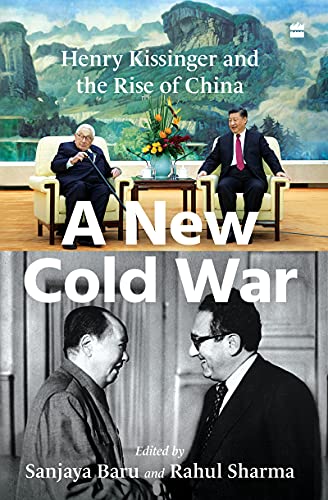
In July 1971, US National Security Advisor, Henry Kissinger, made a secret visit to China to meet top Chinese leaders. This inaugurated a new phase not just in US-China relations but in contemporary history. That visit and the subsequent US-China relationship, including the US decision to invest in China's economic rise and admit it into the WTO, combined to firm up the foundations of China's rise as a world power. For more than four decades, the leadership of the two countries had a secretive pact, which worked well to each other's benefit. The US helped power China's economic growth in the hope that Beijing would turn a new political leaf and adopt Western practices (e.g. democracy). China grew economically and militarily, used its financial prowess to spread its influence across continents, as four generations of Chinese leaders built their nation at the expense of the US. Half a century after Kissinger's historic visit, the US and China are today engaged in a trade war bordering on a new Cold War. Washington is not openly talking about 'de-coupling' from China, which has begun to challenge its global dominance, but it might very well be. China has already established itself as a dominant power across Eurasia. More worryingly, China is militarily and economically threatening its neighbours, including Japan, Korea, Vietnam, Taiwan, Australia, Philippines, Indonesia and India.
This collection of critical essays examines the impact, consequences and legacy of Kissinger's first, door-opening visit to China and how it has shaped world order.
Die Inhaltsangabe kann sich auf eine andere Ausgabe dieses Titels beziehen.
Über die Autorin bzw. den Autor
Sanjaya Baru is a political commentator, author, former newspaper editor and policy analyst. He is now a Distinguished Fellow at the Manohar Parrikar Institute for Defence Studies and Analyses, New Delhi.
Rahul Sharma is a former newspaper editor who heads the India business of APCO Worldwide, a Washington-based global communications advisory firm. He has a deep interest in international affairs and runs a foreign policy blog.
„Über diesen Titel“ kann sich auf eine andere Ausgabe dieses Titels beziehen.
Suchergebnisse für A New Cold War: Henry Kissinger and the Rise of China

Beispielbild für diese ISBN
A New Cold War: Henry Kissinger and the Rise of China
Anbieter: WorldofBooks, Goring-By-Sea, WS, Vereinigtes Königreich
Verkäuferbewertung 5 von 5 Sternen

Paperback. Zustand: Very Good. The book has been read, but is in excellent condition. Pages are intact and not marred by notes or highlighting. The spine remains undamaged. Bestandsnummer des Verkäufers GOR012192010
Gebraucht kaufen
EUR 3,81
EUR 6,69 Versand
Versand von Vereinigtes Königreich nach USA
Versand von Vereinigtes Königreich nach USA
Anzahl: 1 verfügbar
Foto des Verkäufers
A New Cold War: Henry Kissinger and the Rise of China
Verlag:
HarperCollins Publishers India, 2021
ISBN 10: 935422718X
ISBN 13: 9789354227189
Gebraucht
Hardcover
Anbieter: WeBuyBooks, Rossendale, LANCS, Vereinigtes Königreich
Verkäuferbewertung 5 von 5 Sternen
hardcover. Zustand: Very Good. Most items will be dispatched the same or the next working day. A copy that has been read, but is in excellent condition. Pages are intact and not marred by notes or highlighting. The spine remains undamaged. Bestandsnummer des Verkäufers rev5915478889
Gebraucht kaufen
EUR 4,26
EUR 7,92 Versand
Versand von Vereinigtes Königreich nach USA
Versand von Vereinigtes Königreich nach USA
Anzahl: 1 verfügbar
Beispielbild für diese ISBN
A New Cold War
Anbieter: Majestic Books, Hounslow, Vereinigtes Königreich
Verkäuferbewertung 4 von 5 Sternen

Zustand: New. pp. 320. Bestandsnummer des Verkäufers 379135711
Neu kaufen
EUR 14,83
EUR 7,76 Versand
Versand von Vereinigtes Königreich nach USA
Versand von Vereinigtes Königreich nach USA
Anzahl: 10 verfügbar
Beispielbild für diese ISBN
New Cold War : Henry Kissinger and the Rise of China
Anbieter: GreatBookPrices, Columbia, MD, USA
Verkäuferbewertung 5 von 5 Sternen
Zustand: New. Bestandsnummer des Verkäufers 43770264-n
Neu kaufen
EUR 20,40
EUR 2,36 Versand
Versand innerhalb von USA
Versand innerhalb von USA
Anzahl: 2 verfügbar
Beispielbild für diese ISBN
A New Cold War: Henry Kissinger and the Rise of China
Verlag:
HarperCollins Publishers India, 2021
ISBN 10: 935422718X
ISBN 13: 9789354227189
Gebraucht
Hardcover
Anbieter: World of Books (was SecondSale), Montgomery, IL, USA
Verkäuferbewertung 5 von 5 Sternen
Hardback. Zustand: Good. In July 1971, US National Security Advisor, Henry Kissinger, made a secret visit to China to meet top Chinese leaders. This inaugurated a new phase not just in US-China relations but in contemporary history. That visit and the subsequent US-China relationship, including the US decision to invest in China's economic rise and admit it into the WTO, combined to firm up the foundations of China's rise as a world power. For more than four decades, the leadership of the two countries had a secretive pact, which worked well to each other's benefit. The US helped power China's economic growth in the hope that Beijing would turn a new political leaf and adopt Western practices (e.g. democracy). China grew economically and militarily, used its financial prowess to spread its influence across continents, as four generations of Chinese leaders built their nation at the expense of the US. Half a century after Kissinger's historic visit, the US and China are today engaged in a trade war bordering on a new Cold War. Washington is not openly talking about 'de-coupling' from China, which has begun to challenge its global dominance, but it might very well be. China has already established itself as a dominant power across Eurasia. More worryingly, China is militarily and economically threatening its neighbours, including Japan, Korea, Vietnam, Taiwan, Australia, Philippines, Indonesia and India. This collection of critical essays examines the impact, consequences and legacy of Kissinger's first, door-opening visit to China and how it has shaped world order. Bestandsnummer des Verkäufers 00103960518
Gebraucht kaufen
EUR 22,82
Versand gratis
Versand innerhalb von USA
Versand innerhalb von USA
Anzahl: 1 verfügbar
Beispielbild für diese ISBN
A New Cold War: Henry Kissinger and the Rise of China
Anbieter: Vedams eBooks (P) Ltd, New Delhi, Indien
Verkäuferbewertung 4 von 5 Sternen
Hardcover. Zustand: New. In July 1971, US National Security Advisor, Henry Kissinger, made a secret visit to China to meet top Chinese leaders. This inaugurated a new phase not just in US-China relations but in contemporary history. That visit and the subsequent US-China relationship, including the US decision to invest in China's economic rise and admit it into the WTO, combined to firm up the foundations of China's rise as a world power. For more than four decades, the leadership of the two countries had a secretive pact, which worked well to each other's benefit. The US helped power China's economic growth in the hope that Beijing would turn a new political leaf and adopt Western practices (e.g. democracy). China grew economically and militarily, used its financial prowess to spread its influence across continents, as four generations of Chinese leaders built their nation at the expense of the US. Half a century after Kissinger's historic visit, the US and China are today engaged in a trade war bordering on a new Cold War. Washington is not openly talking about 'de-coupling' from China, which has begun to challenge its global dominance, but it might very well be. China has already established itself as a dominant power across Eurasia. More worryingly, China is militarily and economically threatening its neighbours, including Japan, Korea, Vietnam, Taiwan, Australia, Philippines, Indonesia and India. This collection of critical essays examines the impact, consequences and legacy of Kissinger's first, door-opening visit to China and how it has shaped world order. Bestandsnummer des Verkäufers 141287
Neu kaufen
EUR 5,53
EUR 17,50 Versand
Versand von Indien nach USA
Versand von Indien nach USA
Anzahl: 5 verfügbar
Beispielbild für diese ISBN
A New Cold War
Anbieter: Books Puddle, Woodside, NY, USA
Verkäuferbewertung 4 von 5 Sternen
Zustand: New. pp. 320. Bestandsnummer des Verkäufers 26384735488
Neu kaufen
EUR 20,48
EUR 3,57 Versand
Versand innerhalb von USA
Versand innerhalb von USA
Anzahl: 10 verfügbar
Beispielbild für diese ISBN
A New Cold War: Henry Kissinger and the Rise of China
Verlag:
HarperCollins India 2022-02-03, 2022
ISBN 10: 935422718X
ISBN 13: 9789354227189
Neu
Hardcover
Anbieter: Chiron Media, Wallingford, Vereinigtes Königreich
Verkäuferbewertung 5 von 5 Sternen
Hardcover. Zustand: New. Brand new book, sourced directly from publisher. Dispatch time is 24-48 hours from our warehouse. Book will be sent in robust, secure packaging to ensure it reaches you securely. Bestandsnummer des Verkäufers 6666-GRD-9789354227189
Neu kaufen
EUR 18,18
EUR 5,96 Versand
Versand von Vereinigtes Königreich nach USA
Versand von Vereinigtes Königreich nach USA
Anzahl: 1 verfügbar
Beispielbild für diese ISBN
A New Cold War: Henry Kissinger and the Rise of China
Verlag:
HarperCollins Publishers India, 2021
ISBN 10: 935422718X
ISBN 13: 9789354227189
Gebraucht
Hardcover
Anbieter: World of Books Inc, Montgomery, IL, USA
Verkäuferbewertung 4 von 5 Sternen
Hardback. Zustand: Good. In July 1971, US National Security Advisor, Henry Kissinger, made a secret visit to China to meet top Chinese leaders. This inaugurated a new phase not just in US-China relations but in contemporary history. That visit and the subsequent US-China relationship, including the US decision to invest in China's economic rise and admit it into the WTO, combined to firm up the foundations of China's rise as a world power. For more than four decades, the leadership of the two countries had a secretive pact, which worked well to each other's benefit. The US helped power China's economic growth in the hope that Beijing would turn a new political leaf and adopt Western practices (e.g. democracy). China grew economically and militarily, used its financial prowess to spread its influence across continents, as four generations of Chinese leaders built their nation at the expense of the US. Half a century after Kissinger's historic visit, the US and China are today engaged in a trade war bordering on a new Cold War. Washington is not openly talking about 'de-coupling' from China, which has begun to challenge its global dominance, but it might very well be. China has already established itself as a dominant power across Eurasia. More worryingly, China is militarily and economically threatening its neighbours, including Japan, Korea, Vietnam, Taiwan, Australia, Philippines, Indonesia and India. This collection of critical essays examines the impact, consequences and legacy of Kissinger's first, door-opening visit to China and how it has shaped world order. Bestandsnummer des Verkäufers CIN935422718XG
Gebraucht kaufen
EUR 24,67
Versand gratis
Versand innerhalb von USA
Versand innerhalb von USA
Anzahl: 1 verfügbar
Beispielbild für diese ISBN
A New Cold War
Anbieter: Biblios, Frankfurt am main, HESSE, Deutschland
Verkäuferbewertung 4 von 5 Sternen
Zustand: New. pp. 320. Bestandsnummer des Verkäufers 18384735498
Neu kaufen
EUR 15,01
EUR 9,95 Versand
Versand von Deutschland nach USA
Versand von Deutschland nach USA
Anzahl: 10 verfügbar