
Verwandte Artikel zu Khazan Ecosystems of Goa: Building on Indigenous Solutions...
Khazan Ecosystems of Goa: Building on Indigenous Solutions to Cope with Global Environmental Change (Advances in Asian Human-Environmental Research) - Hardcover
Buch 10 von 30: Advances in Asian Human-Environmental Research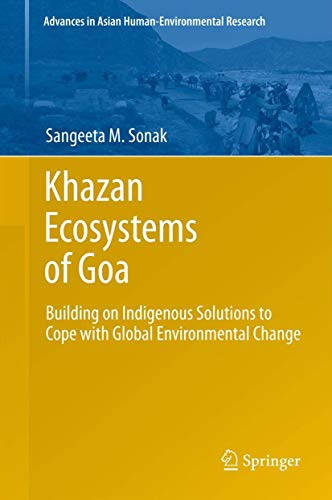
Inhaltsangabe
This book elaborates on the Khazan ecosystems of Goa, India. Khazans are human-managed ecosystems, which are reclaimed from coastal wetlands, salt marshes and mangrove areas, where tidal influence is regulated through a highly structured system of dykes, canals, furrows, and sluice gates using resources that are amply available locally. Khazan ecosystems are marvels of tribal engineering. They are a simple architectural design, which operate at a very low running cost using tidal, hydro, and solar energy. The design contributes to a highly complex but eco-friendly ecosystem integrating agriculture, aquaculture and salt panning. . Khazan ecosystems have been functional for the last 3500 years. The history of Khazans is very ancient and can be traced to the transition from food gathering to food growing, which has been regarded as the biggest step in the history of human civilization. Khazan ecosystems thus have a high historical and world heritage value. They are also repositories of global biodiversity, with unique flora suitable to their unique and highly variable environment. They are endemic and heritage ecosystems of Goa and ultimately reservoirs of history and heritage.
Using the example of the Khazan lands, the book analyzes and comments on traditional ecological knowledge and indigenous technology. It presents the evolution of Khazan management institutions over a period of more than three thousand years, as well as factors that have contributed to its decline in recent years. It develops a conceptual framework for ecosystem performance and suggests strategies for conservation of Khazans as well as strategies to build on these indigenous adaptation mechanisms to cope with the global environmental change.
Die Inhaltsangabe kann sich auf eine andere Ausgabe dieses Titels beziehen.
Über die Autorin bzw. den Autor
Sangeeta Sonak is the Director of the Centre for Environment and Natural Resource Management, Srujan in Panaji, India and a marine biologist with more than twenty years of research experience. Her major focus is on natural resource management aspects, particularly coastal and marine research management. She has co-ordinated and guided several research projects funded by national and international funding agencies, and her areas of interest include human environment interactions, environment management institutions, policy analysis and community based resource management. She has published several articles in international journals, edited two books and a journal special issue, and has been awarded prestigious international fellowships such as a Fulbright Scholarship under Fulbright-Nehru Environmental leadership program (FNELP) at Virginia Tech Institute, USA; a JSPS Fellowship for Senior Scientists by the Japanese Society for the Promotion of Science (JSPS), and an Erasmus Mundus Fellowship for Visiting Scientists to teach and conduct research at three European universities by the European Commission.
Von der hinteren Coverseite
This book elaborates on the Khazan ecosystems of Goa, India. Khazans are human-managed ecosystems, which are reclaimed from coastal wetlands, salt marshes and mangrove areas, where tidal influence is regulated through a highly structured system of dykes, canals, furrows, and sluice gates using resources that are amply available locally. Khazan ecosystems are marvels of tribal engineering. They are a simple architectural design, which operate at a very low running cost using tidal, hydro, and solar energy. The design contributes to a highly complex but eco-friendly ecosystem integrating agriculture, aquaculture and salt panning. . Khazan ecosystems have been functional for the last 3500 years. The history of Khazans is very ancient and can be traced to the transition from food gathering to food growing, which has been regarded as the biggest step in the history of human civilization. Khazan ecosystems thus have a high historical and world heritage value. They are also repositories of global biodiversity, with unique flora suitable to their unique and highly variable environment. They are endemic and heritage ecosystems of Goa and ultimately reservoirs of history and heritage.
Using the example of the Khazan lands, the book analyzes and comments on traditional ecological knowledge and indigenous technology. It presents the evolution of Khazan management institutions over a period of more than three thousand years, as well as factors that have contributed to its decline in recent years. It develops a conceptual framework for ecosystem performance and suggests strategies for conservation of Khazans as well as strategies to build on these indigenous adaptation mechanisms to cope with the global environmental change.
„Über diesen Titel“ kann sich auf eine andere Ausgabe dieses Titels beziehen.
Suchergebnisse für Khazan Ecosystems of Goa: Building on Indigenous Solutions...

Beispielbild für diese ISBN
Khazan Ecosystems of Goa. Building on Indigenous Solutions to Cope with Global Environmental Change.
Anbieter: Universitätsbuchhandlung Herta Hold GmbH, Berlin, Deutschland
Verkäuferbewertung 3 von 5 Sternen

XII, 137 p. Hardcover. Versand aus Deutschland / We dispatch from Germany via Air Mail. Einband bestoßen, daher Mängelexemplar gestempelt, sonst sehr guter Zustand. Imperfect copy due to slightly bumped cover, apart from this in very good condition. Stamped. Stamped. Sprache: Englisch. Bestandsnummer des Verkäufers 1789CB
Gebraucht kaufen
EUR 18,00
EUR 30,00 Versand
Versand von Deutschland nach USA
Versand von Deutschland nach USA
Anzahl: 1 verfügbar
Beispielbild für diese ISBN
Khazan Ecosystems Of Goa: Building On Indigenous Solutions To Cope With Global Environmental Change (advances In Asian Human-environmental Research)
Anbieter: Basi6 International, Irving, TX, USA
Verkäuferbewertung 5 von 5 Sternen

Zustand: Brand New. New. US edition. Expediting shipping for all USA and Europe orders excluding PO Box. Excellent Customer Service. Bestandsnummer des Verkäufers ABEOCT25-256332
Beispielbild für diese ISBN
Khazan Ecosystems Of Goa: Building On Indigenous Solutions To Cope With Global Environmental Change (advances In Asian Human-environmental Research)
Anbieter: Romtrade Corp., STERLING HEIGHTS, MI, USA
Verkäuferbewertung 5 von 5 Sternen
Zustand: New. This is a Brand-new US Edition. This Item may be shipped from US or any other country as we have multiple locations worldwide. Bestandsnummer des Verkäufers ABBB-157400
Beispielbild für diese ISBN
Khazan Ecosystems of Goa : Building on Indigenous Solutions to Cope with Global Environmental Change
Anbieter: Buchpark, Trebbin, Deutschland
Verkäuferbewertung 5 von 5 Sternen
Zustand: Sehr gut. Zustand: Sehr gut | Sprache: Englisch | Produktart: Bücher | This book elaborates on the Khazan ecosystems of Goa, India. Khazans are human-managed ecosystems, which are reclaimed from coastal wetlands, salt marshes and mangrove areas, where tidal influence is regulated through a highly structured system of dykes, canals, furrows, and sluice gates using resources that are amply available locally. Khazan ecosystems are marvels of tribal engineering. They are a simple architectural design, which operate at a very low running cost using tidal, hydro, and solar energy. The design contributes to a highly complex but eco-friendly ecosystem integrating agriculture, aquaculture and salt panning. . Khazan ecosystems have been functional for the last 3500 years. The history of Khazans is very ancient and can be traced to the transition from food gathering to food growing, which has been regarded as the biggest step in the history of human civilization. Khazan ecosystems thus have a high historical and world heritage value. They are also repositories of global biodiversity, with unique flora suitable to their unique and highly variable environment. They are endemic and heritage ecosystems of Goa and ultimately reservoirs of history and heritage.Using the example of the Khazan lands, the book analyzes and comments on traditional ecological knowledge and indigenous technology. It presents the evolution of Khazan management institutions over a period of more than three thousand years, as well as factors that have contributed to its decline in recent years. It develops a conceptual framework for ecosystem performance and suggests strategies for conservation of Khazans as well as strategies to build on these indigenous adaptation mechanisms to cope with the global environmental change. Bestandsnummer des Verkäufers 23884886/2
Gebraucht kaufen
EUR 16,20
EUR 105,00 Versand
Versand von Deutschland nach USA
Versand von Deutschland nach USA
Anzahl: 1 verfügbar
Beispielbild für diese ISBN
Khazan Ecosystems of Goa : Building on Indigenous Solutions to Cope with Global Environmental Change
Anbieter: Buchpark, Trebbin, Deutschland
Verkäuferbewertung 5 von 5 Sternen
Zustand: Sehr gut. Zustand: Sehr gut | Sprache: Englisch | Produktart: Bücher | This book elaborates on the Khazan ecosystems of Goa, India. Khazans are human-managed ecosystems, which are reclaimed from coastal wetlands, salt marshes and mangrove areas, where tidal influence is regulated through a highly structured system of dykes, canals, furrows, and sluice gates using resources that are amply available locally. Khazan ecosystems are marvels of tribal engineering. They are a simple architectural design, which operate at a very low running cost using tidal, hydro, and solar energy. The design contributes to a highly complex but eco-friendly ecosystem integrating agriculture, aquaculture and salt panning. . Khazan ecosystems have been functional for the last 3500 years. The history of Khazans is very ancient and can be traced to the transition from food gathering to food growing, which has been regarded as the biggest step in the history of human civilization. Khazan ecosystems thus have a high historical and world heritage value. They are also repositories of global biodiversity, with unique flora suitable to their unique and highly variable environment. They are endemic and heritage ecosystems of Goa and ultimately reservoirs of history and heritage.Using the example of the Khazan lands, the book analyzes and comments on traditional ecological knowledge and indigenous technology. It presents the evolution of Khazan management institutions over a period of more than three thousand years, as well as factors that have contributed to its decline in recent years. It develops a conceptual framework for ecosystem performance and suggests strategies for conservation of Khazans as well as strategies to build on these indigenous adaptation mechanisms to cope with the global environmental change. Bestandsnummer des Verkäufers 23884886/12
Gebraucht kaufen
EUR 16,20
EUR 105,00 Versand
Versand von Deutschland nach USA
Versand von Deutschland nach USA
Anzahl: 1 verfügbar
Beispielbild für diese ISBN
Khazan Ecosystems of Goa: Building on Indigenous Solutions to Cope with Global Environmental Change (Advances in Asian Human-Environmental Research)
Anbieter: Ria Christie Collections, Uxbridge, Vereinigtes Königreich
Verkäuferbewertung 5 von 5 Sternen
Zustand: New. In English. Bestandsnummer des Verkäufers ria9789400772014_new
Neu kaufen
EUR 116,37
EUR 13,17 Versand
Versand von Vereinigtes Königreich nach USA
Versand von Vereinigtes Königreich nach USA
Anzahl: Mehr als 20 verfügbar
Foto des Verkäufers
Khazan Ecosystems of Goa
Verlag:
Springer Netherlands Okt 2013, 2013
ISBN 10: 9400772017
ISBN 13: 9789400772014
Neu
Hardcover
Anbieter: BuchWeltWeit Ludwig Meier e.K., Bergisch Gladbach, Deutschland
Verkäuferbewertung 5 von 5 Sternen
Buch. Zustand: Neu. This item is printed on demand - it takes 3-4 days longer - Neuware -This book elaborates on the Khazan ecosystems of Goa, India. Khazans are human-managed ecosystems, which are reclaimed from coastal wetlands, salt marshes and mangrove areas, where tidal influence is regulated through a highly structured system of dykes, canals, furrows, and sluice gates using resources that are amply available locally. Khazan ecosystems are marvels of tribal engineering. They are a simple architectural design, which operate at a very low running cost using tidal, hydro, and solar energy. The design contributes to a highly complex but eco-friendly ecosystem integrating agriculture, aquaculture and salt panning. . Khazan ecosystems have been functional for the last 3500 years. The history of Khazans is very ancient and can be traced to the transition from food gathering to food growing, which has been regarded as the biggest step in the history of human civilization. Khazan ecosystems thus have a high historical and world heritage value. They are also repositories of global biodiversity, with unique flora suitable to their unique and highly variable environment. They are endemic and heritage ecosystems of Goa and ultimately reservoirs of history and heritage.Using the example of the Khazan lands, the book analyzes and comments on traditional ecological knowledge and indigenous technology. It presents the evolution of Khazan management institutions over a period of more than three thousand years, as well as factors that have contributed to its decline in recent years. It develops a conceptual framework for ecosystem performance and suggests strategies for conservation of Khazans as well as strategies to build on these indigenous adaptation mechanisms to cope with the global environmental change. 152 pp. Englisch. Bestandsnummer des Verkäufers 9789400772014
Neu kaufen
EUR 106,99
EUR 23,00 Versand
Versand von Deutschland nach USA
Versand von Deutschland nach USA
Anzahl: 2 verfügbar
Foto des Verkäufers
Khazan Ecosystems of Goa
Print-on-DemandAnbieter: moluna, Greven, Deutschland
Verkäuferbewertung 5 von 5 Sternen
Gebunden. Zustand: New. Dieser Artikel ist ein Print on Demand Artikel und wird nach Ihrer Bestellung fuer Sie gedruckt. The book is a review of the unique Khazan ecosystem and traditional ecological knowledge involved therein The book describes the indigenous engineering structures, which date back to the pre-Christian era and are still operational The book p. Bestandsnummer des Verkäufers 5827915
Neu kaufen
EUR 92,27
EUR 48,99 Versand
Versand von Deutschland nach USA
Versand von Deutschland nach USA
Anzahl: Mehr als 20 verfügbar
Beispielbild für diese ISBN
Khazan Ecosystems of Goa: Building on Indigenous Solutions to Cope With Global Environmental Change
Anbieter: Revaluation Books, Exeter, Vereinigtes Königreich
Verkäuferbewertung 5 von 5 Sternen
Hardcover. Zustand: Brand New. 2014 edition. 130 pages. 9.25x6.25x0.50 inches. In Stock. Bestandsnummer des Verkäufers x-9400772017
Neu kaufen
EUR 154,22
EUR 11,66 Versand
Versand von Vereinigtes Königreich nach USA
Versand von Vereinigtes Königreich nach USA
Anzahl: 2 verfügbar
Foto des Verkäufers
Khazan Ecosystems of Goa
Print-on-DemandAnbieter: buchversandmimpf2000, Emtmannsberg, BAYE, Deutschland
Verkäuferbewertung 5 von 5 Sternen
Buch. Zustand: Neu. This item is printed on demand - Print on Demand Titel. Neuware -This book elaborates on the Khazan ecosystems of Goa, India. Khazans are human-managed ecosystems, which are reclaimed from coastal wetlands, salt marshes and mangrove areas, where tidal influence is regulated through a highly structured system of dykes, canals, furrows, and sluice gates using resources that are amply available locally. Khazan ecosystems are marvels of tribal engineering. They are a simple architectural design, which operate at a very low running cost using tidal, hydro, and solar energy. The design contributes to a highly complex but eco-friendly ecosystem integrating agriculture, aquaculture and salt panning. . Khazan ecosystems have been functional for the last 3500 years. The history of Khazans is very ancient and can be traced to the transition from food gathering to food growing, which has been regarded as the biggest step in the history of human civilization. Khazan ecosystems thus have a high historical and world heritage value. They are also repositories of global biodiversity, with unique flora suitable to their unique and highly variable environment. They are endemic and heritage ecosystems of Goa and ultimately reservoirs of history and heritage.Using the example of the Khazan lands, the book analyzes and comments on traditional ecological knowledge and indigenous technology. It presents the evolution of Khazan management institutions over a period of more than three thousand years, as well as factors that have contributed to its decline in recent years. It develops a conceptual framework for ecosystem performance and suggests strategies for conservation of Khazans as well as strategies to build on these indigenous adaptation mechanisms to cope with the global environmental change.Springer-Verlag KG, Sachsenplatz 4-6, 1201 Wien 152 pp. Englisch. Bestandsnummer des Verkäufers 9789400772014
Neu kaufen
EUR 106,99
EUR 60,00 Versand
Versand von Deutschland nach USA
Versand von Deutschland nach USA
Anzahl: 1 verfügbar