Absolutely — here it is without the box.
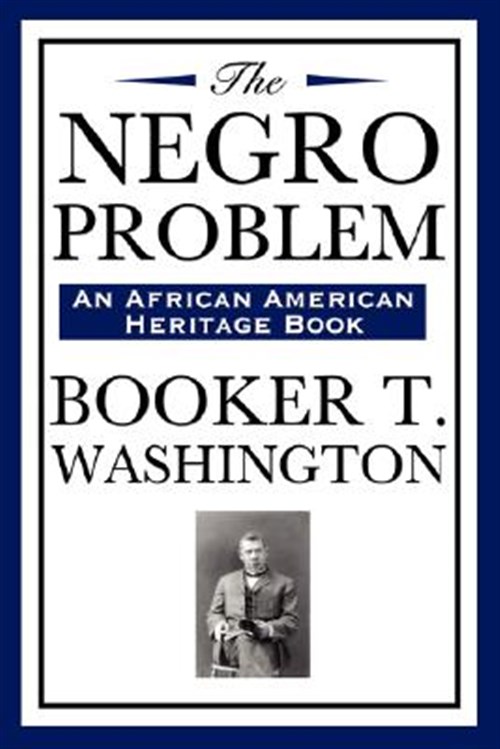
The Negro Problem brings together seven landmark essays by major African American writers and thinkers confronting race, citizenship, education, law, political rights, and Black life in America at the beginning of the twentieth century.
Edited by Booker T. Washington and first published in 1903, this historically important collection includes contributions by W. E. B. Du Bois, Charles W. Chesnutt, Wilford H. Smith, H. T. Kealing, Paul Laurence Dunbar, and T. Thomas Fortune. Written in the aftermath of Reconstruction and during the hardening of Jim Crow, the essays address some of the central questions facing African Americans in the United States: the struggle for education, the meaning of citizenship, the consequences of disenfranchisement, the force of constitutional law, the politics of racial uplift, and the place of Black Americans in national life.
The volume is especially valuable because it preserves, in one book, several distinct voices within African American intellectual history. Washington’s practical emphasis on advancement and public responsibility stands beside Du Bois’s celebrated essay “The Talented Tenth,” Chesnutt’s legal and political critique of disfranchisement, Dunbar’s portraits of representative Black achievement, and Fortune’s examination of the Negro’s place in American life. Together they form a crucial document of African American history, Black political thought, race relations, civil rights history, and early twentieth-century American social debate.
About the Author
Booker T. Washington was one of the most influential African American leaders of the late nineteenth and early twentieth centuries. Born into slavery in Virginia in 1856, Washington became an educator, author, public speaker, and institution builder, best known as the founding principal of Tuskegee Institute and as the author of Up from Slavery. His programme of industrial education, self-help, economic development, and racial uplift made him one of the most widely known Black public figures of his era, while also placing him at the centre of major debates over civil rights, political power, and the future of African American life.
This collection also features W. E. B. Du Bois, the pioneering scholar, sociologist, historian, and civil rights leader whose work helped define modern Black intellectual history; Charles W. Chesnutt, an important novelist and essayist who wrote powerfully about race and law; Paul Laurence Dunbar, one of the most celebrated African American poets and writers of his generation; Wilford H. Smith, H. T. Kealing, and T. Thomas Fortune, each of whom contributed to the wider discussion of Black citizenship, constitutional rights, education, achievement, and racial justice in America.
Booker T. Washington (1856-1915) was born into slavery in Virginia and became an educator, author, and founder of the Tuskegee Institute. Solomon Northup (c. 1807-after 1857) was a free Black musician and farmer from New York who was kidnapped in 1841 and sold into slavery, where he remained for twelve years before recovering his freedom.