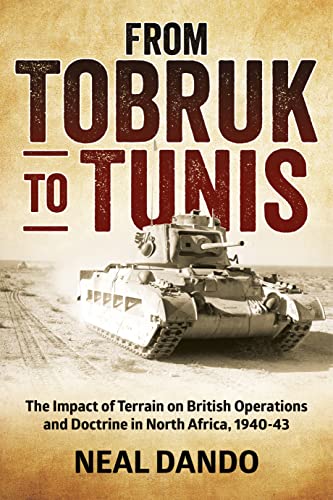
From Tobruk to Tunis: The Impact of Terrain on British Operations and Doctrine in North Africa 1940-1943
Neal Dando
ISBN 10: 1804512451 ISBN 13: 9781804512456
Verlag: Helion & Company, 2023
Neu
Paperback / softback
Verkäufer
THE SAINT BOOKSTORE, Southport, Vereinigtes Königreich
Verkäuferbewertung 5 von 5 Sternen

AbeBooks-Verkäufer seit 14. Juni 2006
Dieser Artikel ist nicht mehr verfügbar.
Beschreibung
Beschreibung:
New copy - Usually dispatched within 7-11 working days. Bestandsnummer des Verkäufers B9781804512456
Inhaltsangabe:
This book focuses on the extent to which the physical terrain features across Egypt, Libya and Tunisia affected British operations throughout the campaign in North Africa during the Second World War. One main theme of the work analyses the terrain from the operational and tactical perspective and argues that the landscape features heavily influenced British operations and should now be considered alongside other standard military factors. The work differs from previous studies in that it considers these additional factors for the entire campaign until the Axis surrender in May 1943. Until now it has been widely assumed that much of the Western Desert coastal plateau was a broadly level, open region in which mobile armored operations were paramount. However this work concentrates on the British operations to show they were driven by the need to capture and hold key features across each successive battlefield. At the operational level planning was led by the need to hold key ground across Libya and especially the province of Cyrenaica during the crucial middle period of the campaign. A secondary theme of the work argues that British forces began to improvise certain tactical doctrines, which altered the early practice of combined arms assaults into one of the Infantry and Armored formations fighting largely separated battles until the autumn of 1942. Other developments in doctrine which were affected by the terrain included the practice of unit dispersal to hold key ground and the use of temporary units such as Jock columns to harass and engage the enemy. The two themes are inter-linked and contribute fresh insights to the debate on British methods of warfare. The author has consulted key primary documents, reports, war diaries and published memoirs, from major UK archives and compared these with the campaign historiography to develop the main themes of the work. These include the National Archives, the Churchill Archives Centre, the Liddell-Hart Centre for Military History, the National Army Museum, John Rylands Centre, Imperial War Museum at London and Duxford and London and the Tank Museum Archives at Bovington. The sources include unit war diaries, after action reports, along with many of the key published and some unpublished memoirs. His text is supported by 24 pages of specially-commissioned color maps.
„Über diesen Titel“ kann sich auf eine andere Ausgabe dieses Titels beziehen.
Bibliografische Details
Titel: From Tobruk to Tunis: The Impact of Terrain ...
Verlag: Helion & Company
Erscheinungsdatum: 2023
Einband: Paperback / softback
Zustand: New
Beste Suchergebnisse bei AbeBooks

Beispielbild für diese ISBN
From Tobruk to Tunis: The Impact of Terrain on British Operations and Doctrine in North Africa 1940-1943 (Wolverhampton Military Studies)
Anbieter: WorldofBooks, Goring-By-Sea, WS, Vereinigtes Königreich
Verkäuferbewertung 5 von 5 Sternen
Paperback. Zustand: Very Good. The book has been read, but is in excellent condition. Pages are intact and not marred by notes or highlighting. The spine remains undamaged. Bestandsnummer des Verkäufers GOR013988680
Gebraucht kaufen
EUR 24,75
Versand:
EUR 6,41
Von Vereinigtes Königreich nach USA
Anzahl: 1 verfügbar
Foto des Verkäufers
From Tobruk to Tunis (Paperback)
Anbieter: Grand Eagle Retail, Bensenville, IL, USA
Verkäuferbewertung 5 von 5 Sternen
Paperback. Zustand: new. Paperback. This book focuses on the extent to which the physical terrain features across Egypt, Libya and Tunisia affected British operations throughout the campaign in North Africa during the Second World War. One main theme of the work analyses the terrain from the operational and tactical perspective and argues that the landscape features heavily influenced British operations and should now be considered alongside other standard military factors. The work differs from previous studies in that it considers these additional factors for the entire campaign until the Axis surrender in May 1943. Until now it has been widely assumed that much of the Western Desert coastal plateau was a broadly level, open region in which mobile armored operations were paramount. However this work concentrates on the British operations to show they were driven by the need to capture and hold key features across each successive battlefield. At the operational level planning was led by the need to hold key ground across Libya and especially the province of Cyrenaica during the crucial middle period of the campaign. A secondary theme of the work argues that British forces began to improvise certain tactical doctrines, which altered the early practice of combined arms assaults into one of the Infantry and Armored formations fighting largely separated battles until the autumn of 1942. Other developments in doctrine which were affected by the terrain included the practice of unit dispersal to hold key ground and the use of temporary units such as Jock columns to harass and engage the enemy. The two themes are inter-linked and contribute fresh insights to the debate on British methods of warfare. The author has consulted key primary documents, reports, war diaries and published memoirs, from major UK archives and compared these with the campaign historiography to develop the main themes of the work. These include the National Archives, the Churchill Archives Centre, the Liddell-Hart Centre for Military History, the National Army Museum, John Rylands Centre, Imperial War Museum at London and Duxford and London and the Tank Museum Archives at Bovington. The sources include unit war diaries, after action reports, along with many of the key published and some unpublished memoirs. His text is supported by 24 pages of specially-commissioned colour maps. 12 b/w photos, 24 colour maps This book focuses on the extent to which the physical terrain features across Egypt, Libya and Tunisia affected British operations throughout the campaign in North Africa during the Second World War. Shipping may be from multiple locations in the US or from the UK, depending on stock availability. Bestandsnummer des Verkäufers 9781804512456
Beispielbild für diese ISBN
From Tobruk to Tunis Format: Paperback
Anbieter: INDOO, Avenel, NJ, USA
Verkäuferbewertung 5 von 5 Sternen
Zustand: New. Brand New. Bestandsnummer des Verkäufers 9781804512456
Foto des Verkäufers
From Tobruk to Tunis : The Impact of Terrain on British Operations and Doctrine in North Africa 1940-1943
Anbieter: GreatBookPrices, Columbia, MD, USA
Verkäuferbewertung 5 von 5 Sternen
Zustand: As New. Unread book in perfect condition. Bestandsnummer des Verkäufers 45630269
Foto des Verkäufers
From Tobruk to Tunis (Paperback)
Anbieter: CitiRetail, Stevenage, Vereinigtes Königreich
Verkäuferbewertung 5 von 5 Sternen
Paperback. Zustand: new. Paperback. This book focuses on the extent to which the physical terrain features across Egypt, Libya and Tunisia affected British operations throughout the campaign in North Africa during the Second World War. One main theme of the work analyses the terrain from the operational and tactical perspective and argues that the landscape features heavily influenced British operations and should now be considered alongside other standard military factors. The work differs from previous studies in that it considers these additional factors for the entire campaign until the Axis surrender in May 1943. Until now it has been widely assumed that much of the Western Desert coastal plateau was a broadly level, open region in which mobile armored operations were paramount. However this work concentrates on the British operations to show they were driven by the need to capture and hold key features across each successive battlefield. At the operational level planning was led by the need to hold key ground across Libya and especially the province of Cyrenaica during the crucial middle period of the campaign. A secondary theme of the work argues that British forces began to improvise certain tactical doctrines, which altered the early practice of combined arms assaults into one of the Infantry and Armored formations fighting largely separated battles until the autumn of 1942. Other developments in doctrine which were affected by the terrain included the practice of unit dispersal to hold key ground and the use of temporary units such as Jock columns to harass and engage the enemy. The two themes are inter-linked and contribute fresh insights to the debate on British methods of warfare. The author has consulted key primary documents, reports, war diaries and published memoirs, from major UK archives and compared these with the campaign historiography to develop the main themes of the work. These include the National Archives, the Churchill Archives Centre, the Liddell-Hart Centre for Military History, the National Army Museum, John Rylands Centre, Imperial War Museum at London and Duxford and London and the Tank Museum Archives at Bovington. The sources include unit war diaries, after action reports, along with many of the key published and some unpublished memoirs. His text is supported by 24 pages of specially-commissioned colour maps. 12 b/w photos, 24 colour maps This book focuses on the extent to which the physical terrain features across Egypt, Libya and Tunisia affected British operations throughout the campaign in North Africa during the Second World War. Shipping may be from our UK warehouse or from our Australian or US warehouses, depending on stock availability. Bestandsnummer des Verkäufers 9781804512456
Neu kaufen
EUR 40,64
Versand:
EUR 42,34
Von Vereinigtes Königreich nach USA
Anzahl: 1 verfügbar
Foto des Verkäufers
From Tobruk to Tunis : The Impact of Terrain on British Operations and Doctrine in North Africa 1940-1943
Anbieter: GreatBookPrices, Columbia, MD, USA
Verkäuferbewertung 5 von 5 Sternen
Zustand: New. Bestandsnummer des Verkäufers 45630269-n
Foto des Verkäufers
From Tobruk to Tunis
Anbieter: Rarewaves USA, OSWEGO, IL, USA
Verkäuferbewertung 5 von 5 Sternen
Paperback. Zustand: New. Reprint. Bestandsnummer des Verkäufers LU-9781804512456
Foto des Verkäufers
From Tobruk to Tunis: The Impact of Terrain on British Operations and Doctrine in North Africa 1940-1943
Anbieter: moluna, Greven, Deutschland
Verkäuferbewertung 4 von 5 Sternen

Zustand: New. KlappentextThis book focuses on the extent to which the physical terrain features across Egypt, Libya and Tunisia affected British operations throughout the campaign in North Africa during the Second World War. Bestandsnummer des Verkäufers 700909999
Neu kaufen
EUR 46,05
Versand:
EUR 48,99
Von Deutschland nach USA
Anzahl: Mehr als 20 verfügbar
Foto des Verkäufers
From Tobruk to Tunis
Anbieter: Rarewaves USA United, OSWEGO, IL, USA
Verkäuferbewertung 5 von 5 Sternen
Paperback. Zustand: New. Reprint. Bestandsnummer des Verkäufers LU-9781804512456
Foto des Verkäufers
From Tobruk to Tunis
Anbieter: Rarewaves.com UK, London, Vereinigtes Königreich
Verkäuferbewertung 5 von 5 Sternen
Paperback. Zustand: New. Reprint. Bestandsnummer des Verkäufers LU-9781804512456
Neu kaufen
EUR 47,28
Versand:
EUR 74,37
Von Vereinigtes Königreich nach USA
Anzahl: 7 verfügbar