

Gesamtpreis (1 Artikel Artikel):
Versandziel:

covelli timon (18 Ergebnisse)
Direkt zu den wichtigsten Suchergebnissen
Suchfilter
Produktart
- Alle Product Types
- Bücher (18)
- Magazine & Zeitschriften (Keine weiteren Ergebnisse entsprechen dieser Verfeinerung)
- Comics (Keine weiteren Ergebnisse entsprechen dieser Verfeinerung)
- Noten (Keine weiteren Ergebnisse entsprechen dieser Verfeinerung)
- Kunst, Grafik & Poster (Keine weiteren Ergebnisse entsprechen dieser Verfeinerung)
- Fotografien (Keine weiteren Ergebnisse entsprechen dieser Verfeinerung)
- Karten (Keine weiteren Ergebnisse entsprechen dieser Verfeinerung)
- Manuskripte & Papierantiquitäten (Keine weiteren Ergebnisse entsprechen dieser Verfeinerung)
Zustand Mehr dazu
- Neu (14)
- Wie Neu, Sehr Gut oder Gut Bis Sehr Gut (3)
- Gut oder Befriedigend (1)
- Ausreichend oder Schlecht (Keine weiteren Ergebnisse entsprechen dieser Verfeinerung)
- Wie beschrieben (Keine weiteren Ergebnisse entsprechen dieser Verfeinerung)
Einband
- alle Einbände
- Hardcover (Keine weiteren Ergebnisse entsprechen dieser Verfeinerung)
- Softcover (18)
Weitere Eigenschaften
- Erstausgabe (Keine weiteren Ergebnisse entsprechen dieser Verfeinerung)
- Signiert (Keine weiteren Ergebnisse entsprechen dieser Verfeinerung)
- Schutzumschlag (Keine weiteren Ergebnisse entsprechen dieser Verfeinerung)
- Angebotsfoto (7)
- Keine Print-on-Demand Angebote (18)
Sprache (1)
Gratisversand
Land des Verkäufers
Verkäuferbewertung
-
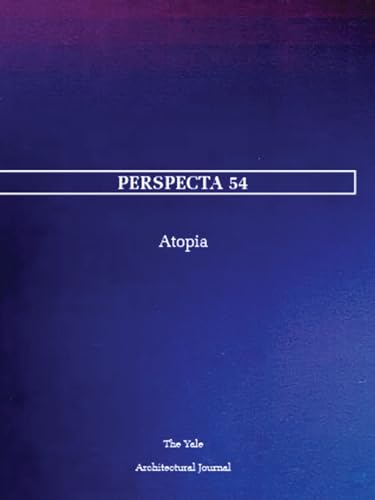
Perspecta 54: Atopia
Anbieter: Bellwetherbooks, McKeesport, PA, USA
Verkäuferbewertung 5 von 5 Sternen

paperback. Zustand: Fine. LIKE NEW/UNREAD!!! Text is Clean and Unmarked! Has a small black line or red dot on bottom/exterior edge of pages.
-

Perspecta 54: Atopia
Anbieter: Big River Books, Powder Springs, GA, USA
Verkäuferbewertung 5 von 5 Sternen
Zustand: good. This book is in good condition. The cover has minor creases or bends. The binding is tight and pages are intact. Some pages may have writing or highlighting.
-

Zustand: New.
-
Perspecta 54 (Paperback)
Anbieter: Grand Eagle Retail, Bensenville, IL, USA
Verkäuferbewertung 5 von 5 Sternen
Paperback. Zustand: new. Paperback. Atopia as both the site of architecture's critical confrontation with hegemonic systems and the theoretical space in which its own processes can be challenged.Atopia as both the site of architecture's critical confrontation with hegemonic systems and the theoretical space in which its own processes can be challenged.A literal no-place, atopia represents the spatial end-product of a society seemingly flattened by supra-territorial flows of information and material. It expresses both a physical artifact and condition of mass culture, and like the global systems of production and consumption from which it is conceived, atopia is both nowhere and everywhere at once. For the contributors of Perspecta 54, the ephemeral conditions of atopia are also an invitation to an equally unconstrained critical practice. Blurred boundaries-geopolitical, virtual, technical, disciplinary-offer sites for transgressive speculation and critique from beyond the limits of traditional design agency.What results is a form of design practice that ambiguously straddles impossibility and hyperreality. Atopia rejects both the escapist fantasy of utopia and the nihilism of dystopia, favoring instead a conceptual middle ground from which real-world conditions can be productively engaged and challenged. Architecture's traditional objectives of critical inquiry-particularly the location of modes of complicity, agency, and resistance within larger structures-are mediated and reframed through nontraditional strategies of speculative design and fiction. For a profession that is routinely asked to navigate extreme complexity with limited tools, this approach suggests an expanded operational domain and possibilities for reinvigorated creative thought. From urban crises and climate emergencies to border disputes and geopolitics, Perspecta 54 examines atopia as both the site of architecture's critical confrontation with hegemonic systems and the theoretical space in which its own processes can be challenged. Shipping may be from multiple locations in the US or from the UK, depending on stock availability.
-

Paperback. Zustand: New. Atopia as both the site of architecture's critical confrontation with hegemonic systems and the theoretical space in which its own processes can be challenged. A literal no-place, atopia represents the spatial end-product of a society seemingly flattened by supra-territorial flows of information and material. It expresses both a physical artifact and condition of mass culture, and like the global systems of production and consumption from which it is conceived, atopia is both nowhere and everywhere at once. For the contributors of Perspecta 54, the ephemeral conditions of atopia are also an invitation to an equally unconstrained critical practice. Blurred boundaries-geopolitical, virtual, technical, disciplinary-offer sites for transgressive speculation and critique from beyond the limits of traditional design agency. What results is a form of design practice that ambiguously straddles impossibility and hyperreality. Atopia rejects both the escapist fantasy of utopia and the nihilism of dystopia, favoring instead a conceptual middle ground from which real-world conditions can be productively engaged and challenged. Architecture's traditional objectives of critical inquiry-particularly the location of modes of complicity, agency, and resistance within larger structures-are mediated and reframed through nontraditional strategies of speculative design and fiction. For a profession that is routinely asked to navigate extreme complexity with limited tools, this approach suggests an expanded operational domain and possibilities for reinvigorated creative thought. From urban crises and climate emergencies to border disputes and geopolitics, Perspecta 54 examines atopia as both the site of architecture's critical confrontation with hegemonic systems and the theoretical space in which its own processes can be challenged.
-
Perspecta 54: Atopia
Anbieter: Massive Bookshop, Greenfield, MA, USA
Verkäuferbewertung 4 von 5 Sternen

Paperback. Zustand: New.
-

Zustand: As New. Unread book in perfect condition.
-
Zustand: As New. Unread copy in mint condition.
-
Zustand: New. Brand New.
-
Zustand: New.
-
Perspecta 54
Anbieter: Kennys Bookshop and Art Galleries Ltd., Galway, GY, Irland
Verkäuferbewertung 5 von 5 Sternen
Zustand: New. 2022. Paperback. . . . . .
-
Zustand: New. 2022. Paperback. . . . . . Books ship from the US and Ireland.
-
Atopia
Anbieter: Revaluation Books, Exeter, Vereinigtes Königreich
Verkäuferbewertung 5 von 5 Sternen
EUR 34,91
EUR 17,17 Versand
Versand von Vereinigtes Königreich nach USAAnzahl: 1 verfügbar
In den WarenkorbPaperback. Zustand: Brand New. 353 pages. 12.25x9.25x0.50 inches. In Stock.
-
Perspecta 54: Atopia
Anbieter: Biblios, Frankfurt am main, HESSE, Deutschland
Verkäuferbewertung 4 von 5 Sternen
Zustand: New.
-

EUR 37,37
EUR 42,43 Versand
Versand innerhalb von USAAnzahl: Mehr als 20 verfügbar
In den WarenkorbPaperback. Zustand: New. Atopia as both the site of architecture's critical confrontation with hegemonic systems and the theoretical space in which its own processes can be challenged. A literal no-place, atopia represents the spatial end-product of a society seemingly flattened by supra-territorial flows of information and material. It expresses both a physical artifact and condition of mass culture, and like the global systems of production and consumption from which it is conceived, atopia is both nowhere and everywhere at once. For the contributors of Perspecta 54, the ephemeral conditions of atopia are also an invitation to an equally unconstrained critical practice. Blurred boundaries-geopolitical, virtual, technical, disciplinary-offer sites for transgressive speculation and critique from beyond the limits of traditional design agency. What results is a form of design practice that ambiguously straddles impossibility and hyperreality. Atopia rejects both the escapist fantasy of utopia and the nihilism of dystopia, favoring instead a conceptual middle ground from which real-world conditions can be productively engaged and challenged. Architecture's traditional objectives of critical inquiry-particularly the location of modes of complicity, agency, and resistance within larger structures-are mediated and reframed through nontraditional strategies of speculative design and fiction. For a profession that is routinely asked to navigate extreme complexity with limited tools, this approach suggests an expanded operational domain and possibilities for reinvigorated creative thought. From urban crises and climate emergencies to border disputes and geopolitics, Perspecta 54 examines atopia as both the site of architecture's critical confrontation with hegemonic systems and the theoretical space in which its own processes can be challenged.
-
Perspecta 54 (Paperback)
Anbieter: AussieBookSeller, Truganina, VIC, Australien
Verkäuferbewertung 5 von 5 Sternen
Paperback. Zustand: new. Paperback. Atopia as both the site of architecture's critical confrontation with hegemonic systems and the theoretical space in which its own processes can be challenged.Atopia as both the site of architecture's critical confrontation with hegemonic systems and the theoretical space in which its own processes can be challenged.A literal no-place, atopia represents the spatial end-product of a society seemingly flattened by supra-territorial flows of information and material. It expresses both a physical artifact and condition of mass culture, and like the global systems of production and consumption from which it is conceived, atopia is both nowhere and everywhere at once. For the contributors of Perspecta 54, the ephemeral conditions of atopia are also an invitation to an equally unconstrained critical practice. Blurred boundaries-geopolitical, virtual, technical, disciplinary-offer sites for transgressive speculation and critique from beyond the limits of traditional design agency.What results is a form of design practice that ambiguously straddles impossibility and hyperreality. Atopia rejects both the escapist fantasy of utopia and the nihilism of dystopia, favoring instead a conceptual middle ground from which real-world conditions can be productively engaged and challenged. Architecture's traditional objectives of critical inquiry-particularly the location of modes of complicity, agency, and resistance within larger structures-are mediated and reframed through nontraditional strategies of speculative design and fiction. For a profession that is routinely asked to navigate extreme complexity with limited tools, this approach suggests an expanded operational domain and possibilities for reinvigorated creative thought. From urban crises and climate emergencies to border disputes and geopolitics, Perspecta 54 examines atopia as both the site of architecture's critical confrontation with hegemonic systems and the theoretical space in which its own processes can be challenged. Shipping may be from our Sydney, NSW warehouse or from our UK or US warehouse, depending on stock availability.
-

EUR 34,03
EUR 48,99 Versand
Versand von Deutschland nach USAAnzahl: Mehr als 20 verfügbar
In den WarenkorbZustand: New. Melinda Agron, Timon Covelli, Alexis Kandel, and David Langdon are all graduates of Yale School of Architecture.Atopia as both the site of architecture&rsquos critical confrontation with hegemonic systems and the theoretical space in which its own p.
-

Perspecta 54
Anbieter: Rarewaves.com UK, London, Vereinigtes Königreich
Verkäuferbewertung 5 von 5 Sternen
EUR 37,41
EUR 74,42 Versand
Versand von Vereinigtes Königreich nach USAAnzahl: Mehr als 20 verfügbar
In den WarenkorbPaperback. Zustand: New. Atopia as both the site of architecture's critical confrontation with hegemonic systems and the theoretical space in which its own processes can be challenged. A literal no-place, atopia represents the spatial end-product of a society seemingly flattened by supra-territorial flows of information and material. It expresses both a physical artifact and condition of mass culture, and like the global systems of production and consumption from which it is conceived, atopia is both nowhere and everywhere at once. For the contributors of Perspecta 54, the ephemeral conditions of atopia are also an invitation to an equally unconstrained critical practice. Blurred boundaries-geopolitical, virtual, technical, disciplinary-offer sites for transgressive speculation and critique from beyond the limits of traditional design agency. What results is a form of design practice that ambiguously straddles impossibility and hyperreality. Atopia rejects both the escapist fantasy of utopia and the nihilism of dystopia, favoring instead a conceptual middle ground from which real-world conditions can be productively engaged and challenged. Architecture's traditional objectives of critical inquiry-particularly the location of modes of complicity, agency, and resistance within larger structures-are mediated and reframed through nontraditional strategies of speculative design and fiction. For a profession that is routinely asked to navigate extreme complexity with limited tools, this approach suggests an expanded operational domain and possibilities for reinvigorated creative thought. From urban crises and climate emergencies to border disputes and geopolitics, Perspecta 54 examines atopia as both the site of architecture's critical confrontation with hegemonic systems and the theoretical space in which its own processes can be challenged.

