

Gesamtpreis (1 Artikel Artikel):
Versandziel:

david arata (38 Ergebnisse)
Direkt zu den wichtigsten Suchergebnissen
Suchfilter
Produktart
- Alle Product Types
- Bücher (38)
- Magazine & Zeitschriften (Keine weiteren Ergebnisse entsprechen dieser Verfeinerung)
- Comics (Keine weiteren Ergebnisse entsprechen dieser Verfeinerung)
- Noten (Keine weiteren Ergebnisse entsprechen dieser Verfeinerung)
- Kunst, Grafik & Poster (Keine weiteren Ergebnisse entsprechen dieser Verfeinerung)
- Fotografien (Keine weiteren Ergebnisse entsprechen dieser Verfeinerung)
- Karten (Keine weiteren Ergebnisse entsprechen dieser Verfeinerung)
- Manuskripte & Papierantiquitäten (Keine weiteren Ergebnisse entsprechen dieser Verfeinerung)
Zustand Mehr dazu
- Neu (15)
- Wie Neu, Sehr Gut oder Gut Bis Sehr Gut (10)
- Gut oder Befriedigend (7)
- Ausreichend oder Schlecht (Keine weiteren Ergebnisse entsprechen dieser Verfeinerung)
- Wie beschrieben (6)
Einband
Weitere Eigenschaften
Sprache (4)
Gratisversand
Land des Verkäufers
Verkäuferbewertung
-

4-Movie Marathon: Post-Apocalyptic Collection (Waterworld / Skyline / Children of Men / Doomsday)
Sprache: Englisch
Verlag: Universal Pictures Home Entertainment, 2016
Anbieter: Stories & Sequels, Ashland, OH, USA
Verkäuferbewertung 4 von 5 Sternen

dvd. Zustand: Good.
-
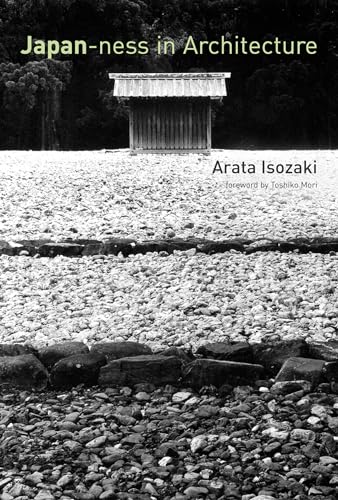
Japan-ness in Architecture (The MIT Press)
Anbieter: Books From California, Simi Valley, CA, USA
Verkäuferbewertung 4 von 5 Sternen
Paperback. Zustand: Fine.
-

Softcover, 304 pages, very good condition, clean and crisp; no internal marks. Foreign shipping may be extra.
-
Japan-Ness in Architecture
Sprache: Englisch
Verlag: The MIT Press, Cambridge, MA, 2011
ISBN 10: 0262516055 ISBN 13: 9780262516051
Anbieter: Treehorn Books, Santa Rosa, CA, USA
Verkäuferbewertung 5 von 5 Sternen

Softcover. Zustand: Very Good. Zustand des Schutzumschlags: No Dust Jacket. Mit Press; b and w photos; 6.06 X 0.74 X 9 inches; 376 pages.
-
Japan-ness in Architecture
Anbieter: GreatBookPrices, Columbia, MD, USA
Verkäuferbewertung 5 von 5 Sternen
Zustand: New.
-
Zustand: New. pp. 376.
-

Zustand: Bueno. : Este libro explora la obra arquitectónica de Arata Isozaki desde 1960 hasta 1990. Analiza su enfoque de diseño de interiores y su contribución a la arquitectura general. Es una obra esencial tanto para estudiantes como para profesionales del diseño y la arquitectura, ofreciendo un repaso a la biografía de este conocido arquitecto y sus creaciones más destacadas. EAN: 9788425215025 Tipo: Libros Categoría: Arte y Cultura Título: Arata Isozaki - Arquitectura 1960-1990 Autor: David B. Stewart| Hajime Yatsuka| Arata Isozaki Editorial: Gg - Gustavo Gili Idioma: es-ES Páginas: 304 Formato: tapa blanda.
-

Japan-ness in Architecture
Anbieter: Rarewaves.com USA, London, LONDO, Vereinigtes Königreich
Verkäuferbewertung 5 von 5 Sternen
EUR 35,63
Versand gratis
Versand von Vereinigtes Königreich nach USAAnzahl: Mehr als 20 verfügbar
In den WarenkorbPaperback. Zustand: New. One of Japan's leading architects examines notions of Japan-ness as exemplified by key events in Japanese architectural history from the seventh to the twentieth century; essays on buildings and their cultural context.Japanese architect Arata Isozaki sees buildings not as dead objects but as events that encompass the social and historical context-not to be defined forever by their "everlasting materiality" but as texts to be interpreted and reread continually. In Japan-ness in Architecture, he identifies what is essentially Japanese in architecture from the seventh to the twentieth century. In the opening essay, Isozaki analyzes the struggles of modern Japanese architects, including himself, to create something uniquely Japanese out of modernity. He then circles back in history to find what he calls Japan-ness in the seventh-century Ise shrine, reconstruction of the twelfth-century Todai-ji Temple, and the seventeenth-century Katsura Imperial Villa. He finds the periodic ritual relocation of Ise's precincts a counter to the West's concept of architectural permanence, and the repetition of the ritual an alternative to modernity's anxious quest for origins. He traces the "constructive power" of the Todai-ji Temple to the vision of the director of its reconstruction, the monk Chogen, whose imaginative power he sees as corresponding to the revolutionary turmoil of the times. The Katsura Imperial Villa, with its chimerical spaces, achieved its own Japan-ness as it reinvented the traditional shoin style. And yet, writes Isozaki, what others consider to be the Japanese aesthetic is often the opposite of that essential Japan-ness born in moments of historic self-definition; the purified stylization-what Isozaki calls "Japanesquization"-lacks the energy of cultural transformation and reflects an island retrenchment in response to the pressure of other cultures.Combining historical survey, critical analysis, theoretical reflection, and autobiographical account, these essays, written over a period of twenty years, demonstrate Isozaki's standing as one of the world's leading architects and preeminent architectural thinkers.
-
Japan-ness in Architecture
Anbieter: GreatBookPrices, Columbia, MD, USA
Verkäuferbewertung 5 von 5 Sternen
Zustand: As New. Unread book in perfect condition.
-
Zustand: As New. Unread copy in mint condition.
-
Zustand: New. Brand New.
-

Hardcover. Zustand: Good. Connecting readers with great books since 1972! Used textbooks may not include companion materials such as access codes, etc. May have some wear or writing/highlighting. We ship orders daily and Customer Service is our top priority!
-

Paperback. Zustand: New. One of Japan's leading architects examines notions of Japan-ness as exemplified by key events in Japanese architectural history from the seventh to the twentieth century; essays on buildings and their cultural context.Japanese architect Arata Isozaki sees buildings not as dead objects but as events that encompass the social and historical context-not to be defined forever by their "everlasting materiality" but as texts to be interpreted and reread continually. In Japan-ness in Architecture, he identifies what is essentially Japanese in architecture from the seventh to the twentieth century. In the opening essay, Isozaki analyzes the struggles of modern Japanese architects, including himself, to create something uniquely Japanese out of modernity. He then circles back in history to find what he calls Japan-ness in the seventh-century Ise shrine, reconstruction of the twelfth-century Todai-ji Temple, and the seventeenth-century Katsura Imperial Villa. He finds the periodic ritual relocation of Ise's precincts a counter to the West's concept of architectural permanence, and the repetition of the ritual an alternative to modernity's anxious quest for origins. He traces the "constructive power" of the Todai-ji Temple to the vision of the director of its reconstruction, the monk Chogen, whose imaginative power he sees as corresponding to the revolutionary turmoil of the times. The Katsura Imperial Villa, with its chimerical spaces, achieved its own Japan-ness as it reinvented the traditional shoin style. And yet, writes Isozaki, what others consider to be the Japanese aesthetic is often the opposite of that essential Japan-ness born in moments of historic self-definition; the purified stylization-what Isozaki calls "Japanesquization"-lacks the energy of cultural transformation and reflects an island retrenchment in response to the pressure of other cultures.Combining historical survey, critical analysis, theoretical reflection, and autobiographical account, these essays, written over a period of twenty years, demonstrate Isozaki's standing as one of the world's leading architects and preeminent architectural thinkers.
-
Japan-ness in Architecture (The MIT Press)
Anbieter: Chiron Media, Wallingford, Vereinigtes Königreich
Verkäuferbewertung 5 von 5 Sternen
EUR 24,18
EUR 17,86 Versand
Versand von Vereinigtes Königreich nach USAAnzahl: 1 verfügbar
In den Warenkorbpaperback. Zustand: New.
-
Japan-ness in Architecture
Anbieter: Majestic Books, Hounslow, Vereinigtes Königreich
Verkäuferbewertung 4 von 5 Sternen
EUR 36,13
EUR 7,50 Versand
Versand von Vereinigtes Königreich nach USAAnzahl: 3 verfügbar
In den WarenkorbZustand: New. pp. 376 54 Illus.
-
Japan-ness in Architecture
Anbieter: Winged Monkey Books, Arlington, VA, USA
Verkäuferbewertung 4 von 5 Sternen
Erstausgabe
First Edition. Hardcover in jacket, very good with light wear.
-

Japan-Ness in Architecture
Verlag: MIT, Cambridge, Mass, 2011
Anbieter: BIBLIOPE by Calvello Books, Oakland, CA, USA
Verkäuferbewertung 4 von 5 Sternen
Erstausgabe
Paperback. Zustand: Near fine. 1st MIT Press pbk. ed. Octavo with black and white pictorial wraps; xx, 349 pages: illustrations; index; 23 cm. "One of Japan's leading architects examines notions of Japan-ness as exemplified by key events in Japanese architectural history from the seventh to the twentieth century; essays on buildings and their cultural context."--Publisher's description. " Contents:Part 1: Japan-ness in Architecture; Part 2: A Mimicry of Origin: Emperor Tenmu's Ise Jingu; Part 3: Construction of the Pure Land (Jodo): Chogen's Rebuilding of Todai-ji; Part 4: A Diagonal Strategy: Katsura as Envisioned by "Enshu Taste"; Glossary; Notes; Index. Near fine; with lightest edgewear to wraps; clean, bright and tight.
-
Japan-ness in Architecture (Mit Press)
Anbieter: Ria Christie Collections, Uxbridge, Vereinigtes Königreich
Verkäuferbewertung 5 von 5 Sternen
EUR 37,78
EUR 13,82 Versand
Versand von Vereinigtes Königreich nach USAAnzahl: 1 verfügbar
In den WarenkorbZustand: New. In.
-
Japan-ness in Architecture (The MIT Press)
Anbieter: Chiron Media, Wallingford, Vereinigtes Königreich
Verkäuferbewertung 5 von 5 Sternen
EUR 33,64
EUR 17,86 Versand
Versand von Vereinigtes Königreich nach USAAnzahl: 1 verfügbar
In den Warenkorbpaperback. Zustand: New.
-
Japan-ness in Architecture
Anbieter: Biblios, Frankfurt am main, HESSE, Deutschland
Verkäuferbewertung 4 von 5 Sternen
Zustand: New. pp. 376.
-
Japan-ness in Architecture
Anbieter: Revaluation Books, Exeter, Vereinigtes Königreich
Verkäuferbewertung 5 von 5 Sternen
EUR 39,20
EUR 14,42 Versand
Versand von Vereinigtes Königreich nach USAAnzahl: 1 verfügbar
In den WarenkorbPaperback. Zustand: Brand New. 371 pages. 9.00x6.00x0.75 inches. In Stock.
-
Japan-ness in Architecture
Anbieter: GreatBookPricesUK, Woodford Green, Vereinigtes Königreich
Verkäuferbewertung 5 von 5 Sternen
EUR 36,51
EUR 17,30 Versand
Versand von Vereinigtes Königreich nach USAAnzahl: 2 verfügbar
In den WarenkorbZustand: New.
-
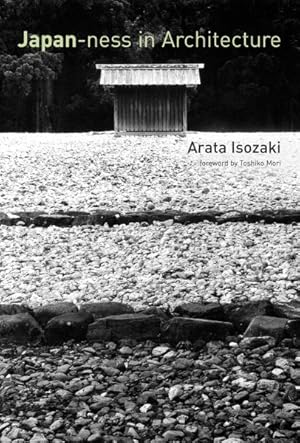
Japan-ness in Architecture
Anbieter: GreatBookPricesUK, Woodford Green, Vereinigtes Königreich
Verkäuferbewertung 5 von 5 Sternen
EUR 39,13
EUR 17,30 Versand
Versand von Vereinigtes Königreich nach USAAnzahl: 2 verfügbar
In den WarenkorbZustand: As New. Unread book in perfect condition.
-

Japan-ness in architecture / Arata Isozaki ; edited by David B. Stewart ; translated by Sabu Kohso ; foreword by Toshiko Mori
Sprache: Englisch
Verlag: Cambridge, Mass ; London : MIT, 2006
ISBN 10: 0262090384 ISBN 13: 9780262090384
Erstausgabe
First Edition. Fine cloth copy in a fine dust-wrapper. Well-preserved overall. Physical description; xx, 349 pages : illustrations ; 23 cm. Notes; Translated from the Japanese. Subjects; Isozaki, Arata (1931-2022). Architecture Japan. Architecture, Japanese. Architecture Philosophy. 1 Kg. Item is Shipped from Ireland or US locations.
-

Japan-ness in Architecture
HARDCOVER. Zustand des Schutzumschlags: Very Good. Hardcover edition. 349pp, octavo. tight binding, clean throughout, Very Good.
-

Japan-ness in Architecture
Anbieter: Rarewaves USA United, OSWEGO, IL, USA
Verkäuferbewertung 5 von 5 Sternen
EUR 43,67
EUR 43,25 Versand
Versand innerhalb von USAAnzahl: Mehr als 20 verfügbar
In den WarenkorbPaperback. Zustand: New. One of Japan's leading architects examines notions of Japan-ness as exemplified by key events in Japanese architectural history from the seventh to the twentieth century; essays on buildings and their cultural context.Japanese architect Arata Isozaki sees buildings not as dead objects but as events that encompass the social and historical context-not to be defined forever by their "everlasting materiality" but as texts to be interpreted and reread continually. In Japan-ness in Architecture, he identifies what is essentially Japanese in architecture from the seventh to the twentieth century. In the opening essay, Isozaki analyzes the struggles of modern Japanese architects, including himself, to create something uniquely Japanese out of modernity. He then circles back in history to find what he calls Japan-ness in the seventh-century Ise shrine, reconstruction of the twelfth-century Todai-ji Temple, and the seventeenth-century Katsura Imperial Villa. He finds the periodic ritual relocation of Ise's precincts a counter to the West's concept of architectural permanence, and the repetition of the ritual an alternative to modernity's anxious quest for origins. He traces the "constructive power" of the Todai-ji Temple to the vision of the director of its reconstruction, the monk Chogen, whose imaginative power he sees as corresponding to the revolutionary turmoil of the times. The Katsura Imperial Villa, with its chimerical spaces, achieved its own Japan-ness as it reinvented the traditional shoin style. And yet, writes Isozaki, what others consider to be the Japanese aesthetic is often the opposite of that essential Japan-ness born in moments of historic self-definition; the purified stylization-what Isozaki calls "Japanesquization"-lacks the energy of cultural transformation and reflects an island retrenchment in response to the pressure of other cultures.Combining historical survey, critical analysis, theoretical reflection, and autobiographical account, these essays, written over a period of twenty years, demonstrate Isozaki's standing as one of the world's leading architects and preeminent architectural thinkers.
-

Japan-ness in Architecture
Anbieter: Rarewaves.com UK, London, Vereinigtes Königreich
Verkäuferbewertung 5 von 5 Sternen
EUR 32,11
EUR 74,96 Versand
Versand von Vereinigtes Königreich nach USAAnzahl: Mehr als 20 verfügbar
In den WarenkorbPaperback. Zustand: New. One of Japan's leading architects examines notions of Japan-ness as exemplified by key events in Japanese architectural history from the seventh to the twentieth century; essays on buildings and their cultural context.Japanese architect Arata Isozaki sees buildings not as dead objects but as events that encompass the social and historical context-not to be defined forever by their "everlasting materiality" but as texts to be interpreted and reread continually. In Japan-ness in Architecture, he identifies what is essentially Japanese in architecture from the seventh to the twentieth century. In the opening essay, Isozaki analyzes the struggles of modern Japanese architects, including himself, to create something uniquely Japanese out of modernity. He then circles back in history to find what he calls Japan-ness in the seventh-century Ise shrine, reconstruction of the twelfth-century Todai-ji Temple, and the seventeenth-century Katsura Imperial Villa. He finds the periodic ritual relocation of Ise's precincts a counter to the West's concept of architectural permanence, and the repetition of the ritual an alternative to modernity's anxious quest for origins. He traces the "constructive power" of the Todai-ji Temple to the vision of the director of its reconstruction, the monk Chogen, whose imaginative power he sees as corresponding to the revolutionary turmoil of the times. The Katsura Imperial Villa, with its chimerical spaces, achieved its own Japan-ness as it reinvented the traditional shoin style. And yet, writes Isozaki, what others consider to be the Japanese aesthetic is often the opposite of that essential Japan-ness born in moments of historic self-definition; the purified stylization-what Isozaki calls "Japanesquization"-lacks the energy of cultural transformation and reflects an island retrenchment in response to the pressure of other cultures.Combining historical survey, critical analysis, theoretical reflection, and autobiographical account, these essays, written over a period of twenty years, demonstrate Isozaki's standing as one of the world's leading architects and preeminent architectural thinkers.
-
Arata Isozaki; Architecture 1960-1990
Sprache: Englisch
Verlag: Rizzoli/Museum of Contemporary Art Los Angeles, New York, 1991
ISBN 10: 0847813193 ISBN 13: 9780847813193
Anbieter: James & Mary Laurie, Booksellers A.B.A.A, Minneapolis, MN, USA
Verbandsmitglied: ABAA ILAB MWABA
Verkäuferbewertung 3 von 5 Sternen

Erstausgabe Signiert
Softcover. Zustand: Fine. 1st. Signed and dated presentation by author on half-title page. Preface by Koshalek, essays by Stewart and Yatsuka. Bound in publisher's original illustrated wrappers. Illustrated throughout in color and black and white. 8 1/2 x 11 inches. 304 pages.
-
Archigram soft cover (reprint edition)
Verlag: Birkhauser Verlag, 1991
Anbieter: Sunny Day Bookstore, SINGAPORE, Singapur
Verkäuferbewertung 4 von 5 Sternen
Zustand: Fine. Number of pages: 144p Size: 27.9 x 21.7cm Number of books: 1 book.
-
Foreign books) Isozaki Arata Architecture (English ARATA ISOZAKI: ARCHITECTURE 1960-1990.)
Verlag: RIZZOLI, 1960
Anbieter: Sunny Day Bookstore, SINGAPORE, Singapur
Verkäuferbewertung 4 von 5 Sternen
Zustand: Fine. The book is in fine condition.


