

Gesamtpreis (1 Artikel Artikel):
Versandziel:

dudek marcin (31 Ergebnisse)
Direkt zu den wichtigsten Suchergebnissen
Suchfilter
Produktart
- Alle Product Types
- Bücher (31)
- Magazine & Zeitschriften (Keine weiteren Ergebnisse entsprechen dieser Verfeinerung)
- Comics (Keine weiteren Ergebnisse entsprechen dieser Verfeinerung)
- Noten (Keine weiteren Ergebnisse entsprechen dieser Verfeinerung)
- Kunst, Grafik & Poster (Keine weiteren Ergebnisse entsprechen dieser Verfeinerung)
- Fotografien (Keine weiteren Ergebnisse entsprechen dieser Verfeinerung)
- Karten (Keine weiteren Ergebnisse entsprechen dieser Verfeinerung)
- Manuskripte & Papierantiquitäten (Keine weiteren Ergebnisse entsprechen dieser Verfeinerung)
Zustand Mehr dazu
- Neu (26)
- Wie Neu, Sehr Gut oder Gut Bis Sehr Gut (3)
- Gut oder Befriedigend (1)
- Ausreichend oder Schlecht (Keine weiteren Ergebnisse entsprechen dieser Verfeinerung)
- Wie beschrieben (1)
Weitere Eigenschaften
- Erstausgabe (Keine weiteren Ergebnisse entsprechen dieser Verfeinerung)
- Signiert (Keine weiteren Ergebnisse entsprechen dieser Verfeinerung)
- Schutzumschlag (Keine weiteren Ergebnisse entsprechen dieser Verfeinerung)
- Angebotsfoto (5)
- Keine Print-on-Demand Angebote (31)
Sprache (2)
Gratisversand
Land des Verkäufers
Verkäuferbewertung
-

The Department of Subterranea
Anbieter: HALCYON BOOKS, LONDON, Vereinigtes Königreich
Verkäuferbewertung 5 von 5 Sternen

EUR 12,89
EUR 20,52 Versand
Versand von Vereinigtes Königreich nach USAAnzahl: 1 verfügbar
In den WarenkorbPaperback. Zustand: Very Good. ALL ITEMS ARE DISPATCHED FROM THE UK WITHIN 48 HOURS ( BOOKS ORDERED OVER THE WEEKEND DISPATCHED ON MONDAY) ALL OVERSEAS ORDERS SENT BY TRACKABLE AIR MAIL. IF YOU ARE LOCATED OUTSIDE THE UK PLEASE ASK US FOR A POSTAGE QUOTE FOR MULTI VOLUME SETS BEFORE ORDERING.
-

Zustand: As New. Unread copy in mint condition.
-
Zustand: New. Brand New.
-
Slash & Burn : Marcin Dudek
Anbieter: GreatBookPrices, Columbia, MD, USA
Verkäuferbewertung 5 von 5 Sternen
Zustand: New.
-
Slash & Burn : Marcin Dudek
Anbieter: GreatBookPrices, Columbia, MD, USA
Verkäuferbewertung 5 von 5 Sternen
Zustand: As New. Unread book in perfect condition.
-
HRD. Zustand: New. New Book. Shipped from UK. Established seller since 2000.
-
The Department of Subterranea (Paperback)
Sprache: Englisch
Verlag: MER Paper Kunsthalle, Ghent, 2015
ISBN 10: 9492321033 ISBN 13: 9789492321039
Anbieter: Grand Eagle Retail, Bensenville, IL, USA
Verkäuferbewertung 5 von 5 Sternen
Paperback. Zustand: new. Paperback. Marcin Dudek's book delves into the captivating universe of a literal and figurative underground, which took form in works he created below and above ground in the past ten years. Shipping may be from multiple locations in the US or from the UK, depending on stock availability.
-
The Department of Subterranea
Anbieter: PBShop.store US, Wood Dale, IL, USA
Verkäuferbewertung 5 von 5 Sternen
PAP. Zustand: New. New Book. Shipped from UK. Established seller since 2000.
-

The Department of Subterranea
Anbieter: Rarewaves.com USA, London, LONDO, Vereinigtes Königreich
Verkäuferbewertung 5 von 5 Sternen
EUR 46,63
Versand gratis
Versand von Vereinigtes Königreich nach USAAnzahl: 14 verfügbar
In den WarenkorbPaperback. Zustand: New.
-
The Department of Subterranea
Anbieter: Majestic Books, Hounslow, Vereinigtes Königreich
Verkäuferbewertung 4 von 5 Sternen

EUR 40,61
EUR 7,41 Versand
Versand von Vereinigtes Königreich nach USAAnzahl: 3 verfügbar
In den WarenkorbZustand: New. pp. 200.
-
Slash and Burn
Anbieter: PBShop.store UK, Fairford, GLOS, Vereinigtes Königreich
Verkäuferbewertung 4 von 5 Sternen
EUR 40,94
EUR 5,72 Versand
Versand von Vereinigtes Königreich nach USAAnzahl: 15 verfügbar
In den WarenkorbHRD. Zustand: New. New Book. Shipped from UK. Established seller since 2000.
-

Slash and Burn
Anbieter: Rarewaves.com USA, London, LONDO, Vereinigtes Königreich
Verkäuferbewertung 5 von 5 Sternen
EUR 48,75
Versand gratis
Versand von Vereinigtes Königreich nach USAAnzahl: Mehr als 20 verfügbar
In den WarenkorbHardback. Zustand: New. Slash and Burn presents some of Marcin Dudek's key creations, focusing on what he refers to as 'Memory Boxes' and touching on other elements of practice including collage, performance, sculpture and research.Marcin Dudek was just 12 years old and living in a concrete housing block outside Krakow, Poland, when the Berlin Wall finally toppled. Poland's free-fall into capitalism followed as the country reeled from severe shortages, skyrocketing inflation and suddenly-defunct industry. For many, food was scarce. Money, more than hard to come by. A frayed social fabric, lacking civic associations left children vulnerable to new allegiances. Before becoming a teenager, he followed his older brother into the arms of a wild group of football supporters who created havoc in and outside the local stadium. Over time, many from this group moved from the council estate into the prison block as petty crimes escalated into enterprising criminal endeavours. Thanks in part to his sister, Dudek found an alternative path, moving to Salzburg, Austria to attend University of Art Mozarteum. He found work in art galleries, learned German and later moved to London, earning an MFA at Central Saint Martin's.Art as methodology for living, coupled with the DIY survivalist strategies of his youth, became tools for transformation as well as dealing with childhood trauma. Shortly after settling in Brussels in 2012, he began to publicly question and explore his past in the seminal exhibition Too Close for Comfort. Marcin Dudek is represented by Haarlen Levy Projects in Brussels.
-
The Department of Subterranea
Anbieter: PBShop.store UK, Fairford, GLOS, Vereinigtes Königreich
Verkäuferbewertung 4 von 5 Sternen
EUR 45,01
EUR 5,72 Versand
Versand von Vereinigtes Königreich nach USAAnzahl: 15 verfügbar
In den WarenkorbPAP. Zustand: New. New Book. Shipped from UK. Established seller since 2000.
-
The Department of Subterranea
Anbieter: Kennys Bookshop and Art Galleries Ltd., Galway, GY, Irland
Verkäuferbewertung 5 von 5 Sternen
EUR 43,70
EUR 10,50 Versand
Versand von Irland nach USAAnzahl: Mehr als 20 verfügbar
In den WarenkorbZustand: New.
-
Zustand: New. pp. 200.
-
Slash & Burn (Hardcover)
Anbieter: Grand Eagle Retail, Bensenville, IL, USA
Verkäuferbewertung 5 von 5 Sternen
Hardcover. Zustand: new. Hardcover. Slash & Burn presents some of Marcin Dudek's key creations, focusing on what he refers to as 'Memory Boxes' and touching on other elements of practice including collage, performance, sculpture and research. Marcin Dudek was just 12 years old and living in a concrete housing block outside Krakow, Poland, when the Berlin Wall finally toppled. Poland's free-fall into capitalism followed as the country reeled from severe shortages, skyrocketing inflation and suddenly-defunct industry. For many, food was scarce. Money, more than hard to come by. A frayed social fabric, lacking civic associations left children vulnerable to new allegiances. Before becoming a teenager, he followed his older brother into the arms of a wild group of football supporters who created havoc in and outside the local stadium. Over time, many from this group moved from the council estate into the prison block as petty crimes escalated into enterprising criminal endeavors. Thanks in part to his sister, Dudek found an alternative path, moving to Salzburg, Austria to attend University of Art Mozarteum. He found work in art galleries, learned German and later moved to London, earning an MFA at Central Saint Martin's. Art as methodology for living, coupled with the DIY survivalist strategies of his youth, became tools for transformation as well as dealing with childhood trauma. Shortly after settling in Brussels in 2012, he began to publicly question and explore his past in the seminal exhibition Too Close for Comfort. Marcin Dudek is represented by Haarlen Levy Projects in Brussels. AUTHOR: Marcin Dudek was just ten years old and living in a housing block outside Krakow when the Berlin Wall finally toppled. It was followed by Poland's free fall into capitalism as the country reeled from severe shortages, skyrocketing inflation, and now-defunct industry. A frayed social fabric lacking civic associations left children vulnerable to new allegiances. As a preteen Dudek was swept up by Cracovia, one of Krakow's two viciously sparring soccer fan clubs, whose uniform (shared by other clubs across Eastern Europe) was a black bomber jacket with bright orange lining. Members would collectively turn their jackets inside out in the stadium to signal they were ready to brawl. Like the strike of a match, the blazing orange lining would be revealed, and all hell would break loose. Tied together by unseen bonds, each member of the group was a pawn to the larger mission, acting as one force. One can feel the physical power of the bodies that crowded the stands through their jackets alone, as witnessed in Dudek's monumental installation, Passage. As a testament to the impact of the switch to capitalism in Eastern Europe and the resulting survival economy, hundreds of jackets sent from the West to the East were collected from thrift shops and brought back to the West to be stitched together, creating a monumental coat which envelops, shields, and takes over the viewer. As one ducks to walk through the sleeve and into the path laid out for them, a series of three meticulously-crafted hybrids between collage and painting become visible, all using the jacket and its ability to hold memory, violence, and meaning. Orange lines burnt into the walls on either side of this trilogy are signs of Dudek's performance during the build-up of the exhibition, which baptized the gallery with a smoke grenade like the ones used in his youth. Following this trail, the viewer is brought into a small room with one single padlocked work. When opened, we find a testimony to a life of crime, imprisonment, and self-preservation; the path that Dudek himself would have taken had art not allowed him an escape route. - Excerpt from Amanda Sarroff's essay The Passage SELLING POINTS: . An insight into the Polish-born, Brussels-based contemporary artist Marcin Dudek, represented by Harlan-Levey Pro Shipping may be from multiple locations in the US or from the UK, depending on stock availability.
-
The Department of Subterranea
Anbieter: Revaluation Books, Exeter, Vereinigtes Königreich
Verkäuferbewertung 5 von 5 Sternen
EUR 42,02
EUR 14,25 Versand
Versand von Vereinigtes Königreich nach USAAnzahl: 2 verfügbar
In den WarenkorbPaperback. Zustand: Brand New. 01 edition. 200 pages. In Stock.
-
The Department of Subterranea
Anbieter: Biblios, Frankfurt am main, HESSE, Deutschland
Verkäuferbewertung 4 von 5 Sternen
Zustand: New. pp. 200.
-
Slash & Burn: Marcin Dudek
Anbieter: Ria Christie Collections, Uxbridge, Vereinigtes Königreich
Verkäuferbewertung 5 von 5 Sternen
EUR 46,36
EUR 13,66 Versand
Versand von Vereinigtes Königreich nach USAAnzahl: Mehr als 20 verfügbar
In den WarenkorbZustand: New. In.
-
Slash & Burn : Marcin Dudek
Anbieter: GreatBookPricesUK, Woodford Green, Vereinigtes Königreich
Verkäuferbewertung 5 von 5 Sternen
EUR 43,22
EUR 17,10 Versand
Versand von Vereinigtes Königreich nach USAAnzahl: Mehr als 20 verfügbar
In den WarenkorbZustand: New.
-
The Department of Subterranea
Anbieter: Kennys Bookstore, Olney, MD, USA
Verkäuferbewertung 4 von 5 Sternen
Zustand: New.
-
Slash & Burn: Marcin Dudek
Anbieter: Revaluation Books, Exeter, Vereinigtes Königreich
Verkäuferbewertung 5 von 5 Sternen
EUR 51,45
EUR 17,10 Versand
Versand von Vereinigtes Königreich nach USAAnzahl: 2 verfügbar
In den WarenkorbHardcover. Zustand: Brand New. 224 pages. 10.25x8.25x8.27 inches. In Stock.
-
Slash & Burn: Marcin Dudek
Anbieter: Aardvark Rare Books, Bucknell, SHROP, Vereinigtes Königreich
Verkäuferbewertung 5 von 5 Sternen
EUR 58,71
EUR 15,96 Versand
Versand von Vereinigtes Königreich nach USAAnzahl: 1 verfügbar
In den Warenkorbhardcover. Zustand: New. **HARDBACK** First edition, 1 of 800 copies.
-
The Department of Subterranea (Paperback)
Sprache: Englisch
Verlag: MER Paper Kunsthalle, Ghent, 2015
ISBN 10: 9492321033 ISBN 13: 9789492321039
Anbieter: AussieBookSeller, Truganina, VIC, Australien
Verkäuferbewertung 5 von 5 Sternen
Paperback. Zustand: new. Paperback. Marcin Dudek's book delves into the captivating universe of a literal and figurative underground, which took form in works he created below and above ground in the past ten years. Shipping may be from our Sydney, NSW warehouse or from our UK or US warehouse, depending on stock availability.
-
Slash & Burn (Hardcover)
Anbieter: CitiRetail, Stevenage, Vereinigtes Königreich
Verkäuferbewertung 5 von 5 Sternen
EUR 52,24
EUR 42,18 Versand
Versand von Vereinigtes Königreich nach USAAnzahl: 1 verfügbar
In den WarenkorbHardcover. Zustand: new. Hardcover. Slash & Burn presents some of Marcin Dudek's key creations, focusing on what he refers to as 'Memory Boxes' and touching on other elements of practice including collage, performance, sculpture and research. Marcin Dudek was just 12 years old and living in a concrete housing block outside Krakow, Poland, when the Berlin Wall finally toppled. Poland's free-fall into capitalism followed as the country reeled from severe shortages, skyrocketing inflation and suddenly-defunct industry. For many, food was scarce. Money, more than hard to come by. A frayed social fabric, lacking civic associations left children vulnerable to new allegiances. Before becoming a teenager, he followed his older brother into the arms of a wild group of football supporters who created havoc in and outside the local stadium. Over time, many from this group moved from the council estate into the prison block as petty crimes escalated into enterprising criminal endeavors. Thanks in part to his sister, Dudek found an alternative path, moving to Salzburg, Austria to attend University of Art Mozarteum. He found work in art galleries, learned German and later moved to London, earning an MFA at Central Saint Martin's. Art as methodology for living, coupled with the DIY survivalist strategies of his youth, became tools for transformation as well as dealing with childhood trauma. Shortly after settling in Brussels in 2012, he began to publicly question and explore his past in the seminal exhibition Too Close for Comfort. Marcin Dudek is represented by Haarlen Levy Projects in Brussels. AUTHOR: Marcin Dudek was just ten years old and living in a housing block outside Krakow when the Berlin Wall finally toppled. It was followed by Poland's free fall into capitalism as the country reeled from severe shortages, skyrocketing inflation, and now-defunct industry. A frayed social fabric lacking civic associations left children vulnerable to new allegiances. As a preteen Dudek was swept up by Cracovia, one of Krakow's two viciously sparring soccer fan clubs, whose uniform (shared by other clubs across Eastern Europe) was a black bomber jacket with bright orange lining. Members would collectively turn their jackets inside out in the stadium to signal they were ready to brawl. Like the strike of a match, the blazing orange lining would be revealed, and all hell would break loose. Tied together by unseen bonds, each member of the group was a pawn to the larger mission, acting as one force. One can feel the physical power of the bodies that crowded the stands through their jackets alone, as witnessed in Dudek's monumental installation, Passage. As a testament to the impact of the switch to capitalism in Eastern Europe and the resulting survival economy, hundreds of jackets sent from the West to the East were collected from thrift shops and brought back to the West to be stitched together, creating a monumental coat which envelops, shields, and takes over the viewer. As one ducks to walk through the sleeve and into the path laid out for them, a series of three meticulously-crafted hybrids between collage and painting become visible, all using the jacket and its ability to hold memory, violence, and meaning. Orange lines burnt into the walls on either side of this trilogy are signs of Dudek's performance during the build-up of the exhibition, which baptized the gallery with a smoke grenade like the ones used in his youth. Following this trail, the viewer is brought into a small room with one single padlocked work. When opened, we find a testimony to a life of crime, imprisonment, and self-preservation; the path that Dudek himself would have taken had art not allowed him an escape route. - Excerpt from Amanda Sarroff's essay The Passage SELLING POINTS: . An insight into the Polish-born, Brussels-based contemporary artist Marcin Dudek, represented by Har Shipping may be from our UK warehouse or from our Australian or US warehouses, depending on stock availability.
-
Slash & Burn : Marcin Dudek
Anbieter: GreatBookPricesUK, Woodford Green, Vereinigtes Königreich
Verkäuferbewertung 5 von 5 Sternen
EUR 88,10
EUR 17,10 Versand
Versand von Vereinigtes Königreich nach USAAnzahl: Mehr als 20 verfügbar
In den WarenkorbZustand: As New. Unread book in perfect condition.
-

Slash and Burn
Anbieter: Rarewaves.com UK, London, Vereinigtes Königreich
Verkäuferbewertung 5 von 5 Sternen
EUR 44,73
EUR 74,10 Versand
Versand von Vereinigtes Königreich nach USAAnzahl: Mehr als 20 verfügbar
In den WarenkorbHardback. Zustand: New. Slash and Burn presents some of Marcin Dudek's key creations, focusing on what he refers to as 'Memory Boxes' and touching on other elements of practice including collage, performance, sculpture and research.Marcin Dudek was just 12 years old and living in a concrete housing block outside Krakow, Poland, when the Berlin Wall finally toppled. Poland's free-fall into capitalism followed as the country reeled from severe shortages, skyrocketing inflation and suddenly-defunct industry. For many, food was scarce. Money, more than hard to come by. A frayed social fabric, lacking civic associations left children vulnerable to new allegiances. Before becoming a teenager, he followed his older brother into the arms of a wild group of football supporters who created havoc in and outside the local stadium. Over time, many from this group moved from the council estate into the prison block as petty crimes escalated into enterprising criminal endeavours. Thanks in part to his sister, Dudek found an alternative path, moving to Salzburg, Austria to attend University of Art Mozarteum. He found work in art galleries, learned German and later moved to London, earning an MFA at Central Saint Martin's.Art as methodology for living, coupled with the DIY survivalist strategies of his youth, became tools for transformation as well as dealing with childhood trauma. Shortly after settling in Brussels in 2012, he began to publicly question and explore his past in the seminal exhibition Too Close for Comfort. Marcin Dudek is represented by Haarlen Levy Projects in Brussels.
-
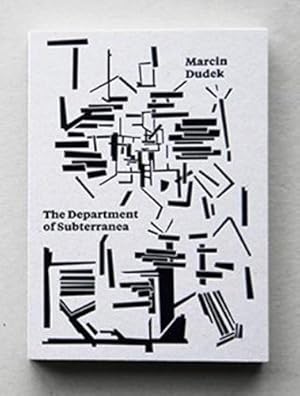
The Department of Subterranea
Anbieter: Rarewaves.com UK, London, Vereinigtes Königreich
Verkäuferbewertung 5 von 5 Sternen
EUR 44,78
EUR 74,10 Versand
Versand von Vereinigtes Königreich nach USAAnzahl: 14 verfügbar
In den WarenkorbPaperback. Zustand: New.
-
Slash & Burn (Hardcover)
Anbieter: AussieBookSeller, Truganina, VIC, Australien
Verkäuferbewertung 5 von 5 Sternen
Hardcover. Zustand: new. Hardcover. Slash & Burn presents some of Marcin Dudek's key creations, focusing on what he refers to as 'Memory Boxes' and touching on other elements of practice including collage, performance, sculpture and research. Marcin Dudek was just 12 years old and living in a concrete housing block outside Krakow, Poland, when the Berlin Wall finally toppled. Poland's free-fall into capitalism followed as the country reeled from severe shortages, skyrocketing inflation and suddenly-defunct industry. For many, food was scarce. Money, more than hard to come by. A frayed social fabric, lacking civic associations left children vulnerable to new allegiances. Before becoming a teenager, he followed his older brother into the arms of a wild group of football supporters who created havoc in and outside the local stadium. Over time, many from this group moved from the council estate into the prison block as petty crimes escalated into enterprising criminal endeavors. Thanks in part to his sister, Dudek found an alternative path, moving to Salzburg, Austria to attend University of Art Mozarteum. He found work in art galleries, learned German and later moved to London, earning an MFA at Central Saint Martin's. Art as methodology for living, coupled with the DIY survivalist strategies of his youth, became tools for transformation as well as dealing with childhood trauma. Shortly after settling in Brussels in 2012, he began to publicly question and explore his past in the seminal exhibition Too Close for Comfort. Marcin Dudek is represented by Haarlen Levy Projects in Brussels. AUTHOR: Marcin Dudek was just ten years old and living in a housing block outside Krakow when the Berlin Wall finally toppled. It was followed by Poland's free fall into capitalism as the country reeled from severe shortages, skyrocketing inflation, and now-defunct industry. A frayed social fabric lacking civic associations left children vulnerable to new allegiances. As a preteen Dudek was swept up by Cracovia, one of Krakow's two viciously sparring soccer fan clubs, whose uniform (shared by other clubs across Eastern Europe) was a black bomber jacket with bright orange lining. Members would collectively turn their jackets inside out in the stadium to signal they were ready to brawl. Like the strike of a match, the blazing orange lining would be revealed, and all hell would break loose. Tied together by unseen bonds, each member of the group was a pawn to the larger mission, acting as one force. One can feel the physical power of the bodies that crowded the stands through their jackets alone, as witnessed in Dudek's monumental installation, Passage. As a testament to the impact of the switch to capitalism in Eastern Europe and the resulting survival economy, hundreds of jackets sent from the West to the East were collected from thrift shops and brought back to the West to be stitched together, creating a monumental coat which envelops, shields, and takes over the viewer. As one ducks to walk through the sleeve and into the path laid out for them, a series of three meticulously-crafted hybrids between collage and painting become visible, all using the jacket and its ability to hold memory, violence, and meaning. Orange lines burnt into the walls on either side of this trilogy are signs of Dudek's performance during the build-up of the exhibition, which baptized the gallery with a smoke grenade like the ones used in his youth. Following this trail, the viewer is brought into a small room with one single padlocked work. When opened, we find a testimony to a life of crime, imprisonment, and self-preservation; the path that Dudek himself would have taken had art not allowed him an escape route. - Excerpt from Amanda Sarroff's essay The Passage SELLING POINTS: . An insight into the Polish-born, Brussels-based contemporary artist Marcin Dudek, represented by Har Shipping may be from our Sydney, NSW warehouse or from our UK or US warehouse, depending on stock availability.
-

Slash & Burn : Marcin Dudek
Anbieter: AHA-BUCH GmbH, Einbeck, Deutschland
Verkäuferbewertung 5 von 5 Sternen
Buch. Zustand: Neu. Neuware - Slash & Burn presents some of Marcin Dudek's key creations, focusing on what he refers to as 'Memory Boxes' and touching on other elements of practice including collage, performance, sculpture and research. Marcin Dudek was just 12 years old and living in a concrete housing block outside Krakow, Poland, when the Berlin Wall finally toppled. Poland's free-fall into capitalism followed as the country reeled from severe shortages, skyrocketing inflation and suddenly-defunct industry. For many, food was scarce. Money, more than hard to come by. A frayed social fabric, lacking civic associations left children vulnerable to new allegiances. Before becoming a teenager, he followed his older brother into the arms of a wild group of football supporters who created havoc in and outside the local stadium. Over time, many from this group moved from the council estate into the prison block as petty crimes escalated into enterprising criminal endeavors. Thanks in part to his sister, Dudek found an alternative path, moving to Salzburg, Austria to attend University of Art Mozarteum. He found work in art galleries, learned German and later moved to London, earning an MFA at Central Saint Martin's. Art as methodology for living, coupled with the DIY survivalist strategies of his youth, became tools for transformation as well as dealing with childhood trauma. Shortly after settling in Brussels in 2012, he began to publicly question and explore his past in the seminal exhibition Too Close for Comfort. Marcin Dudek is represented by Haarlen Levy Projects in Brussels.

