

Gesamtpreis (1 Artikel Artikel):
Versandziel:

fahem zied (14 Ergebnisse)
Direkt zu den wichtigsten Suchergebnissen
Suchfilter
Produktart
- Alle Product Types
- Bücher (14)
- Magazine & Zeitschriften (Keine weiteren Ergebnisse entsprechen dieser Verfeinerung)
- Comics (Keine weiteren Ergebnisse entsprechen dieser Verfeinerung)
- Noten (Keine weiteren Ergebnisse entsprechen dieser Verfeinerung)
- Kunst, Grafik & Poster (Keine weiteren Ergebnisse entsprechen dieser Verfeinerung)
- Fotografien (Keine weiteren Ergebnisse entsprechen dieser Verfeinerung)
- Karten (Keine weiteren Ergebnisse entsprechen dieser Verfeinerung)
- Manuskripte & Papierantiquitäten (Keine weiteren Ergebnisse entsprechen dieser Verfeinerung)
Zustand Mehr dazu
- Neu (12)
- Wie Neu, Sehr Gut oder Gut Bis Sehr Gut (2)
- Gut oder Befriedigend (Keine weiteren Ergebnisse entsprechen dieser Verfeinerung)
- Ausreichend oder Schlecht (Keine weiteren Ergebnisse entsprechen dieser Verfeinerung)
- Wie beschrieben (Keine weiteren Ergebnisse entsprechen dieser Verfeinerung)
Einband
- alle Einbände
- Hardcover (Keine weiteren Ergebnisse entsprechen dieser Verfeinerung)
- Softcover (14)
Weitere Eigenschaften
- Erstausgabe (Keine weiteren Ergebnisse entsprechen dieser Verfeinerung)
- Signiert (Keine weiteren Ergebnisse entsprechen dieser Verfeinerung)
- Schutzumschlag (Keine weiteren Ergebnisse entsprechen dieser Verfeinerung)
- Angebotsfoto (5)
- Keine Print-on-Demand Angebote (7)
Sprache (1)
Preis
- Beliebiger Preis
- Weniger als EUR 20
- EUR 20 bis EUR 45
- Mehr als EUR 45 (Keine weiteren Ergebnisse entsprechen dieser Verfeinerung)
Gratisversand
Land des Verkäufers
Verkäuferbewertung
-

Cross-linked Polymers as Dielectrics for Organic Field-effect Transistors
Anbieter: Lucky's Textbooks, Dallas, TX, USA
Verkäuferbewertung 5 von 5 Sternen

Zustand: New.
-
Cross-linked Polymers as Dielectrics for Organic Field-effect Transistors
Anbieter: GreatBookPrices, Columbia, MD, USA
Verkäuferbewertung 5 von 5 Sternen
Zustand: As New. Unread book in perfect condition.
-
Cross-linked Polymers as Dielectrics for Organic Field-effect Transistors
Anbieter: GreatBookPrices, Columbia, MD, USA
Verkäuferbewertung 5 von 5 Sternen
Zustand: New.
-
Cross-linked Polymers as Dielectrics for Organic Field-effect Transistors
Anbieter: Ria Christie Collections, Uxbridge, Vereinigtes Königreich
Verkäuferbewertung 5 von 5 Sternen
EUR 20,72
EUR 13,81 Versand
Versand von Vereinigtes Königreich nach USAAnzahl: Mehr als 20 verfügbar
In den WarenkorbZustand: New. In.
-
Cross-linked Polymers as Dielectrics for Organic Field-effect Transistors
Anbieter: Chiron Media, Wallingford, Vereinigtes Königreich
Verkäuferbewertung 5 von 5 Sternen
EUR 17,45
EUR 17,85 Versand
Versand von Vereinigtes Königreich nach USAAnzahl: 10 verfügbar
In den WarenkorbPF. Zustand: New.
-
Cross-linked Polymers as Dielectrics for Organic Field-effect Transistors
Anbieter: GreatBookPricesUK, Woodford Green, Vereinigtes Königreich
Verkäuferbewertung 5 von 5 Sternen
EUR 20,40
EUR 17,29 Versand
Versand von Vereinigtes Königreich nach USAAnzahl: Mehr als 20 verfügbar
In den WarenkorbZustand: New.
-
Cross-linked Polymers as Dielectrics for Organic Field-effect Transistors
Anbieter: GreatBookPricesUK, Woodford Green, Vereinigtes Königreich
Verkäuferbewertung 5 von 5 Sternen
EUR 23,98
EUR 17,29 Versand
Versand von Vereinigtes Königreich nach USAAnzahl: Mehr als 20 verfügbar
In den WarenkorbZustand: As New. Unread book in perfect condition.
-
Cross-linked Polymers as Dielectrics for Organic Field-effect Transistors
Anbieter: PBShop.store US, Wood Dale, IL, USA
Verkäuferbewertung 5 von 5 Sternen
PAP. Zustand: New. New Book. Shipped from UK. THIS BOOK IS PRINTED ON DEMAND. Established seller since 2000.
-
Cross-linked Polymers as Dielectrics for Organic Field-effect Transistors
Anbieter: PBShop.store UK, Fairford, GLOS, Vereinigtes Königreich
Verkäuferbewertung 4 von 5 Sternen

EUR 21,67
EUR 6,77 Versand
Versand von Vereinigtes Königreich nach USAAnzahl: Mehr als 20 verfügbar
In den WarenkorbPAP. Zustand: New. New Book. Delivered from our UK warehouse in 4 to 14 business days. THIS BOOK IS PRINTED ON DEMAND. Established seller since 2000.
-
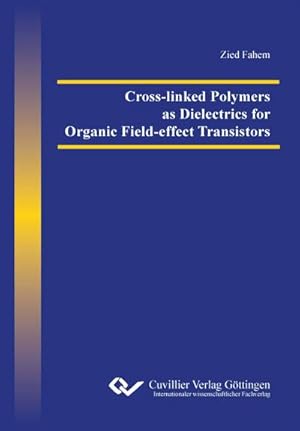
Cross-linked Polymers as Dielectrics for Organic Field-effect Transistors
Sprache: Englisch
Verlag: Cuvillier, Cuvillier Nov 2013, 2013
ISBN 10: 3954045613 ISBN 13: 9783954045617
Anbieter: BuchWeltWeit Ludwig Meier e.K., Bergisch Gladbach, Deutschland
Verkäuferbewertung 5 von 5 Sternen
Taschenbuch. Zustand: Neu. This item is printed on demand - it takes 3-4 days longer - Neuware -Organic electronics are getting more and more interest from industrial companies and research groups in the last years since they enable many new applications, which could not be realized by inorganic materials [1{7]. Flexible displays [1], large-area sensors [1], light-emitting large surfaces [8], printable radio-frequency identification tags (RFID) for packaging or logistic industry [2] and many other systems which require exible, large area and low-cost electronic devices are now developed for the near future or even already commercialized. Organic light-emitting-diode (OLED) displays, for example, are now implemented in portable devices and have higher performance than the traditional LCD displays [9]. OLED displays are self illuminating and do not need back lightening, therefore they have higher brightness, contrast and viewing angle in comparison to LCD displays [9]. Many electronic devices producers implemented OLED displays in their high-end smartphones and SLR cameras [10], and recently LG (a Korean company) introduced a 55-inch OLED television [11]. Large-area solar cells based on organic materials have also found their way to commercialization [12].All of these innovations were only possible after the introduction of organic conductors and semiconductors. Organic (semi)-conductors have the advantage of their low-cost processing technologies (e.g. printing or spray-coating). However, they have lower electrical conductivity, free charge carriers mobility [13] and packaging density than their inorganic counterparts. Therefore they are normally used in lowcost and low-performance applications, except in the case of OLED where they have clear advantages compared with other technologies.In order to produce fully exible devices, elementary devices for electronic circuits (e.g. transistors and diodes) need to be made with exible materials. The performance of these devices needs to be enhanced and their fabrication processes should be optimized to ensure their commercialization as switching elements in OLED displays or in other circuits. These tasks are principally a material issue, that means new materials with higher performance and easier processability are sought after. Most of the work done in this direction is devoted to synthesize new semiconducting materials with higher mobility and solution-processability. Parallel to these investigations, new dielectric materials with good dielectric properties even in thin films, solution-processability and good interface properties to the semiconductors should be developed. Cross-linked polymers are advantageous for organic field-effect transistors (OFETs) because of their electrical and chemical properties, specially their high volume resistivity and their stability towards solvents, acids and bases. This work shows that the application of cross-linked materials can also reduce or even eliminate the use of the volatile organic compounds (VOC), for which legal limitations are yearly augmented. 112 pp. Englisch.
-

EUR 18,63
EUR 48,99 Versand
Versand von Deutschland nach USAAnzahl: Mehr als 20 verfügbar
In den WarenkorbZustand: New. Dieser Artikel ist ein Print on Demand Artikel und wird nach Ihrer Bestellung fuer Sie gedruckt. KlappentextrnrnOrganic electronics are getting more and more interest from industrial companies and research groups in the last years since they enable many new applications, which could not be realized by inorganic materials [1{7]. Flexible dis.
-

Cross-linked Polymers as Dielectrics for Organic Field-effect Transistors
Sprache: Englisch
Verlag: Cuvillier, Cuvillier Nov 2013, 2013
ISBN 10: 3954045613 ISBN 13: 9783954045617
Anbieter: buchversandmimpf2000, Emtmannsberg, BAYE, Deutschland
Verkäuferbewertung 5 von 5 Sternen
Taschenbuch. Zustand: Neu. This item is printed on demand - Print on Demand Titel. Neuware -Organic electronics are getting more and more interest from industrial companies and research groups in the last years since they enable many new applications, which could not be realized by inorganic materials [1{7]. Flexible displays [1], large-area sensors [1], light-emitting large surfaces [8], printable radio-frequency identification tags (RFID) for packaging or logistic industry [2] and many other systems which require exible, large area and low-cost electronic devices are now developed for the near future or even already commercialized. Organic light-emitting-diode (OLED) displays, for example, are now implemented in portable devices and have higher performance than the traditional LCD displays [9]. OLED displays are self illuminating and do not need back lightening, therefore they have higher brightness, contrast and viewing angle in comparison to LCD displays [9]. Many electronic devices producers implemented OLED displays in their high-end smartphones and SLR cameras [10], and recently LG (a Korean company) introduced a 55-inch OLED television [11]. Large-area solar cells based on organic materials have also found their way to commercialization [12].All of these innovations were only possible after the introduction of organic conductors and semiconductors. Organic (semi)-conductors have the advantage of their low-cost processing technologies (e.g. printing or spray-coating). However, they have lower electrical conductivity, free charge carriers mobility [13] and packaging density than their inorganic counterparts. Therefore they are normally used in lowcost and low-performance applications, except in the case of OLED where they have clear advantages compared with other technologies.In order to produce fully exible devices, elementary devices for electronic circuits (e.g. transistors and diodes) need to be made with exible materials. The performance of these devices needs to be enhanced and their fabrication processes should be optimized to ensure their commercialization as switching elements in OLED displays or in other circuits. These tasks are principally a material issue, that means new materials with higher performance and easier processability are sought after. Most of the work done in this direction is devoted to synthesize new semiconducting materials with higher mobility and solution-processability. Parallel to these investigations, new dielectric materials with good dielectric properties even in thin films, solution-processability and good interface properties to the semiconductors should be developed. Cross-linked polymers are advantageous for organic field-effect transistors (OFETs) because of their electrical and chemical properties, specially their high volume resistivity and their stability towards solvents, acids and bases. This work shows that the application of cross-linked materials can also reduce or even eliminate the use of the volatile organic compounds (VOC), for which legal limitations are yearly augmented.Cuvillier Verlag, Nonnenstieg 8, 37075 Göttingen 112 pp. Englisch.
-

Cross-linked Polymers as Dielectrics for Organic Field-effect Transistors
Anbieter: AHA-BUCH GmbH, Einbeck, Deutschland
Verkäuferbewertung 5 von 5 Sternen
Taschenbuch. Zustand: Neu. nach der Bestellung gedruckt Neuware - Printed after ordering - Organic electronics are getting more and more interest from industrial companies and research groups in the last years since they enable many new applications, which could not be realized by inorganic materials [1{7]. Flexible displays [1], large-area sensors [1], light-emitting large surfaces [8], printable radio-frequency identification tags (RFID) for packaging or logistic industry [2] and many other systems which require exible, large area and low-cost electronic devices are now developed for the near future or even already commercialized. Organic light-emitting-diode (OLED) displays, for example, are now implemented in portable devices and have higher performance than the traditional LCD displays [9]. OLED displays are self illuminating and do not need back lightening, therefore they have higher brightness, contrast and viewing angle in comparison to LCD displays [9]. Many electronic devices producers implemented OLED displays in their high-end smartphones and SLR cameras [10], and recently LG (a Korean company) introduced a 55-inch OLED television [11]. Large-area solar cells based on organic materials have also found their way to commercialization [12].All of these innovations were only possible after the introduction of organic conductors and semiconductors. Organic (semi)-conductors have the advantage of their low-cost processing technologies (e.g. printing or spray-coating). However, they have lower electrical conductivity, free charge carriers mobility [13] and packaging density than their inorganic counterparts. Therefore they are normally used in lowcost and low-performance applications, except in the case of OLED where they have clear advantages compared with other technologies.In order to produce fully exible devices, elementary devices for electronic circuits (e.g. transistors and diodes) need to be made with exible materials. The performance of these devices needs to be enhanced and their fabrication processes should be optimized to ensure their commercialization as switching elements in OLED displays or in other circuits. These tasks are principally a material issue, that means new materials with higher performance and easier processability are sought after. Most of the work done in this direction is devoted to synthesize new semiconducting materials with higher mobility and solution-processability. Parallel to these investigations, new dielectric materials with good dielectric properties even in thin films, solution-processability and good interface properties to the semiconductors should be developed. Cross-linked polymers are advantageous for organic field-effect transistors (OFETs) because of their electrical and chemical properties, specially their high volume resistivity and their stability towards solvents, acids and bases. This work shows that the application of cross-linked materials can also reduce or even eliminate the use of the volatile organic compounds (VOC), for which legal limitations are yearly augmented.
-
Taschenbuch. Zustand: Neu. Cross-linked Polymers as Dielectrics for Organic Field-effect Transistors | Zied Fahem | Taschenbuch | 112 S. | Englisch | 2013 | Cuvillier | EAN 9783954045617 | Verantwortliche Person für die EU: Cuvillier Verlag, Nonnenstieg 8, 37075 Göttingen, info[at]cuvillier[dot]de | Anbieter: preigu Print on Demand.


