

Gesamtpreis (1 Artikel Artikel):
Versandziel:

klenner jens (22 Ergebnisse)
Direkt zu den wichtigsten Suchergebnissen
Suchfilter
Produktart
- Alle Product Types
- Bücher (22)
- Magazine & Zeitschriften (Keine weiteren Ergebnisse entsprechen dieser Verfeinerung)
- Comics (Keine weiteren Ergebnisse entsprechen dieser Verfeinerung)
- Noten (Keine weiteren Ergebnisse entsprechen dieser Verfeinerung)
- Kunst, Grafik & Poster (Keine weiteren Ergebnisse entsprechen dieser Verfeinerung)
- Fotografien (Keine weiteren Ergebnisse entsprechen dieser Verfeinerung)
- Karten (Keine weiteren Ergebnisse entsprechen dieser Verfeinerung)
- Manuskripte & Papierantiquitäten (Keine weiteren Ergebnisse entsprechen dieser Verfeinerung)
Zustand Mehr dazu
- Neu (17)
- Wie Neu, Sehr Gut oder Gut Bis Sehr Gut (4)
- Gut oder Befriedigend (1)
- Ausreichend oder Schlecht (Keine weiteren Ergebnisse entsprechen dieser Verfeinerung)
- Wie beschrieben (Keine weiteren Ergebnisse entsprechen dieser Verfeinerung)
Weitere Eigenschaften
- Erstausgabe (Keine weiteren Ergebnisse entsprechen dieser Verfeinerung)
- Signiert (Keine weiteren Ergebnisse entsprechen dieser Verfeinerung)
- Schutzumschlag (Keine weiteren Ergebnisse entsprechen dieser Verfeinerung)
- Angebotsfoto (13)
- Keine Print-on-Demand Angebote (15)
Sprache (2)
Gratisversand
Land des Verkäufers
Verkäuferbewertung
-

Writing the Mountains : The Alpine Form in German Fiction
Anbieter: GreatBookPrices, Columbia, MD, USA
Verkäuferbewertung 5 von 5 Sternen

Zustand: New.
-

Writing the Mountains
Anbieter: PBShop.store US, Wood Dale, IL, USA
Verkäuferbewertung 5 von 5 Sternen
PAP. Zustand: New. New Book. Shipped from UK. Established seller since 2000.
-

Writing the Mountains : The Alpine Form in German Fiction
Anbieter: GreatBookPrices, Columbia, MD, USA
Verkäuferbewertung 5 von 5 Sternen
Zustand: As New. Unread book in perfect condition.
-
Writing the Mountains
Anbieter: PBShop.store UK, Fairford, GLOS, Vereinigtes Königreich
Verkäuferbewertung 4 von 5 Sternen

EUR 40,40
EUR 3,78 Versand
Versand von Vereinigtes Königreich nach USAAnzahl: Mehr als 20 verfügbar
In den WarenkorbPAP. Zustand: New. New Book. Shipped from UK. Established seller since 2000.
-

Writing the Mountains : The Alpine Form in German Fiction
Anbieter: GreatBookPricesUK, Woodford Green, Vereinigtes Königreich
Verkäuferbewertung 5 von 5 Sternen
EUR 40,39
EUR 17,24 Versand
Versand von Vereinigtes Königreich nach USAAnzahl: Mehr als 20 verfügbar
In den WarenkorbZustand: New.
-

Writing the Mountains : The Alpine Form in German Fiction
Anbieter: GreatBookPricesUK, Woodford Green, Vereinigtes Königreich
Verkäuferbewertung 5 von 5 Sternen
EUR 44,24
EUR 17,24 Versand
Versand von Vereinigtes Königreich nach USAAnzahl: Mehr als 20 verfügbar
In den WarenkorbZustand: As New. Unread book in perfect condition.
-
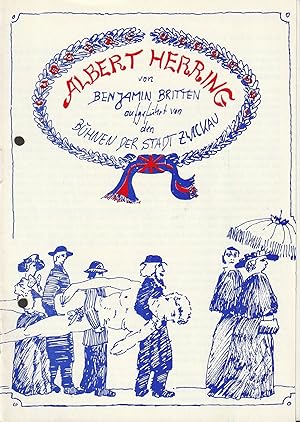
Programmheft Benjamin Britten ALBERT HERRING Premiere 29. März 1987 Spieljahr 1987 Nr. 4
Verlag: Grafische Werke Zwickau, 1987, 1987
Anbieter: Programmhefte24 Schauspiel und Musiktheater der letzten 150 Jahre, Görlitz, Deutschland
Verkäuferbewertung 5 von 5 Sternen
Zustand: Gut. original Heft, nicht paginiert, 8 Seiten, einzelne Illustrationen, beiliegende Besetzungsliste. Zustand: sehr gut, Ablagelochung Komische Oper in drei Akten nach einer Novelle von Guy de Maupassant frei gestaltet von Eric Crozier. Musikalische Leitung: Hans-Peter Kirchberg. Regie: Christoph Thomm. Ausstattung: Udo Klenner. Mitwirkende: Christine Haubold-Menkhoff, Sabine Münkner / Barbara Zosel, Reinhild Wäntig, Horst Behrend / Andreas Sommerfeld, Klaus-Dolf Schubert, u.a. - Theaterprogramm, Opernprogramm, Ballettprogramm, Musicalprogramm, Konzertprogramm, Theatermemorabilia, Programmhefte Sammlung, deutsche Theatergeschichte deu.
-

Writing the Mountains: The Alpine Form in German Fiction (New Directions in German Studies)
Anbieter: Ria Christie Collections, Uxbridge, Vereinigtes Königreich
Verkäuferbewertung 5 von 5 Sternen
EUR 99,78
EUR 13,77 Versand
Versand von Vereinigtes Königreich nach USAAnzahl: Mehr als 20 verfügbar
In den WarenkorbZustand: New. In.
-

Writing the Mountains : The Alpine Form in German Fiction
Anbieter: GreatBookPrices, Columbia, MD, USA
Verkäuferbewertung 5 von 5 Sternen
EUR 112,53
EUR 2,27 Versand
Versand innerhalb von USAAnzahl: Mehr als 20 verfügbar
In den WarenkorbZustand: New.
-

Writing the Mountains : The Alpine Form in German Fiction
Anbieter: GreatBookPrices, Columbia, MD, USA
Verkäuferbewertung 5 von 5 Sternen
EUR 118,72
EUR 2,27 Versand
Versand innerhalb von USAAnzahl: Mehr als 20 verfügbar
In den WarenkorbZustand: As New. Unread book in perfect condition.
-

Writing the Mountains : The Alpine Form in German Fiction
Anbieter: GreatBookPricesUK, Woodford Green, Vereinigtes Königreich
Verkäuferbewertung 5 von 5 Sternen
EUR 109,66
EUR 17,24 Versand
Versand von Vereinigtes Königreich nach USAAnzahl: Mehr als 20 verfügbar
In den WarenkorbZustand: New.
-

Writing the Mountains
Anbieter: Rarewaves.com USA, London, LONDO, Vereinigtes Königreich
Verkäuferbewertung 5 von 5 Sternen
EUR 136,11
Versand gratis
Versand von Vereinigtes Königreich nach USAAnzahl: Mehr als 20 verfügbar
In den WarenkorbHardback. Zustand: New. Writing the Mountains reconsiders the role of mountains in German language fiction from 1800 to the present and argues that in a range of texts, from E.T.A. Hoffmann's "Die Bergwerke zu Falun" (1819) to Elfriede Jelinek's Die Kinder der Toten (1995) and beyond, mountains serve as dynamic spaces of material change that generate aesthetic and narrative innovation. In contrast to dominant critical approaches to the Alpine landscape in literature, in which mountain ranges often features as passive settings, or which trace the influence of geographical and geological sciences in literary productions, this study argues for the dynamic role in literature of presumably rigid mineral structures.In German-language fiction after 1800, the counter-intuitive topology of rocky mountain ranges and unfathomable subterranean depths of the Alpine imaginary functions as a space of exception which appears to reconfirm and radically challenge the foundations of Enlightenment thought. Writing the Mountains reads the mountain range as a rigid yet permeable liminal space. Within this zone, semiotic orders are unsettled, as is the division between organic and inorganic, between the human and the other.
-

Writing the Mountains : The Alpine Form in German Fiction
Anbieter: GreatBookPricesUK, Woodford Green, Vereinigtes Königreich
Verkäuferbewertung 5 von 5 Sternen
EUR 121,19
EUR 17,24 Versand
Versand von Vereinigtes Königreich nach USAAnzahl: Mehr als 20 verfügbar
In den WarenkorbZustand: As New. Unread book in perfect condition.
-

Writing the Mountains
Anbieter: Rarewaves.com UK, London, Vereinigtes Königreich
Verkäuferbewertung 5 von 5 Sternen
EUR 127,04
EUR 74,69 Versand
Versand von Vereinigtes Königreich nach USAAnzahl: Mehr als 20 verfügbar
In den WarenkorbHardback. Zustand: New. Writing the Mountains reconsiders the role of mountains in German language fiction from 1800 to the present and argues that in a range of texts, from E.T.A. Hoffmann's "Die Bergwerke zu Falun" (1819) to Elfriede Jelinek's Die Kinder der Toten (1995) and beyond, mountains serve as dynamic spaces of material change that generate aesthetic and narrative innovation. In contrast to dominant critical approaches to the Alpine landscape in literature, in which mountain ranges often features as passive settings, or which trace the influence of geographical and geological sciences in literary productions, this study argues for the dynamic role in literature of presumably rigid mineral structures.In German-language fiction after 1800, the counter-intuitive topology of rocky mountain ranges and unfathomable subterranean depths of the Alpine imaginary functions as a space of exception which appears to reconfirm and radically challenge the foundations of Enlightenment thought. Writing the Mountains reads the mountain range as a rigid yet permeable liminal space. Within this zone, semiotic orders are unsettled, as is the division between organic and inorganic, between the human and the other.
-

Writing the Mountains : The Alpine Form in German Fiction
Anbieter: AHA-BUCH GmbH, Einbeck, Deutschland
Verkäuferbewertung 5 von 5 Sternen
Buch. Zustand: Neu. Neuware - Writing the Mountains reconsiders the role of the mountains in German language fiction from 1800 to the present and argues that in a range of texts, from E.T.A. Hoffmann's 'Die Bergwerke zu Falun' (1819) to Elfriede Jelinek's Die Kinder der Toten (1995) and beyond, the mountains serve as dynamic spaces of material change that generate aesthetic and narrative innovation. In contrast to dominant critical approaches to the Alpine landscape in literature, in which mountain ranges often features as passive settings, or which traces the influence of geographical and geological sciences in literary productions, this study argues for the dynamic role in literature of presumably rigid mineral structures.In German-language fiction after 1800, the counter-intuitive topology of rocky mountain ranges and unfathomable subterranean depths of the Alpine imaginary functions as a space of exception which appears to reconfirm and radically challenge the foundations of Enlightenment thought. Writing the Mountains reads the mountain range as a rigid yet permeable liminal space. Within this zone, semiotic orders are unsettled, as is the division between organic and inorganic, between the human and its other.
-
Writing the Mountains (Paperback)
Anbieter: Grand Eagle Retail, Bensenville, IL, USA
Verkäuferbewertung 5 von 5 Sternen
Paperback. Zustand: new. Paperback. Writing the Mountains reconsiders the role of mountains in German language fiction from 1800 to the present and argues that in a range of texts, from E.T.A. Hoffmanns Die Bergwerke zu Falun (1819) to Elfriede Jelineks Die Kinder der Toten (1995) and beyond, mountains serve as dynamic spaces of material change that generate aesthetic and narrative innovation. In contrast to dominant critical approaches to the Alpine landscape in literature, in which mountain ranges often features as passive settings, or which trace the influence of geographical and geological sciences in literary productions, this study argues for the dynamic role in literature of presumably rigid mineral structures.In German-language fiction after 1800, the counter-intuitive topology of rocky mountain ranges and unfathomable subterranean depths of the Alpine imaginary functions as a space of exception which appears to reconfirm and radically challenge the foundations of Enlightenment thought. Writing the Mountains reads the mountain range as a rigid yet permeable liminal space. Within this zone, semiotic orders are unsettled, as is the division between organic and inorganic, between the human and the other. This item is printed on demand. Shipping may be from multiple locations in the US or from the UK, depending on stock availability.
-
Writing the Mountains (Paperback)
Anbieter: CitiRetail, Stevenage, Vereinigtes Königreich
Verkäuferbewertung 5 von 5 Sternen
EUR 45,55
EUR 42,51 Versand
Versand von Vereinigtes Königreich nach USAAnzahl: 1 verfügbar
In den WarenkorbPaperback. Zustand: new. Paperback. Writing the Mountains reconsiders the role of mountains in German language fiction from 1800 to the present and argues that in a range of texts, from E.T.A. Hoffmanns Die Bergwerke zu Falun (1819) to Elfriede Jelineks Die Kinder der Toten (1995) and beyond, mountains serve as dynamic spaces of material change that generate aesthetic and narrative innovation. In contrast to dominant critical approaches to the Alpine landscape in literature, in which mountain ranges often features as passive settings, or which trace the influence of geographical and geological sciences in literary productions, this study argues for the dynamic role in literature of presumably rigid mineral structures.In German-language fiction after 1800, the counter-intuitive topology of rocky mountain ranges and unfathomable subterranean depths of the Alpine imaginary functions as a space of exception which appears to reconfirm and radically challenge the foundations of Enlightenment thought. Writing the Mountains reads the mountain range as a rigid yet permeable liminal space. Within this zone, semiotic orders are unsettled, as is the division between organic and inorganic, between the human and the other. This item is printed on demand. Shipping may be from our UK warehouse or from our Australian or US warehouses, depending on stock availability.
-
Writing the Mountains
Anbieter: PBShop.store US, Wood Dale, IL, USA
Verkäuferbewertung 5 von 5 Sternen
HRD. Zustand: New. New Book. Shipped from UK. THIS BOOK IS PRINTED ON DEMAND. Established seller since 2000.
-
Writing the Mountains
Anbieter: PBShop.store UK, Fairford, GLOS, Vereinigtes Königreich
Verkäuferbewertung 4 von 5 Sternen
EUR 109,68
EUR 4,78 Versand
Versand von Vereinigtes Königreich nach USAAnzahl: Mehr als 20 verfügbar
In den WarenkorbHRD. Zustand: New. New Book. Delivered from our UK warehouse in 4 to 14 business days. THIS BOOK IS PRINTED ON DEMAND. Established seller since 2000.
-

Taschenbuch. Zustand: Neu. Writing the Mountains | The Alpine Form in German Fiction | Jens Klenner | Taschenbuch | Englisch | 2025 | Bloomsbury Academic | EAN 9798765106518 | Verantwortliche Person für die EU: Libri GmbH, Europaallee 1, 36244 Bad Hersfeld, gpsr[at]libri[dot]de | Anbieter: preigu Print on Demand.
-
Writing the Mountains (Hardcover)
Anbieter: Grand Eagle Retail, Bensenville, IL, USA
Verkäuferbewertung 5 von 5 Sternen
Hardcover. Zustand: new. Hardcover. Writing the Mountains reconsiders the role of mountains in German language fiction from 1800 to the present and argues that in a range of texts, from E.T.A. Hoffmanns Die Bergwerke zu Falun (1819) to Elfriede Jelineks Die Kinder der Toten (1995) and beyond, mountains serve as dynamic spaces of material change that generate aesthetic and narrative innovation. In contrast to dominant critical approaches to the Alpine landscape in literature, in which mountain ranges often features as passive settings, or which trace the influence of geographical and geological sciences in literary productions, this study argues for the dynamic role in literature of presumably rigid mineral structures.In German-language fiction after 1800, the counter-intuitive topology of rocky mountain ranges and unfathomable subterranean depths of the Alpine imaginary functions as a space of exception which appears to reconfirm and radically challenge the foundations of Enlightenment thought. Writing the Mountains reads the mountain range as a rigid yet permeable liminal space. Within this zone, semiotic orders are unsettled, as is the division between organic and inorganic, between the human and the other. This item is printed on demand. Shipping may be from multiple locations in the US or from the UK, depending on stock availability.
-
Writing the Mountains (Hardcover)
Anbieter: CitiRetail, Stevenage, Vereinigtes Königreich
Verkäuferbewertung 5 von 5 Sternen
EUR 117,16
EUR 42,51 Versand
Versand von Vereinigtes Königreich nach USAAnzahl: 1 verfügbar
In den WarenkorbHardcover. Zustand: new. Hardcover. Writing the Mountains reconsiders the role of mountains in German language fiction from 1800 to the present and argues that in a range of texts, from E.T.A. Hoffmanns Die Bergwerke zu Falun (1819) to Elfriede Jelineks Die Kinder der Toten (1995) and beyond, mountains serve as dynamic spaces of material change that generate aesthetic and narrative innovation. In contrast to dominant critical approaches to the Alpine landscape in literature, in which mountain ranges often features as passive settings, or which trace the influence of geographical and geological sciences in literary productions, this study argues for the dynamic role in literature of presumably rigid mineral structures.In German-language fiction after 1800, the counter-intuitive topology of rocky mountain ranges and unfathomable subterranean depths of the Alpine imaginary functions as a space of exception which appears to reconfirm and radically challenge the foundations of Enlightenment thought. Writing the Mountains reads the mountain range as a rigid yet permeable liminal space. Within this zone, semiotic orders are unsettled, as is the division between organic and inorganic, between the human and the other. This item is printed on demand. Shipping may be from our UK warehouse or from our Australian or US warehouses, depending on stock availability.

