

Gesamtpreis (1 Artikel Artikel):
Versandziel:

mcavey maureen (10 Ergebnisse)
Direkt zu den wichtigsten Suchergebnissen
Suchfilter
Produktart
- Alle Product Types
- Bücher (10)
- Magazine & Zeitschriften (Keine weiteren Ergebnisse entsprechen dieser Verfeinerung)
- Comics (Keine weiteren Ergebnisse entsprechen dieser Verfeinerung)
- Noten (Keine weiteren Ergebnisse entsprechen dieser Verfeinerung)
- Kunst, Grafik & Poster (Keine weiteren Ergebnisse entsprechen dieser Verfeinerung)
- Fotografien (Keine weiteren Ergebnisse entsprechen dieser Verfeinerung)
- Karten (Keine weiteren Ergebnisse entsprechen dieser Verfeinerung)
- Manuskripte & Papierantiquitäten (Keine weiteren Ergebnisse entsprechen dieser Verfeinerung)
Zustand Mehr dazu
- Neu (4)
- Wie Neu, Sehr Gut oder Gut Bis Sehr Gut (1)
- Gut oder Befriedigend (4)
- Ausreichend oder Schlecht (1)
- Wie beschrieben (Keine weiteren Ergebnisse entsprechen dieser Verfeinerung)
Einband
- alle Einbände
- Hardcover (Keine weiteren Ergebnisse entsprechen dieser Verfeinerung)
- Softcover (10)
Weitere Eigenschaften
- Erstausgabe (Keine weiteren Ergebnisse entsprechen dieser Verfeinerung)
- Signiert (Keine weiteren Ergebnisse entsprechen dieser Verfeinerung)
- Schutzumschlag (Keine weiteren Ergebnisse entsprechen dieser Verfeinerung)
- Angebotsfoto (2)
- Keine Print-on-Demand Angebote (10)
Sprache (1)
Gratisversand
Land des Verkäufers
Verkäuferbewertung
-

The City in 2050: Creating Blueprints for Change
Anbieter: ThriftBooks-Atlanta, AUSTELL, GA, USA
Verkäuferbewertung 5 von 5 Sternen

Paperback. Zustand: Fair. No Jacket. Readable copy. Pages may have considerable notes/highlighting. ~ ThriftBooks: Read More, Spend Less.
-
The City in 2050: Creating Blueprints for Change
Anbieter: World of Books (was SecondSale), Montgomery, IL, USA
Verkäuferbewertung 5 von 5 Sternen
Zustand: Good. Item in good condition. Textbooks may not include supplemental items i.e. CDs, access codes etc.
-
The City In 2050 : Creating Blueprints for Change
Anbieter: Better World Books: West, Reno, NV, USA
Verkäuferbewertung 5 von 5 Sternen
Zustand: Very Good. Pages intact with possible writing/highlighting. Binding strong with minor wear. Dust jackets/supplements may not be included. Stock photo provided. Product includes identifying sticker. Better World Books: Buy Books. Do Good.
-
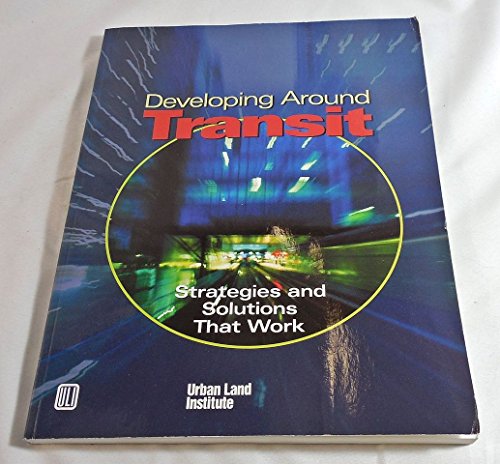
Developing Around Transit: Strategies and Solutions That Work
Anbieter: Wonder Book, Frederick, MD, USA
Verkäuferbewertung 5 von 5 Sternen
Zustand: Very Good. Very Good condition. A copy that may have a few cosmetic defects. May also contain light spine creasing or a few markings such as an owner's name, short gifter's inscription or light stamp. Bundled media such as CDs, DVDs, floppy disks or access codes may not be included.
-
Developing Around Transit: Strategies and Solutions That Work
Anbieter: Wonder Book, Frederick, MD, USA
Verkäuferbewertung 5 von 5 Sternen
Zustand: As New. Like New condition. A near perfect copy that may have very minor cosmetic defects.
-
Developing Around Transit: Strategies and Solutions That Work
Anbieter: ThriftBooks-Dallas, Dallas, TX, USA
Verkäuferbewertung 5 von 5 Sternen
Paperback. Zustand: Good. No Jacket. Pages can have notes/highlighting. Spine may show signs of wear. ~ ThriftBooks: Read More, Spend Less.
-

Reaching for the Future: Creative Finance for Smaller Communities
Sprache: Englisch
Verlag: Urban Land Institute,U.S., US, 2016
ISBN 10: 0874203767 ISBN 13: 9780874203769
Paperback. Zustand: New. All too often, communities paralyze themselves because they do not believe that they have the resources to initiate change-and therefore they do not even try. The case studies in Reaching for the Future: Creative Finance for Smaller Communities illustrate how communities have used and combined various sources of public funds to facilitate dramatic change.This publication focuses on six communities. Some are built on historic traditions, others are built on natural location, and others are newly built. Two neighborhoods are recovering from severe blight and disinvestment, two are suburban developments that have created a sense of place, and two are small cities that were watching their downtowns fail. In each case, to succeed required a strategic vision, leadership, and creative financing. The leadership rose in different ways but came together in effective public/private partnerships. In each case, the conversation started with "what do we want to be" rather than "how do we pay for it." In each case, the communities, each with a struggling economy, figured out how to finance their dreams.The Financing Transformational Projects section identifies the most common public programs and how they might be used. It also addresses the use of public financing to catalyze private investment in public/private partnerships, and projects the strengths and weaknesses of those partnerships.Finally, a checklist offers leaders, both public and private, an opportunity to analyze whether they are ready to move forward.
-

Zustand: New. Brand New.
-
Zustand: New. Satisfaction Guaranteed or your money back.
-

Reaching for the Future: Creative Finance for Smaller Communities
Sprache: Englisch
Verlag: Urban Land Institute,U.S., US, 2016
ISBN 10: 0874203767 ISBN 13: 9780874203769
Anbieter: Rarewaves USA United, OSWEGO, IL, USA
Verkäuferbewertung 5 von 5 Sternen
EUR 48,52
EUR 42,65 Versand
Versand innerhalb von USAAnzahl: Mehr als 20 verfügbar
In den WarenkorbPaperback. Zustand: New. All too often, communities paralyze themselves because they do not believe that they have the resources to initiate change-and therefore they do not even try. The case studies in Reaching for the Future: Creative Finance for Smaller Communities illustrate how communities have used and combined various sources of public funds to facilitate dramatic change.This publication focuses on six communities. Some are built on historic traditions, others are built on natural location, and others are newly built. Two neighborhoods are recovering from severe blight and disinvestment, two are suburban developments that have created a sense of place, and two are small cities that were watching their downtowns fail. In each case, to succeed required a strategic vision, leadership, and creative financing. The leadership rose in different ways but came together in effective public/private partnerships. In each case, the conversation started with "what do we want to be" rather than "how do we pay for it." In each case, the communities, each with a struggling economy, figured out how to finance their dreams.The Financing Transformational Projects section identifies the most common public programs and how they might be used. It also addresses the use of public financing to catalyze private investment in public/private partnerships, and projects the strengths and weaknesses of those partnerships.Finally, a checklist offers leaders, both public and private, an opportunity to analyze whether they are ready to move forward.
