

Gesamtpreis (1 Artikel Artikel):
Versandziel:

prlic doris (29 Ergebnisse)
Direkt zu den wichtigsten Suchergebnissen
Suchfilter
Produktart
- Alle Product Types
- Bücher (29)
- Magazine & Zeitschriften (Keine weiteren Ergebnisse entsprechen dieser Verfeinerung)
- Comics (Keine weiteren Ergebnisse entsprechen dieser Verfeinerung)
- Noten (Keine weiteren Ergebnisse entsprechen dieser Verfeinerung)
- Kunst, Grafik & Poster (Keine weiteren Ergebnisse entsprechen dieser Verfeinerung)
- Fotografien (Keine weiteren Ergebnisse entsprechen dieser Verfeinerung)
- Karten (Keine weiteren Ergebnisse entsprechen dieser Verfeinerung)
- Manuskripte & Papierantiquitäten (Keine weiteren Ergebnisse entsprechen dieser Verfeinerung)
Zustand Mehr dazu
- Neu (25)
- Wie Neu, Sehr Gut oder Gut Bis Sehr Gut (2)
- Gut oder Befriedigend (2)
- Ausreichend oder Schlecht (Keine weiteren Ergebnisse entsprechen dieser Verfeinerung)
- Wie beschrieben (Keine weiteren Ergebnisse entsprechen dieser Verfeinerung)
Einband
Weitere Eigenschaften
- Erstausgabe (2)
- Signiert (Keine weiteren Ergebnisse entsprechen dieser Verfeinerung)
- Schutzumschlag (Keine weiteren Ergebnisse entsprechen dieser Verfeinerung)
- Angebotsfoto (15)
- Keine Print-on-Demand Angebote (24)
Sprache (1)
Gratisversand
Land des Verkäufers
Verkäuferbewertung
-

Matters of Belonging : Ethnographic Museums in a Changing Europe
Anbieter: GreatBookPrices, Columbia, MD, USA
Verkäuferbewertung 5 von 5 Sternen

Zustand: As New. Unread book in perfect condition.
-

Matters of Belonging
Anbieter: PBShop.store UK, Fairford, GLOS, Vereinigtes Königreich
Verkäuferbewertung 5 von 5 Sternen
EUR 39,82
EUR 5,75 Versand
Versand von Vereinigtes Königreich nach USAAnzahl: 1 verfügbar
In den WarenkorbPAP. Zustand: New. New Book. Shipped from UK. Established seller since 2000.
-

Matters of Belonging : Ethnographic Museums in a Changing Europe
Anbieter: GreatBookPrices, Columbia, MD, USA
Verkäuferbewertung 5 von 5 Sternen
Zustand: New.
-

Matters of Belonging Ethnographic Museums in a Changing Europe
Anbieter: Biblioteca di Babele, Tarquinia, VT, Italien
Verkäuferbewertung 5 von 5 Sternen
Zustand: BUONO USATO. INGLESE Volume brossurato usato che mostra ottime condizioni interne, carte pienamente godibili e prive di imperfezioni, toni non alterati dalla luce, cerniera perfettamente salda, alcune figure a colori valorizzano il testo. Copertina lucida interamente illustrata, minime imperfezioni agli angoli, buonissimo l'aspetto. Edizione inglese con testi di Wayne Modest, Nicholas Thomas, Doris Prlic e Claudia Augustat. Il volume potrebbe contenere timbri, il materiale è stato regolarmente acquisito dalla nostra Libreria. N. pag. 225.
-
Zustand: NEW.
-
Matters of Belonging (Paperback)
Anbieter: Grand Eagle Retail, Bensenville, IL, USA
Verkäuferbewertung 5 von 5 Sternen
Paperback. Zustand: new. Paperback. Matters of Belonging foregrounds critical practices within ethnographic museums in relation to their diverse stakeholders, with a special focus on collaboration with artists and differently constituted, self-identified communities. The book emerges from the EU-funded project SWICH (Sharing a World of Inclusion, Creativity and Heritage) that places ethnographic museums at the centre of ongoing debates about Europes shifting polity and questions around heritage, citizenship and belonging. Addressing diverse political climates and citizenship regimes, legal frameworks and colonial/migratory histories, the articles seek to question the role of ethnographic and world cultures museums within contemporary negotiations of how to define Europe, Europeans, and European heritage, especially mindful of the regions colonial and migratory pasts. The book is neither celebratory nor congratulatory, and does not depict a triumphal overcoming by ethnographic museums of their troubled pasts. Its aim is to think critically about these museums responses, to identify both pitfalls and positive developments, and to sketch out possible futures for museums generally, and ethnographic museums specifically, as they try to locate themselves within discussions about Europe and its futures. Core to the books argument is that it may exactly be in their entanglement with the colonial past that these museums can become important sites for thinking about colonial entailments in the present. Facing up to this past is the beginning of addressing these larger legacies. The authors suggest that the ethnographic museum has been the site not just for trenchant questioning of colonial durabilities in contemporary Europe, but also for the development of new practices of collaboration and authority-sharing, of recognition and belonging. The book explores these models, not as complete, but as a starting point to push forward new practices. This publication examines creative and collaborative practices within ethnographic and world cultures museums across Europe as part of their responses to ongoing public and scholarly critique. Shipping may be from multiple locations in the US or from the UK, depending on stock availability.
-

Matters of Belonging : Ethnographic Museums in a Changing Europe
Anbieter: GreatBookPricesUK, Woodford Green, Vereinigtes Königreich
Verkäuferbewertung 5 von 5 Sternen
EUR 39,25
EUR 17,18 Versand
Versand von Vereinigtes Königreich nach USAAnzahl: 2 verfügbar
In den WarenkorbZustand: New.
-
Matters of Belonging: Ethnographic Museums in a Changing Europe
Anbieter: Majestic Books, Hounslow, Vereinigtes Königreich
Verkäuferbewertung 4 von 5 Sternen

EUR 50,13
EUR 7,45 Versand
Versand von Vereinigtes Königreich nach USAAnzahl: 3 verfügbar
In den WarenkorbZustand: New.
-

Matters of Belonging. Ethnographic Museums in a Changing Europe.
Sprache: Englisch
Verlag: Sidestone Press, Leiden., 2019
Anbieter: Peter Moore Bookseller, (Est. 1970. PBFA, BCSA), Cambridge, Vereinigtes Königreich
Verbandsmitglied: PBFA
Verkäuferbewertung 5 von 5 Sternen
Erstausgabe
EUR 23,61
EUR 35,46 Versand
Versand von Vereinigtes Königreich nach USAAnzahl: 1 verfügbar
In den WarenkorbSoft cover. Zustand: Very Good. No Jacket. 1st Edition. 224pp. 23cm. Colour photographic illustrations in the text. References. Illustrated soft covers. Very good clean copy.
-
Matters of Belonging: Ethnographic Museums in a Changing Europe
Sprache: Englisch
Verlag: Sidestone Press 2019-10-10, 2019
ISBN 10: 9088907773 ISBN 13: 9789088907777
Anbieter: Chiron Media, Wallingford, Vereinigtes Königreich
Verkäuferbewertung 5 von 5 Sternen
EUR 41,31
EUR 17,75 Versand
Versand von Vereinigtes Königreich nach USAAnzahl: 3 verfügbar
In den WarenkorbPaperback. Zustand: New.
-
Matters of Belonging: Ethnographic Museums in a Changing Europe
Anbieter: Ria Christie Collections, Uxbridge, Vereinigtes Königreich
Verkäuferbewertung 5 von 5 Sternen
EUR 47,81
EUR 13,72 Versand
Versand von Vereinigtes Königreich nach USAAnzahl: 3 verfügbar
In den WarenkorbZustand: New. In.
-
Matters of Belonging: Ethnographic Museums in a Changing Europe
Anbieter: Revaluation Books, Exeter, Vereinigtes Königreich
Verkäuferbewertung 5 von 5 Sternen
EUR 50,57
EUR 11,46 Versand
Versand von Vereinigtes Königreich nach USAAnzahl: 2 verfügbar
In den WarenkorbPaperback. Zustand: Brand New. 01 edition. 225 pages. 9.00x6.50x0.50 inches. In Stock.
-

Matters of Belonging : Ethnographic Museums in a Changing Europe
Anbieter: GreatBookPricesUK, Woodford Green, Vereinigtes Königreich
Verkäuferbewertung 5 von 5 Sternen
EUR 45,73
EUR 17,18 Versand
Versand von Vereinigtes Königreich nach USAAnzahl: 2 verfügbar
In den WarenkorbZustand: As New. Unread book in perfect condition.
-
Matters of Belonging: Ethnographic Museums in a Changing Europe
Anbieter: Biblios, Frankfurt am main, HESSE, Deutschland
Verkäuferbewertung 4 von 5 Sternen
Zustand: New.
-

Taschenbuch. Zustand: Neu. Neuware -Matters of Belonging brings to the foreground critical practices within ethnographic museums in relation to their diverse stakeholders, with a special focus on collaboration with artists and differently constituted, self-identified communities. This book emerges from the EU-funded project SWICH (Sharing a World of Inclusion, Creativity and Heritage) that places ethnographic museums at the centre of ongoing debates about Europe¿s shifting polity and questions around heritage, citizenship and belonging. Addressing diverse political climates and citizenship regimes, legal frameworks and colonial/migratory histories, the articles seek to question the role of ethnographic and world cultures museums within contemporary negotiations of how to define Europe, Europeans, and European heritage, especially mindful of the region¿s colonial and migratory pasts.The book is neither celebratory nor congratulatory, and does not depict a triumphal overcoming by ethnographic museums of their troubled pasts. Its aim is to think critically about these museums¿ responses, to identify both pitfalls and positive developments, and to sketch out possible futures for museums generally, and ethnographic museums specifically, as they try to locate themselves within discussions about Europe and its futures.Central to the book¿s argument is that it may exactly be in their entanglement with the colonial past that these museums can become important sites for thinking about colonial entailments in the present. Facing up to this past is the beginning of addressing these larger legacies. The authors suggest that the ethnographic museum has been the site not just for trenchant questioning of colonial durabilities in contemporary Europe, but also for the development of new practices ¿ of collaboration and authority-sharing, of recognition and belonging. This book explores these models, not as complete, but as starting points to push forward new practices.ContentsAcknowledgementsList of imagesIntroductionWayne ModestHeritageThe Museum Inside-out ¿ Twenty ObservationsNicholas ThomasMuseums and Source Communities: Reflections and implicationsLaura PeersCollaboration and the Dilemma of the Exotic: A Research NoteBarbara PlankensteinerOur House is Made of Thin, Burning Ice. Let¿s DanceSandra FerracutiCreativityQuestions of BelongingAlana JelinekLove and Loss in the Ethnographic MuseumRajkamal KahlonEyes in the Back of Your HeadBianca BaldiI came as a StrangerAleksandra PawloffThe Long Walk: Following the Tick Ticking Sounds into the Unknown ¿ Or the OmittedJacqueline Hoàng Nguy¿nInclusionShared Authority Matters: Collaboration with Heritage Bearers with Migrant BackgroundTina Palai¿ and Bojana Rogelj ¿kafarUncomfortable Memory and Community Participation at the Barcelona Ethnological and World Cultures MuseumSalvador García Arnillas and Lluís-Josep Ramoneda AigüadéThe Making of a Point of View: A Participatory Exhibition at the Pigorini Museum in RomeRosa Anna Di Lella ¿ Loretta PaderniOut of Boxes: Touching Wor(l)ds, Moving PicturesUrban Nomad MixesFor Contingent Collaboration: The Making of the Afterlives of Slavery exhibition at the TropenmuseumRita Ouédraogo, Robin Lelijveld, Martin Berger, Richard Kofi, and Wayne Modest.
-
MATTERS OF BELONGING
Anbieter: Speedyhen, Hertfordshire, Vereinigtes Königreich
Verkäuferbewertung 5 von 5 Sternen
EUR 39,26
EUR 46,97 Versand
Versand von Vereinigtes Königreich nach USAAnzahl: 3 verfügbar
In den WarenkorbZustand: NEW.
-
Matters of Belonging: Ethnographic Museums in a Changing Europe
Anbieter: Kennys Bookstore, Olney, MD, USA
Verkäuferbewertung 5 von 5 Sternen
Zustand: New. 2019. 1st Edition. paperback. . . . . . Books ship from the US and Ireland.
-

Zustand: New. This publication examines creative and collaborative practices within ethnographic and world cultures museums across Europe as part of their responses to ongoing public and scholarly critique.Matters of Belonging brings to the foreground critical practi.
-

Matters of Belonging
Anbieter: buchversandmimpf2000, Emtmannsberg, BAYE, Deutschland
Verkäuferbewertung 5 von 5 Sternen
Taschenbuch. Zustand: Neu. Neuware -Matters of Belonging brings to the foreground critical practices within ethnographic museums in relation to their diverse stakeholders, with a special focus on collaboration with artists and differently constituted, self-identified communities. This book emerges from the EU-funded project SWICH (Sharing a World of Inclusion, Creativity and Heritage) that places ethnographic museums at the centre of ongoing debates about Europe¿s shifting polity and questions around heritage, citizenship and belonging. Addressing diverse political climates and citizenship regimes, legal frameworks and colonial/migratory histories, the articles seek to question the role of ethnographic and world cultures museums within contemporary negotiations of how to define Europe, Europeans, and European heritage, especially mindful of the region¿s colonial and migratory pasts.The book is neither celebratory nor congratulatory, and does not depict a triumphal overcoming by ethnographic museums of their troubled pasts. Its aim is to think critically about these museums¿ responses, to identify both pitfalls and positive developments, and to sketch out possible futures for museums generally, and ethnographic museums specifically, as they try to locate themselves within discussions about Europe and its futures.Central to the book¿s argument is that it may exactly be in their entanglement with the colonial past that these museums can become important sites for thinking about colonial entailments in the present. Facing up to this past is the beginning of addressing these larger legacies. The authors suggest that the ethnographic museum has been the site not just for trenchant questioning of colonial durabilities in contemporary Europe, but also for the development of new practices ¿ of collaboration and authority-sharing, of recognition and belonging. This book explores these models, not as complete, but as starting points to push forward new practices.ContentsAcknowledgementsList of imagesIntroductionWayne ModestHeritageThe Museum Inside-out ¿ Twenty ObservationsNicholas ThomasMuseums and Source Communities: Reflections and implicationsLaura PeersCollaboration and the Dilemma of the Exotic: A Research NoteBarbara PlankensteinerOur House is Made of Thin, Burning Ice. Let¿s DanceSandra FerracutiCreativityQuestions of BelongingAlana JelinekLove and Loss in the Ethnographic MuseumRajkamal KahlonEyes in the Back of Your HeadBianca BaldiI came as a StrangerAleksandra PawloffThe Long Walk: Following the Tick Ticking Sounds into the Unknown ¿ Or the OmittedJacqueline Hoàng Nguy¿nInclusionShared Authority Matters: Collaboration with Heritage Bearers with Migrant BackgroundTina Palai¿ and Bojana Rogelj ¿kafarUncomfortable Memory and Community Participation at the Barcelona Ethnological and World Cultures MuseumSalvador García Arnillas and Lluís-Josep Ramoneda AigüadéThe Making of a Point of View: A Participatory Exhibition at the Pigorini Museum in RomeRosa Anna Di Lella ¿ Loretta PaderniOut of Boxes: Touching Wor(l)ds, Moving PicturesUrban Nomad MixesFor Contingent Collaboration: The Making of the Afterlives of Slavery exhibition at the TropenmuseumRita Ouédraogo, Robin Lelijveld, Martin Berger, Richard Kofi, and Wayne ModestBooks on Demand GmbH, Überseering 33, 22297 Hamburg 226 pp. Englisch.
-
Matters of Belonging: Ethnographic Museums in a Changing Europe
Anbieter: Kennys Bookshop and Art Galleries Ltd., Galway, GY, Irland
Verkäuferbewertung 5 von 5 Sternen
Erstausgabe
Zustand: New. 2019. 1st Edition. paperback. . . . . .
-
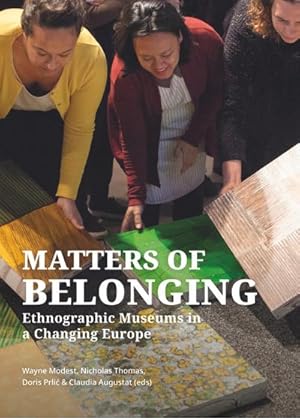
Matters of Belonging
Anbieter: AHA-BUCH GmbH, Einbeck, Deutschland
Verkäuferbewertung 5 von 5 Sternen
Taschenbuch. Zustand: Neu. Neuware - Matters of Belonging brings to the foreground critical practices within ethnographic museums in relation to their diverse stakeholders, with a special focus on collaboration with artists and differently constituted, self-identified communities. This book emerges from the EU-funded project SWICH (Sharing a World of Inclusion, Creativity and Heritage) that places ethnographic museums at the centre of ongoing debates about Europe's shifting polity and questions around heritage, citizenship and belonging. Addressing diverse political climates and citizenship regimes, legal frameworks and colonial/migratory histories, the articles seek to question the role of ethnographic and world cultures museums within contemporary negotiations of how to define Europe, Europeans, and European heritage, especially mindful of the region's colonial and migratory pasts.The book is neither celebratory nor congratulatory, and does not depict a triumphal overcoming by ethnographic museums of their troubled pasts. Its aim is to think critically about these museums' responses, to identify both pitfalls and positive developments, and to sketch out possible futures for museums generally, and ethnographic museums specifically, as they try to locate themselves within discussions about Europe and its futures.Central to the book's argument is that it may exactly be in their entanglement with the colonial past that these museums can become important sites for thinking about colonial entailments in the present. Facing up to this past is the beginning of addressing these larger legacies. The authors suggest that the ethnographic museum has been the site not just for trenchant questioning of colonial durabilities in contemporary Europe, but also for the development of new practices - of collaboration and authority-sharing, of recognition and belonging. This book explores these models, not as complete, but as starting points to push forward new practices.ContentsAcknowledgementsList of imagesIntroductionWayne ModestHeritageThe Museum Inside-out - Twenty ObservationsNicholas ThomasMuseums and Source Communities: Reflections and implicationsLaura PeersCollaboration and the Dilemma of the Exotic: A Research NoteBarbara PlankensteinerOur House is Made of Thin, Burning Ice. Let s DanceSandra FerracutiCreativityQuestions of BelongingAlana JelinekLove and Loss in the Ethnographic MuseumRajkamal KahlonEyes in the Back of Your HeadBianca BaldiI came as a StrangerAleksandra PawloffThe Long Walk: Following the Tick Ticking Sounds into the Unknown - Or the OmittedJacqueline Hoàng Nguy nInclusionShared Authority Matters: Collaboration with Heritage Bearers with Migrant BackgroundTina Palaic and Bojana Rogelj SkafarUncomfortable Memory and Community Participation at the Barcelona Ethnological and World Cultures MuseumSalvador García Arnillas and Lluís-Josep Ramoneda AigüadéThe Making of a Point of View: A Participatory Exhibition at the Pigorini Museum in RomeRosa Anna Di Lella - Loretta PaderniOut of Boxes: Touching Wor(l)ds, Moving PicturesUrban Nomad MixesFor Contingent Collaboration: The Making of the Afterlives of Slavery exhibition at the TropenmuseumRita Ouédraogo, Robin Lelijveld, Martin Berger, Richard Kofi, and Wayne Modest.
-
Matters of Belonging (Paperback)
Anbieter: AussieBookSeller, Truganina, VIC, Australien
Verkäuferbewertung 5 von 5 Sternen
Paperback. Zustand: new. Paperback. Matters of Belonging foregrounds critical practices within ethnographic museums in relation to their diverse stakeholders, with a special focus on collaboration with artists and differently constituted, self-identified communities. The book emerges from the EU-funded project SWICH (Sharing a World of Inclusion, Creativity and Heritage) that places ethnographic museums at the centre of ongoing debates about Europes shifting polity and questions around heritage, citizenship and belonging. Addressing diverse political climates and citizenship regimes, legal frameworks and colonial/migratory histories, the articles seek to question the role of ethnographic and world cultures museums within contemporary negotiations of how to define Europe, Europeans, and European heritage, especially mindful of the regions colonial and migratory pasts. The book is neither celebratory nor congratulatory, and does not depict a triumphal overcoming by ethnographic museums of their troubled pasts. Its aim is to think critically about these museums responses, to identify both pitfalls and positive developments, and to sketch out possible futures for museums generally, and ethnographic museums specifically, as they try to locate themselves within discussions about Europe and its futures. Core to the books argument is that it may exactly be in their entanglement with the colonial past that these museums can become important sites for thinking about colonial entailments in the present. Facing up to this past is the beginning of addressing these larger legacies. The authors suggest that the ethnographic museum has been the site not just for trenchant questioning of colonial durabilities in contemporary Europe, but also for the development of new practices of collaboration and authority-sharing, of recognition and belonging. The book explores these models, not as complete, but as a starting point to push forward new practices. This publication examines creative and collaborative practices within ethnographic and world cultures museums across Europe as part of their responses to ongoing public and scholarly critique. Shipping may be from our Sydney, NSW warehouse or from our UK or US warehouse, depending on stock availability.
-

Matters of Belonging
Anbieter: buchversandmimpf2000, Emtmannsberg, BAYE, Deutschland
Verkäuferbewertung 5 von 5 Sternen
Buch. Zustand: Neu. Neuware -Matters of Belonging brings to the foreground critical practices within ethnographic museums in relation to their diverse stakeholders, with a special focus on collaboration with artists and differently constituted, self-identified communities. This book emerges from the EU-funded project SWICH (Sharing a World of Inclusion, Creativity and Heritage) that places ethnographic museums at the centre of ongoing debates about Europe¿s shifting polity and questions around heritage, citizenship and belonging. Addressing diverse political climates and citizenship regimes, legal frameworks and colonial/migratory histories, the articles seek to question the role of ethnographic and world cultures museums within contemporary negotiations of how to define Europe, Europeans, and European heritage, especially mindful of the region¿s colonial and migratory pasts.The book is neither celebratory nor congratulatory, and does not depict a triumphal overcoming by ethnographic museums of their troubled pasts. Its aim is to think critically about these museums¿ responses, to identify both pitfalls and positive developments, and to sketch out possible futures for museums generally, and ethnographic museums specifically, as they try to locate themselves within discussions about Europe and its futures.Central to the book¿s argument is that it may exactly be in their entanglement with the colonial past that these museums can become important sites for thinking about colonial entailments in the present. Facing up to this past is the beginning of addressing these larger legacies. The authors suggest that the ethnographic museum has been the site not just for trenchant questioning of colonial durabilities in contemporary Europe, but also for the development of new practices ¿ of collaboration and authority-sharing, of recognition and belonging. This book explores these models, not as complete, but as starting points to push forward new practices.ContentsAcknowledgementsList of imagesIntroductionWayne ModestHeritageThe Museum Inside-out ¿ Twenty ObservationsNicholas ThomasMuseums and Source Communities: Reflections and implicationsLaura PeersCollaboration and the Dilemma of the Exotic: A Research NoteBarbara PlankensteinerOur House is Made of Thin, Burning Ice. Let¿s DanceSandra FerracutiCreativityQuestions of BelongingAlana JelinekLove and Loss in the Ethnographic MuseumRajkamal KahlonEyes in the Back of Your HeadBianca BaldiI came as a StrangerAleksandra PawloffThe Long Walk: Following the Tick Ticking Sounds into the Unknown ¿ Or the OmittedJacqueline Hoàng Nguy¿nInclusionShared Authority Matters: Collaboration with Heritage Bearers with Migrant BackgroundTina Palai¿ and Bojana Rogelj ¿kafarUncomfortable Memory and Community Participation at the Barcelona Ethnological and World Cultures MuseumSalvador García Arnillas and Lluís-Josep Ramoneda AigüadéThe Making of a Point of View: A Participatory Exhibition at the Pigorini Museum in RomeRosa Anna Di Lella ¿ Loretta PaderniOut of Boxes: Touching Wor(l)ds, Moving PicturesUrban Nomad MixesFor Contingent Collaboration: The Making of the Afterlives of Slavery exhibition at the TropenmuseumRita Ouédraogo, Robin Lelijveld, Martin Berger, Richard Kofi, and Wayne ModestBooks on Demand GmbH, Überseering 33, 22297 Hamburg 226 pp. Englisch.
-
Matters of Belonging: Ethnographic Museums in a Changing Europe
Anbieter: Mispah books, Redhill, SURRE, Vereinigtes Königreich
Verkäuferbewertung 4 von 5 Sternen
EUR 472,01
EUR 28,64 Versand
Versand von Vereinigtes Königreich nach USAAnzahl: 1 verfügbar
In den Warenkorbhardcover. Zustand: New. NEW. SHIPS FROM MULTIPLE LOCATIONS. book.
-

Matters of Belonging
Anbieter: Rheinberg-Buch Andreas Meier eK, Bergisch Gladbach, Deutschland
Verkäuferbewertung 5 von 5 Sternen
Taschenbuch. Zustand: Neu. This item is printed on demand - it takes 3-4 days longer - Neuware -Matters of Belonging brings to the foreground critical practices within ethnographic museums in relation to their diverse stakeholders, with a special focus on collaboration with artists and differently constituted, self-identified communities. This book emerges from the EU-funded project SWICH (Sharing a World of Inclusion, Creativity and Heritage) that places ethnographic museums at the centre of ongoing debates about Europe's shifting polity and questions around heritage, citizenship and belonging. Addressing diverse political climates and citizenship regimes, legal frameworks and colonial/migratory histories, the articles seek to question the role of ethnographic and world cultures museums within contemporary negotiations of how to define Europe, Europeans, and European heritage, especially mindful of the region's colonial and migratory pasts.The book is neither celebratory nor congratulatory, and does not depict a triumphal overcoming by ethnographic museums of their troubled pasts. Its aim is to think critically about these museums' responses, to identify both pitfalls and positive developments, and to sketch out possible futures for museums generally, and ethnographic museums specifically, as they try to locate themselves within discussions about Europe and its futures.Central to the book's argument is that it may exactly be in their entanglement with the colonial past that these museums can become important sites for thinking about colonial entailments in the present. Facing up to this past is the beginning of addressing these larger legacies. The authors suggest that the ethnographic museum has been the site not just for trenchant questioning of colonial durabilities in contemporary Europe, but also for the development of new practices - of collaboration and authority-sharing, of recognition and belonging. This book explores these models, not as complete, but as starting points to push forward new practices.ContentsAcknowledgementsList of imagesIntroductionWayne ModestHeritageThe Museum Inside-out - Twenty ObservationsNicholas ThomasMuseums and Source Communities: Reflections and implicationsLaura PeersCollaboration and the Dilemma of the Exotic: A Research NoteBarbara PlankensteinerOur House is Made of Thin, Burning Ice. Let s DanceSandra FerracutiCreativityQuestions of BelongingAlana JelinekLove and Loss in the Ethnographic MuseumRajkamal KahlonEyes in the Back of Your HeadBianca BaldiI came as a StrangerAleksandra PawloffThe Long Walk: Following the Tick Ticking Sounds into the Unknown - Or the OmittedJacqueline Hoàng Nguy nInclusionShared Authority Matters: Collaboration with Heritage Bearers with Migrant BackgroundTina Palaic and Bojana Rogelj SkafarUncomfortable Memory and Community Participation at the Barcelona Ethnological and World Cultures MuseumSalvador García Arnillas and Lluís-Josep Ramoneda AigüadéThe Making of a Point of View: A Participatory Exhibition at the Pigorini Museum in RomeRosa Anna Di Lella - Loretta PaderniOut of Boxes: Touching Wor(l)ds, Moving PicturesUrban Nomad MixesFor Contingent Collaboration: The Making of the Afterlives of Slavery exhibition at the TropenmuseumRita Ouédraogo, Robin Lelijveld, Martin Berger, Richard Kofi, and Wayne Modest 226 pp. Englisch.
-

Matters of Belonging
Anbieter: BuchWeltWeit Ludwig Meier e.K., Bergisch Gladbach, Deutschland
Verkäuferbewertung 5 von 5 Sternen
Taschenbuch. Zustand: Neu. This item is printed on demand - it takes 3-4 days longer - Neuware -Matters of Belonging brings to the foreground critical practices within ethnographic museums in relation to their diverse stakeholders, with a special focus on collaboration with artists and differently constituted, self-identified communities. This book emerges from the EU-funded project SWICH (Sharing a World of Inclusion, Creativity and Heritage) that places ethnographic museums at the centre of ongoing debates about Europe's shifting polity and questions around heritage, citizenship and belonging. Addressing diverse political climates and citizenship regimes, legal frameworks and colonial/migratory histories, the articles seek to question the role of ethnographic and world cultures museums within contemporary negotiations of how to define Europe, Europeans, and European heritage, especially mindful of the region's colonial and migratory pasts.The book is neither celebratory nor congratulatory, and does not depict a triumphal overcoming by ethnographic museums of their troubled pasts. Its aim is to think critically about these museums' responses, to identify both pitfalls and positive developments, and to sketch out possible futures for museums generally, and ethnographic museums specifically, as they try to locate themselves within discussions about Europe and its futures.Central to the book's argument is that it may exactly be in their entanglement with the colonial past that these museums can become important sites for thinking about colonial entailments in the present. Facing up to this past is the beginning of addressing these larger legacies. The authors suggest that the ethnographic museum has been the site not just for trenchant questioning of colonial durabilities in contemporary Europe, but also for the development of new practices - of collaboration and authority-sharing, of recognition and belonging. This book explores these models, not as complete, but as starting points to push forward new practices.ContentsAcknowledgementsList of imagesIntroductionWayne ModestHeritageThe Museum Inside-out - Twenty ObservationsNicholas ThomasMuseums and Source Communities: Reflections and implicationsLaura PeersCollaboration and the Dilemma of the Exotic: A Research NoteBarbara PlankensteinerOur House is Made of Thin, Burning Ice. Let s DanceSandra FerracutiCreativityQuestions of BelongingAlana JelinekLove and Loss in the Ethnographic MuseumRajkamal KahlonEyes in the Back of Your HeadBianca BaldiI came as a StrangerAleksandra PawloffThe Long Walk: Following the Tick Ticking Sounds into the Unknown - Or the OmittedJacqueline Hoàng Nguy nInclusionShared Authority Matters: Collaboration with Heritage Bearers with Migrant BackgroundTina Palaic and Bojana Rogelj SkafarUncomfortable Memory and Community Participation at the Barcelona Ethnological and World Cultures MuseumSalvador García Arnillas and Lluís-Josep Ramoneda AigüadéThe Making of a Point of View: A Participatory Exhibition at the Pigorini Museum in RomeRosa Anna Di Lella - Loretta PaderniOut of Boxes: Touching Wor(l)ds, Moving PicturesUrban Nomad MixesFor Contingent Collaboration: The Making of the Afterlives of Slavery exhibition at the TropenmuseumRita Ouédraogo, Robin Lelijveld, Martin Berger, Richard Kofi, and Wayne Modest 226 pp. Englisch.
-

EUR 105,18
EUR 48,99 Versand
Versand von Deutschland nach USAAnzahl: Mehr als 20 verfügbar
In den WarenkorbGebunden. Zustand: New. Dieser Artikel ist ein Print on Demand Artikel und wird nach Ihrer Bestellung fuer Sie gedruckt. This publication examines creative and collaborative practices within ethnographic and world cultures museums across Europe as part of their responses to ongoing public and scholarly critique.Matters of Belonging brings to the foreground critical practi.
-

Matters of Belonging
Anbieter: BuchWeltWeit Ludwig Meier e.K., Bergisch Gladbach, Deutschland
Verkäuferbewertung 5 von 5 Sternen
Buch. Zustand: Neu. This item is printed on demand - it takes 3-4 days longer - Neuware -Matters of Belonging brings to the foreground critical practices within ethnographic museums in relation to their diverse stakeholders, with a special focus on collaboration with artists and differently constituted, self-identified communities. This book emerges from the EU-funded project SWICH (Sharing a World of Inclusion, Creativity and Heritage) that places ethnographic museums at the centre of ongoing debates about Europe's shifting polity and questions around heritage, citizenship and belonging. Addressing diverse political climates and citizenship regimes, legal frameworks and colonial/migratory histories, the articles seek to question the role of ethnographic and world cultures museums within contemporary negotiations of how to define Europe, Europeans, and European heritage, especially mindful of the region's colonial and migratory pasts.The book is neither celebratory nor congratulatory, and does not depict a triumphal overcoming by ethnographic museums of their troubled pasts. Its aim is to think critically about these museums' responses, to identify both pitfalls and positive developments, and to sketch out possible futures for museums generally, and ethnographic museums specifically, as they try to locate themselves within discussions about Europe and its futures.Central to the book's argument is that it may exactly be in their entanglement with the colonial past that these museums can become important sites for thinking about colonial entailments in the present. Facing up to this past is the beginning of addressing these larger legacies. The authors suggest that the ethnographic museum has been the site not just for trenchant questioning of colonial durabilities in contemporary Europe, but also for the development of new practices - of collaboration and authority-sharing, of recognition and belonging. This book explores these models, not as complete, but as starting points to push forward new practices.ContentsAcknowledgementsList of imagesIntroductionWayne ModestHeritageThe Museum Inside-out - Twenty ObservationsNicholas ThomasMuseums and Source Communities: Reflections and implicationsLaura PeersCollaboration and the Dilemma of the Exotic: A Research NoteBarbara PlankensteinerOur House is Made of Thin, Burning Ice. Let s DanceSandra FerracutiCreativityQuestions of BelongingAlana JelinekLove and Loss in the Ethnographic MuseumRajkamal KahlonEyes in the Back of Your HeadBianca BaldiI came as a StrangerAleksandra PawloffThe Long Walk: Following the Tick Ticking Sounds into the Unknown - Or the OmittedJacqueline Hoàng Nguy nInclusionShared Authority Matters: Collaboration with Heritage Bearers with Migrant BackgroundTina Palaic and Bojana Rogelj SkafarUncomfortable Memory and Community Participation at the Barcelona Ethnological and World Cultures MuseumSalvador García Arnillas and Lluís-Josep Ramoneda AigüadéThe Making of a Point of View: A Participatory Exhibition at the Pigorini Museum in RomeRosa Anna Di Lella - Loretta PaderniOut of Boxes: Touching Wor(l)ds, Moving PicturesUrban Nomad MixesFor Contingent Collaboration: The Making of the Afterlives of Slavery exhibition at the TropenmuseumRita Ouédraogo, Robin Lelijveld, Martin Berger, Richard Kofi, and Wayne Modest 226 pp. Englisch.
-

Matters of Belonging
Anbieter: AHA-BUCH GmbH, Einbeck, Deutschland
Verkäuferbewertung 5 von 5 Sternen
Buch. Zustand: Neu. nach der Bestellung gedruckt Neuware - Printed after ordering - Matters of Belonging brings to the foreground critical practices within ethnographic museums in relation to their diverse stakeholders, with a special focus on collaboration with artists and differently constituted, self-identified communities. This book emerges from the EU-funded project SWICH (Sharing a World of Inclusion, Creativity and Heritage) that places ethnographic museums at the centre of ongoing debates about Europe's shifting polity and questions around heritage, citizenship and belonging. Addressing diverse political climates and citizenship regimes, legal frameworks and colonial/migratory histories, the articles seek to question the role of ethnographic and world cultures museums within contemporary negotiations of how to define Europe, Europeans, and European heritage, especially mindful of the region's colonial and migratory pasts.The book is neither celebratory nor congratulatory, and does not depict a triumphal overcoming by ethnographic museums of their troubled pasts. Its aim is to think critically about these museums' responses, to identify both pitfalls and positive developments, and to sketch out possible futures for museums generally, and ethnographic museums specifically, as they try to locate themselves within discussions about Europe and its futures.Central to the book's argument is that it may exactly be in their entanglement with the colonial past that these museums can become important sites for thinking about colonial entailments in the present. Facing up to this past is the beginning of addressing these larger legacies. The authors suggest that the ethnographic museum has been the site not just for trenchant questioning of colonial durabilities in contemporary Europe, but also for the development of new practices - of collaboration and authority-sharing, of recognition and belonging. This book explores these models, not as complete, but as starting points to push forward new practices.ContentsAcknowledgementsList of imagesIntroductionWayne ModestHeritageThe Museum Inside-out - Twenty ObservationsNicholas ThomasMuseums and Source Communities: Reflections and implicationsLaura PeersCollaboration and the Dilemma of the Exotic: A Research NoteBarbara PlankensteinerOur House is Made of Thin, Burning Ice. Let s DanceSandra FerracutiCreativityQuestions of BelongingAlana JelinekLove and Loss in the Ethnographic MuseumRajkamal KahlonEyes in the Back of Your HeadBianca BaldiI came as a StrangerAleksandra PawloffThe Long Walk: Following the Tick Ticking Sounds into the Unknown - Or the OmittedJacqueline Hoàng Nguy nInclusionShared Authority Matters: Collaboration with Heritage Bearers with Migrant BackgroundTina Palaic and Bojana Rogelj SkafarUncomfortable Memory and Community Participation at the Barcelona Ethnological and World Cultures MuseumSalvador García Arnillas and Lluís-Josep Ramoneda AigüadéThe Making of a Point of View: A Participatory Exhibition at the Pigorini Museum in RomeRosa Anna Di Lella - Loretta PaderniOut of Boxes: Touching Wor(l)ds, Moving PicturesUrban Nomad MixesFor Contingent Collaboration: The Making of the Afterlives of Slavery exhibition at the TropenmuseumRita Ouédraogo, Robin Lelijveld, Martin Berger, Richard Kofi, and Wayne Modest.


