

Gesamtpreis (1 Artikel Artikel):
Versandziel:

schatzke andreas (83 Ergebnisse)
Direkt zu den wichtigsten Suchergebnissen
Suchfilter
Produktart
- Alle Product Types
- Bücher (82)
- Magazine & Zeitschriften (Keine weiteren Ergebnisse entsprechen dieser Verfeinerung)
- Comics (Keine weiteren Ergebnisse entsprechen dieser Verfeinerung)
- Noten (Keine weiteren Ergebnisse entsprechen dieser Verfeinerung)
- Kunst, Grafik & Poster (Keine weiteren Ergebnisse entsprechen dieser Verfeinerung)
- Fotografien (1)
- Karten (Keine weiteren Ergebnisse entsprechen dieser Verfeinerung)
- Manuskripte & Papierantiquitäten (Keine weiteren Ergebnisse entsprechen dieser Verfeinerung)
Zustand Mehr dazu
- Neu (37)
- Wie Neu, Sehr Gut oder Gut Bis Sehr Gut (18)
- Gut oder Befriedigend (9)
- Ausreichend oder Schlecht (Keine weiteren Ergebnisse entsprechen dieser Verfeinerung)
- Wie beschrieben (19)
Weitere Eigenschaften
- Erstausgabe (4)
- Signiert (Keine weiteren Ergebnisse entsprechen dieser Verfeinerung)
- Schutzumschlag (7)
- Angebotsfoto (55)
- Keine Print-on-Demand Angebote (83)
Sprache (3)
Gratisversand
Land des Verkäufers
Verkäuferbewertung
-

Josef Paul Kleihues. Stadt, Bau, Kunst. Mit sehr zahlr. Abb.
Verlag: Berlin, Nicolai, 2003
Anbieter: WILFRIED MELCHIOR · ANTIQUARIAT & VERLAG, Spreewaldheide, Deutschland
Verkäuferbewertung 5 von 5 Sternen

205 S. 4°. Orig.-Leinen mit farbig illustr. Schutzumschlag (rückseitig leichte Druckspur), - Sehr guter Zustand, wie neu (unterer Schnitt gestempelt "Mängelexemplar", was aber nicht der Fall ist). * Stadt, Architektur und Öffentlichkeit. Internationale Bauaustellung Berlin. Stadtplanung. Museumsprojekte. * ISBN 3-89479-089-X * (Ein Titel aus unserem Online-Katalog "Kunst - Architektur").
-
![Beispielbild für Die Hand des Architekten. Zeichnungen aus Berliner Architektursammlungen ; [anläßlich der Ausstellung Die Hand des Architekten, Zeichnungen aus Berliner Architektursammlungen, 21. Juli bis 29. September 2002 im Alten Museum der Staatlichen Museen zu Berlin], zum Verkauf von Grammat Antiquariat](https://pictures.abebooks.com/isbn/9783883756066-de-300.jpg)
Die Hand des Architekten. Zeichnungen aus Berliner Architektursammlungen ; [anläßlich der Ausstellung Die Hand des Architekten, Zeichnungen aus Berliner Architektursammlungen, 21. Juli bis 29. September 2002 im Alten Museum der Staatlichen Museen zu Berlin],
Anbieter: Grammat Antiquariat, Oberbarnim, Deutschland
Verkäuferbewertung 5 von 5 Sternen
Pp. 0. 8°. 346 S. : Ill., graph. Darst. Pp. Schriftenreihe der Bauakademie Berlin ; Bd. 1 am oberen Schnitt leicht bestoßen, sonst gut erhalten. Sprache: Deutsch Schriftenreihe der Bauakademie Berlin ; Bd. 1 2,000 gr.
-

Zustand: good. Befriedigend/Good: Durchschnittlich erhaltenes Buch bzw. Schutzumschlag mit Gebrauchsspuren, aber vollständigen Seiten. / Describes the average WORN book or dust jacket that has all the pages present.
-

Dietrich and Dietrich Max-Plank-Institutfur Wissenschaftsgeschichte, Berlin
Anbieter: PBShop.store US, Wood Dale, IL, USA
Verkäuferbewertung 5 von 5 Sternen
HRD. Zustand: New. New Book. Shipped from UK. Established seller since 2000.
-
Dietrich and Dietrich Max-Plank-Institutfur Wissenschaftsgeschichte, Berlin
Anbieter: PBShop.store UK, Fairford, GLOS, Vereinigtes Königreich
Verkäuferbewertung 4 von 5 Sternen

EUR 34,03
EUR 6,78 Versand
Versand von Vereinigtes Königreich nach USAAnzahl: 1 verfügbar
In den WarenkorbHRD. Zustand: New. New Book. Shipped from UK. Established seller since 2000.
-
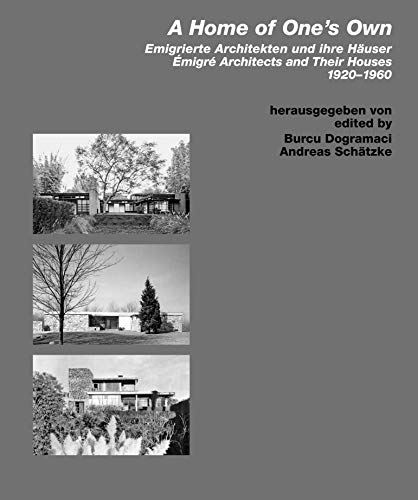
Home of One's Own: Ãmigrà Architects and Their Houses. 1920-1960
Anbieter: Hennessey + Ingalls, Los Angeles, CA, USA
Verkäuferbewertung 4 von 5 Sternen
Hardcover. Zustand: Used - Very Good. When architects design a house for themselves, the often tense relationship between clients and builders is usually absent. That is why in many such buildings the architect-designer's artistic stance and political position, preferences and antipathies, temperament and character are more pronounced than usual. Moreover the architectonic theories, debates and trends of an epoch also leave their traces in them in a particular way. Building for oneself has a special connotation under the conditions of migration and exile. Among the most prominent examples are the private homes of Rudolph Schindler in West Hollywood (1922), Richard Neutra in Los Angeles (1932), Ernst May near Nairobi (1937), Walter Gropius in Lincoln, Massachusetts (1938), Bruno Taut in Istanbul (1938), Ernà Goldfinger in London (1939), Josep LluÃs Sert in Locust Valley, New York (1949), Max Cetto in Mexico City (1949), and Marcel Breuer in New Canaan, Connecticut (1948 and 1951). Many architects who built a house of one's own tried to bring the special message of their design to the public's attention by putting all their ideas into action. They created in this way their own 'manifesto.' Was this possible under the conditions of migration and exile? To what extent, for example, do other buildings of the architects differ from such 'houses of one's own' in a foreign country, to use an expression borrowed and modified from Virginia Wolf? This are two of numerous of questions around the subject 'immigration and exile of architects' for which the authors of the book try to find answers. the top corners are really dented, otherwise in excellent condition.
-

Dietrich & Dietrich: Max-Planck-Institut für Wissenschaftsgeschichte, Berlin;
Anbieter: Versandbuchhandlung Kisch & Co., Fürstenberg OT Blumenow, Deutschland
Verkäuferbewertung 5 von 5 Sternen
Gebundene Ausgabe. Zustand: Sehr gut. "Gebraucht - Sehr gut Ungelesenes, vollständiges Exemplar; in sehr gutem Zustand mit leichten Lagerspuren, als Mängelexemplar gekennzeichnet Rechnung mit MwSt; Bestellungen bis 15 Uhr werden am gleichen Werktag verschicktDahlem has developed in two different ways since the early years of the 20th century An important scientific centre emerged on the site of this former royal territory south-west of Berlin, alongside a suburban villa colony Elite research institutes were established in Dahlem, with the intention of creating a \"German Oxford\", including the first institutes for the Kaiser-Wilhelm-Gesellschaft, founded in 1911 Then Dahlem was chosen as the location for the Freie Universität Berlin after the Second World War The Max-Planck-Gesellschaft commissioned a new building in these surroundings in order to provide the Institute for the History of Science, dating from 1994, with accommodation appropriate to its needs The building was erected in 2004/05 to a competition design by the Stuttgart architects Marion Dietrich-Schake, Hans-Jürgen Dietrich and Thomas Tafel (who left the team after drawing up the planning application) The buildings adjacent to the plot, which is bordered by streets on three sides, date mainly from the 1930s Alongside the institutional buildings detached homes determine the local character The Max-Planck-Institut reflects the dimensions and structure of its surroundings Its height relates to the two-storey homes; the building masses were structured as eight connected, pavilion-like sections, which means that, despite its size, the institute is reticent in its impact on the urban space The symmetrical complex is built around a spacious courtyard with old chestnut trees The library is the key element of the building, and so was arranged around all four sides of the inner courtyard Extensively glazed internal and external walls afford a wide range of views into the library rooms This ensures a constant presence for the institute`s most important set of working tools, and at the same time makes it accessible over very short distances from various parts of the building -Dahlem has developed in two different ways since the early years of the 20th century. An important scientific centre emerged on the site of this former royal territory south-west of Berlin, alongside a suburban villa colony. Elite research institutes were established in Dahlem, with the intention of creating a 'German Oxford', including the first institutes for the Kaiser-Wilhelm-Gesellschaft, founded in 1911. Then Dahlem was chosen as the location for the Freie Universität Berlin after the Second World War. The Max-Planck-Gesellschaft commissioned a new building in these surroundings in order to provide the Institute for the History of Science, dating from 1994, with accommodation appropriate to its needs. The building was erected in 2004/05 to a competition design by the Stuttgart architects Marion Dietrich-Schake, Hans-Jürgen Dietrich and Thomas Tafel (who left the team after drawing up the planning application). The buildings adjacent to the plot, which is bordered by streets on three sides, date mainly from the 1930s. Alongside the institutional buildings detached homes determine the local character. The Max-Planck-Institut reflects the dimensions and structure of its surroundings. Its height relates to the two-storey homes; the building masses were structured as eight connected, pavilion-like sections, which means that, despite its size, the institute is reticent in its impact on the urban space. The symmetrical complex is built around a spacious courtyard with old chestnut trees. The library is the key element of the building, and so was arranged around all four sides of the inner courtyard. Extensively glazed internal and external walls afford a wide range of views into the library rooms. This ensures a constant presence for the institute`s most important set of working tools, and at the same time makes it accessible over very short distances from various parts of the building." 60 pp. Deutsch, Englisch.
-

Deutsche Architekten in BroBbritannien / German Architects in Great Britain : Planen und Bauen im Exil 1933-1945 / Planning and Building in Exile 1933-1945
Anbieter: GreatBookPrices, Columbia, MD, USA
Verkäuferbewertung 5 von 5 Sternen
Zustand: As New. Unread book in perfect condition.
-

Zustand: As New. Unread copy in mint condition.
-
-

Deutsche Architekten in BroBbritannien / German Architects in Great Britain : Planen und Bauen im Exil 1933-1945 / Planning and Building in Exile 1933-1945
Anbieter: GreatBookPrices, Columbia, MD, USA
Verkäuferbewertung 5 von 5 Sternen
Zustand: New.
-
![Bild des Verkäufers für Josef Paul Kleihues - The Art of Urban Architecture: Exhibition at Hamburger Bahnhof, Museum für Gegenwart, Berlin [12 June to 31 August 2003, Hamburger Bahnhof - Museum für Gegenwart, Berlin] zum Verkauf von diakonia secondhand](https://pictures.abebooks.com/inventory/md/md31884967293.jpg)
Josef Paul Kleihues - The Art of Urban Architecture: Exhibition at Hamburger Bahnhof, Museum für Gegenwart, Berlin [12 June to 31 August 2003, Hamburger Bahnhof - Museum für Gegenwart, Berlin]
Sprache: Englisch
Verlag: Nicolaische Verlagsbuchhandlung, 2003
ISBN 10: 3894791136 ISBN 13: 9783894791131
Anbieter: diakonia secondhand, München, Deutschland
Verkäuferbewertung 5 von 5 Sternen
Zustand: Sehr gut. 1. 175 S. Das Buch befindet sich in einem einwandfreien Zustand. 500 Sprache: Englisch Gewicht in Gramm: 1120 Gebundene Ausgabe, Maße: 20.96 cm x 2.59 cm x 26.06 cm.
-
German Architects in Great Britain
Anbieter: PBShop.store US, Wood Dale, IL, USA
Verkäuferbewertung 5 von 5 Sternen
HRD. Zustand: New. New Book. Shipped from UK. Established seller since 2000.
-

Josef Paul Kleihues: Stadt - Bau - Kunst.
Anbieter: KULTur-Antiquariat, Boizenburg, MV, Deutschland
Verkäuferbewertung 5 von 5 Sternen
Erstausgabe
Zustand: Sehr gut. 1. Auflage. 204 Seiten Insgesamt sehr gut: Buch sehr gut erhalten, nur Kopfschnitt fleckig und Seite 93 geknickt. Schutzumschlag ganz leicht berieben. ISBN: 9783894790899 Sprache: Deutsch Gewicht in Gramm: 1140 Gebundene Ausgabe, Leinen, mit SU.
-

Die Hand des Architekten - Zeichnungen aus Berliner Architektursammlungen.
Anbieter: KULTur-Antiquariat, Boizenburg, MV, Deutschland
Verkäuferbewertung 5 von 5 Sternen
Broschiert. Zustand: Sehr gut. 346 Seiten, bebildert. Buch sehr gut erhalten, nur Einband ganz leicht berieben und nachgedunkelt. ISBN: 9783883756066 Sprache: Deutsch Gewicht in Gramm: 1100.
-

Kanzlerbungalow, Bonn ( = opus 72 )
Sprache: Englisch
Verlag: Stuttgart ; London Ed. Menges 2009, 1. A., 2009
ISBN 10: 393256572X ISBN 13: 9783932565724
Anbieter: Antiquariat Carl Wegner, Berlin, B, Deutschland
Verbandsmitglied: GIAQ
Verkäuferbewertung 5 von 5 Sternen
Erstausgabe
Hardcover. 4°, Original-Leinen im OSU. 47 (1) Seiten in deutsch und englisch, farbig und einfarbig bebildert. Guter Zustand. -- Original linen in original dust jacket. 47 (1) pages in German and English, illustrated in color and monochrome. Good condition. -- Bitte Portokosten außerhalb EU erfragen! / Please ask for postage costs outside EU! / S ' il vous plait demander des frais de port en dehors de l ' UE! // Bitte beachten Sie auch unsere Fotos! / Please also note our photos! / Veuillez noter nos photos -- Genießen Sie den Jahresanfang mit unterhaltender Lektüre! - Bei uns finden Sie das richtige Geschenk! -- Wir kaufen Ihre werthaltigen Bücher! Archi.
-
Die Hand des Architekten. Zeichnungen aus Berliner Architektursammlungen. Herausgegeben von der Bauakademie Berlin.
Anbieter: Architektur-Fotografie, Berlin, Deutschland
Verkäuferbewertung 1 von 5 Sternen

Erstausgabe
Softcover. Zustand: Sehr gut. Ohne Schutzumschlag. 1. Auflage. Ausstellungskatalog! Die Hand des Architekten: Zeichnungen aus Berliner Architektursammlungen von Andreas [Hrsg.]. Schätzke.
-

Josef Paul Kleihues - Stadt, Bau, Kunst - Mit CD (Film)
Sprache: Deutsch
Verlag: Nicolaische Verlagsbuchhandlung, Berlin, 2003
ISBN 10: 389479089X ISBN 13: 9783894790899
Anbieter: Der Bücherhof, Helmbrechts, Deutschland
Verkäuferbewertung 4 von 5 Sternen
OLwd. Zustand: sehr gut. wie neu, Etikett auf SU - Mit CD: Ein Film von Ralf Lange und Jörg Plenio im Auftrag des Rundfunks Berlin-Brandenburg. Red.: Meyen Wachholz. 15 Minuten. Limitierte Auflage in Verbindung mit dem Buch zur Ausstellung, erschienen im Nicolai Verlag 2003. Hergestellt mit freundlicher Unterstützung von USM., Achtung: Buch wiegt mehr als 1kg, die Versandkosten erhoehen sich daher Deutsch 205 pages. 4.
-
![Bild des Verkäufers für Die Hand des Architekten : Zeichnungen aus Berliner Architektursammlungen ; [anläßlich der Ausstellung Die Hand des Architekten, Zeichnungen aus Berliner Architektursammlungen, 21. Juli bis 29. September 2002 im Alten Museum der Staatlichen Museen zu Berlin]. hrsg. von der Bauakademie Berlin. [Red.: Andreas Schätzke] / Deutsche Bauakademie: Schriftenreihe der Bauakademie Berlin ; Bd. 1 zum Verkauf von Schuebula](https://pictures.abebooks.com/inventory/md/md30603685355.jpg)
Die Hand des Architekten : Zeichnungen aus Berliner Architektursammlungen ; [anläßlich der Ausstellung Die Hand des Architekten, Zeichnungen aus Berliner Architektursammlungen, 21. Juli bis 29. September 2002 im Alten Museum der Staatlichen Museen zu Berlin]. hrsg. von der Bauakademie Berlin. [Red.: Andreas Schätzke] / Deutsche Bauakademie: Schriftenreihe der Bauakademie Berlin ; Bd. 1
Anbieter: Schuebula, Schneverdingen OT Wintermoor, Deutschland
Verkäuferbewertung 4 von 5 Sternen
Softcover/Paperback. 346 Seiten, reich illustriert ; 24 cm Das Buch befindet sich in einem guten Zustand. Kaum wahrnehmbare Gebrauchsspuren. RA2/26/49 Sprache: Deutsch Gewicht in Gramm: 1011.
-
German Architects in Great Britain (Hardcover)
Sprache: Englisch
Verlag: Edition Axel Menges, Fellbach, 2013
ISBN 10: 3936681759 ISBN 13: 9783936681758
Anbieter: Grand Eagle Retail, Bensenville, IL, USA
Verkäuferbewertung 5 von 5 Sternen
Hardcover. Zustand: new. Hardcover. Text in English & German. In the years after 1933 several hundred architects were forced to emigrate from Germany by the National Socialist dictatorship. Between seventy and eighty of them went to Great Britain -- in part, prominent representatives of Modernism like Walter Gropius, Erich Mendelsohn, Erwin Gutkind, Arthur Korn and Marcel Breuer, but also less well known architects who had adopted very divergent positions. They found the architectural scene in Great Britain to be surprisingly conservative. Only a small circle of architects, clients and specialist journalists was open to modern design and construction methods and stylistic idioms. A few emigrants very quickly and successfully managed to gain a foothold in an environment that was for the most part unfamiliar to them, while for others exile meant a serious break in their career. Just a few months after his arrival in Great Britain, Erich Mendelsohn, together with Serge Chermayeff, won the prestigious competition for the De La Warr Pavilion in the southern English seaside resort of Bexhill (1933-35). The leisure centre is one of the most important examples of classic Modernism on the British Isles. Impington Village College (1936-39), which Walter Gropius designed in partnership with E. Maxwell Fry, also received a great deal of attention and had an impact on the development of British architecture. Furthermore, the spectrum of projects tackled by the emigrants ranged from houses to traffic structures and industrial buildings to buildings for Jewish communities and designs for exhibitions and shops. During this period German architects also left their mark in Great Britain as university lecturers, scientists and publicists. The book offers an overview of the topic and presents select buildings in detail. Moreover, hitherto largely unpublished documents from the estate of Walter Gropius provide a direct insight in-to his life and work in British exile. Shipping may be from multiple locations in the US or from the UK, depending on stock availability.
-

German Architects in Great Britain
Anbieter: Rarewaves.com USA, London, LONDO, Vereinigtes Königreich
Verkäuferbewertung 5 von 5 Sternen
EUR 59,86
Versand gratis
Versand von Vereinigtes Königreich nach USAAnzahl: 4 verfügbar
In den WarenkorbHardback. Zustand: New. Text in English and German. In the years after 1933 several hundred architects were forced to emigrate from Germany by the National Socialist dictatorship. Between seventy and eighty of them went to Great Britain -- in part, prominent representatives of Modernism like Walter Gropius, Erich Mendelsohn, Erwin Gutkind, Arthur Korn and Marcel Breuer, but also less well known architects who had adopted very divergent positions. They found the architectural scene in Great Britain to be surprisingly conservative. Only a small circle of architects, clients and specialist journalists was open to modern design and construction methods and stylistic idioms. A few emigrants very quickly and successfully managed to gain a foothold in an environment that was for the most part unfamiliar to them, while for others exile meant a serious break in their career. Just a few months after his arrival in Great Britain, Erich Mendelsohn, together with Serge Chermayeff, won the prestigious competition for the De La Warr Pavilion in the southern English seaside resort of Bexhill (1933-35). The leisure centre is one of the most important examples of classic Modernism on the British Isles. Impington Village College (1936-39), which Walter Gropius designed in partnership with E. Maxwell Fry, also received a great deal of attention and had an impact on the development of British architecture. Furthermore, the spectrum of projects tackled by the emigrants ranged from houses to traffic structures and industrial buildings to buildings for Jewish communities and designs for exhibitions and shops. During this period German architects also left their mark in Great Britain as university lecturers, scientists and publicists. The book offers an overview of the topic and presents select buildings in detail. Moreover, hitherto largely unpublished documents from the estate of Walter Gropius provide a direct insight in-to his life and work in British exile.
-
German Architects in Great Britain
Anbieter: PBShop.store UK, Fairford, GLOS, Vereinigtes Königreich
Verkäuferbewertung 4 von 5 Sternen
EUR 53,84
EUR 8,82 Versand
Versand von Vereinigtes Königreich nach USAAnzahl: 6 verfügbar
In den WarenkorbHRD. Zustand: New. New Book. Shipped from UK. Established seller since 2000.
-

Hardback. Zustand: New. Die Meister der Betonschalen Mitte des 2 . Jahrhunderts begann die Hochphase des Betonschalenbaus. Weltweit entstanden technisch avancierte Konstruktionen von aufsehenerregender Expressivität. Mit Félix Candela, Heinz Isler und Ulrich Müther nimmt dieses Buch exemplarisch drei Protagonisten dieser Bauweise in den Blick. Ihr Wirken - vorwiegend in Mexiko, der Schweiz und der DDR - fand unter sehr verschiedenen politischen, ökonomisch-sozialen und kulturellen Bedingungen statt. Die Autoren analysieren die Bauten und Projekte vor dem Hintergrund der Entwicklungen der Architektur und des Ingenieurwesens jener Zeit. Sie thematisieren wechselseitige Einflüsse, Gemeinsamkeiten wie Unterschiede in den Entwurfsprozessen, der Konstruktion und der Ausführung. Darüber hinaus werden Fragen der Rezeption und der heutigen Nutzung behandelt. Lernen von Félix Candela ( 9 - 997), Heinz Isler ( 92 -2 9) und Ulrich Müther ( 934-2 7) und ihren historischen Schalenbauten Unbekanntes aus den Planarchiven Englisch mit Zusammenfassungen auf Deutsch und Spanisch.
-

Candela Isler Müther : Positions on Shell Construction
Anbieter: GreatBookPrices, Columbia, MD, USA
Verkäuferbewertung 5 von 5 Sternen
Zustand: New.
-

Dietrich & Dietrich: Max-Planck-Institut für Wissenschaftsgeschichte, Berlin;
Anbieter: Che & Chandler Versandbuchhandlung, Fürstenberg OT Blumenow, Deutschland
Verkäuferbewertung 5 von 5 Sternen
Gebundene Ausgabe. Zustand: Sehr gut. "Gebraucht - Sehr gut Ungelesenes, vollständiges Exemplar; in sehr gutem Zustand mit leichten Lagerspuren, als Mängelexemplar gekennzeichnet Rechnung mit MwSt; Bestellungen bis 15 Uhr werden am gleichen Werktag verschicktDahlem has developed in two different ways since the early years of the 20th century An important scientific centre emerged on the site of this former royal territory south-west of Berlin, alongside a suburban villa colony Elite research institutes were established in Dahlem, with the intention of creating a \"German Oxford\", including the first institutes for the Kaiser-Wilhelm-Gesellschaft, founded in 1911 Then Dahlem was chosen as the location for the Freie Universität Berlin after the Second World War The Max-Planck-Gesellschaft commissioned a new building in these surroundings in order to provide the Institute for the History of Science, dating from 1994, with accommodation appropriate to its needs The building was erected in 2004/05 to a competition design by the Stuttgart architects Marion Dietrich-Schake, Hans-Jürgen Dietrich and Thomas Tafel (who left the team after drawing up the planning application) The buildings adjacent to the plot, which is bordered by streets on three sides, date mainly from the 1930s Alongside the institutional buildings detached homes determine the local character The Max-Planck-Institut reflects the dimensions and structure of its surroundings Its height relates to the two-storey homes; the building masses were structured as eight connected, pavilion-like sections, which means that, despite its size, the institute is reticent in its impact on the urban space The symmetrical complex is built around a spacious courtyard with old chestnut trees The library is the key element of the building, and so was arranged around all four sides of the inner courtyard Extensively glazed internal and external walls afford a wide range of views into the library rooms This ensures a constant presence for the institute`s most important set of working tools, and at the same time makes it accessible over very short distances from various parts of the building -Dahlem has developed in two different ways since the early years of the 20th century. An important scientific centre emerged on the site of this former royal territory south-west of Berlin, alongside a suburban villa colony. Elite research institutes were established in Dahlem, with the intention of creating a 'German Oxford', including the first institutes for the Kaiser-Wilhelm-Gesellschaft, founded in 1911. Then Dahlem was chosen as the location for the Freie Universität Berlin after the Second World War. The Max-Planck-Gesellschaft commissioned a new building in these surroundings in order to provide the Institute for the History of Science, dating from 1994, with accommodation appropriate to its needs. The building was erected in 2004/05 to a competition design by the Stuttgart architects Marion Dietrich-Schake, Hans-Jürgen Dietrich and Thomas Tafel (who left the team after drawing up the planning application). The buildings adjacent to the plot, which is bordered by streets on three sides, date mainly from the 1930s. Alongside the institutional buildings detached homes determine the local character. The Max-Planck-Institut reflects the dimensions and structure of its surroundings. Its height relates to the two-storey homes; the building masses were structured as eight connected, pavilion-like sections, which means that, despite its size, the institute is reticent in its impact on the urban space. The symmetrical complex is built around a spacious courtyard with old chestnut trees. The library is the key element of the building, and so was arranged around all four sides of the inner courtyard. Extensively glazed internal and external walls afford a wide range of views into the library rooms. This ensures a constant presence for the institute`s most important set of working tools, and at the same time makes it accessible over very short distances from various parts of the building." 60 pp. Deutsch, Englisch.
-

Home of One's Own : Émigré Architects and Their Houses: 1920-1960 / Emigrierte Architekten und ihre Hauser
Anbieter: GreatBookPrices, Columbia, MD, USA
Verkäuferbewertung 5 von 5 Sternen
Zustand: As New. Unread book in perfect condition.
-

Deutsche Architekten in BroBbritannien / German Architects in Great Britain : Planen und Bauen im Exil 1933-1945 / Planning and Building in Exile 1933-1945
Anbieter: GreatBookPricesUK, Woodford Green, Vereinigtes Königreich
Verkäuferbewertung 5 von 5 Sternen
EUR 47,30
EUR 17,33 Versand
Versand von Vereinigtes Königreich nach USAAnzahl: 8 verfügbar
In den WarenkorbZustand: New.
-

Candela Isler Müther : Positions on Shell Construction
Anbieter: GreatBookPrices, Columbia, MD, USA
Verkäuferbewertung 5 von 5 Sternen
Zustand: As New. Unread book in perfect condition.
-

Candela Isler M?ther
Anbieter: PBShop.store UK, Fairford, GLOS, Vereinigtes Königreich
Verkäuferbewertung 4 von 5 Sternen
EUR 55,41
EUR 9,81 Versand
Versand von Vereinigtes Königreich nach USAAnzahl: 4 verfügbar
In den WarenkorbHRD. Zustand: New. New Book. Shipped from UK. Established seller since 2000.
-

Home of One's Own : Émigré Architects and Their Houses: 1920-1960 / Emigrierte Architekten und ihre Hauser
Anbieter: GreatBookPrices, Columbia, MD, USA
Verkäuferbewertung 5 von 5 Sternen
Zustand: New.


