

Gesamtpreis (1 Artikel Artikel):
Versandziel:

9780141978024 - Why Information Grows: The Evolution of Order, from Atoms to Economies von Hidalgo, César (23 Ergebnisse)
Direkt zu den wichtigsten Suchergebnissen
Suchfilter
Produktart
- Alle Product Types
- Bücher (23)
- Magazine & Zeitschriften (Keine weiteren Ergebnisse entsprechen dieser Verfeinerung)
- Comics (Keine weiteren Ergebnisse entsprechen dieser Verfeinerung)
- Noten (Keine weiteren Ergebnisse entsprechen dieser Verfeinerung)
- Kunst, Grafik & Poster (Keine weiteren Ergebnisse entsprechen dieser Verfeinerung)
- Fotografien (Keine weiteren Ergebnisse entsprechen dieser Verfeinerung)
- Karten (Keine weiteren Ergebnisse entsprechen dieser Verfeinerung)
- Manuskripte & Papierantiquitäten (Keine weiteren Ergebnisse entsprechen dieser Verfeinerung)
Zustand Mehr dazu
- Neu (17)
- Wie Neu, Sehr Gut oder Gut Bis Sehr Gut (3)
- Gut oder Befriedigend (2)
- Ausreichend oder Schlecht (1)
- Wie beschrieben (Keine weiteren Ergebnisse entsprechen dieser Verfeinerung)
Einband
- alle Einbände
- Hardcover (Keine weiteren Ergebnisse entsprechen dieser Verfeinerung)
- Softcover (23)
Weitere Eigenschaften
- Erstausgabe (Keine weiteren Ergebnisse entsprechen dieser Verfeinerung)
- Signiert (Keine weiteren Ergebnisse entsprechen dieser Verfeinerung)
- Schutzumschlag (Keine weiteren Ergebnisse entsprechen dieser Verfeinerung)
- Angebotsfoto (10)
- Keine Print-on-Demand Angebote (23)
Sprache (1)
Preis
- Beliebiger Preis
- Weniger als EUR 20
- EUR 20 bis EUR 45
- Mehr als EUR 45 (Keine weiteren Ergebnisse entsprechen dieser Verfeinerung)
Gratisversand
Land des Verkäufers
Verkäuferbewertung
-
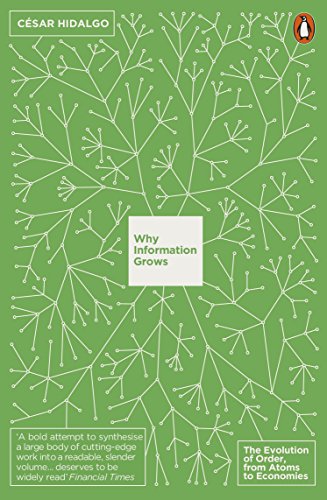
Why Information Grows: The Evolution of Order, from Atoms to Economies
Anbieter: WorldofBooks, Goring-By-Sea, WS, Vereinigtes Königreich
Verkäuferbewertung 5 von 5 Sternen

EUR 1,05
EUR 6,47 Versand
Versand von Vereinigtes Königreich nach USAAnzahl: 7 verfügbar
In den WarenkorbPaperback. Zustand: Very Good. The book has been read, but is in excellent condition. Pages are intact and not marred by notes or highlighting. The spine remains undamaged.
-

Why Information Grows: The Evolution of Order, from Atoms to Economies
Anbieter: WeBuyBooks, Rossendale, LANCS, Vereinigtes Königreich
Verkäuferbewertung 5 von 5 Sternen
EUR 2,80
EUR 5,72 Versand
Versand von Vereinigtes Königreich nach USAAnzahl: 1 verfügbar
In den WarenkorbZustand: Good. Most items will be dispatched the same or the next working day. A copy that has been read but remains in clean condition. All of the pages are intact and the cover is intact and the spine may show signs of wear. The book may have minor markings which are not specifically mentioned. Ex library copy with usual stamps & stickers.
-

Why Information Grows
Anbieter: Rarewaves.com USA, London, LONDO, Vereinigtes Königreich
Verkäuferbewertung 5 von 5 Sternen
EUR 16,32
Versand gratis
Versand von Vereinigtes Königreich nach USAAnzahl: 2 verfügbar
In den WarenkorbPaperback. Zustand: New. In Why Information Grows, rising star César Hidalgo offers a radical interpretation of global economicsWhat is economic growth? And why, historically, has it occurred in only a few places? Previous efforts to answer these questions have focused on institutions, geography, finances, and psychology. But MIT professor César Hidalgo argues that in order to fully grasp the nature of economic growth we need to transcend the social sciences and turn to the science of information, networks and complexity. The growth of economies, he explains, is deeply connected with the growth of order - or information.At first glance, the universe seems hostile to order. Thermodynamics dictates that over time, order will disappear. But thermodynamics also has loopholes that promote the growth of information in pockets. Our cities are such pockets where information grows, but they are not all the same. For every Silicon Valley, Tokyo, and London, there are dozens of places with underdeveloped economies. Why does the US economy outstrip Brazil's, and Brazil's that of Chad? Why did the technology corridor along Boston's Route 128 languish while Silicon Valley blossomed? In each case, the key is how people, companies, and the networks they form process information - it is all about their knowledge, knowhow and imagination. As Hidalgo compellingly shows, economies are made of networks of people and society is a collective computer. The problem of economic development is in fact the problem of making these networks more powerful.A radical new interpretation of global economics, Why Information Grows overturns traditional assumptions about the development of economies and the origins of wealth and takes a crucial step toward making economics less the dismal science and more the insightful one.
-
Why Information Grows (Paperback)
Sprache: Englisch
Verlag: Penguin Books Ltd, London, 2016
ISBN 10: 0141978023 ISBN 13: 9780141978024
Anbieter: Grand Eagle Retail, Bensenville, IL, USA
Verkäuferbewertung 5 von 5 Sternen
Paperback. Zustand: new. Paperback. In Why Information Grows, rising star Cesar Hidalgo offers a radical interpretation of global economicsWhat is economic growth? And why, historically, has it occurred in only a few places? Previous efforts to answer these questions have focused on institutions, geography, finances, and psychology. But MIT professor Cesar Hidalgo argues that in order to fully grasp the nature of economic growth we need to transcend the social sciences and turn to the science of information, networks and complexity. The growth of economies, he explains, is deeply connected with the growth of order - or information.At first glance, the universe seems hostile to order. Thermodynamics dictates that over time, order will disappear. But thermodynamics also has loopholes that promote the growth of information in pockets. Our cities are such pockets where information grows, but they are not all the same. For every Silicon Valley, Tokyo, and London, there are dozens of places with underdeveloped economies. Why does the US economy outstrip Brazil's, and Brazil's that of Chad? Why did the technology corridor along Boston's Route 128 languish while Silicon Valley blossomed? In each case, the key is how people, companies, and the networks they form process information - it is all about their knowledge, knowhow and imagination. As Hidalgo compellingly shows, economies are made of networks of people and society is a collective computer. The problem of economic development is in fact the problem of making these networks more powerful.A radical new interpretation of global economics, Why Information Grows overturns traditional assumptions about the development of economies and the origins of wealth and takes a crucial step toward making economics less the dismal science and more the insightful one. What is economic growth? And why, historically, has it occurred in only a few places? Previous efforts to answer these questions have focused on institutions, geography, finances, and psychology. This book argues that in order to fully grasp the nature of economic growth we need to turn to the science of information, networks and complexity. Shipping may be from multiple locations in the US or from the UK, depending on stock availability.
-
Why Information Grows
Anbieter: PBShop.store UK, Fairford, GLOS, Vereinigtes Königreich
Verkäuferbewertung 5 von 5 Sternen
EUR 13,45
EUR 3,80 Versand
Versand von Vereinigtes Königreich nach USAAnzahl: 4 verfügbar
In den WarenkorbPAP. Zustand: New. New Book. Shipped from UK. Established seller since 2000.
-
Why Information Grows: The Evolution of Order, from Atoms to Economies
Anbieter: AproposBooks&Comics, London, Vereinigtes Königreich
Verkäuferbewertung 4 von 5 Sternen

EUR 4,70
EUR 17,27 Versand
Versand von Vereinigtes Königreich nach USAAnzahl: 1 verfügbar
In den WarenkorbSoft cover. Zustand: Near Fine.
-
Why Information Grows: The Evolution of Order, from Atoms to Economies
Anbieter: SGOIS, Bungay, SUFFO, Vereinigtes Königreich
Verkäuferbewertung 5 von 5 Sternen
EUR 5,95
EUR 16,17 Versand
Versand von Vereinigtes Königreich nach USAAnzahl: 1 verfügbar
In den WarenkorbSoft cover. Zustand: As New. No Jacket. Printers ink stamp inside the rear cover, otherwise looks unread.
-
Why Information Grows: The Evolution of Order, from Atoms to Economies
Anbieter: Revaluation Books, Exeter, Vereinigtes Königreich
Verkäuferbewertung 5 von 5 Sternen
EUR 12,06
EUR 11,55 Versand
Versand von Vereinigtes Königreich nach USAAnzahl: 2 verfügbar
In den WarenkorbPaperback. Zustand: Brand New. 256 pages. 7.80x5.04x0.71 inches. In Stock.
-
Why Information Grows: The Evolution of Order, from Atoms to Economies
Anbieter: Kennys Bookshop and Art Galleries Ltd., Galway, GY, Irland
Verkäuferbewertung 5 von 5 Sternen
EUR 13,87
EUR 10,50 Versand
Versand von Irland nach USAAnzahl: Mehr als 20 verfügbar
In den WarenkorbZustand: New. Num Pages: 256 pages. BIC Classification: KCY. Category: (P) Professional & Vocational; (U) Tertiary Education (US: College). Dimension: 198 x 129. . . 2016. Paperback. . . . .
-
Why Information Grows: The Evolution of Order, from Atoms to Economies
Anbieter: Kennys Bookstore, Olney, MD, USA
Verkäuferbewertung 5 von 5 Sternen
Zustand: New. Num Pages: 256 pages. BIC Classification: KCY. Category: (P) Professional & Vocational; (U) Tertiary Education (US: College). Dimension: 198 x 129. . . 2016. Paperback. . . . . Books ship from the US and Ireland.
-
Why Information Grows: The Evolution of Order, from Atoms to Economies
Anbieter: Ria Christie Collections, Uxbridge, Vereinigtes Königreich
Verkäuferbewertung 5 von 5 Sternen
EUR 12,79
EUR 13,84 Versand
Versand von Vereinigtes Königreich nach USAAnzahl: Mehr als 20 verfügbar
In den WarenkorbZustand: New. In.
-
Why Information Grows: The Evolution of Order, from Atoms to Economies
Anbieter: Chiron Media, Wallingford, Vereinigtes Königreich
Verkäuferbewertung 5 von 5 Sternen
EUR 10,28
EUR 17,89 Versand
Versand von Vereinigtes Königreich nach USAAnzahl: 4 verfügbar
In den Warenkorbpaperback. Zustand: New.
-
Why Information Grows: The Evolution of Order, from Atoms to Economies
Anbieter: Biblios, Frankfurt am main, HESSE, Deutschland
Verkäuferbewertung 4 von 5 Sternen
Zustand: New. pp. 256.
-

Why Information Grows : The Evolution of Order, from Atoms to Economies
Anbieter: GreatBookPricesUK, Woodford Green, Vereinigtes Königreich
Verkäuferbewertung 5 von 5 Sternen
EUR 13,23
EUR 17,33 Versand
Versand von Vereinigtes Königreich nach USAAnzahl: 2 verfügbar
In den WarenkorbZustand: New.
-
Why Information Grows: The Evolution of Order, from Atoms to Economies
Anbieter: THE SAINT BOOKSTORE, Southport, Vereinigtes Königreich
Verkäuferbewertung 5 von 5 Sternen
EUR 15,41
EUR 16,23 Versand
Versand von Vereinigtes Königreich nach USAAnzahl: 2 verfügbar
In den WarenkorbPaperback / softback. Zustand: New. New copy - Usually dispatched within 3 working days.
-

Why Information Grows : The Evolution of Order, from Atoms to Economies
Anbieter: GreatBookPricesUK, Woodford Green, Vereinigtes Königreich
Verkäuferbewertung 5 von 5 Sternen
EUR 15,57
EUR 17,33 Versand
Versand von Vereinigtes Königreich nach USAAnzahl: 2 verfügbar
In den WarenkorbZustand: As New. Unread book in perfect condition.
-
Why Information Grows: The Evolution of Order, from Atoms to Economies
Anbieter: Stephen White Books, Bradford, Vereinigtes Königreich
Verkäuferbewertung 5 von 5 Sternen
EUR 1,03
EUR 38,41 Versand
Versand von Vereinigtes Königreich nach USAAnzahl: 1 verfügbar
In den Warenkorbpaperback. Zustand: Acceptable. Ex-library book, usual marking. Clean copy in good condition. Stain at top edge. Quick dispatch from UK seller.
-
Why Information Grows (Paperback)
Sprache: Englisch
Verlag: Penguin Books Ltd, London, 2016
ISBN 10: 0141978023 ISBN 13: 9780141978024
Anbieter: CitiRetail, Stevenage, Vereinigtes Königreich
Verkäuferbewertung 5 von 5 Sternen
EUR 13,66
EUR 42,74 Versand
Versand von Vereinigtes Königreich nach USAAnzahl: 1 verfügbar
In den WarenkorbPaperback. Zustand: new. Paperback. In Why Information Grows, rising star Cesar Hidalgo offers a radical interpretation of global economicsWhat is economic growth? And why, historically, has it occurred in only a few places? Previous efforts to answer these questions have focused on institutions, geography, finances, and psychology. But MIT professor Cesar Hidalgo argues that in order to fully grasp the nature of economic growth we need to transcend the social sciences and turn to the science of information, networks and complexity. The growth of economies, he explains, is deeply connected with the growth of order - or information.At first glance, the universe seems hostile to order. Thermodynamics dictates that over time, order will disappear. But thermodynamics also has loopholes that promote the growth of information in pockets. Our cities are such pockets where information grows, but they are not all the same. For every Silicon Valley, Tokyo, and London, there are dozens of places with underdeveloped economies. Why does the US economy outstrip Brazil's, and Brazil's that of Chad? Why did the technology corridor along Boston's Route 128 languish while Silicon Valley blossomed? In each case, the key is how people, companies, and the networks they form process information - it is all about their knowledge, knowhow and imagination. As Hidalgo compellingly shows, economies are made of networks of people and society is a collective computer. The problem of economic development is in fact the problem of making these networks more powerful.A radical new interpretation of global economics, Why Information Grows overturns traditional assumptions about the development of economies and the origins of wealth and takes a crucial step toward making economics less the dismal science and more the insightful one. What is economic growth? And why, historically, has it occurred in only a few places? Previous efforts to answer these questions have focused on institutions, geography, finances, and psychology. This book argues that in order to fully grasp the nature of economic growth we need to turn to the science of information, networks and complexity. Shipping may be from our UK warehouse or from our Australian or US warehouses, depending on stock availability.
-
Why Information Grows (Paperback)
Sprache: Englisch
Verlag: Penguin Books Ltd, London, 2016
ISBN 10: 0141978023 ISBN 13: 9780141978024
Anbieter: AussieBookSeller, Truganina, VIC, Australien
Verkäuferbewertung 5 von 5 Sternen
Paperback. Zustand: new. Paperback. In Why Information Grows, rising star Cesar Hidalgo offers a radical interpretation of global economicsWhat is economic growth? And why, historically, has it occurred in only a few places? Previous efforts to answer these questions have focused on institutions, geography, finances, and psychology. But MIT professor Cesar Hidalgo argues that in order to fully grasp the nature of economic growth we need to transcend the social sciences and turn to the science of information, networks and complexity. The growth of economies, he explains, is deeply connected with the growth of order - or information.At first glance, the universe seems hostile to order. Thermodynamics dictates that over time, order will disappear. But thermodynamics also has loopholes that promote the growth of information in pockets. Our cities are such pockets where information grows, but they are not all the same. For every Silicon Valley, Tokyo, and London, there are dozens of places with underdeveloped economies. Why does the US economy outstrip Brazil's, and Brazil's that of Chad? Why did the technology corridor along Boston's Route 128 languish while Silicon Valley blossomed? In each case, the key is how people, companies, and the networks they form process information - it is all about their knowledge, knowhow and imagination. As Hidalgo compellingly shows, economies are made of networks of people and society is a collective computer. The problem of economic development is in fact the problem of making these networks more powerful.A radical new interpretation of global economics, Why Information Grows overturns traditional assumptions about the development of economies and the origins of wealth and takes a crucial step toward making economics less the dismal science and more the insightful one. What is economic growth? And why, historically, has it occurred in only a few places? Previous efforts to answer these questions have focused on institutions, geography, finances, and psychology. This book argues that in order to fully grasp the nature of economic growth we need to turn to the science of information, networks and complexity. Shipping may be from our Sydney, NSW warehouse or from our UK or US warehouse, depending on stock availability.
-
WHY INFORMATION GROWS
Anbieter: Speedyhen, Hertfordshire, Vereinigtes Königreich
Verkäuferbewertung 5 von 5 Sternen
EUR 12,58
EUR 47,36 Versand
Versand von Vereinigtes Königreich nach USAAnzahl: 4 verfügbar
In den WarenkorbZustand: NEW.
-
Zustand: New. What is economic growth? And why, historically, has it occurred in only a few places? Previous efforts to answer these questions have focused on institutions, geography, finances, and psychology. This book argues that in order to fully grasp the nature of e.
-

Why Information Grows
Anbieter: Rarewaves.com UK, London, Vereinigtes Königreich
Verkäuferbewertung 5 von 5 Sternen
EUR 12,57
EUR 75,08 Versand
Versand von Vereinigtes Königreich nach USAAnzahl: 2 verfügbar
In den WarenkorbPaperback. Zustand: New. In Why Information Grows, rising star César Hidalgo offers a radical interpretation of global economicsWhat is economic growth? And why, historically, has it occurred in only a few places? Previous efforts to answer these questions have focused on institutions, geography, finances, and psychology. But MIT professor César Hidalgo argues that in order to fully grasp the nature of economic growth we need to transcend the social sciences and turn to the science of information, networks and complexity. The growth of economies, he explains, is deeply connected with the growth of order - or information.At first glance, the universe seems hostile to order. Thermodynamics dictates that over time, order will disappear. But thermodynamics also has loopholes that promote the growth of information in pockets. Our cities are such pockets where information grows, but they are not all the same. For every Silicon Valley, Tokyo, and London, there are dozens of places with underdeveloped economies. Why does the US economy outstrip Brazil's, and Brazil's that of Chad? Why did the technology corridor along Boston's Route 128 languish while Silicon Valley blossomed? In each case, the key is how people, companies, and the networks they form process information - it is all about their knowledge, knowhow and imagination. As Hidalgo compellingly shows, economies are made of networks of people and society is a collective computer. The problem of economic development is in fact the problem of making these networks more powerful.A radical new interpretation of global economics, Why Information Grows overturns traditional assumptions about the development of economies and the origins of wealth and takes a crucial step toward making economics less the dismal science and more the insightful one.
-

Taschenbuch. Zustand: Neu. Why Information Grows | The Evolution of Order, from Atoms to Economies | Cesar Hidalgo | Taschenbuch | Kartoniert / Broschiert | Englisch | 2016 | Penguin Books Ltd | EAN 9780141978024 | Verantwortliche Person für die EU: Ansata, ein Label der Penguin Random House Verlagsgruppe GmbH, Neumarkter Str. 28, 81673 München, kundenservice[at]penguinrandomhouse[dot]de | Anbieter: preigu.

