

Gesamtpreis (1 Artikel Artikel):
Versandziel:

9780226577029 - Alchemy Tried in the Fire: Starkey, Boyle, and the Fate of Helmontian Chymistry von Newman, William R. R.; Principe, Lawrence M. (22 Ergebnisse)
Direkt zu den wichtigsten Suchergebnissen
Suchfilter
Produktart
- Alle Product Types
- Bücher (22)
- Magazine & Zeitschriften (Keine weiteren Ergebnisse entsprechen dieser Verfeinerung)
- Comics (Keine weiteren Ergebnisse entsprechen dieser Verfeinerung)
- Noten (Keine weiteren Ergebnisse entsprechen dieser Verfeinerung)
- Kunst, Grafik & Poster (Keine weiteren Ergebnisse entsprechen dieser Verfeinerung)
- Fotografien (Keine weiteren Ergebnisse entsprechen dieser Verfeinerung)
- Karten (Keine weiteren Ergebnisse entsprechen dieser Verfeinerung)
- Manuskripte & Papierantiquitäten (Keine weiteren Ergebnisse entsprechen dieser Verfeinerung)
Zustand Mehr dazu
- Neu (19)
- Wie Neu, Sehr Gut oder Gut Bis Sehr Gut (3)
- Gut oder Befriedigend (Keine weiteren Ergebnisse entsprechen dieser Verfeinerung)
- Ausreichend oder Schlecht (Keine weiteren Ergebnisse entsprechen dieser Verfeinerung)
- Wie beschrieben (Keine weiteren Ergebnisse entsprechen dieser Verfeinerung)
Einband
- alle Einbände
- Hardcover (Keine weiteren Ergebnisse entsprechen dieser Verfeinerung)
- Softcover (22)
Weitere Eigenschaften
- Erstausgabe (Keine weiteren Ergebnisse entsprechen dieser Verfeinerung)
- Signiert (Keine weiteren Ergebnisse entsprechen dieser Verfeinerung)
- Schutzumschlag (Keine weiteren Ergebnisse entsprechen dieser Verfeinerung)
- Angebotsfoto (10)
- Keine Print-on-Demand Angebote (21)
Sprache (1)
Preis
- Beliebiger Preis
- Weniger als EUR 20 (Keine weiteren Ergebnisse entsprechen dieser Verfeinerung)
- EUR 20 bis EUR 45
- Mehr als EUR 45
Gratisversand
Land des Verkäufers
Verkäuferbewertung
-
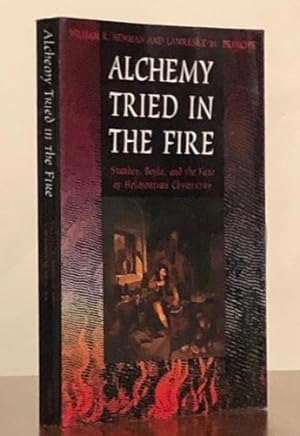
Alchemy Tried in the Fire: Starkey, Boyle, and the Fate of Helmontian Chymistry
Sprache: Englisch
Verlag: University of Chicago Press, 2005
ISBN 10: 0226577023 ISBN 13: 9780226577029
Anbieter: Moroccobound Fine Books, IOBA, Lewis Center, OH, USA
Verbandsmitglied: IOBA
Verkäuferbewertung 5 von 5 Sternen

Soft cover. Zustand: Near Fine. 344 pp. Softcover, bound in wraps. Light edge-wear, the text unmarked.
-
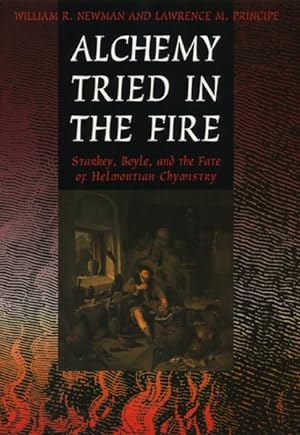
Alchemy Tried In The Fire : Starkey, Boyle, And The Fate Of Helmontian Chymistry
Sprache: Englisch
Verlag: University of Chicago Press, 2005
ISBN 10: 0226577023 ISBN 13: 9780226577029
Anbieter: GreatBookPrices, Columbia, MD, USA
Verkäuferbewertung 5 von 5 Sternen
Zustand: New.
-

Alchemy Tried in the Fire (Paperback)
Sprache: Englisch
Verlag: The University of Chicago Press, Chicago, IL, 2005
ISBN 10: 0226577023 ISBN 13: 9780226577029
Anbieter: Grand Eagle Retail, Bensenville, IL, USA
Verkäuferbewertung 5 von 5 Sternen
Paperback. Zustand: new. Paperback. Winner of the 2005 Pfizer Prize from the History of Science Society. What actually took place in the private laboratory of a mid-seventeenth century alchemist? How did he direct his quest after the secrets of Nature? What instruments and theoretical principles did he employ?Using, as their guide, the previously misunderstood interactions between Robert Boyle, widely known as "the father of chemistry," and George Starkey, an alchemist and the most prominent American scientific writer before Benjamin Franklin as their guide, Newman and Principe reveal the hitherto hidden laboratory operations of a famous alchemist and argue that many of the principles and practices characteristic of modern chemistry derive from alchemy. By analyzing Starkey's extraordinary laboratory notebooks, the authors show how this American "chymist" translated the wildly figurative writings of traditional alchemy into quantitative, carefully reasoned laboratory practiceand then encoded his own work in allegorical, secretive treatises under the name of Eirenaeus Philalethes. The intriguing "mystic" Joan Baptista Van Helmonta favorite of Starkey, Boyle, and even of Lavoisieremerges from this study as a surprisingly central figure in seventeenth-century "chymistry." A common emphasis on quantification, material production, and analysis/synthesis, the authors argue, illustrates a continuity of goals and practices from late medieval alchemy down to and beyond the Chemical Revolution. For anyone who wants to understand how alchemy was actually practiced during the Scientific Revolution and what it contributed to the development of modern chemistry, Alchemy Tried in the Fire will be a veritable philosopher's stone. Using the previously misunderstood interactions between Robert Boyle, widely known as "the father of chemistry," and George Starkey, an alchemist and the most prominent American scientific writer before Benjamin Franklin, as their guide, William R. Newman and Lawrence M. Shipping may be from multiple locations in the US or from the UK, depending on stock availability.
-

Alchemy Tried in the Fire: Starkey, Boyle, and the Fate of Helmontian Chymistry (eng)
Sprache: Englisch
Verlag: University of Chicago Press, 2005
ISBN 10: 0226577023 ISBN 13: 9780226577029
Anbieter: Brook Bookstore On Demand, Napoli, NA, Italien
Verkäuferbewertung 5 von 5 Sternen
EUR 35,77
EUR 6,80 Versand
Versand von Italien nach USAAnzahl: Mehr als 20 verfügbar
In den WarenkorbZustand: new.
-
Alchemy Tried in the Fire
Sprache: Englisch
Verlag: University of Chicago Press, 2005
ISBN 10: 0226577023 ISBN 13: 9780226577029
Anbieter: PBShop.store US, Wood Dale, IL, USA
Verkäuferbewertung 5 von 5 Sternen
PAP. Zustand: New. New Book. Shipped from UK. Established seller since 2000.
-
Alchemy Tried In The Fire : Starkey, Boyle, And The Fate Of Helmontian Chymistry
Sprache: Englisch
Verlag: University of Chicago Press, 2005
ISBN 10: 0226577023 ISBN 13: 9780226577029
Anbieter: GreatBookPrices, Columbia, MD, USA
Verkäuferbewertung 5 von 5 Sternen
Zustand: As New. Unread book in perfect condition.
-
Alchemy Tried in the Fire
Sprache: Englisch
Verlag: University of Chicago Press, 2005
ISBN 10: 0226577023 ISBN 13: 9780226577029
Anbieter: PBShop.store UK, Fairford, GLOS, Vereinigtes Königreich
Verkäuferbewertung 5 von 5 Sternen
EUR 42,95
EUR 5,86 Versand
Versand von Vereinigtes Königreich nach USAAnzahl: 15 verfügbar
In den WarenkorbPAP. Zustand: New. New Book. Shipped from UK. Established seller since 2000.
-
Alchemy Tried in the Fire: Starkey, Boyle, and the Fate of Helmontian Chymistry
Sprache: Englisch
Verlag: University Of Chicago Press, 2005
ISBN 10: 0226577023 ISBN 13: 9780226577029
Anbieter: Kennys Bookshop and Art Galleries Ltd., Galway, GY, Irland
Verkäuferbewertung 5 von 5 Sternen
EUR 37,74
EUR 10,50 Versand
Versand von Irland nach USAAnzahl: Mehr als 20 verfügbar
In den WarenkorbZustand: New. Using the previously misunderstood interactions between Robert Boyle, widely known as "the father of chemistry," and George Starkey, an alchemist and the most prominent American scientific writer before Benjamin Franklin, as their guide, William R. Newman and Lawrence M. Num Pages: 360 pages, 7 halftones. BIC Classification: HRQX2; PDX; PN. Category: (P) Professional & Vocational. Dimension: 230 x 325 x 30. Weight in Grams: 578. . 2005. Paperback Ed. Paperback. . . . .
-
Alchemy Tried in the Fire Starkey, Boyle and the Fate of Helmontian Chymistry
Anbieter: Revaluation Books, Exeter, Vereinigtes Königreich
Verkäuferbewertung 5 von 5 Sternen
EUR 38,48
EUR 14,59 Versand
Versand von Vereinigtes Königreich nach USAAnzahl: 1 verfügbar
In den WarenkorbPaperback. Zustand: Brand New. paperback ed edition. 344 pages. 8.75x6.00x0.75 inches. In Stock.
-
Alchemy Tried in the Fire
Sprache: Englisch
Verlag: University of Chicago Press, 2005
ISBN 10: 0226577023 ISBN 13: 9780226577029
Anbieter: Majestic Books, Hounslow, Vereinigtes Königreich
Verkäuferbewertung 4 von 5 Sternen

EUR 46,92
EUR 7,59 Versand
Versand von Vereinigtes Königreich nach USAAnzahl: 3 verfügbar
In den WarenkorbZustand: New. pp. 360.
-
Alchemy Tried in the Fire: Starkey, Boyle, and the Fate of Helmontian Chymistry
Sprache: Englisch
Verlag: University Of Chicago Press, 2005
ISBN 10: 0226577023 ISBN 13: 9780226577029
Anbieter: Kennys Bookstore, Olney, MD, USA
Verkäuferbewertung 5 von 5 Sternen
Zustand: New. Using the previously misunderstood interactions between Robert Boyle, widely known as "the father of chemistry," and George Starkey, an alchemist and the most prominent American scientific writer before Benjamin Franklin, as their guide, William R. Newman and Lawrence M. Num Pages: 360 pages, 7 halftones. BIC Classification: HRQX2; PDX; PN. Category: (P) Professional & Vocational. Dimension: 230 x 325 x 30. Weight in Grams: 578. . 2005. Paperback Ed. Paperback. . . . . Books ship from the US and Ireland.
-
Alchemy Tried In The Fire : Starkey, Boyle, And The Fate Of Helmontian Chymistry
Sprache: Englisch
Verlag: University of Chicago Press, 2005
ISBN 10: 0226577023 ISBN 13: 9780226577029
Anbieter: GreatBookPricesUK, Woodford Green, Vereinigtes Königreich
Verkäuferbewertung 5 von 5 Sternen
EUR 40,77
EUR 17,51 Versand
Versand von Vereinigtes Königreich nach USAAnzahl: Mehr als 20 verfügbar
In den WarenkorbZustand: New.
-
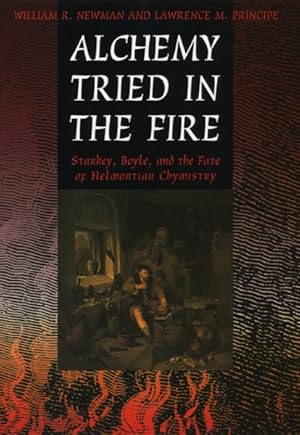
Alchemy Tried In The Fire : Starkey, Boyle, And The Fate Of Helmontian Chymistry
Sprache: Englisch
Verlag: University of Chicago Press, 2005
ISBN 10: 0226577023 ISBN 13: 9780226577029
Anbieter: GreatBookPricesUK, Woodford Green, Vereinigtes Königreich
Verkäuferbewertung 5 von 5 Sternen
EUR 46,33
EUR 17,51 Versand
Versand von Vereinigtes Königreich nach USAAnzahl: Mehr als 20 verfügbar
In den WarenkorbZustand: As New. Unread book in perfect condition.
-
Alchemy Tried in the Fire
Sprache: Englisch
Verlag: University of Chicago Press, 2005
ISBN 10: 0226577023 ISBN 13: 9780226577029
Zustand: New. pp. 360 Index.
-
Alchemy Tried in the Fire: Starkey, Boyle, and the Fate of Helmontian Chymistry
Sprache: Englisch
Verlag: The University of Chicago Press, 2005
ISBN 10: 0226577023 ISBN 13: 9780226577029
Anbieter: THE SAINT BOOKSTORE, Southport, Vereinigtes Königreich
Verkäuferbewertung 5 von 5 Sternen
EUR 47,65
EUR 18,89 Versand
Versand von Vereinigtes Königreich nach USAAnzahl: Mehr als 20 verfügbar
In den WarenkorbPaperback / softback. Zustand: New. New copy - Usually dispatched within 4 working days.
-
Alchemy Tried in the Fire (Paperback)
Sprache: Englisch
Verlag: The University of Chicago Press, Chicago, IL, 2005
ISBN 10: 0226577023 ISBN 13: 9780226577029
Anbieter: AussieBookSeller, Truganina, VIC, Australien
Verkäuferbewertung 5 von 5 Sternen
Paperback. Zustand: new. Paperback. Winner of the 2005 Pfizer Prize from the History of Science Society. What actually took place in the private laboratory of a mid-seventeenth century alchemist? How did he direct his quest after the secrets of Nature? What instruments and theoretical principles did he employ?Using, as their guide, the previously misunderstood interactions between Robert Boyle, widely known as "the father of chemistry," and George Starkey, an alchemist and the most prominent American scientific writer before Benjamin Franklin as their guide, Newman and Principe reveal the hitherto hidden laboratory operations of a famous alchemist and argue that many of the principles and practices characteristic of modern chemistry derive from alchemy. By analyzing Starkey's extraordinary laboratory notebooks, the authors show how this American "chymist" translated the wildly figurative writings of traditional alchemy into quantitative, carefully reasoned laboratory practiceand then encoded his own work in allegorical, secretive treatises under the name of Eirenaeus Philalethes. The intriguing "mystic" Joan Baptista Van Helmonta favorite of Starkey, Boyle, and even of Lavoisieremerges from this study as a surprisingly central figure in seventeenth-century "chymistry." A common emphasis on quantification, material production, and analysis/synthesis, the authors argue, illustrates a continuity of goals and practices from late medieval alchemy down to and beyond the Chemical Revolution. For anyone who wants to understand how alchemy was actually practiced during the Scientific Revolution and what it contributed to the development of modern chemistry, Alchemy Tried in the Fire will be a veritable philosopher's stone. Using the previously misunderstood interactions between Robert Boyle, widely known as "the father of chemistry," and George Starkey, an alchemist and the most prominent American scientific writer before Benjamin Franklin, as their guide, William R. Newman and Lawrence M. Shipping may be from our Sydney, NSW warehouse or from our UK or US warehouse, depending on stock availability.
-
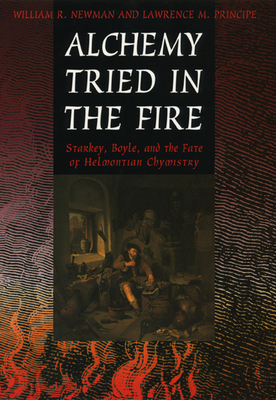
Alchemy Tried in the Fire: Starkey, Boyle, and the Fate of Helmontian Chymistry (Paperback or Softback)
Sprache: Englisch
Verlag: University of Chicago Press 6/1/2005, 2005
ISBN 10: 0226577023 ISBN 13: 9780226577029
Anbieter: BargainBookStores, Grand Rapids, MI, USA
Verkäuferbewertung 5 von 5 Sternen
Paperback or Softback. Zustand: New. Alchemy Tried in the Fire: Starkey, Boyle, and the Fate of Helmontian Chymistry. Book.
-
Alchemy Tried in the Fire Starkey, Boyle and the Fate of Helmontian Chymistry
Anbieter: Revaluation Books, Exeter, Vereinigtes Königreich
Verkäuferbewertung 5 von 5 Sternen
EUR 66,03
EUR 14,59 Versand
Versand von Vereinigtes Königreich nach USAAnzahl: 2 verfügbar
In den WarenkorbPaperback. Zustand: Brand New. paperback ed edition. 344 pages. 8.75x6.00x0.75 inches. In Stock.
-
Alchemy Tried in the Fire: Starkey, Boyle, and the Fate of Helmontian Chymistry
Sprache: Englisch
Verlag: University of Chicago Press, 2005
ISBN 10: 0226577023 ISBN 13: 9780226577029
Anbieter: BennettBooksLtd, Los Angeles, CA, USA
Verkäuferbewertung 5 von 5 Sternen
Paperback. Zustand: New. In shrink wrap. Looks like an interesting title!
-
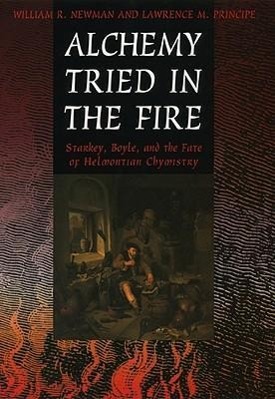
Newman, W: Alchemy Tried in the Fire - Starkey, Boyle and th
Sprache: Englisch
Verlag: University of Chicago Press, 2005
ISBN 10: 0226577023 ISBN 13: 9780226577029
EUR 52,12
EUR 48,99 Versand
Versand von Deutschland nach USAAnzahl: Mehr als 20 verfügbar
In den WarenkorbZustand: New. Using the previously misunderstood interactions between Robert Boyle, widely known as the father of chemistry, and George Starkey, an alchemist and the most prominent American scientific writer before Benjamin Franklin, as their guide, William R. Newman a.
-

Alchemy Tried in the Fire : Starkey, Boyle, and the Fate of Helmontian Chymistry
Sprache: Englisch
Verlag: The University Of Chicago Press Jun 2005, 2005
ISBN 10: 0226577023 ISBN 13: 9780226577029
Anbieter: AHA-BUCH GmbH, Einbeck, Deutschland
Verkäuferbewertung 5 von 5 Sternen
Taschenbuch. Zustand: Neu. Neuware - What actually took place in the private laboratory of a mid-seventeenth century alchemist How did he direct his quest after the secrets of Nature What instruments and theoretical principles did he employ Using, as their guide, the previously misunderstood interactions between Robert Boyle, widely known as 'the father of chemistry,' and George Starkey, an alchemist and the most prominent American scientific writer before Benjamin Franklin as their guide, Newman and Principe reveal the hitherto hidden laboratory operations of a famous alchemist and argue that many of the principles and practices characteristic of modern chemistry derive from alchemy. By analyzing Starkey's extraordinary laboratory not Elektronisches Buch, the authors show how this American 'chymist' translated the wildly figurative writings of traditional alchemy into quantitative, carefully reasoned laboratory practice--and then encoded his own work in allegorical, secretive treatises under the name of Eirenaeus Philalethes. The intriguing 'mystic' Joan Baptista Van Helmont--a favorite of Starkey, Boyle, and even of Lavoisier--emerges from this study as a surprisingly central figure in seventeenth-century 'chymistry.' A common emphasis on quantification, material production, and analysis/synthesis, the authors argue, illustrates a continuity of goals and practices from late medieval alchemy down to and beyond the Chemical Revolution. For anyone who wants to understand how alchemy was actually practiced during the Scientific Revolution and what it contributed to the development of modern chemistry, 'Alchemy Tried in the Fire' will be a veritable philosopher's stone.
-

Alchemy Tried in the Fire (Paperback)
Sprache: Englisch
Verlag: The University of Chicago Press, Chicago, IL, 2005
ISBN 10: 0226577023 ISBN 13: 9780226577029
Anbieter: CitiRetail, Stevenage, Vereinigtes Königreich
Verkäuferbewertung 5 von 5 Sternen
EUR 63,72
EUR 43,20 Versand
Versand von Vereinigtes Königreich nach USAAnzahl: 1 verfügbar
In den WarenkorbPaperback. Zustand: new. Paperback. Winner of the 2005 Pfizer Prize from the History of Science Society. What actually took place in the private laboratory of a mid-seventeenth century alchemist? How did he direct his quest after the secrets of Nature? What instruments and theoretical principles did he employ?Using, as their guide, the previously misunderstood interactions between Robert Boyle, widely known as "the father of chemistry," and George Starkey, an alchemist and the most prominent American scientific writer before Benjamin Franklin as their guide, Newman and Principe reveal the hitherto hidden laboratory operations of a famous alchemist and argue that many of the principles and practices characteristic of modern chemistry derive from alchemy. By analyzing Starkey's extraordinary laboratory notebooks, the authors show how this American "chymist" translated the wildly figurative writings of traditional alchemy into quantitative, carefully reasoned laboratory practiceand then encoded his own work in allegorical, secretive treatises under the name of Eirenaeus Philalethes. The intriguing "mystic" Joan Baptista Van Helmonta favorite of Starkey, Boyle, and even of Lavoisieremerges from this study as a surprisingly central figure in seventeenth-century "chymistry." A common emphasis on quantification, material production, and analysis/synthesis, the authors argue, illustrates a continuity of goals and practices from late medieval alchemy down to and beyond the Chemical Revolution. For anyone who wants to understand how alchemy was actually practiced during the Scientific Revolution and what it contributed to the development of modern chemistry, Alchemy Tried in the Fire will be a veritable philosopher's stone. Using the previously misunderstood interactions between Robert Boyle, widely known as "the father of chemistry," and George Starkey, an alchemist and the most prominent American scientific writer before Benjamin Franklin, as their guide, William R. Newman and Lawrence M. This item is printed on demand. Shipping may be from our UK warehouse or from our Australian or US warehouses, depending on stock availability.

