

Gesamtpreis (1 Artikel Artikel):
Versandziel:

9780300035926 - The Art of Political Manipulation von Riker, William H. (26 Ergebnisse)
Direkt zu den wichtigsten Suchergebnissen
Suchfilter
Produktart
- Alle Product Types
- Bücher (26)
- Magazine & Zeitschriften (Keine weiteren Ergebnisse entsprechen dieser Verfeinerung)
- Comics (Keine weiteren Ergebnisse entsprechen dieser Verfeinerung)
- Noten (Keine weiteren Ergebnisse entsprechen dieser Verfeinerung)
- Kunst, Grafik & Poster (Keine weiteren Ergebnisse entsprechen dieser Verfeinerung)
- Fotografien (Keine weiteren Ergebnisse entsprechen dieser Verfeinerung)
- Karten (Keine weiteren Ergebnisse entsprechen dieser Verfeinerung)
- Manuskripte & Papierantiquitäten (Keine weiteren Ergebnisse entsprechen dieser Verfeinerung)
Zustand Mehr dazu
- Neu (13)
- Wie Neu, Sehr Gut oder Gut Bis Sehr Gut (3)
- Gut oder Befriedigend (8)
- Ausreichend oder Schlecht (2)
- Wie beschrieben (Keine weiteren Ergebnisse entsprechen dieser Verfeinerung)
Einband
- alle Einbände
- Hardcover (Keine weiteren Ergebnisse entsprechen dieser Verfeinerung)
- Softcover (26)
Weitere Eigenschaften
- Erstausgabe (Keine weiteren Ergebnisse entsprechen dieser Verfeinerung)
- Signiert (Keine weiteren Ergebnisse entsprechen dieser Verfeinerung)
- Schutzumschlag (Keine weiteren Ergebnisse entsprechen dieser Verfeinerung)
- Angebotsfoto (9)
- Keine Print-on-Demand Angebote (26)
Sprache (1)
Gratisversand
Land des Verkäufers
Verkäuferbewertung
-
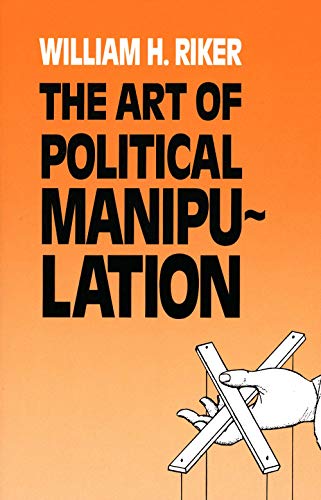
The Art of Political Manipulation
Anbieter: Your Online Bookstore, Houston, TX, USA
Verkäuferbewertung 5 von 5 Sternen

paperback. Zustand: Fair.
-
The Art of Political Manipulation
Anbieter: ThriftBooks-Atlanta, AUSTELL, GA, USA
Verkäuferbewertung 5 von 5 Sternen
Paperback. Zustand: Good. No Jacket. Pages can have notes/highlighting. Spine may show signs of wear. ~ ThriftBooks: Read More, Spend Less.
-
The Art of Political Manipulation
Anbieter: ThriftBooks-Dallas, Dallas, TX, USA
Verkäuferbewertung 5 von 5 Sternen
Paperback. Zustand: Very Good. No Jacket. May have limited writing in cover pages. Pages are unmarked. ~ ThriftBooks: Read More, Spend Less.
-
The Art of Political Manipulation
Anbieter: ThriftBooks-Dallas, Dallas, TX, USA
Verkäuferbewertung 5 von 5 Sternen
Paperback. Zustand: Good. No Jacket. Pages can have notes/highlighting. Spine may show signs of wear. ~ ThriftBooks: Read More, Spend Less.
-
The Art of Political Manipulation
Sprache: Englisch
Verlag: Yale University Press (edition ), 1986
ISBN 10: 0300035926 ISBN 13: 9780300035926
Paperback. Zustand: Good. It's a preowned item in good condition and includes all the pages. It may have some general signs of wear and tear, such as markings, highlighting, slight damage to the cover, minimal wear to the binding, etc., but they will not affect the overall reading experience.
-
The Art of Political Manipulation
Sprache: Englisch
Verlag: Yale University Press (edition ), 1986
ISBN 10: 0300035926 ISBN 13: 9780300035926
Paperback. Zustand: Fair. The item might be beaten up but readable. May contain markings or highlighting, as well as stains, bent corners, or any other major defect, but the text is not obscured in any way.
-
The Art of Political Manipulation
Anbieter: Half Price Books Inc., Dallas, TX, USA
Verkäuferbewertung 5 von 5 Sternen
paperback. Zustand: Very Good. Connecting readers with great books since 1972! Used books may not include companion materials, and may have some shelf wear or limited writing. We ship orders daily and Customer Service is our top priority!
-
Paperback. Zustand: Very Good. Connecting readers with great books since 1972! Used books may not include companion materials, and may have some shelf wear or limited writing. We ship orders daily and Customer Service is our top priority!
-
The Art of Political Manipulation
Anbieter: Better World Books, Mishawaka, IN, USA
Verkäuferbewertung 5 von 5 Sternen
Zustand: Good. Pages intact with minimal writing/highlighting. The binding may be loose and creased. Dust jackets/supplements are not included. Stock photo provided. Product includes identifying sticker. Better World Books: Buy Books. Do Good.
-
The Art of Political Manipulation
Anbieter: Armadillo Books, Chapel Hill, NC, USA
Verkäuferbewertung 3 von 5 Sternen

Soft cover. Zustand: Near Fine. Later printing (after 2006) of this classic work. A tight, bright, and lightly read copy, with just a few lines of highlighting on only five of the one hundred and fifty-two pages in the book. (C-3.).
-
The Art of Political Manipulation
Anbieter: Midtown Scholar Bookstore, Harrisburg, PA, USA
Verkäuferbewertung 5 von 5 Sternen
Paperback. Zustand: Good. Good paperback, bumped/creased with shelfwear; may have previous owner's name inside. Standard-sized.
-

The Art of Political Manipulation (Paperback)
Sprache: Englisch
Verlag: Yale University Press, New Haven, 1986
ISBN 10: 0300035926 ISBN 13: 9780300035926
Anbieter: Grand Eagle Retail, Bensenville, IL, USA
Verkäuferbewertung 5 von 5 Sternen
Paperback. Zustand: new. Paperback. In twelve entertaining stories from history and current events, a noted political scientist and game theorist shows us how some of our heroes we as well as ordinary folk have manipulated their opponents in order to win political advantage. The stories come from many times and places, because manipulation of people by other people is universal: from the Roman Senate through the Constitutional Convention of 1787, to the Congress, state legislatures, and city councils of twentieth-century America.The results of manipulation are not trivial, as we see, for example, in Riker's account of Lincoln's outmaneuvering of Douglas in their debates and in his description of the parliamentary trick that defeated the Equal Rights Amendment only six years ago in the Virginia Senate.The tales can be enjoyed by anyone. For the scholar, they are held together by a concluding chapter in which Riker discusses the feature of politics that all of the manipulators exploited and sketches out the new political theory that explains why manipulation works the way it does.PrefaceLincoln at FreeportChauncey DePew and the Seventeenth AmendmentThe Flying ClubGouverneur Morris in the Philadelphia ConventionHeresthetic in FictionCamouflaging the GerrymanderPliny the Younger on Parliamentary LawTrading Votes at the Constitutional ConventionHow to Win on a Roll Call by Not VotingWarren Magnuson and Nerve GasExploiting the Powell AmendmentReed and Cannon Conclusion"A useful and entertaining informal essay on political tactics that will have direct utility in the classroom."-Douglas W. Rae, Yale UniversityWilliam H. Riker is Wilson Professor of Political Science at the University of Rochester and a former president of the American Political Science Association. He is the author of numerous books, including Theory of Political Coalitions, a classic in the field. Shipping may be from multiple locations in the US or from the UK, depending on stock availability.
-

Art of Political Manipulation
Anbieter: GreatBookPrices, Columbia, MD, USA
Verkäuferbewertung 5 von 5 Sternen
Zustand: New.
-

Art of Political Manipulation
Anbieter: GreatBookPrices, Columbia, MD, USA
Verkäuferbewertung 5 von 5 Sternen
Zustand: As New. Unread book in perfect condition.
-
The Art of Political Manipulation
Sprache: Englisch
Verlag: Yale University Press, US, 1986
ISBN 10: 0300035926 ISBN 13: 9780300035926
Anbieter: Rarewaves.com USA, London, LONDO, Vereinigtes Königreich
Verkäuferbewertung 5 von 5 Sternen
EUR 28,25
Versand gratis
Versand von Vereinigtes Königreich nach USAAnzahl: 1 verfügbar
In den WarenkorbPaperback. Zustand: New. In twelve entertaining stories from history and current events, a noted political scientist and game theorist shows us how some of our heroes we as well as ordinary folk have manipulated their opponents in order to win political advantage. The stories come from many times and places, because manipulation of people by other people is universal: from the Roman Senate through the Constitutional Convention of 1787, to the Congress, state legislatures, and city councils of twentieth-century America.The results of manipulation are not trivial, as we see, for example, in Riker's account of Lincoln's outmaneuvering of Douglas in their debates and in his description of the parliamentary trick that defeated the Equal Rights Amendment only six years ago in the Virginia Senate.The tales can be enjoyed by anyone. For the scholar, they are held together by a concluding chapter in which Riker discusses the feature of politics that all of the manipulators exploited and sketches out the new political theory that explains why manipulation works the way it does.PrefaceLincoln at FreeportChauncey DePew and the Seventeenth AmendmentThe Flying ClubGouverneur Morris in the Philadelphia ConventionHeresthetic in FictionCamouflaging the GerrymanderPliny the Younger on Parliamentary LawTrading Votes at the Constitutional ConventionHow to Win on a Roll Call by Not VotingWarren Magnuson and Nerve GasExploiting the Powell AmendmentReed and Cannon Conclusion"A useful and entertaining informal essay on political tactics that will have direct utility in the classroom."-Douglas W. Rae, Yale UniversityWilliam H. Riker is Wilson Professor of Political Science at the University of Rochester and a former president of the American Political Science Association. He is the author of numerous books, including Theory of Political Coalitions, a classic in the field.
-
The Art of Political Manipulation
Anbieter: PBShop.store UK, Fairford, GLOS, Vereinigtes Königreich
Verkäuferbewertung 4 von 5 Sternen

EUR 30,34
EUR 3,82 Versand
Versand von Vereinigtes Königreich nach USAAnzahl: 2 verfügbar
In den WarenkorbPAP. Zustand: New. New Book. Shipped from UK. Established seller since 2000.
-
The Art of Political Manipulation
Anbieter: Kennys Bookshop and Art Galleries Ltd., Galway, GY, Irland
Verkäuferbewertung 5 von 5 Sternen
Zustand: New. Num Pages: 192 pages. BIC Classification: JP. Category: (P) Professional & Vocational; (UP) Postgraduate, Research & Scholarly; (UU) Undergraduate. Dimension: 139 x 209 x 10. Weight in Grams: 210. . 1986. Paperback. . . . .
-
The Art of Political Manipulation
Anbieter: Kennys Bookstore, Olney, MD, USA
Verkäuferbewertung 5 von 5 Sternen
Zustand: New. Num Pages: 192 pages. BIC Classification: JP. Category: (P) Professional & Vocational; (UP) Postgraduate, Research & Scholarly; (UU) Undergraduate. Dimension: 139 x 209 x 10. Weight in Grams: 210. . 1986. Paperback. . . . . Books ship from the US and Ireland.
-
The Art of Political Manipulation (Paper)
Anbieter: Revaluation Books, Exeter, Vereinigtes Königreich
Verkäuferbewertung 5 von 5 Sternen
EUR 29,72
EUR 11,60 Versand
Versand von Vereinigtes Königreich nach USAAnzahl: 2 verfügbar
In den WarenkorbPaperback. Zustand: Brand New. 153 pages. 8.25x5.75x0.75 inches. In Stock.
-

Art of Political Manipulation
Anbieter: GreatBookPricesUK, Woodford Green, Vereinigtes Königreich
Verkäuferbewertung 5 von 5 Sternen
EUR 27,68
EUR 17,39 Versand
Versand von Vereinigtes Königreich nach USAAnzahl: 4 verfügbar
In den WarenkorbZustand: New.
-

Art of Political Manipulation
Anbieter: GreatBookPricesUK, Woodford Green, Vereinigtes Königreich
Verkäuferbewertung 5 von 5 Sternen
EUR 29,32
EUR 17,39 Versand
Versand von Vereinigtes Königreich nach USAAnzahl: 4 verfügbar
In den WarenkorbZustand: As New. Unread book in perfect condition.
-
The Art of Political Manipulation
Anbieter: THE SAINT BOOKSTORE, Southport, Vereinigtes Königreich
Verkäuferbewertung 5 von 5 Sternen
EUR 33,63
EUR 15,24 Versand
Versand von Vereinigtes Königreich nach USAAnzahl: 2 verfügbar
In den WarenkorbPaperback / softback. Zustand: New. New copy - Usually dispatched within 4 working days.
-

The Art of Political Manipulation (Paperback)
Sprache: Englisch
Verlag: Yale University Press, New Haven, 1986
ISBN 10: 0300035926 ISBN 13: 9780300035926
Anbieter: AussieBookSeller, Truganina, VIC, Australien
Verkäuferbewertung 5 von 5 Sternen
Paperback. Zustand: new. Paperback. In twelve entertaining stories from history and current events, a noted political scientist and game theorist shows us how some of our heroes we as well as ordinary folk have manipulated their opponents in order to win political advantage. The stories come from many times and places, because manipulation of people by other people is universal: from the Roman Senate through the Constitutional Convention of 1787, to the Congress, state legislatures, and city councils of twentieth-century America.The results of manipulation are not trivial, as we see, for example, in Riker's account of Lincoln's outmaneuvering of Douglas in their debates and in his description of the parliamentary trick that defeated the Equal Rights Amendment only six years ago in the Virginia Senate.The tales can be enjoyed by anyone. For the scholar, they are held together by a concluding chapter in which Riker discusses the feature of politics that all of the manipulators exploited and sketches out the new political theory that explains why manipulation works the way it does.PrefaceLincoln at FreeportChauncey DePew and the Seventeenth AmendmentThe Flying ClubGouverneur Morris in the Philadelphia ConventionHeresthetic in FictionCamouflaging the GerrymanderPliny the Younger on Parliamentary LawTrading Votes at the Constitutional ConventionHow to Win on a Roll Call by Not VotingWarren Magnuson and Nerve GasExploiting the Powell AmendmentReed and Cannon Conclusion"A useful and entertaining informal essay on political tactics that will have direct utility in the classroom."-Douglas W. Rae, Yale UniversityWilliam H. Riker is Wilson Professor of Political Science at the University of Rochester and a former president of the American Political Science Association. He is the author of numerous books, including Theory of Political Coalitions, a classic in the field. Shipping may be from our Sydney, NSW warehouse or from our UK or US warehouse, depending on stock availability.
-

The Art of Political Manipulation (Paperback)
Sprache: Englisch
Verlag: Yale University Press, New Haven, 1986
ISBN 10: 0300035926 ISBN 13: 9780300035926
Anbieter: CitiRetail, Stevenage, Vereinigtes Königreich
Verkäuferbewertung 5 von 5 Sternen
EUR 28,65
EUR 42,91 Versand
Versand von Vereinigtes Königreich nach USAAnzahl: 1 verfügbar
In den WarenkorbPaperback. Zustand: new. Paperback. In twelve entertaining stories from history and current events, a noted political scientist and game theorist shows us how some of our heroes we as well as ordinary folk have manipulated their opponents in order to win political advantage. The stories come from many times and places, because manipulation of people by other people is universal: from the Roman Senate through the Constitutional Convention of 1787, to the Congress, state legislatures, and city councils of twentieth-century America.The results of manipulation are not trivial, as we see, for example, in Riker's account of Lincoln's outmaneuvering of Douglas in their debates and in his description of the parliamentary trick that defeated the Equal Rights Amendment only six years ago in the Virginia Senate.The tales can be enjoyed by anyone. For the scholar, they are held together by a concluding chapter in which Riker discusses the feature of politics that all of the manipulators exploited and sketches out the new political theory that explains why manipulation works the way it does.PrefaceLincoln at FreeportChauncey DePew and the Seventeenth AmendmentThe Flying ClubGouverneur Morris in the Philadelphia ConventionHeresthetic in FictionCamouflaging the GerrymanderPliny the Younger on Parliamentary LawTrading Votes at the Constitutional ConventionHow to Win on a Roll Call by Not VotingWarren Magnuson and Nerve GasExploiting the Powell AmendmentReed and Cannon Conclusion"A useful and entertaining informal essay on political tactics that will have direct utility in the classroom."-Douglas W. Rae, Yale UniversityWilliam H. Riker is Wilson Professor of Political Science at the University of Rochester and a former president of the American Political Science Association. He is the author of numerous books, including Theory of Political Coalitions, a classic in the field. Shipping may be from our UK warehouse or from our Australian or US warehouses, depending on stock availability.
-
The Art of Political Manipulation
Anbieter: BennettBooksLtd, Los Angeles, CA, USA
Verkäuferbewertung 5 von 5 Sternen
paperback. Zustand: New. In shrink wrap. Looks like an interesting title!
-

The Art of Political Manipulation
Sprache: Englisch
Verlag: Yale University Press, US, 1986
ISBN 10: 0300035926 ISBN 13: 9780300035926
Anbieter: Rarewaves.com UK, London, Vereinigtes Königreich
Verkäuferbewertung 5 von 5 Sternen
EUR 27,66
EUR 75,37 Versand
Versand von Vereinigtes Königreich nach USAAnzahl: 1 verfügbar
In den WarenkorbPaperback. Zustand: New. In twelve entertaining stories from history and current events, a noted political scientist and game theorist shows us how some of our heroes we as well as ordinary folk have manipulated their opponents in order to win political advantage. The stories come from many times and places, because manipulation of people by other people is universal: from the Roman Senate through the Constitutional Convention of 1787, to the Congress, state legislatures, and city councils of twentieth-century America.The results of manipulation are not trivial, as we see, for example, in Riker's account of Lincoln's outmaneuvering of Douglas in their debates and in his description of the parliamentary trick that defeated the Equal Rights Amendment only six years ago in the Virginia Senate.The tales can be enjoyed by anyone. For the scholar, they are held together by a concluding chapter in which Riker discusses the feature of politics that all of the manipulators exploited and sketches out the new political theory that explains why manipulation works the way it does.PrefaceLincoln at FreeportChauncey DePew and the Seventeenth AmendmentThe Flying ClubGouverneur Morris in the Philadelphia ConventionHeresthetic in FictionCamouflaging the GerrymanderPliny the Younger on Parliamentary LawTrading Votes at the Constitutional ConventionHow to Win on a Roll Call by Not VotingWarren Magnuson and Nerve GasExploiting the Powell AmendmentReed and Cannon Conclusion"A useful and entertaining informal essay on political tactics that will have direct utility in the classroom."-Douglas W. Rae, Yale UniversityWilliam H. Riker is Wilson Professor of Political Science at the University of Rochester and a former president of the American Political Science Association. He is the author of numerous books, including Theory of Political Coalitions, a classic in the field.


