

Gesamtpreis (1 Artikel Artikel):
Versandziel:

9780393319064 - Beyond Malthus: Nineteen Dimensions of the Population Challenge (Worldwatch Environmental Alert) von Brown, Lester R; Gardner, Gary T; Halweil, Brian (27 Ergebnisse)
Direkt zu den wichtigsten Suchergebnissen
Suchfilter
Produktart
- Alle Product Types
- Bücher (27)
- Magazine & Zeitschriften (Keine weiteren Ergebnisse entsprechen dieser Verfeinerung)
- Comics (Keine weiteren Ergebnisse entsprechen dieser Verfeinerung)
- Noten (Keine weiteren Ergebnisse entsprechen dieser Verfeinerung)
- Kunst, Grafik & Poster (Keine weiteren Ergebnisse entsprechen dieser Verfeinerung)
- Fotografien (Keine weiteren Ergebnisse entsprechen dieser Verfeinerung)
- Karten (Keine weiteren Ergebnisse entsprechen dieser Verfeinerung)
- Manuskripte & Papierantiquitäten (Keine weiteren Ergebnisse entsprechen dieser Verfeinerung)
Zustand Mehr dazu
- Neu (14)
- Wie Neu, Sehr Gut oder Gut Bis Sehr Gut (2)
- Gut oder Befriedigend (11)
- Ausreichend oder Schlecht (Keine weiteren Ergebnisse entsprechen dieser Verfeinerung)
- Wie beschrieben (Keine weiteren Ergebnisse entsprechen dieser Verfeinerung)
Einband
Weitere Eigenschaften
- Erstausgabe (1)
- Signiert (Keine weiteren Ergebnisse entsprechen dieser Verfeinerung)
- Schutzumschlag (2)
- Angebotsfoto (7)
- Keine Print-on-Demand Angebote (17)
Sprache (1)
Preis
- Beliebiger Preis
- Weniger als EUR 20
- EUR 20 bis EUR 45
- Mehr als EUR 45 (Keine weiteren Ergebnisse entsprechen dieser Verfeinerung)
Gratisversand
Land des Verkäufers
Verkäuferbewertung
-
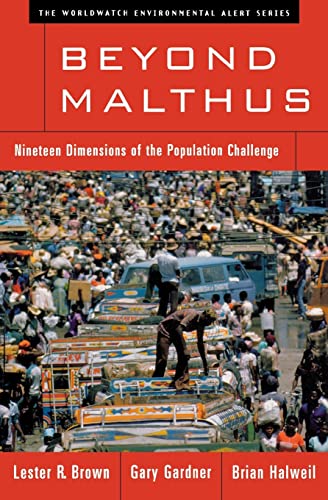
Beyond Malthus: Nineteen Dimensions of the Population Challenge (The Worldwatch Environmental Alert Series)
Buch 2 von 2: The Worldwatch Environmental Alert SeriesSprache: Englisch
Verlag: W. W. Norton & Company (edition ), 1999
ISBN 10: 0393319067 ISBN 13: 9780393319064
Paperback. Zustand: Good. It's a preowned item in good condition and includes all the pages. It may have some general signs of wear and tear, such as markings, highlighting, slight damage to the cover, minimal wear to the binding, etc., but they will not affect the overall reading experience.
-
Beyond Malthus: Nineteen Dimensions of the Population Challenge (The Worldwatch Environmental Alert Series)
Buch 2 von 2: The Worldwatch Environmental Alert SeriesAnbieter: World of Books (was SecondSale), Montgomery, IL, USA
Verkäuferbewertung 5 von 5 Sternen

Zustand: Very Good. Item in very good condition! Textbooks may not include supplemental items i.e. CDs, access codes etc.
-
Beyond Malthus: Nineteen Dimensions of the Population Challenge (The Worldwatch Environmental Alert Series)
Buch 2 von 2: The Worldwatch Environmental Alert SeriesAnbieter: Wonder Book, Frederick, MD, USA
Verkäuferbewertung 5 von 5 Sternen
Zustand: Very Good. Very Good condition. A copy that may have a few cosmetic defects. May also contain light spine creasing or a few markings such as an owner's name, short gifter's inscription or light stamp. Bundled media such as CDs, DVDs, floppy disks or access codes may not be included.
-
paperback. Zustand: Very Good. Connecting readers with great books since 1972! Used books may not include companion materials, and may have some shelf wear or limited writing. We ship orders daily and Customer Service is our top priority!
-
paperback. Zustand: Very Good. Connecting readers with great books since 1972! Used books may not include companion materials, and may have some shelf wear or limited writing. We ship orders daily and Customer Service is our top priority!
-
Trade paperback. Zustand: Fine. Trade paperback (US). Glued binding. 167 p. Contains: Unspecified, Illustrations, black & white. Worldwatch Environmental Alert. Audience: General/trade. No previous owner's name. Clean, tight pages. No bent corners. SC 267.
-
Beyond Malthus : Nineteen Dimensions of the Population Challenge
Buch 2 von 2: The Worldwatch Environmental Alert SeriesSprache: Englisch
Verlag: Norton & Company, Incorporated, W. W., 1999
ISBN 10: 0393319067 ISBN 13: 9780393319064
Anbieter: Better World Books, Mishawaka, IN, USA
Verkäuferbewertung 5 von 5 Sternen
Zustand: Good. Pages intact with minimal writing/highlighting. The binding may be loose and creased. Dust jackets/supplements are not included. Stock photo provided. Product includes identifying sticker. Better World Books: Buy Books. Do Good.
-
BEYOND MALTHUS, NINETEEN DIMENSIONS OF THE POPULATION CHALLENGE
Buch 2 von 2: The Worldwatch Environmental Alert SeriesAnbieter: Larry W Price Books, Portland, OR, USA
Verkäuferbewertung 5 von 5 Sternen
Paperback. Zustand: Fine. 167 pp., Red Color Illus Paperback, Fine, 1st ed (As New).
-
BEYOND MALTHUS: Nineteen Dimensions of the Population Challenge
Buch 2 von 2: The Worldwatch Environmental Alert SeriesSprache: Englisch
Verlag: W.W. Norton & Company, NY, NY, 1999
ISBN 10: 0393319067 ISBN 13: 9780393319064
Anbieter: Falls Bookstore, Readsboro, VT, USA
Verkäuferbewertung 4 von 5 Sternen

Erstausgabe
Trade Paperback. Zustand: Very Good. No Jacket. First Edition. Soft cover with Pictoral with white print. Tight sound and unmarked.167 pages. One of " The Worldwatch Environmental Alert" series.
-
-
Beyond Malthus â" Nineteen Dimensions of the Population Challenge: 0 (Worldwatch Environmental Alert)
Buch 2 von 2: The Worldwatch Environmental Alert SeriesAnbieter: WorldofBooks, Goring-By-Sea, WS, Vereinigtes Königreich
Verkäuferbewertung 5 von 5 Sternen
EUR 10,91
EUR 6,43 Versand
Versand von Vereinigtes Königreich nach USAAnzahl: 1 verfügbar
In den WarenkorbHardback. Zustand: Very Good. The book has been read, but is in excellent condition. Pages are intact and not marred by notes or highlighting. The spine remains undamaged.
-

Beyond Malthus
Buch 2 von 2: The Worldwatch Environmental Alert SeriesAnbieter: Rarewaves.com USA, London, LONDO, Vereinigtes Königreich
Verkäuferbewertung 5 von 5 Sternen
EUR 23,48
Versand gratis
Versand von Vereinigtes Königreich nach USAAnzahl: Mehr als 20 verfügbar
In den WarenkorbPaperback. Zustand: New. Human demands are pressing up against more and more of the Earth's limits. This book from the Worldwatch Institute examines the impacts of population growth on global resources and services, including food, fresh water, fisheries, jobs, education, income, and health. Despite the current hype of a "birth dearth" in parts of Europe and Japan, the fact remains that human numbers are projected to increase by over 3 billion by 2050. Rapidly growing nations are likely to outstrip the carrying capacity of their natural support systems. Governments worn down by several decades of rapid population growth often cannot mobilize the resources necessary to cope with emerging threats such as new diseases, food and water shortages, and mass unemployment. Already, in several African nations, hunger, disease, and social disintegration are leading to rising death rates, checking the rapid growth of population. Either nations with surging populations will quickly shift to smaller families or nature will impose its own, less humane limits to growth. As the world enters the new millennium, no challenge is perhaps so urgent as the need to quickly reduce population growth. Pakistan's population is projected to increase from 148 million to 357 million, surpassing that of the United States before 2050. Zimbabwe, Botswana, Zambia, Namibia, and Swaziland, where over one-fifth of the adult population is infected with HIV, will likely reach population stability shortly after the year 2000, as AIDS-related deaths offset soaring birth rates. A Worldwatch Environmental Alert book. Newsmaking press conference on publication National press and television coverage.
-
Beyond Malthus â" Nineteen Dimensions of the Population Challenge: 0 (Worldwatch Environmental Alert)
Buch 2 von 2: The Worldwatch Environmental Alert SeriesAnbieter: Sell Books, Elland, YORKS, Vereinigtes Königreich
Verkäuferbewertung 5 von 5 Sternen
EUR 10,90
EUR 13,95 Versand
Versand von Vereinigtes Königreich nach USAAnzahl: 1 verfügbar
In den Warenkorbpaperback. Zustand: Very Good. Most of our very good books have only minor imperfections such as shelf wear consistent with a new book that's sat on a bookshop shelf for a year or two. Occasionally we may miss other minor imperfections as we have to grade books at speed. Our books are dispatched from a Yorkshire former cotton mill. We list via barcode/ISBN so please note that the images are stock images and may not be the exact copy you receive, furthermore the details about edition and year might not be accurate as many publishers reuse the same ISBN for multiple editions and as we simply scan a barcode or enter an ISBN we do not check the validity of the edition data when listing. If you're looking for an exact edition please don't order (at least not without checking with us first, although we don't always have time to check). We aim to dispatch prompty, the service used will depend on order value and book size. We can ship to most countries, see our shipping policies. Payment is via Abe only.
-
Beyond Malthus Nineteen Dimensions of the Population Challenge
Buch 2 von 2: The Worldwatch Environmental Alert SeriesAnbieter: Revaluation Books, Exeter, Vereinigtes Königreich
Verkäuferbewertung 5 von 5 Sternen
EUR 17,40
EUR 11,48 Versand
Versand von Vereinigtes Königreich nach USAAnzahl: 2 verfügbar
In den WarenkorbPaperback. Zustand: Brand New. (worldwatch environmental alert series) edition. 256 pages. 8.50x5.50x0.50 inches. In Stock.
-

Beyond Malthus: Nineteen Dimensions of the Population Challenge (The Worldwatch Environmental Alert Series)
Buch 2 von 2: The Worldwatch Environmental Alert SeriesAnbieter: SoferBooks, Barcelona, B, Spanien
Verkäuferbewertung 5 von 5 Sternen
Blanda. Zustand: Buen Estado. Zustand des Schutzumschlags: Buen Estado.
-

Beyond Malthus: Nineteen Dimensions of the Population Challenge (The Worldwatch Environmental Alert Series)
Buch 2 von 2: The Worldwatch Environmental Alert SeriesAnbieter: NAVEBOOKS, BARCELONA, B, Spanien
Verkäuferbewertung 5 von 5 Sternen
Blanda. Zustand: Buen Estado. Zustand des Schutzumschlags: Buen Estado.
-
Beyond Malthus (Paperback)
Buch 2 von 2: The Worldwatch Environmental Alert SeriesAnbieter: Grand Eagle Retail, Bensenville, IL, USA
Verkäuferbewertung 5 von 5 Sternen
Paperback. Zustand: new. Paperback. Human demands are pressing up against more and more of the Earth's limits. This book from the Worldwatch Institute examines the impacts of population growth on global resources and services, including food, fresh water, fisheries, jobs, education, income, and health. Despite the current hype of a "birth dearth" in parts of Europe and Japan, the fact remains that human numbers are projected to increase by over 3 billion by 2050. Rapidly growing nations are likely to outstrip the carrying capacity of their natural support systems. Governments worn down by several decades of rapid population growth often cannot mobilize the resources necessary to cope with emerging threats such as new diseases, food and water shortages, and mass unemployment. Already, in several African nations, hunger, disease, and social disintegration are leading to rising death rates, checking the rapid growth of population. Either nations with surging populations will quickly shift to smaller families or nature will impose its own, less humane limits to growth. As the world enters the new millennium, no challenge is perhaps so urgent as the need to quickly reduce population growth. Pakistan's population is projected to increase from 148 million to 357 million, surpassing that of the United States before 2050. Zimbabwe, Botswana, Zambia, Namibia, and Swaziland, where over one-fifth of the adult population is infected with HIV, will likely reach population stability shortly after the year 2000, as AIDS-related deaths offset soaring birth rates. A Worldwatch Environmental Alert book. Newsmaking press conference on publication National press and television coverage On the bicentennial of Malthus's legendary essay on the tendency for population to grow more rapidly than the food supply, the question facing the world is not whether population growth will slow, but how. This item is printed on demand. Shipping may be from multiple locations in the US or from the UK, depending on stock availability.
-

Beyond Malthus
Buch 2 von 2: The Worldwatch Environmental Alert SeriesAnbieter: Rarewaves.com UK, London, Vereinigtes Königreich
Verkäuferbewertung 5 von 5 Sternen
EUR 22,17
EUR 74,65 Versand
Versand von Vereinigtes Königreich nach USAAnzahl: Mehr als 20 verfügbar
In den WarenkorbPaperback. Zustand: New. Human demands are pressing up against more and more of the Earth's limits. This book from the Worldwatch Institute examines the impacts of population growth on global resources and services, including food, fresh water, fisheries, jobs, education, income, and health. Despite the current hype of a "birth dearth" in parts of Europe and Japan, the fact remains that human numbers are projected to increase by over 3 billion by 2050. Rapidly growing nations are likely to outstrip the carrying capacity of their natural support systems. Governments worn down by several decades of rapid population growth often cannot mobilize the resources necessary to cope with emerging threats such as new diseases, food and water shortages, and mass unemployment. Already, in several African nations, hunger, disease, and social disintegration are leading to rising death rates, checking the rapid growth of population. Either nations with surging populations will quickly shift to smaller families or nature will impose its own, less humane limits to growth. As the world enters the new millennium, no challenge is perhaps so urgent as the need to quickly reduce population growth. Pakistan's population is projected to increase from 148 million to 357 million, surpassing that of the United States before 2050. Zimbabwe, Botswana, Zambia, Namibia, and Swaziland, where over one-fifth of the adult population is infected with HIV, will likely reach population stability shortly after the year 2000, as AIDS-related deaths offset soaring birth rates. A Worldwatch Environmental Alert book. Newsmaking press conference on publication National press and television coverage.
-
Beyond Malthus Nineteen Dimensions of the Population Challenge Worldwatch Environmental Alert
Buch 2 von 2: The Worldwatch Environmental Alert SeriesAnbieter: PBShop.store UK, Fairford, GLOS, Vereinigtes Königreich
Verkäuferbewertung 5 von 5 Sternen
EUR 22,18
EUR 3,78 Versand
Versand von Vereinigtes Königreich nach USAAnzahl: Mehr als 20 verfügbar
In den WarenkorbPAP. Zustand: New. New Book. Delivered from our UK warehouse in 4 to 14 business days. THIS BOOK IS PRINTED ON DEMAND. Established seller since 2000.
-
Beyond Malthus ? Nineteen Dimensions of the Population Challenge: 0 (Worldwatch Environmental Alert)
Buch 2 von 2: The Worldwatch Environmental Alert SeriesAnbieter: Majestic Books, Hounslow, Vereinigtes Königreich
Verkäuferbewertung 4 von 5 Sternen
EUR 20,57
EUR 7,47 Versand
Versand von Vereinigtes Königreich nach USAAnzahl: 4 verfügbar
In den WarenkorbZustand: New. Print on Demand pp. 256.
-
Zustand: New. Print on Demand pp. 256.
-
Beyond Malthus: Nineteen Dimensions of the Population Challenge
Buch 2 von 2: The Worldwatch Environmental Alert SeriesAnbieter: THE SAINT BOOKSTORE, Southport, Vereinigtes Königreich
Verkäuferbewertung 5 von 5 Sternen
EUR 23,11
EUR 14,44 Versand
Versand von Vereinigtes Königreich nach USAAnzahl: Mehr als 20 verfügbar
In den WarenkorbPaperback. Zustand: New. This item is printed on demand. New copy - Usually dispatched within 5-9 working days 182.
-
Beyond Malthus ? Nineteen Dimensions of the Population Challenge: 0 (Worldwatch Environmental Alert)
Buch 2 von 2: The Worldwatch Environmental Alert SeriesAnbieter: Biblios, Frankfurt am main, HESSE, Deutschland
Verkäuferbewertung 4 von 5 Sternen
Zustand: New. PRINT ON DEMAND pp. 256.
-
Beyond Malthus (Paperback)
Buch 2 von 2: The Worldwatch Environmental Alert SeriesAnbieter: CitiRetail, Stevenage, Vereinigtes Königreich
Verkäuferbewertung 5 von 5 Sternen
EUR 26,60
EUR 42,49 Versand
Versand von Vereinigtes Königreich nach USAAnzahl: 1 verfügbar
In den WarenkorbPaperback. Zustand: new. Paperback. Human demands are pressing up against more and more of the Earth's limits. This book from the Worldwatch Institute examines the impacts of population growth on global resources and services, including food, fresh water, fisheries, jobs, education, income, and health. Despite the current hype of a "birth dearth" in parts of Europe and Japan, the fact remains that human numbers are projected to increase by over 3 billion by 2050. Rapidly growing nations are likely to outstrip the carrying capacity of their natural support systems. Governments worn down by several decades of rapid population growth often cannot mobilize the resources necessary to cope with emerging threats such as new diseases, food and water shortages, and mass unemployment. Already, in several African nations, hunger, disease, and social disintegration are leading to rising death rates, checking the rapid growth of population. Either nations with surging populations will quickly shift to smaller families or nature will impose its own, less humane limits to growth. As the world enters the new millennium, no challenge is perhaps so urgent as the need to quickly reduce population growth. Pakistan's population is projected to increase from 148 million to 357 million, surpassing that of the United States before 2050. Zimbabwe, Botswana, Zambia, Namibia, and Swaziland, where over one-fifth of the adult population is infected with HIV, will likely reach population stability shortly after the year 2000, as AIDS-related deaths offset soaring birth rates. A Worldwatch Environmental Alert book. Newsmaking press conference on publication National press and television coverage On the bicentennial of Malthus's legendary essay on the tendency for population to grow more rapidly than the food supply, the question facing the world is not whether population growth will slow, but how. This item is printed on demand. Shipping may be from our UK warehouse or from our Australian or US warehouses, depending on stock availability.
-

Beyond Malthus: Nineteen Dimensions of the Population Challenge
Buch 2 von 2: The Worldwatch Environmental Alert SeriesEUR 23,02
EUR 48,99 Versand
Versand von Deutschland nach USAAnzahl: Mehr als 20 verfügbar
In den WarenkorbZustand: New. Dieser Artikel ist ein Print on Demand Artikel und wird nach Ihrer Bestellung fuer Sie gedruckt. On the bicentennial of Malthus s legendary essay on the tendency for population to grow more rapidly than the food supply, the question facing the world is not whether population growth will slow, but how.Über den AutorL.
-

Beyond Malthus : Nineteen Dimensions of the Population Challenge
Buch 2 von 2: The Worldwatch Environmental Alert SeriesAnbieter: AHA-BUCH GmbH, Einbeck, Deutschland
Verkäuferbewertung 5 von 5 Sternen
Taschenbuch. Zustand: Neu. nach der Bestellung gedruckt Neuware - Printed after ordering - Human demands are pressing up against more and more of the Earth's limits. This book from the Worldwatch Institute examines the impacts of population growth on global resources and services, including food, fresh water, fisheries, jobs, education, income, and health. Despite the current hype of a -birth dearth- in parts of Europe and Japan, the fact remains that human numbers are projected to increase by over 3 billion by 2050. Rapidly growing nations are likely to outstrip the carrying capacity of their natural support systems. Governments worn down by several decades of rapid population growth often cannot mobilize the resources necessary to cope with emerging threats such as new diseases, food and water shortages, and mass unemployment. Already, in several African nations, hunger, disease, and social disintegration are leading to rising death rates, checking the rapid growth of population. Either nations with surging populations will quickly shift to smaller families or nature will impose its own, less humane limits to growth. As the world enters the new millennium, no challenge is perhaps so urgent as the need to quickly reduce population growth. Pakistan's population is projected to increase from 148 million to 357 million, surpassing that of the United States before 2050. Zimbabwe, Botswana, Zambia, Namibia, and Swaziland, where over one-fifth of the adult population is infected with HIV, will likely reach population stability shortly after the year 2000, as AIDS-related deaths offset soaring birth rates. A Worldwatch Environmental Alert book.
-

Taschenbuch. Zustand: Neu. Beyond Malthus | Nineteen Dimensions of the Population Challenge | Lester R Brown (u. a.) | Taschenbuch | Einband - flex.(Paperback) | Englisch | 1999 | W. W. Norton & Company | EAN 9780393319064 | Verantwortliche Person für die EU: Libri GmbH, Europaallee 1, 36244 Bad Hersfeld, gpsr[at]libri[dot]de | Anbieter: preigu Print on Demand.

