

Gesamtpreis (1 Artikel Artikel):
Versandziel:

9780700613786 - Griswold v. Connecticut: Birth Control And The Constitutional Right Of Privacy (Landmark Law Cases and American Society) von Johnson, John W. (23 Ergebnisse)
Direkt zu den wichtigsten Suchergebnissen
Suchfilter
Produktart
- Alle Product Types
- Bücher (23)
- Magazine & Zeitschriften (Keine weiteren Ergebnisse entsprechen dieser Verfeinerung)
- Comics (Keine weiteren Ergebnisse entsprechen dieser Verfeinerung)
- Noten (Keine weiteren Ergebnisse entsprechen dieser Verfeinerung)
- Kunst, Grafik & Poster (Keine weiteren Ergebnisse entsprechen dieser Verfeinerung)
- Fotografien (Keine weiteren Ergebnisse entsprechen dieser Verfeinerung)
- Karten (Keine weiteren Ergebnisse entsprechen dieser Verfeinerung)
- Manuskripte & Papierantiquitäten (Keine weiteren Ergebnisse entsprechen dieser Verfeinerung)
Zustand Mehr dazu
- Neu (9)
- Wie Neu, Sehr Gut oder Gut Bis Sehr Gut (2)
- Gut oder Befriedigend (12)
- Ausreichend oder Schlecht (Keine weiteren Ergebnisse entsprechen dieser Verfeinerung)
- Wie beschrieben (Keine weiteren Ergebnisse entsprechen dieser Verfeinerung)
Einband
- alle Einbände
- Hardcover (Keine weiteren Ergebnisse entsprechen dieser Verfeinerung)
- Softcover (23)
Weitere Eigenschaften
- Erstausgabe (Keine weiteren Ergebnisse entsprechen dieser Verfeinerung)
- Signiert (Keine weiteren Ergebnisse entsprechen dieser Verfeinerung)
- Schutzumschlag (Keine weiteren Ergebnisse entsprechen dieser Verfeinerung)
- Angebotsfoto (4)
- Keine Print-on-Demand Angebote (23)
Sprache (1)
Gratisversand
Land des Verkäufers
Verkäuferbewertung
-
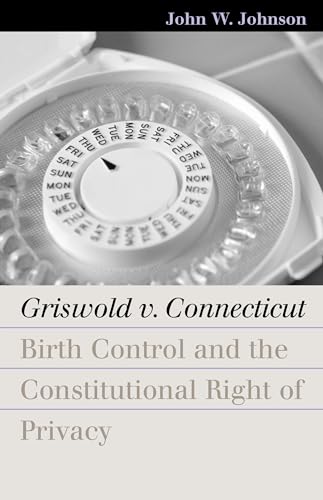
Griswold v. Connecticut: Birth Control and the Constitutional Right of Privacy (Landmark Law Cases & American Society)
Buch 58 von 86: Landmark Law Cases and American SocietyAnbieter: World of Books (was SecondSale), Montgomery, IL, USA
Verkäuferbewertung 5 von 5 Sternen

Zustand: Good. Item in good condition. Textbooks may not include supplemental items i.e. CDs, access codes etc.
-
Paperback. Zustand: Good. Connecting readers with great books since 1972! Used textbooks may not include companion materials such as access codes, etc. May have some wear or writing/highlighting. We ship orders daily and Customer Service is our top priority!
-
Griswold V. Connecticut
Buch 58 von 86: Landmark Law Cases and American SocietySprache: Englisch
Verlag: University Press of Kansas, 2005
ISBN 10: 0700613781 ISBN 13: 9780700613786
Anbieter: ThriftBooks-Dallas, Dallas, TX, USA
Verkäuferbewertung 5 von 5 Sternen
Paperback. Zustand: Very Good. No Jacket. Former library book; May have limited writing in cover pages. Pages are unmarked. ~ ThriftBooks: Read More, Spend Less.
-
Griswold V. Connecticut
Buch 58 von 86: Landmark Law Cases and American SocietySprache: Englisch
Verlag: University Press of Kansas, 2005
ISBN 10: 0700613781 ISBN 13: 9780700613786
Anbieter: ThriftBooks-Dallas, Dallas, TX, USA
Verkäuferbewertung 5 von 5 Sternen
Paperback. Zustand: As New. No Jacket. Pages are clean and are not marred by notes or folds of any kind. ~ ThriftBooks: Read More, Spend Less.
-
Griswold V. Connecticut
Buch 58 von 86: Landmark Law Cases and American SocietySprache: Englisch
Verlag: University Press of Kansas, 2005
ISBN 10: 0700613781 ISBN 13: 9780700613786
Anbieter: ThriftBooks-Dallas, Dallas, TX, USA
Verkäuferbewertung 5 von 5 Sternen
Paperback. Zustand: Very Good. No Jacket. May have limited writing in cover pages. Pages are unmarked. ~ ThriftBooks: Read More, Spend Less.
-
Griswold V. Connecticut
Buch 58 von 86: Landmark Law Cases and American SocietySprache: Englisch
Verlag: University Press of Kansas, 2005
ISBN 10: 0700613781 ISBN 13: 9780700613786
Anbieter: ThriftBooks-Atlanta, AUSTELL, GA, USA
Verkäuferbewertung 5 von 5 Sternen
Paperback. Zustand: Good. No Jacket. Pages can have notes/highlighting. Spine may show signs of wear. ~ ThriftBooks: Read More, Spend Less.
-
Griswold V. Connecticut
Buch 58 von 86: Landmark Law Cases and American SocietySprache: Englisch
Verlag: University Press of Kansas, 2005
ISBN 10: 0700613781 ISBN 13: 9780700613786
Anbieter: ThriftBooks-Atlanta, AUSTELL, GA, USA
Verkäuferbewertung 5 von 5 Sternen
Paperback. Zustand: Very Good. No Jacket. May have limited writing in cover pages. Pages are unmarked. ~ ThriftBooks: Read More, Spend Less.
-
Griswold V. Connecticut : Birth Control and the Constitutional Right of Privacy
Buch 58 von 86: Landmark Law Cases and American SocietySprache: Englisch
Verlag: University Press of Kansas, 2005
ISBN 10: 0700613781 ISBN 13: 9780700613786
Anbieter: Better World Books: West, Reno, NV, USA
Verkäuferbewertung 5 von 5 Sternen
Zustand: Very Good. Pages intact with possible writing/highlighting. Binding strong with minor wear. Dust jackets/supplements may not be included. Stock photo provided. Product includes identifying sticker. Better World Books: Buy Books. Do Good.
-
Griswold V. Connecticut : Birth Control and the Constitutional Right of Privacy
Buch 58 von 86: Landmark Law Cases and American SocietySprache: Englisch
Verlag: University Press of Kansas, 2005
ISBN 10: 0700613781 ISBN 13: 9780700613786
Anbieter: Better World Books, Mishawaka, IN, USA
Verkäuferbewertung 5 von 5 Sternen
Zustand: Good. Pages intact with minimal writing/highlighting. The binding may be loose and creased. Dust jackets/supplements are not included. Stock photo provided. Product includes identifying sticker. Better World Books: Buy Books. Do Good.
-
Griswold V. Connecticut : Birth Control and the Constitutional Right of Privacy
Buch 58 von 86: Landmark Law Cases and American SocietySprache: Englisch
Verlag: University Press of Kansas, 2005
ISBN 10: 0700613781 ISBN 13: 9780700613786
Anbieter: Better World Books: West, Reno, NV, USA
Verkäuferbewertung 5 von 5 Sternen
Zustand: Good. Former library copy. Pages intact with minimal writing/highlighting. The binding may be loose and creased. Dust jackets/supplements are not included. Includes library markings. Stock photo provided. Product includes identifying sticker. Better World Books: Buy Books. Do Good.
-
Paperback. Zustand: Very Good. Connecting readers with great books since 1972! Used books may not include companion materials, and may have some shelf wear or limited writing. We ship orders daily and Customer Service is our top priority!
-
Paperback. Zustand: Very Good. Connecting readers with great books since 1972! Used books may not include companion materials, and may have some shelf wear or limited writing. We ship orders daily and Customer Service is our top priority!
-
Griswold v. Connecticut: Birth Control and the Constitutional Right of Privacy (Landmark Law Cases and American Society)
Buch 58 von 86: Landmark Law Cases and American SocietyAnbieter: Textbooks_Source, Columbia, MO, USA
Verkäuferbewertung 5 von 5 Sternen
paperback. Zustand: Good. Ships in a BOX from Central Missouri! May not include working access code. Will not include dust jacket. Has used sticker(s) and some writing or highlighting. UPS shipping for most packages, (Priority Mail for AK/HI/APO/PO Boxes).
-
GRISWOLD V CONNECTICUT
Buch 58 von 86: Landmark Law Cases and American SocietySprache: Englisch
Verlag: University of Nebraska Press, 2005
ISBN 10: 0700613781 ISBN 13: 9780700613786
Zustand: New. Brand New.
-

Griswold V. Connecticut : Birth Control And The Constitutional Right Of Privacy
Buch 58 von 86: Landmark Law Cases and American SocietyAnbieter: GreatBookPrices, Columbia, MD, USA
Verkäuferbewertung 5 von 5 Sternen
Zustand: As New. Unread book in perfect condition.
-

Griswold V. Connecticut : Birth Control And The Constitutional Right Of Privacy
Buch 58 von 86: Landmark Law Cases and American SocietyAnbieter: GreatBookPrices, Columbia, MD, USA
Verkäuferbewertung 5 von 5 Sternen
Zustand: New.
-
Griswold v. Connecticut (Paperback)
Buch 58 von 86: Landmark Law Cases and American SocietySprache: Englisch
Verlag: University Press of Kansas, Kansas, 2005
ISBN 10: 0700613781 ISBN 13: 9780700613786
Anbieter: Grand Eagle Retail, Bensenville, IL, USA
Verkäuferbewertung 5 von 5 Sternen
Paperback. Zustand: new. Paperback. Americans value privacy as one of their most cherished rights, yet the word "privacy" isn't even mentioned in the U.S. Constitution. It took the Supreme Court's ruling in Griswold v. Connecticut (1965) to bestow constitutional protection upon this right. That remains one of the Court's most hotly debated rulings and led directly to an even more controversial decision in Roe v. Wade (1973). John Johnson's masterly critique of Griswold--which observes its 40th anniversary on June 7, 2005--reminds us once again of its crucial impact on both American law and society. Johnson explores Griswold's origins in a challenge to Connecticut's 1879 anti-contraception law, provides a detailed narrative of its progress, examines the unfolding of the newly secured right of privacy up to recent controversies over same-sex relations, and grounds the story in two key contexts: the struggle within one state to establish the right to birth control and the national debate over the right of privacy. He also provides important insights into the Supreme Court decision in Poe v. Ullman (1961), which rejected challenges to the Connecticut's law and was itself immediately challenged. In response to Poe, Planned Parenthood opened a clinic in New Haven to dispense birth control advice and devices to married women. Ten days later, a local prosecutor shut the clinic down and indicted executive director Estelle Griswold and her medical director, C. Lee Buxton. Tracing the progress of Griswold's case, Johnson clarifies how privacy or "the right to be let alone" became a judicially constructed right. In one of the most idiosyncratic opinions in the Court's history, Justice William O. Douglas ruled that "emanations" from five constitutional amendments afforded protection to the right of privacy, while several other justices proposed competing rationales in support. As he unravels this fascinating tale, Johnson reveals a multifaceted decision that was not in fact the doctrinal novelty that many scholars have argued. For two generations, Griswold has functioned as the legal basis for judicial rulings involving issues of sexual intimacy, reproductive rights, and family life. Even today, it continues to set the agenda for debates about privacy in American life and about how the Constitution itself should be interpreted. Johnson's deft and incisive analysis of the case will interest anyone concerned about the nature, scope, and future of privacy in America. Privacy isn't even mentioned in the US Constitution. It took the Supreme Court's ruling in Griswold v. Connecticut (1965) to bestow constitutional protection upon this right. John Johnson's critique of Griswold - which observes its 40th anniversary on June 7, 2005 - reminds us once again of its crucial impact on both American law and society. Shipping may be from multiple locations in the US or from the UK, depending on stock availability.
-
Griswold v. Connecticut: Birth Control and the Constitutional Right of Privacy (Landmark Law Cases and American Society) (Landmark Law Cases & American Society)
Buch 58 von 86: Landmark Law Cases and American SocietyAnbieter: Kennys Bookshop and Art Galleries Ltd., Galway, GY, Irland
Verkäuferbewertung 5 von 5 Sternen
EUR 46,05
EUR 10,50 Versand
Versand von Irland nach USAAnzahl: Mehr als 20 verfügbar
In den WarenkorbZustand: New. "Privacy" isn't even mentioned in the US Constitution. It took the Supreme Court's ruling in Griswold v. Connecticut (1965) to bestow constitutional protection upon this right. John Johnson's critique of Griswold - which observes its 40th anniversary on June 7, 2005 - reminds us once again of its crucial impact on both American law and society. Series: Landmark Law Cases and American Society. Num Pages: 272 pages. BIC Classification: 1KBB; HBJK; HBLW3; LND; LNTJ. Category: (P) Professional & Vocational; (UP) Postgraduate, Research & Scholarly; (UU) Undergraduate. Dimension: 216 x 140 x 21. Weight in Grams: 349. . 2005. Paperback. . . . .
-
Griswold v. Connecticut Birth Control and the Constitutional Right of Privacy
Buch 58 von 86: Landmark Law Cases and American SocietyAnbieter: Revaluation Books, Exeter, Vereinigtes Königreich
Verkäuferbewertung 5 von 5 Sternen
EUR 49,58
EUR 11,73 Versand
Versand von Vereinigtes Königreich nach USAAnzahl: 2 verfügbar
In den WarenkorbPaperback. Zustand: Brand New. 266 pages. 8.25x5.25x1.00 inches. In Stock.
-
Griswold v. Connecticut: Birth Control and the Constitutional Right of Privacy (Landmark Law Cases and American Society) (Landmark Law Cases & American Society)
Buch 58 von 86: Landmark Law Cases and American SocietyAnbieter: Kennys Bookstore, Olney, MD, USA
Verkäuferbewertung 5 von 5 Sternen
Zustand: New. "Privacy" isn't even mentioned in the US Constitution. It took the Supreme Court's ruling in Griswold v. Connecticut (1965) to bestow constitutional protection upon this right. John Johnson's critique of Griswold - which observes its 40th anniversary on June 7, 2005 - reminds us once again of its crucial impact on both American law and society. Series: Landmark Law Cases and American Society. Num Pages: 272 pages. BIC Classification: 1KBB; HBJK; HBLW3; LND; LNTJ. Category: (P) Professional & Vocational; (UP) Postgraduate, Research & Scholarly; (UU) Undergraduate. Dimension: 216 x 140 x 21. Weight in Grams: 349. . 2005. Paperback. . . . . Books ship from the US and Ireland.
-
Griswold v. Connecticut: Birth Control and the Constitutional Right of Privacy (Landmark Law Cases and American Society)
Buch 58 von 86: Landmark Law Cases and American SocietyAnbieter: BennettBooksLtd, Los Angeles, CA, USA
Verkäuferbewertung 5 von 5 Sternen
paperback. Zustand: New. In shrink wrap. Looks like an interesting title!
-

EUR 39,53
EUR 48,99 Versand
Versand von Deutschland nach USAAnzahl: Mehr als 20 verfügbar
In den WarenkorbZustand: New. Privacy isn t even mentioned in the US Constitution. It took the Supreme Court s ruling in Griswold v. Connecticut (1965) to bestow constitutional protection upon this right. John Johnson s critique of Griswold - which observes its 40th anniversary on June .
-

Griswold v. Connecticut : Birth Control and the Constitutional Right of Privacy
Buch 58 von 86: Landmark Law Cases and American SocietySprache: Englisch
Verlag: University Press Of Kansas Mär 2005, 2005
ISBN 10: 0700613781 ISBN 13: 9780700613786
Anbieter: AHA-BUCH GmbH, Einbeck, Deutschland
Verkäuferbewertung 5 von 5 Sternen
Taschenbuch. Zustand: Neu. Neuware - Americans value privacy as one their most cherished rights, yet the word 'privacy' isn't even mentioned in the U.S. Constitution. It took the supreme Court's ruling in 'Griswold v. Connecticut (1965) to bestow constitutional protection upon this right. That remains one of the Court's most hotly debated rulings and led directly to an even more controversial decision in 'Roe v. Wade (1973). John Johnson's masterly critique of Griswold-'which observes its 40th anniversary on June 7, 2005-'reminds us once again of its crucial impact on both American law and society. Johnson explores 'Griswold's origins in a challenge to Connecticut's 1879 anticontraception law, provides a detailed narrative of its progress, examines the unfolding of the newly secured right of privacy up to recent controversies over same-sex relations, and grounds the story in two key contexts: the struggle within one state to establish the right to birth control and the national debate over the right of privacy. He also provides important insights into the Supreme Court decision in 'Poe v. Ullman (1961), which rejected challenges to the Connecticut's law and was itself immediately challenged. In response to 'poe, Planned Parenthood opened a clinic in New Haven to dispense birth control advice and devices to married women. Ten days later, a local prosecutor shut the clinic down and indicted executive director Estelle Griswold and her medical director, C. Lee Buxton. Tracing the progress of Griswold's case, Johnson clarifies how privacy or 'the right to be let alone' became a judicially constructed right. In one of the most idiosyncratic opinions in the Court's history, Justice William O. Douglas ruled that 'emanations' fromfive constitutional amendments afforded protection to the right of privacy, while several other justices proposed competing rationales in support. As he unravels this fascinating tale, Johnson reveals a multifaceted decision that was not in fact the doctrinal novelty that m.
