

Gesamtpreis (1 Artikel Artikel):
Versandziel:

9780801478062 - Why Intelligence Fails: Lessons from the Iranian Revolution and the Iraq War (Cornell Studies in Security Affairs) von Jervis, Robert (45 Ergebnisse)
Direkt zu den wichtigsten Suchergebnissen
Suchfilter
Produktart
- Alle Product Types
- Bücher (45)
- Magazine & Zeitschriften (Keine weiteren Ergebnisse entsprechen dieser Verfeinerung)
- Comics (Keine weiteren Ergebnisse entsprechen dieser Verfeinerung)
- Noten (Keine weiteren Ergebnisse entsprechen dieser Verfeinerung)
- Kunst, Grafik & Poster (Keine weiteren Ergebnisse entsprechen dieser Verfeinerung)
- Fotografien (Keine weiteren Ergebnisse entsprechen dieser Verfeinerung)
- Karten (Keine weiteren Ergebnisse entsprechen dieser Verfeinerung)
- Manuskripte & Papierantiquitäten (Keine weiteren Ergebnisse entsprechen dieser Verfeinerung)
Zustand Mehr dazu
- Neu (29)
- Wie Neu, Sehr Gut oder Gut Bis Sehr Gut (4)
- Gut oder Befriedigend (10)
- Ausreichend oder Schlecht (2)
- Wie beschrieben (Keine weiteren Ergebnisse entsprechen dieser Verfeinerung)
Einband
- alle Einbände
- Hardcover (Keine weiteren Ergebnisse entsprechen dieser Verfeinerung)
- Softcover (44)
Weitere Eigenschaften
- Erstausgabe (4)
- Signiert (Keine weiteren Ergebnisse entsprechen dieser Verfeinerung)
- Schutzumschlag (Keine weiteren Ergebnisse entsprechen dieser Verfeinerung)
- Angebotsfoto (15)
- Keine Print-on-Demand Angebote (40)
Sprache (2)
Gratisversand
Land des Verkäufers
Verkäuferbewertung
-
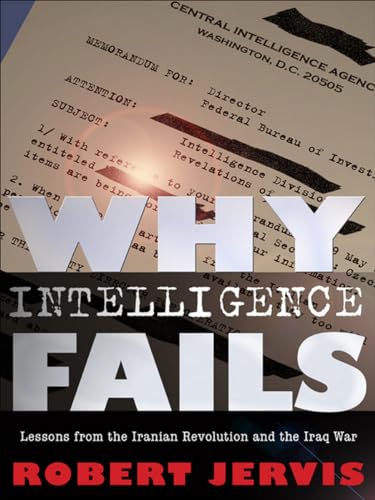
Why Intelligence Fails
Anbieter: ThriftBooks-Atlanta, AUSTELL, GA, USA
Verkäuferbewertung 5 von 5 Sternen

Paperback. Zustand: Fair. No Jacket. Readable copy. Pages may have considerable notes/highlighting. ~ ThriftBooks: Read More, Spend Less.
-
Why Intelligence Fails : Lessons from the Iranian Revolution and the Iraq War
Anbieter: Better World Books, Mishawaka, IN, USA
Verkäuferbewertung 5 von 5 Sternen
Zustand: Good. Pages intact with minimal writing/highlighting. The binding may be loose and creased. Dust jackets/supplements are not included. Stock photo provided. Product includes identifying sticker. Better World Books: Buy Books. Do Good.
-
Paperback. Zustand: Very Good. Connecting readers with great books since 1972! Used books may not include companion materials, and may have some shelf wear or limited writing. We ship orders daily and Customer Service is our top priority!
-
paperback. Zustand: Good. Connecting readers with great books since 1972! Used textbooks may not include companion materials such as access codes, etc. May have some wear or writing/highlighting. We ship orders daily and Customer Service is our top priority!
-
Why Intelligence Fails: Lessons from the Iranian Revolution and the Iraq War (Cornell Studies in Security Affairs)
Anbieter: Midtown Scholar Bookstore, Harrisburg, PA, USA
Verkäuferbewertung 5 von 5 Sternen
Paperback. Zustand: Acceptable. Acceptable - This is a significantly damaged book. It should be considered a reading copy only. Please order this book only if you are interested in the content and not the condition. May be ex-library. PAPERBACK Standard-sized.
-
Why Intelligence Fails: Lessons from the Iranian Revolution and the Iraq War (Cornell Studies in Security Affairs)
Anbieter: Books From California, Simi Valley, CA, USA
Verkäuferbewertung 4 von 5 Sternen

Paperback. Zustand: Good. Cover and edges may have some wear.
-

Why Intelligence Fails: Lessons from the Iranian Revolution and the Iraq War (Cornell Studies in Security Affairs)
Anbieter: Zoom Books East, Glendale Heights, IL, USA
Verkäuferbewertung 5 von 5 Sternen
Zustand: very_good. Book is in very good condition and may include minimal underlining highlighting. The book can also include "From the library of" labels. May not contain miscellaneous items toys, dvds, etc. . We offer 100% money back guarantee and 24 7 customer service.
-

Why Intelligence Fails: Lessons from the Iranian Revolution and the Iraq War (Cornell Studies in Security Affairs)
Anbieter: Big River Books, Powder Springs, GA, USA
Verkäuferbewertung 5 von 5 Sternen
Zustand: good. This book is in good condition. The cover has minor creases or bends. The binding is tight and pages are intact. Some pages may have writing or highlighting.
-
Why Intelligence Fails: Lessons from the Iranian Revolution and the Iraq War (Cornell Studies in Security Affairs)
Anbieter: Books From California, Simi Valley, CA, USA
Verkäuferbewertung 4 von 5 Sternen
Paperback. Zustand: Very Good.
-

Why Intelligence Fails: Lessons from the Iranian Revolution and the Iraq War (Cornell Studies in Security Affairs)
Anbieter: Santa Fe Used Books, Santa Fe, NM, USA
Verkäuferbewertung 5 von 5 Sternen
paperback. Zustand: Very Good. Owner donation sticker to front end page. All else is clean and unmarked. Binding strong. Light wear.
-
Why Intelligence Fails: Lessons from the Iranian Revolution and the Iraq War (Cornell Studies in Security Affairs)
Anbieter: Books From California, Simi Valley, CA, USA
Verkäuferbewertung 4 von 5 Sternen
Paperback. Zustand: Fine.
-
Why Intelligence Fails: Lessons from the Iranian Revolution and the Iraq War (Cornell Studies in Security Affairs)
Anbieter: Antheil Booksellers, No. Bellmore, NY, USA
Verkäuferbewertung 4 von 5 Sternen
Erstausgabe
238pp.
-
Why Intelligence Fails: Lessons from the Iranian Revolution and the Iraq War (Cornell Studies in Security Affairs)
Anbieter: 3rd St. Books, Lees Summit, MO, USA
Verkäuferbewertung 5 von 5 Sternen
Erstausgabe
Soft cover. Zustand: Good. 1st Edition. Good, clean, tight condition. Text has marks and highlighting. Professional book dealer since 1999. All orders are processed promptly and carefully packaged with tracking.
-

Why Intelligence Fails : Lessons from the Iranian Revolution and the Iraq War
Anbieter: GreatBookPrices, Columbia, MD, USA
Verkäuferbewertung 5 von 5 Sternen
Zustand: New.
-
Why Intelligence Fails: Lessons from the Iranian Revolution and the Iraq War (Cornell Studies in Security Affairs)
Anbieter: Lakeside Books, Benton Harbor, MI, USA
Verkäuferbewertung 5 von 5 Sternen
Zustand: New. Brand New! Not Overstocks or Low Quality Book Club Editions! Direct From the Publisher! We're not a giant, faceless warehouse organization! We're a small town bookstore that loves books and loves it's customers! Buy from Lakeside Books!
-

Why Intelligence Fails: Lessons from the Iranian Revolution and the Iraq War (Paperback or Softback)
Sprache: Englisch
Verlag: Cornell University Press 12/22/2011, 2011
ISBN 10: 0801478065 ISBN 13: 9780801478062
Anbieter: BargainBookStores, Grand Rapids, MI, USA
Verkäuferbewertung 5 von 5 Sternen
Paperback or Softback. Zustand: New. Why Intelligence Fails: Lessons from the Iranian Revolution and the Iraq War. Book.
-
Why Intelligence Fails: Lessons from the Iranian Revolution and the Iraq War (Cornell Studies in Security Affairs)
Anbieter: Textbooks_Source, Columbia, MO, USA
Verkäuferbewertung 5 von 5 Sternen
Erstausgabe
paperback. Zustand: Good. First Edition. Ships in a BOX from Central Missouri! May not include working access code. Will not include dust jacket. Has used sticker(s) and some writing or highlighting. UPS shipping for most packages, (Priority Mail for AK/HI/APO/PO Boxes).
-

Why Intelligence Fails : Lessons from the Iranian Revolution and the Iraq War
Anbieter: GreatBookPrices, Columbia, MD, USA
Verkäuferbewertung 5 von 5 Sternen
Zustand: As New. Unread book in perfect condition.
-

Why Intelligence Fails
Sprache: Englisch
Verlag: Cornell University Press, US, 2011
ISBN 10: 0801478065 ISBN 13: 9780801478062
Paperback. Zustand: New. The U.S. government spends enormous resources each year on the gathering and analysis of intelligence, yet the history of American foreign policy is littered with missteps and misunderstandings that have resulted from intelligence failures. In Why Intelligence Fails, Robert Jervis examines the politics and psychology of two of the more spectacular intelligence failures in recent memory: the mistaken belief that the regime of the Shah in Iran was secure and stable in 1978, and the claim that Iraq had active WMD programs in 2002. The Iran case is based on a recently declassified report Jervis was commissioned to undertake by CIA thirty years ago and includes memoranda written by CIA officials in response to Jervis's findings. The Iraq case, also grounded in a review of the intelligence community's performance, is based on close readings of both classified and declassified documents, though Jervis's conclusions are entirely supported by evidence that has been declassified. In both cases, Jervis finds not only that intelligence was badly flawed but also that later explanations-analysts were bowing to political pressure and telling the White House what it wanted to hear or were willfully blind-were also incorrect. Proponents of these explanations claimed that initial errors were compounded by groupthink, lack of coordination within the government, and failure to share information. Policy prescriptions, including the recent establishment of a Director of National Intelligence, were supposed to remedy the situation. In Jervis's estimation, neither the explanations nor the prescriptions are adequate. The inferences that intelligence drew were actually quite plausible given the information available. Errors arose, he concludes, from insufficient attention to the ways in which information should be gathered and interpreted, a lack of self-awareness about the factors that led to the judgments, and an organizational culture that failed to probe for weaknesses and explore alternatives. Evaluating the inherent tensions between the methods and aims of intelligence personnel and policymakers from a unique insider's perspective, Jervis forcefully criticizes recent proposals for improving the performance of the intelligence community and discusses ways in which future analysis can be improved.
-

Why Intelligence Fails
Sprache: Englisch
Verlag: Cornell University Press, US, 2011
ISBN 10: 0801478065 ISBN 13: 9780801478062
Anbieter: Rarewaves.com USA, London, LONDO, Vereinigtes Königreich
Verkäuferbewertung 5 von 5 Sternen
EUR 23,21
Versand gratis
Versand von Vereinigtes Königreich nach USAAnzahl: 7 verfügbar
In den WarenkorbPaperback. Zustand: New. The U.S. government spends enormous resources each year on the gathering and analysis of intelligence, yet the history of American foreign policy is littered with missteps and misunderstandings that have resulted from intelligence failures. In Why Intelligence Fails, Robert Jervis examines the politics and psychology of two of the more spectacular intelligence failures in recent memory: the mistaken belief that the regime of the Shah in Iran was secure and stable in 1978, and the claim that Iraq had active WMD programs in 2002. The Iran case is based on a recently declassified report Jervis was commissioned to undertake by CIA thirty years ago and includes memoranda written by CIA officials in response to Jervis's findings. The Iraq case, also grounded in a review of the intelligence community's performance, is based on close readings of both classified and declassified documents, though Jervis's conclusions are entirely supported by evidence that has been declassified. In both cases, Jervis finds not only that intelligence was badly flawed but also that later explanations-analysts were bowing to political pressure and telling the White House what it wanted to hear or were willfully blind-were also incorrect. Proponents of these explanations claimed that initial errors were compounded by groupthink, lack of coordination within the government, and failure to share information. Policy prescriptions, including the recent establishment of a Director of National Intelligence, were supposed to remedy the situation. In Jervis's estimation, neither the explanations nor the prescriptions are adequate. The inferences that intelligence drew were actually quite plausible given the information available. Errors arose, he concludes, from insufficient attention to the ways in which information should be gathered and interpreted, a lack of self-awareness about the factors that led to the judgments, and an organizational culture that failed to probe for weaknesses and explore alternatives. Evaluating the inherent tensions between the methods and aims of intelligence personnel and policymakers from a unique insider's perspective, Jervis forcefully criticizes recent proposals for improving the performance of the intelligence community and discusses ways in which future analysis can be improved.
-
Why Intelligence Fails
Sprache: Englisch
Verlag: MB - Cornell University Press, 2011
ISBN 10: 0801478065 ISBN 13: 9780801478062
Anbieter: PBShop.store UK, Fairford, GLOS, Vereinigtes Königreich
Verkäuferbewertung 5 von 5 Sternen
EUR 20,15
EUR 4,79 Versand
Versand von Vereinigtes Königreich nach USAAnzahl: 14 verfügbar
In den WarenkorbPAP. Zustand: New. New Book. Shipped from UK. Established seller since 2000.
-
Why Intelligence Fails (Paperback)
Sprache: Englisch
Verlag: Cornell University Press, Ithaca, 2011
ISBN 10: 0801478065 ISBN 13: 9780801478062
Anbieter: Grand Eagle Retail, Bensenville, IL, USA
Verkäuferbewertung 5 von 5 Sternen
Paperback. Zustand: new. Paperback. The U.S. government spends enormous resources each year on the gathering and analysis of intelligence, yet the history of American foreign policy is littered with missteps and misunderstandings that have resulted from intelligence failures. In Why Intelligence Fails, Robert Jervis examines the politics and psychology of two of the more spectacular intelligence failures in recent memory: the mistaken belief that the regime of the Shah in Iran was secure and stable in 1978, and the claim that Iraq had active WMD programs in 2002. The Iran case is based on a recently declassified report Jervis was commissioned to undertake by CIA thirty years ago and includes memoranda written by CIA officials in response to Jervis's findings. The Iraq case, also grounded in a review of the intelligence community's performance, is based on close readings of both classified and declassified documents, though Jervis's conclusions are entirely supported by evidence that has been declassified.In both cases, Jervis finds not only that intelligence was badly flawed but also that later explanations-analysts were bowing to political pressure and telling the White House what it wanted to hear or were willfully blind-were also incorrect. Proponents of these explanations claimed that initial errors were compounded by groupthink, lack of coordination within the government, and failure to share information. Policy prescriptions, including the recent establishment of a Director of National Intelligence, were supposed to remedy the situation. In Jervis's estimation, neither the explanations nor the prescriptions are adequate. The inferences that intelligence drew were actually quite plausible given the information available. Errors arose, he concludes, from insufficient attention to the ways in which information should be gathered and interpreted, a lack of self-awareness about the factors that led to the judgments, and an organizational culture that failed to probe for weaknesses and explore alternatives.Evaluating the inherent tensions between the methods and aims of intelligence personnel and policymakers from a unique insider's perspective, Jervis forcefully criticizes recent proposals for improving the performance of the intelligence community and discusses ways in which future analysis can be improved. Jervis examines the politics and psychology of two of the more spectacular intelligence failures in recent memory: the mistaken belief that the regime of the Shah in Iran was secure and stable in 1978, and the 2002 claim that Iraq had active WMD programs. Shipping may be from multiple locations in the US or from the UK, depending on stock availability.
-
Why Intelligence Fails: Lessons from the Iranian Revolution and the Iraq War (eng)
Anbieter: Brook Bookstore On Demand, Napoli, NA, Italien
Verkäuferbewertung 4 von 5 Sternen
Zustand: new.
-
Why Intelligence Fails: Lessons from the Iranian Revolution and the Iraq War (Cornell Studies in Security Affairs)
Anbieter: Majestic Books, Hounslow, Vereinigtes Königreich
Verkäuferbewertung 4 von 5 Sternen
EUR 24,76
EUR 7,49 Versand
Versand von Vereinigtes Königreich nach USAAnzahl: 3 verfügbar
In den WarenkorbZustand: New. pp. 248.
-
Why Intelligence Fails Lessons from the Iranian Revolution and the Iraq War
Anbieter: Revaluation Books, Exeter, Vereinigtes Königreich
Verkäuferbewertung 5 von 5 Sternen
EUR 23,33
EUR 11,52 Versand
Versand von Vereinigtes Königreich nach USAAnzahl: 2 verfügbar
In den WarenkorbPaperback. Zustand: Brand New. bc edition. 248 pages. 9.00x6.10x0.80 inches. In Stock.
-
Why Intelligence Fails: Lessons from the Iranian Revolution and the Iraq War
Anbieter: Kennys Bookshop and Art Galleries Ltd., Galway, GY, Irland
Verkäuferbewertung 5 von 5 Sternen
Erstausgabe
Zustand: New. Series: Cornell Studies in Security Affairs. Num Pages: 248 pages. BIC Classification: JPSH. Category: (G) General (US: Trade). Dimension: 235 x 153 x 9. Weight in Grams: 346. . 2011. 1st Edition. Paperback. . . . .
-
Cornell Studies in Security Affairs Format: Paperback
Verlag: University of Nebraska Press
ISBN 10: 0801478065 ISBN 13: 9780801478062
Zustand: New. Brand New.
-

Why Intelligence Fails : Lessons from the Iranian Revolution and the Iraq War
Anbieter: GreatBookPricesUK, Woodford Green, Vereinigtes Königreich
Verkäuferbewertung 5 von 5 Sternen
EUR 19,85
EUR 17,28 Versand
Versand von Vereinigtes Königreich nach USAAnzahl: Mehr als 20 verfügbar
In den WarenkorbZustand: New.
-
Why Intelligence Fails: Lessons from the Iranian Revolution and the Iraq War
Anbieter: THE SAINT BOOKSTORE, Southport, Vereinigtes Königreich
Verkäuferbewertung 5 von 5 Sternen
EUR 20,01
EUR 16,83 Versand
Versand von Vereinigtes Königreich nach USAAnzahl: 6 verfügbar
In den WarenkorbPaperback / softback. Zustand: New. New copy - Usually dispatched within 4 working days.
-
Why Intelligence Fails: Lessons from the Iranian Revolution and the Iraq War
Anbieter: Kennys Bookstore, Olney, MD, USA
Verkäuferbewertung 5 von 5 Sternen
Zustand: New. Series: Cornell Studies in Security Affairs. Num Pages: 248 pages. BIC Classification: JPSH. Category: (G) General (US: Trade). Dimension: 235 x 153 x 9. Weight in Grams: 346. . 2011. 1st Edition. Paperback. . . . . Books ship from the US and Ireland.

