

Gesamtpreis (1 Artikel Artikel):
Versandziel:

9780877229568 - Jookin': The Rise of Social Dance Formations in African-American Culture von Hazzard-Gordon, Katrina (26 Ergebnisse)
Direkt zu den wichtigsten Suchergebnissen
Suchfilter
Produktart
- Alle Product Types
- Bücher (26)
- Magazine & Zeitschriften (Keine weiteren Ergebnisse entsprechen dieser Verfeinerung)
- Comics (Keine weiteren Ergebnisse entsprechen dieser Verfeinerung)
- Noten (Keine weiteren Ergebnisse entsprechen dieser Verfeinerung)
- Kunst, Grafik & Poster (Keine weiteren Ergebnisse entsprechen dieser Verfeinerung)
- Fotografien (Keine weiteren Ergebnisse entsprechen dieser Verfeinerung)
- Karten (Keine weiteren Ergebnisse entsprechen dieser Verfeinerung)
- Manuskripte & Papierantiquitäten (Keine weiteren Ergebnisse entsprechen dieser Verfeinerung)
Zustand Mehr dazu
- Neu (22)
- Wie Neu, Sehr Gut oder Gut Bis Sehr Gut (2)
- Gut oder Befriedigend (2)
- Ausreichend oder Schlecht (Keine weiteren Ergebnisse entsprechen dieser Verfeinerung)
- Wie beschrieben (Keine weiteren Ergebnisse entsprechen dieser Verfeinerung)
Einband
- alle Einbände
- Hardcover (Keine weiteren Ergebnisse entsprechen dieser Verfeinerung)
- Softcover (26)
Weitere Eigenschaften
- Erstausgabe (Keine weiteren Ergebnisse entsprechen dieser Verfeinerung)
- Signiert (Keine weiteren Ergebnisse entsprechen dieser Verfeinerung)
- Schutzumschlag (Keine weiteren Ergebnisse entsprechen dieser Verfeinerung)
- Angebotsfoto (8)
- Keine Print-on-Demand Angebote (26)
Sprache (1)
Gratisversand
Land des Verkäufers
Verkäuferbewertung
-
![Beispielbild für Jookin': The Rise of Social Dance Formations in African-American Culture [Paperback] Hazzard-Gordon, Katrina zum Verkauf von Mercantile Books](https://pictures.abebooks.com/isbn/9780877229568-de-300.jpg)
Jookin': The Rise of Social Dance Formations in African-American Culture [Paperback] Hazzard-Gordon, Katrina
Anbieter: Mercantile Books, Columbus, OH, USA
Verkäuferbewertung 5 von 5 Sternen

paperback. Zustand: Good. Signed/Inscribed by author "Katrina" Hazzard-Gordon. Pages clean, unmarked. Crease to spine, binding sound. Cover has moderate wear, with crease upper back, some scratches on back. Former owner's name inside front. Shipped promptly with Tracking.
-
Jookin' : The Rise of Social Dance Formations in African-American Culture
Anbieter: Better World Books, Mishawaka, IN, USA
Verkäuferbewertung 5 von 5 Sternen
Zustand: Good. Pages intact with minimal writing/highlighting. The binding may be loose and creased. Dust jackets/supplements are not included. Stock photo provided. Product includes identifying sticker. Better World Books: Buy Books. Do Good.
-
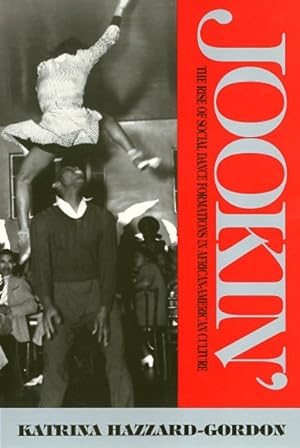
Jookin' : The Rise of Social Dance Formations in African-American Culture
Anbieter: GreatBookPrices, Columbia, MD, USA
Verkäuferbewertung 5 von 5 Sternen
Zustand: New.
-

Jookin'
Sprache: Englisch
Verlag: Temple University Press,U.S., US, 1992
ISBN 10: 0877229562 ISBN 13: 9780877229568
Anbieter: Rarewaves.com USA, London, LONDO, Vereinigtes Königreich
Verkäuferbewertung 5 von 5 Sternen
EUR 31,04
Versand gratis
Versand von Vereinigtes Königreich nach USAAnzahl: 4 verfügbar
In den WarenkorbPaperback. Zustand: New. Katrina Hazzard-Gordon offers the first analysis of the development of the jook-an underground cultural institution created by the black working class-together with other dance arenas in African-American culture. Beginning with the effects of African slaves' middle passage experience on their traditional dances, she traces the unique and virtually autonomous dance culture that developed in the rural South. Like the blues, these secular dance forms and institutions were brought north and urbanized by migrating blacks. In northern cities, some aspects of black dance became integrated into white culture and commercialized. Focusing on ten African-American dance arenas from the period of enslavement to the mid-twentieth century, this book explores the jooks, honky-tonks, rent parties, and after-hours joints as well as the licensed membership clubs, dance halls, cabarets, and the dances of the black elite. Jook houses emerged during the Reconstruction era and can be viewed as a cultural response to freedom. In the jook, Hazzard-Gordon explains, an immeasurable amount of core black culture including food, language, community fellowship, mate selection, music, and dance found a sanctuary of expression when no other secular institution flourished among the folk. The jook and its various derivative forms have provided both entertainment and an economic alternative (such as illegal lotteries and numbers) to people excluded from the dominant economy. Dances like the Charleston, shimmy, snake hips, funky butt, twist, and slow drag originated in the jooks; some can be traced back to Africa. Social dancing links black Americans to their African past more strongly than any other aspect of their culture. Citing the significance of dance in the African-American psyche, this study explores the establishments that nurtured ancestral as well as communal links for African-Americans, vividly describing black dances, formal rituals, such as debutante balls, and the influence of black dance on white culture.
-
Jookin'
Sprache: Englisch
Verlag: ML - Temple University Press, 1992
ISBN 10: 0877229562 ISBN 13: 9780877229568
Anbieter: PBShop.store UK, Fairford, GLOS, Vereinigtes Königreich
Verkäuferbewertung 4 von 5 Sternen

EUR 26,39
EUR 4,77 Versand
Versand von Vereinigtes Königreich nach USAAnzahl: 15 verfügbar
In den WarenkorbPAP. Zustand: New. New Book. Shipped from UK. Established seller since 2000.
-

Jookin' : The Rise of Social Dance Formations in African-American Culture
Anbieter: GreatBookPrices, Columbia, MD, USA
Verkäuferbewertung 5 von 5 Sternen
Zustand: As New. Unread book in perfect condition.
-
Jookin' (Paperback)
Sprache: Englisch
Verlag: Temple University Press,U.S., Philadelphia PA, 1992
ISBN 10: 0877229562 ISBN 13: 9780877229568
Anbieter: Grand Eagle Retail, Bensenville, IL, USA
Verkäuferbewertung 5 von 5 Sternen
Paperback. Zustand: new. Paperback. Katrina Hazzard-Gordon offers the first analysis of the development of the jook, an underground cultural institution created by the black working class together with other dance arenas in African-American culture. Beginning with the effects of African slaves' middle passage experience on their traditional dances, she traces the unique and virtually autonomous dance culture that developed in the rural South. Like the blues, these secular dance forms and institutions were brought north and urbanized by migrating blacks. In northern cities, some aspects of black dance became integrated into white culture and commercialized. Focusing on ten African-American dance arenas from the period of enslavement to the mid-twentieth century, this book explores the jooks, honky-tonks, rent parties, and after-hours joints as well as the licensed membership clubs, dance halls, cabarets, and the dances of the black elite. Jook houses emerged during the Reconstruction era and can be viewed as a cultural response to freedom.In the jook, Hazzard-Gordon explains, an immeasurable amount of core black culture including food, language, community fellowship, mate selection, music, and dance found a sanctuary of expression when no other secular institution flourished among the folk. The jook and its various derivative forms have provided both entertainment and an economic alternative (such as illegal lotteries and numbers) to people excluded from the dominant economy. Dances like the Charleston, shimmy, snake hips, funky butt, twist, and slow drag originated in the jooks; some can be traced back to Africa. Social dancing links black Americans to their African past more strongly than any other aspect of their culture. Citing the significance of dance in the African-American psyche, this study explores the establishments that nurtured ancestral as well as communal links for African-Americans, vividly describing black dances, formal rituals, such as debutante balls, and the influence of black dance on white culture. Katrina Hazzard-Gordon is Associate Professor of Sociology at Rutgers University, Camden, and the founder and director of the Diaspora Dance Theatre and Research Group. Offers an analysis of the development of the jook, an underground cultural institution created by the black working class with other dance arenas in African-American culture. Presenting the effects of African slaves' middle passage experience on their traditional dances, this work traces the unique dance culture that developed in the rural South. Shipping may be from multiple locations in the US or from the UK, depending on stock availability.
-
Jookin': The Rise of Social Dance Formations in African-American Culture (eng)
Anbieter: Brook Bookstore On Demand, Napoli, NA, Italien
Verkäuferbewertung 4 von 5 Sternen
Zustand: new.
-
Jookin` The Rise of Social Dance Formations in AfricanAmerican Culture
Anbieter: Revaluation Books, Exeter, Vereinigtes Königreich
Verkäuferbewertung 5 von 5 Sternen
EUR 30,48
EUR 11,48 Versand
Versand von Vereinigtes Königreich nach USAAnzahl: 2 verfügbar
In den WarenkorbPaperback. Zustand: Brand New. 248 pages. 8.25x5.75x0.75 inches. In Stock.
-
Jookin'
Anbieter: Majestic Books, Hounslow, Vereinigtes Königreich
Verkäuferbewertung 4 von 5 Sternen
EUR 35,01
EUR 7,46 Versand
Versand von Vereinigtes Königreich nach USAAnzahl: 3 verfügbar
In den WarenkorbZustand: New. pp. 248.
-

Jookin' : The Rise of Social Dance Formations in African-American Culture
Anbieter: GreatBookPricesUK, Woodford Green, Vereinigtes Königreich
Verkäuferbewertung 5 von 5 Sternen
EUR 27,09
EUR 17,21 Versand
Versand von Vereinigtes Königreich nach USAAnzahl: 2 verfügbar
In den WarenkorbZustand: New.
-
Jookin': The Rise of Social Dance Formations in African-American Culture
Anbieter: Kennys Bookshop and Art Galleries Ltd., Galway, GY, Irland
Verkäuferbewertung 5 von 5 Sternen
Zustand: New. Offers an analysis of the development of the jook, an underground cultural institution created by the black working class with other dance arenas in African-American culture. Presenting the effects of African slaves' middle passage experience on their traditional dances, this work traces the unique dance culture that developed in the rural South. Num Pages: 248 pages, illustrations. BIC Classification: ASD; JH. Category: (P) Professional & Vocational. Dimension: 210 x 146 x 18. Weight in Grams: 295. . 1992. Paperback. . . . .
-
Jookin': The Rise of Social Dance Formations in African-American Culture
Sprache: Englisch
Verlag: Temple University Press 1990-06-01, 1990
ISBN 10: 0877229562 ISBN 13: 9780877229568
Anbieter: Chiron Media, Wallingford, Vereinigtes Königreich
Verkäuferbewertung 5 von 5 Sternen
EUR 26,81
EUR 17,78 Versand
Versand von Vereinigtes Königreich nach USAAnzahl: 2 verfügbar
In den WarenkorbPaperback. Zustand: New.
-
Jookin': The Rise of Social Dance Formations in African-American Culture
Anbieter: Ria Christie Collections, Uxbridge, Vereinigtes Königreich
Verkäuferbewertung 5 von 5 Sternen
EUR 31,84
EUR 13,75 Versand
Versand von Vereinigtes Königreich nach USAAnzahl: 2 verfügbar
In den WarenkorbZustand: New. In.
-
Zustand: New. pp. 248 Index.
-
Jookin': The Rise of Social Dance Formations in African-American Culture
Sprache: Englisch
Verlag: Temple University Press,U.S., 1992
ISBN 10: 0877229562 ISBN 13: 9780877229568
Anbieter: THE SAINT BOOKSTORE, Southport, Vereinigtes Königreich
Verkäuferbewertung 5 von 5 Sternen
EUR 30,55
EUR 17,16 Versand
Versand von Vereinigtes Königreich nach USAAnzahl: Mehr als 20 verfügbar
In den WarenkorbPaperback / softback. Zustand: New. New copy - Usually dispatched within 4 working days.
-
Jookin': The Rise of Social Dance Formations in African-American Culture
Anbieter: Kennys Bookstore, Olney, MD, USA
Verkäuferbewertung 4 von 5 Sternen
Zustand: New. Offers an analysis of the development of the jook, an underground cultural institution created by the black working class with other dance arenas in African-American culture. Presenting the effects of African slaves' middle passage experience on their traditional dances, this work traces the unique dance culture that developed in the rural South. Num Pages: 248 pages, illustrations. BIC Classification: ASD; JH. Category: (P) Professional & Vocational. Dimension: 210 x 146 x 18. Weight in Grams: 295. . 1992. Paperback. . . . . Books ship from the US and Ireland.
-
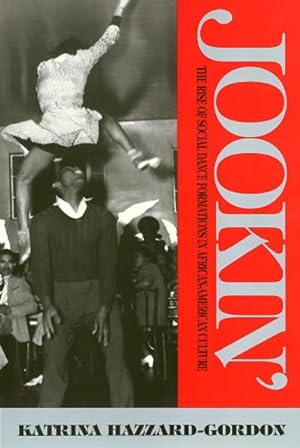
Jookin' : The Rise of Social Dance Formations in African-American Culture
Anbieter: GreatBookPricesUK, Woodford Green, Vereinigtes Königreich
Verkäuferbewertung 5 von 5 Sternen
EUR 32,41
EUR 17,21 Versand
Versand von Vereinigtes Königreich nach USAAnzahl: 2 verfügbar
In den WarenkorbZustand: As New. Unread book in perfect condition.
-
Paperback. Zustand: new. New Copy. Customer Service Guaranteed.
-
JOOKIN
Anbieter: Speedyhen, Hertfordshire, Vereinigtes Königreich
Verkäuferbewertung 5 von 5 Sternen
EUR 25,97
EUR 47,05 Versand
Versand von Vereinigtes Königreich nach USAAnzahl: 2 verfügbar
In den WarenkorbZustand: NEW.
-
Jookin': The Rise of Social Dance Formations in African-American Culture
Anbieter: BennettBooksLtd, Los Angeles, CA, USA
Verkäuferbewertung 5 von 5 Sternen
paperback. Zustand: New. In shrink wrap. Looks like an interesting title!
-

Zustand: New. The first analysis of the development of the jook and other dance arenas in African-American cultureÜber den AutorKatrina Hazzard-Gordon is Associate Professor of Sociology at Rutgers University, Camden, and the founder and dire.
-
Jookin' (Paperback)
Sprache: Englisch
Verlag: Temple University Press,U.S., Philadelphia PA, 1992
ISBN 10: 0877229562 ISBN 13: 9780877229568
Anbieter: AussieBookSeller, Truganina, VIC, Australien
Verkäuferbewertung 5 von 5 Sternen
Paperback. Zustand: new. Paperback. Katrina Hazzard-Gordon offers the first analysis of the development of the jook, an underground cultural institution created by the black working class together with other dance arenas in African-American culture. Beginning with the effects of African slaves' middle passage experience on their traditional dances, she traces the unique and virtually autonomous dance culture that developed in the rural South. Like the blues, these secular dance forms and institutions were brought north and urbanized by migrating blacks. In northern cities, some aspects of black dance became integrated into white culture and commercialized. Focusing on ten African-American dance arenas from the period of enslavement to the mid-twentieth century, this book explores the jooks, honky-tonks, rent parties, and after-hours joints as well as the licensed membership clubs, dance halls, cabarets, and the dances of the black elite. Jook houses emerged during the Reconstruction era and can be viewed as a cultural response to freedom.In the jook, Hazzard-Gordon explains, an immeasurable amount of core black culture including food, language, community fellowship, mate selection, music, and dance found a sanctuary of expression when no other secular institution flourished among the folk. The jook and its various derivative forms have provided both entertainment and an economic alternative (such as illegal lotteries and numbers) to people excluded from the dominant economy. Dances like the Charleston, shimmy, snake hips, funky butt, twist, and slow drag originated in the jooks; some can be traced back to Africa. Social dancing links black Americans to their African past more strongly than any other aspect of their culture. Citing the significance of dance in the African-American psyche, this study explores the establishments that nurtured ancestral as well as communal links for African-Americans, vividly describing black dances, formal rituals, such as debutante balls, and the influence of black dance on white culture. Katrina Hazzard-Gordon is Associate Professor of Sociology at Rutgers University, Camden, and the founder and director of the Diaspora Dance Theatre and Research Group. Offers an analysis of the development of the jook, an underground cultural institution created by the black working class with other dance arenas in African-American culture. Presenting the effects of African slaves' middle passage experience on their traditional dances, this work traces the unique dance culture that developed in the rural South. Shipping may be from our Sydney, NSW warehouse or from our UK or US warehouse, depending on stock availability.
-

Jookin'
Sprache: Englisch
Verlag: Temple University Press,U.S., US, 1992
ISBN 10: 0877229562 ISBN 13: 9780877229568
Anbieter: Rarewaves.com UK, London, Vereinigtes Königreich
Verkäuferbewertung 5 von 5 Sternen
EUR 27,11
EUR 74,59 Versand
Versand von Vereinigtes Königreich nach USAAnzahl: 4 verfügbar
In den WarenkorbPaperback. Zustand: New. Katrina Hazzard-Gordon offers the first analysis of the development of the jook-an underground cultural institution created by the black working class-together with other dance arenas in African-American culture. Beginning with the effects of African slaves' middle passage experience on their traditional dances, she traces the unique and virtually autonomous dance culture that developed in the rural South. Like the blues, these secular dance forms and institutions were brought north and urbanized by migrating blacks. In northern cities, some aspects of black dance became integrated into white culture and commercialized. Focusing on ten African-American dance arenas from the period of enslavement to the mid-twentieth century, this book explores the jooks, honky-tonks, rent parties, and after-hours joints as well as the licensed membership clubs, dance halls, cabarets, and the dances of the black elite. Jook houses emerged during the Reconstruction era and can be viewed as a cultural response to freedom. In the jook, Hazzard-Gordon explains, an immeasurable amount of core black culture including food, language, community fellowship, mate selection, music, and dance found a sanctuary of expression when no other secular institution flourished among the folk. The jook and its various derivative forms have provided both entertainment and an economic alternative (such as illegal lotteries and numbers) to people excluded from the dominant economy. Dances like the Charleston, shimmy, snake hips, funky butt, twist, and slow drag originated in the jooks; some can be traced back to Africa. Social dancing links black Americans to their African past more strongly than any other aspect of their culture. Citing the significance of dance in the African-American psyche, this study explores the establishments that nurtured ancestral as well as communal links for African-Americans, vividly describing black dances, formal rituals, such as debutante balls, and the influence of black dance on white culture.
-

Taschenbuch. Zustand: Neu. Jookin' | The Rise of Social Dance Formations in African-American Culture | Katrina Hazzard-Gordon | Taschenbuch | Einband - flex.(Paperback) | Englisch | 1992 | Temple University Press | EAN 9780877229568 | Verantwortliche Person für die EU: Libri GmbH, Europaallee 1, 36244 Bad Hersfeld, gpsr[at]libri[dot]de | Anbieter: preigu.
-
Zustand: New. Satisfaction Guaranteed or your money back.

