

Gesamtpreis (1 Artikel Artikel):
Versandziel:

9781612008813 - British Fighter Aircraft in Wwi: Design, Construction and Innovation (Casemate Illustrated Special) von Wilkins, Mark C. (21 Ergebnisse)
Direkt zu den wichtigsten Suchergebnissen
Suchfilter
Produktart
- Alle Product Types
- Bücher (21)
- Magazine & Zeitschriften (Keine weiteren Ergebnisse entsprechen dieser Verfeinerung)
- Comics (Keine weiteren Ergebnisse entsprechen dieser Verfeinerung)
- Noten (Keine weiteren Ergebnisse entsprechen dieser Verfeinerung)
- Kunst, Grafik & Poster (Keine weiteren Ergebnisse entsprechen dieser Verfeinerung)
- Fotografien (Keine weiteren Ergebnisse entsprechen dieser Verfeinerung)
- Karten (Keine weiteren Ergebnisse entsprechen dieser Verfeinerung)
- Manuskripte & Papierantiquitäten (Keine weiteren Ergebnisse entsprechen dieser Verfeinerung)
Zustand Mehr dazu
- Neu (21)
- Wie Neu, Sehr Gut oder Gut Bis Sehr Gut (Keine weiteren Ergebnisse entsprechen dieser Verfeinerung)
- Gut oder Befriedigend (Keine weiteren Ergebnisse entsprechen dieser Verfeinerung)
- Ausreichend oder Schlecht (Keine weiteren Ergebnisse entsprechen dieser Verfeinerung)
- Wie beschrieben (Keine weiteren Ergebnisse entsprechen dieser Verfeinerung)
Einband
- alle Einbände
- Hardcover (21)
- Softcover (Keine weiteren Ergebnisse entsprechen dieser Verfeinerung)
Weitere Eigenschaften
- Erstausgabe (1)
- Signiert (Keine weiteren Ergebnisse entsprechen dieser Verfeinerung)
- Schutzumschlag (Keine weiteren Ergebnisse entsprechen dieser Verfeinerung)
- Angebotsfoto (10)
- Keine Print-on-Demand Angebote (21)
Sprache (1)
Preis
- Beliebiger Preis
- Weniger als EUR 20 (Keine weiteren Ergebnisse entsprechen dieser Verfeinerung)
- EUR 20 bis EUR 45
- Mehr als EUR 45
Gratisversand
Land des Verkäufers
Verkäuferbewertung
-

British Fighter Aircraft in WWI (Hardcover)
Buch 12 von 16: Casemate Illustrated SpecialAnbieter: Grand Eagle Retail, Bensenville, IL, USA
Verkäuferbewertung 5 von 5 Sternen

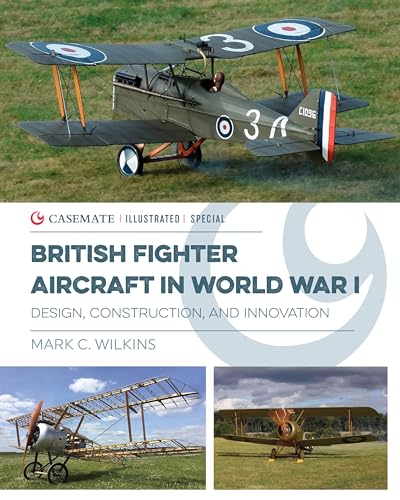
Hardcover. Zustand: new. Hardcover. Fully illustrated account of how British aircraft manufacturers vied to create the best fighter to counter German technology during World War I. World War I witnessed unprecedented growth and innovation in aircraft design, construction, and as the war progressed - mass production. Each country generated its own innovations sometimes in surprising ways - Albatros Fokker, Pfalz, and Junkers in Germany and Nieuport, Spad, Sopwith and Bristol in France and Britain. This book focuses on the British approach to fighter design, construction, and mass production. Initially the French led the way in Allied fighter development with their Bleriot trainers then nimble Nieuport Scouts - culminating with the powerful, fast gun platforms as exemplified by the Spads. The Spads had a major drawback however, in that they were difficult and counter-intuitive to fix in the field. The British developed fighters in a very different way; Tommy Sopwith had a distinctive approach to fighter design that relied on lightly loaded wings and simple functional box-girder fuselages. His Camel was revolutionary as it combined all the weight well forward; enabling the Camel to turn very quickly - but also making it an unforgiving fighter for the inexperienced. The British Aircraft Company's SE5a represented another leap forward with its comfortable cockpit, modern instrumentation, and inline engine - clearly influenced by both Spads and German aircraft. Each manufacturer and design team vied for the upper hand and deftly and quickly appropriated good ideas from other companies - be they friend or foe. Developments in tactics and deployment also influenced design - from the early reconnaissance planes, to turn fighters, finally planes that relied upon formation tactics, speed, and firepower. Advances were so great that the postwar industry seemed bland by comparison. AUTHOR: Mark Wilkins is an historian, writer, and museum professional. He is the current Curator of Maritime History at the Calvert Marine Museum. He has been director & curator of both the Cape Cod Maritime Museum and The Atwood House Museum (Chatham Historical Society), and has worked for the Smithsonian & Mystic Seaport. He is a published author of books and articles relating to maritime and aviation history. Mark has a master's degree in history from Harvard University, and is currently working on several books relating to WWI aviation. He is adjunct faculty, history department, at St. Mary's College of Maryland. 250 photographs, profiles and diagrams Fully illustrated account of how British aircraft manufacturers vied to create the best fighter to counter German technology during World War I. Shipping may be from multiple locations in the US or from the UK, depending on stock availability.
-

Hardback. Zustand: New. World War I witnessed unprecedented growth and innovation in aircraft design, construction, and as the war progressed - mass production. Each country generated its own innovations sometimes in surprising ways - Albatros Fokker, Pfalz, and Junkers in Germany and Nieuport, Spad, Sopwith and Bristol in France and Britain. This book focuses on the British approach to fighter design, construction, and mass production. Initially the French led the way in Allied fighter development with their Bleriot trainers then nimble Nieuport Scouts - culminating with the powerful, fast gun platforms as exemplified by the Spads. The Spads had a major drawback however, in that they were difficult and counter-intuitive to fix in the field. The British developed fighters in a very different way; Tommy Sopwith had a distinctive approach to fighter design that relied on lightly loaded wings and simple functional box-girder fuselages. His Camel was revolutionary as it combined all the weight well forward; enabling the Camel to turn very quickly - but also making it an unforgiving fighter for the inexperienced. The Royal Aircraft Factory's SE5a represented another leap forward with its comfortable cockpit, modern instrumentation, and inline engine - clearly influenced by both Spads and German aircraft. Each manufacturer and design team vied for the upper hand and deftly and quickly appropriated good ideas from other companies - be they friend or foe. Developments in tactics and deployment also influenced design - from the early reconnaissance planes, to turn fighters, finally planes that relied upon formation tactics, speed, and firepower. Advances were so great that the postwar industry seemed bland by comparison.
-
Hardcover. Zustand: New. First Edition. Brand new copy. Read descriptions carefully. Avoid GLASSFROGBOOKS, ERGODOBOOKS, MORE BOOKS, IRISH BOOKSELLERS, PRO QUO/BAYSIDE BOOKS, BOOKSPLEASE, RIA CHRISTIE, DISCOVER BOOKS, BOOKS2ANYWHERE, BOOKS EXPRESS, CHIRON MEDIA! These "Booksellers" have no books of their own. they buy honest booksellers' books, upcharge you and have no idea what the book is really like. Support your local and small bookstore owners!
-
British Fighter Aircraft in WWI
Buch 12 von 16: Casemate Illustrated SpecialAnbieter: PBShop.store UK, Fairford, GLOS, Vereinigtes Königreich
Verkäuferbewertung 5 von 5 Sternen
EUR 33,58
EUR 6,80 Versand
Versand von Vereinigtes Königreich nach USAAnzahl: 1 verfügbar
In den WarenkorbHRD. Zustand: New. New Book. Shipped from UK. Established seller since 2000.
-

British Fighter Aircraft in WWI
Buch 12 von 16: Casemate Illustrated SpecialAnbieter: Rarewaves.com USA, London, LONDO, Vereinigtes Königreich
Verkäuferbewertung 5 von 5 Sternen
EUR 43,74
Versand gratis
Versand von Vereinigtes Königreich nach USAAnzahl: 1 verfügbar
In den WarenkorbHardback. Zustand: New. World War I witnessed unprecedented growth and innovation in aircraft design, construction, and as the war progressed - mass production. Each country generated its own innovations sometimes in surprising ways - Albatros Fokker, Pfalz, and Junkers in Germany and Nieuport, Spad, Sopwith and Bristol in France and Britain. This book focuses on the British approach to fighter design, construction, and mass production. Initially the French led the way in Allied fighter development with their Bleriot trainers then nimble Nieuport Scouts - culminating with the powerful, fast gun platforms as exemplified by the Spads. The Spads had a major drawback however, in that they were difficult and counter-intuitive to fix in the field. The British developed fighters in a very different way; Tommy Sopwith had a distinctive approach to fighter design that relied on lightly loaded wings and simple functional box-girder fuselages. His Camel was revolutionary as it combined all the weight well forward; enabling the Camel to turn very quickly - but also making it an unforgiving fighter for the inexperienced. The Royal Aircraft Factory's SE5a represented another leap forward with its comfortable cockpit, modern instrumentation, and inline engine - clearly influenced by both Spads and German aircraft. Each manufacturer and design team vied for the upper hand and deftly and quickly appropriated good ideas from other companies - be they friend or foe. Developments in tactics and deployment also influenced design - from the early reconnaissance planes, to turn fighters, finally planes that relied upon formation tactics, speed, and firepower. Advances were so great that the postwar industry seemed bland by comparison.
-
-
British Fighter Aircraft in WWI: Design, Construction and Innovation (Casemate Illustrated Special)
Buch 12 von 16: Casemate Illustrated SpecialAnbieter: Ria Christie Collections, Uxbridge, Vereinigtes Königreich
Verkäuferbewertung 5 von 5 Sternen
EUR 35,05
EUR 13,88 Versand
Versand von Vereinigtes Königreich nach USAAnzahl: 1 verfügbar
In den WarenkorbZustand: New. In.
-
British Fighter Aircraft in WWI: Design, Construction and Innovation: CISS0005 (Casemate Illustrated Special)
Buch 12 von 16: Casemate Illustrated SpecialAnbieter: Chiron Media, Wallingford, Vereinigtes Königreich
Verkäuferbewertung 5 von 5 Sternen
EUR 31,15
EUR 17,95 Versand
Versand von Vereinigtes Königreich nach USAAnzahl: 1 verfügbar
In den Warenkorbhardcover. Zustand: New.
-
British Fighter Aircraft in WWI: Design, Construction and Innovation
Buch 12 von 16: Casemate Illustrated SpecialAnbieter: Kennys Bookshop and Art Galleries Ltd., Galway, GY, Irland
Verkäuferbewertung 5 von 5 Sternen
Zustand: New. 2021. Illustrated, Special. Hardcover. . . . . .
-
British Fighter Aircraft in World War I: Design, Construction and Innovation
Buch 12 von 16: Casemate Illustrated SpecialSprache: Englisch
Verlag: Casemate Pub & Book Dist Llc, 2021
ISBN 10: 161200881X ISBN 13: 9781612008813
Anbieter: Revaluation Books, Exeter, Vereinigtes Königreich
Verkäuferbewertung 5 von 5 Sternen
EUR 40,50
EUR 14,48 Versand
Versand von Vereinigtes Königreich nach USAAnzahl: 1 verfügbar
In den WarenkorbHardcover. Zustand: Brand New. ill spl edition. 192 pages. 10.00x8.00x0.75 inches. In Stock.
-
British Fighter Aircraft in WWI: Design, Construction and Innovation
Buch 12 von 16: Casemate Illustrated SpecialAnbieter: Kennys Bookstore, Olney, MD, USA
Verkäuferbewertung 5 von 5 Sternen
Zustand: New. 2021. Illustrated, Special. Hardcover. . . . . . Books ship from the US and Ireland.
-
British Fighter Aircraft in WWI: Design, Construction and Innovation
Buch 12 von 16: Casemate Illustrated SpecialAnbieter: THE SAINT BOOKSTORE, Southport, Vereinigtes Königreich
Verkäuferbewertung 5 von 5 Sternen
EUR 39,87
EUR 23,53 Versand
Versand von Vereinigtes Königreich nach USAAnzahl: 1 verfügbar
In den WarenkorbHardback. Zustand: New. New copy - Usually dispatched within 3 working days.
-
British Fighter Aircraft in World War I: Design, Construction and Innovation
Buch 12 von 16: Casemate Illustrated SpecialSprache: Englisch
Verlag: Casemate Pub & Book Dist Llc, 2021
ISBN 10: 161200881X ISBN 13: 9781612008813
Anbieter: Revaluation Books, Exeter, Vereinigtes Königreich
Verkäuferbewertung 5 von 5 Sternen
EUR 49,62
EUR 14,48 Versand
Versand von Vereinigtes Königreich nach USAAnzahl: 1 verfügbar
In den WarenkorbHardcover. Zustand: Brand New. ill spl edition. 192 pages. 10.00x8.00x0.75 inches. In Stock.
-
BRITISH FIGHTER AIRCRAFT IN WWI
Buch 12 von 16: Casemate Illustrated SpecialAnbieter: Speedyhen, Hertfordshire, Vereinigtes Königreich
Verkäuferbewertung 5 von 5 Sternen
EUR 31,00
EUR 47,50 Versand
Versand von Vereinigtes Königreich nach USAAnzahl: 1 verfügbar
In den WarenkorbZustand: NEW.
-

British Fighter Aircraft in WWI (Hardcover)
Buch 12 von 16: Casemate Illustrated SpecialAnbieter: CitiRetail, Stevenage, Vereinigtes Königreich
Verkäuferbewertung 5 von 5 Sternen
EUR 37,57
EUR 42,87 Versand
Versand von Vereinigtes Königreich nach USAAnzahl: 1 verfügbar
In den WarenkorbHardcover. Zustand: new. Hardcover. Fully illustrated account of how British aircraft manufacturers vied to create the best fighter to counter German technology during World War I. World War I witnessed unprecedented growth and innovation in aircraft design, construction, and as the war progressed - mass production. Each country generated its own innovations sometimes in surprising ways - Albatros Fokker, Pfalz, and Junkers in Germany and Nieuport, Spad, Sopwith and Bristol in France and Britain. This book focuses on the British approach to fighter design, construction, and mass production. Initially the French led the way in Allied fighter development with their Bleriot trainers then nimble Nieuport Scouts - culminating with the powerful, fast gun platforms as exemplified by the Spads. The Spads had a major drawback however, in that they were difficult and counter-intuitive to fix in the field. The British developed fighters in a very different way; Tommy Sopwith had a distinctive approach to fighter design that relied on lightly loaded wings and simple functional box-girder fuselages. His Camel was revolutionary as it combined all the weight well forward; enabling the Camel to turn very quickly - but also making it an unforgiving fighter for the inexperienced. The British Aircraft Company's SE5a represented another leap forward with its comfortable cockpit, modern instrumentation, and inline engine - clearly influenced by both Spads and German aircraft. Each manufacturer and design team vied for the upper hand and deftly and quickly appropriated good ideas from other companies - be they friend or foe. Developments in tactics and deployment also influenced design - from the early reconnaissance planes, to turn fighters, finally planes that relied upon formation tactics, speed, and firepower. Advances were so great that the postwar industry seemed bland by comparison. AUTHOR: Mark Wilkins is an historian, writer, and museum professional. He is the current Curator of Maritime History at the Calvert Marine Museum. He has been director & curator of both the Cape Cod Maritime Museum and The Atwood House Museum (Chatham Historical Society), and has worked for the Smithsonian & Mystic Seaport. He is a published author of books and articles relating to maritime and aviation history. Mark has a master's degree in history from Harvard University, and is currently working on several books relating to WWI aviation. He is adjunct faculty, history department, at St. Mary's College of Maryland. 250 photographs, profiles and diagrams Fully illustrated account of how British aircraft manufacturers vied to create the best fighter to counter German technology during World War I. Shipping may be from our UK warehouse or from our Australian or US warehouses, depending on stock availability.
-

British Fighter Aircraft in WWI
Buch 12 von 16: Casemate Illustrated SpecialAnbieter: Rarewaves USA United, OSWEGO, IL, USA
Verkäuferbewertung 5 von 5 Sternen
EUR 39,33
EUR 43,21 Versand
Versand innerhalb von USAAnzahl: Mehr als 20 verfügbar
In den WarenkorbHardback. Zustand: New. World War I witnessed unprecedented growth and innovation in aircraft design, construction, and as the war progressed - mass production. Each country generated its own innovations sometimes in surprising ways - Albatros Fokker, Pfalz, and Junkers in Germany and Nieuport, Spad, Sopwith and Bristol in France and Britain. This book focuses on the British approach to fighter design, construction, and mass production. Initially the French led the way in Allied fighter development with their Bleriot trainers then nimble Nieuport Scouts - culminating with the powerful, fast gun platforms as exemplified by the Spads. The Spads had a major drawback however, in that they were difficult and counter-intuitive to fix in the field. The British developed fighters in a very different way; Tommy Sopwith had a distinctive approach to fighter design that relied on lightly loaded wings and simple functional box-girder fuselages. His Camel was revolutionary as it combined all the weight well forward; enabling the Camel to turn very quickly - but also making it an unforgiving fighter for the inexperienced. The Royal Aircraft Factory's SE5a represented another leap forward with its comfortable cockpit, modern instrumentation, and inline engine - clearly influenced by both Spads and German aircraft. Each manufacturer and design team vied for the upper hand and deftly and quickly appropriated good ideas from other companies - be they friend or foe. Developments in tactics and deployment also influenced design - from the early reconnaissance planes, to turn fighters, finally planes that relied upon formation tactics, speed, and firepower. Advances were so great that the postwar industry seemed bland by comparison.
-

British Fighter Aircraft in WWI (Hardcover)
Buch 12 von 16: Casemate Illustrated SpecialAnbieter: AussieBookSeller, Truganina, VIC, Australien
Verkäuferbewertung 5 von 5 Sternen
Hardcover. Zustand: new. Hardcover. Fully illustrated account of how British aircraft manufacturers vied to create the best fighter to counter German technology during World War I. World War I witnessed unprecedented growth and innovation in aircraft design, construction, and as the war progressed - mass production. Each country generated its own innovations sometimes in surprising ways - Albatros Fokker, Pfalz, and Junkers in Germany and Nieuport, Spad, Sopwith and Bristol in France and Britain. This book focuses on the British approach to fighter design, construction, and mass production. Initially the French led the way in Allied fighter development with their Bleriot trainers then nimble Nieuport Scouts - culminating with the powerful, fast gun platforms as exemplified by the Spads. The Spads had a major drawback however, in that they were difficult and counter-intuitive to fix in the field. The British developed fighters in a very different way; Tommy Sopwith had a distinctive approach to fighter design that relied on lightly loaded wings and simple functional box-girder fuselages. His Camel was revolutionary as it combined all the weight well forward; enabling the Camel to turn very quickly - but also making it an unforgiving fighter for the inexperienced. The British Aircraft Company's SE5a represented another leap forward with its comfortable cockpit, modern instrumentation, and inline engine - clearly influenced by both Spads and German aircraft. Each manufacturer and design team vied for the upper hand and deftly and quickly appropriated good ideas from other companies - be they friend or foe. Developments in tactics and deployment also influenced design - from the early reconnaissance planes, to turn fighters, finally planes that relied upon formation tactics, speed, and firepower. Advances were so great that the postwar industry seemed bland by comparison. AUTHOR: Mark Wilkins is an historian, writer, and museum professional. He is the current Curator of Maritime History at the Calvert Marine Museum. He has been director & curator of both the Cape Cod Maritime Museum and The Atwood House Museum (Chatham Historical Society), and has worked for the Smithsonian & Mystic Seaport. He is a published author of books and articles relating to maritime and aviation history. Mark has a master's degree in history from Harvard University, and is currently working on several books relating to WWI aviation. He is adjunct faculty, history department, at St. Mary's College of Maryland. 250 photographs, profiles and diagrams Fully illustrated account of how British aircraft manufacturers vied to create the best fighter to counter German technology during World War I. Shipping may be from our Sydney, NSW warehouse or from our UK or US warehouse, depending on stock availability.
-

Zustand: New. Fully illustrated account of how British aircraft manufacturers vied to create the best fighter to counter German technology during World War I.KlappentextFully illustrated account of how British aircraft manufacturers vied to create.
-

British Fighter Aircraft in Wwi : Design, Construction and Innovation
Buch 12 von 16: Casemate Illustrated SpecialAnbieter: AHA-BUCH GmbH, Einbeck, Deutschland
Verkäuferbewertung 5 von 5 Sternen
Buch. Zustand: Neu. Neuware - Fully illustrated account of how British aircraft manufacturers vied to create the best fighter to counter German technology during World War I.
-

British Fighter Aircraft in WWI
Buch 12 von 16: Casemate Illustrated SpecialAnbieter: Rarewaves.com UK, London, Vereinigtes Königreich
Verkäuferbewertung 5 von 5 Sternen
EUR 40,25
EUR 75,31 Versand
Versand von Vereinigtes Königreich nach USAAnzahl: 1 verfügbar
In den WarenkorbHardback. Zustand: New. World War I witnessed unprecedented growth and innovation in aircraft design, construction, and as the war progressed - mass production. Each country generated its own innovations sometimes in surprising ways - Albatros Fokker, Pfalz, and Junkers in Germany and Nieuport, Spad, Sopwith and Bristol in France and Britain. This book focuses on the British approach to fighter design, construction, and mass production. Initially the French led the way in Allied fighter development with their Bleriot trainers then nimble Nieuport Scouts - culminating with the powerful, fast gun platforms as exemplified by the Spads. The Spads had a major drawback however, in that they were difficult and counter-intuitive to fix in the field. The British developed fighters in a very different way; Tommy Sopwith had a distinctive approach to fighter design that relied on lightly loaded wings and simple functional box-girder fuselages. His Camel was revolutionary as it combined all the weight well forward; enabling the Camel to turn very quickly - but also making it an unforgiving fighter for the inexperienced. The Royal Aircraft Factory's SE5a represented another leap forward with its comfortable cockpit, modern instrumentation, and inline engine - clearly influenced by both Spads and German aircraft. Each manufacturer and design team vied for the upper hand and deftly and quickly appropriated good ideas from other companies - be they friend or foe. Developments in tactics and deployment also influenced design - from the early reconnaissance planes, to turn fighters, finally planes that relied upon formation tactics, speed, and firepower. Advances were so great that the postwar industry seemed bland by comparison.
-

Buch. Zustand: Neu. British Fighter Aircraft in WWI | Design, Construction and Innovation | Mark C Wilkins | Buch | Gebunden | Englisch | 2024 | Casemate Publishers | EAN 9781612008813 | Verantwortliche Person für die EU: Libri GmbH, Europaallee 1, 36244 Bad Hersfeld, gpsr[at]libri[dot]de | Anbieter: preigu.


