

Gesamtpreis (1 Artikel Artikel):
Versandziel:

9783930698189 - Benjamin Baker, Forth Bridge: Engl. (Opus) (25 Ergebnisse)
Direkt zu den wichtigsten Suchergebnissen
Suchfilter
Produktart
- Alle Product Types
- Bücher (25)
- Magazine & Zeitschriften (Keine weiteren Ergebnisse entsprechen dieser Verfeinerung)
- Comics (Keine weiteren Ergebnisse entsprechen dieser Verfeinerung)
- Noten (Keine weiteren Ergebnisse entsprechen dieser Verfeinerung)
- Kunst, Grafik & Poster (Keine weiteren Ergebnisse entsprechen dieser Verfeinerung)
- Fotografien (Keine weiteren Ergebnisse entsprechen dieser Verfeinerung)
- Karten (Keine weiteren Ergebnisse entsprechen dieser Verfeinerung)
- Manuskripte & Papierantiquitäten (Keine weiteren Ergebnisse entsprechen dieser Verfeinerung)
Zustand Mehr dazu
- Neu (19)
- Wie Neu, Sehr Gut oder Gut Bis Sehr Gut (5)
- Gut oder Befriedigend (1)
- Ausreichend oder Schlecht (Keine weiteren Ergebnisse entsprechen dieser Verfeinerung)
- Wie beschrieben (Keine weiteren Ergebnisse entsprechen dieser Verfeinerung)
Einband
- alle Einbände
- Hardcover (25)
- Softcover (Keine weiteren Ergebnisse entsprechen dieser Verfeinerung)
Weitere Eigenschaften
- Erstausgabe (1)
- Signiert (Keine weiteren Ergebnisse entsprechen dieser Verfeinerung)
- Schutzumschlag (1)
- Angebotsfoto (11)
- Keine Print-on-Demand Angebote (25)
Sprache (1)
Preis
- Beliebiger Preis
- Weniger als EUR 20 (Keine weiteren Ergebnisse entsprechen dieser Verfeinerung)
- EUR 20 bis EUR 45
- Mehr als EUR 45
Gratisversand
Land des Verkäufers
Verkäuferbewertung
-
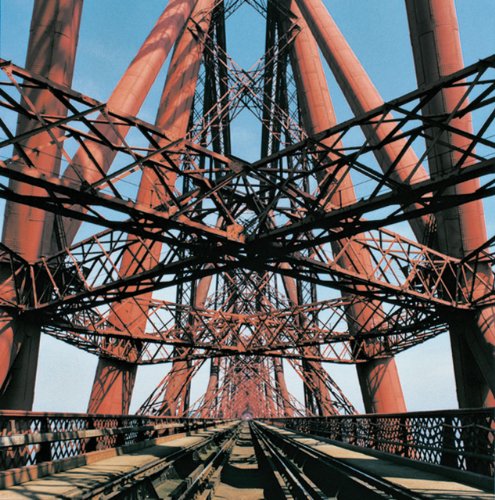
John Fowler, Benjamin Baker, Forth Bridge: Opus 18
Anbieter: GLOBAL BOOKS AND SUPPLIES LLC, Jamaica, NY, USA
Verkäuferbewertung 5 von 5 Sternen

Hardcover. Zustand: Good.
-
John Fowler, Benjamin Baker, Forth Bridge: Opus 18
Anbieter: Books From California, Simi Valley, CA, USA
Verkäuferbewertung 4 von 5 Sternen

hardcover. Zustand: New.
-
John Fowler, Benjamin Baker : Forth Bridge
Anbieter: GreatBookPrices, Columbia, MD, USA
Verkäuferbewertung 5 von 5 Sternen
Zustand: As New. Unread book in perfect condition.
-
Zustand: As New. Unread copy in mint condition.
-

John Fowler, Benjamin Baker : Forth Bridge
Anbieter: GreatBookPrices, Columbia, MD, USA
Verkäuferbewertung 5 von 5 Sternen
Zustand: New.
-
Zustand: New. Brand New.
-
John Fowler, Benjamin Baker
Anbieter: PBShop.store US, Wood Dale, IL, USA
Verkäuferbewertung 5 von 5 Sternen
HRD. Zustand: New. New Book. Shipped from UK. Established seller since 2000.
-

John Fowler, Benjamin Baker, Forth Bridge
Anbieter: Rarewaves.com USA, London, LONDO, Vereinigtes Königreich
Verkäuferbewertung 5 von 5 Sternen
EUR 36,97
Versand gratis
Versand von Vereinigtes Königreich nach USAAnzahl: 6 verfügbar
In den WarenkorbHardback. Zustand: New. When the Forth Bridge opened on 4 March 1890, it was the longest railway bridge in the world and the first large structure made of steel. Crossing the wide Firth of Forth west of Edinburgh in Scotland, it represents one of the greatest engineering triumphs of Victorian Britain, man's victory over the intractable topography of land and water. Not surprisingly, such a vigorous rebuff of the natural order was condemned at the time by those late Victorians who resisted the march of technology, and William Morris described the Bridge as the "supremest specimen of all ugliness". In response, Benjamin Baker insisted that its beauty lay in its functional elegance. Contrasting the bridge with the only comparable structure of the period, the Eiffel Tower, he concluded: "The Eiffel Tower is a foolish piece of work, ugly, ill-proportioned and of no real use to anyone." But the beauty and fascination of the Forth Bridge lies not simply in its functional performance, but in its scale and power. Over a mile long and higher than the dome of St. Peter's in Rome, it rivals the natural phenomena that the philosophers of the 18th century identified as sources of sublime beauty. Immanuel Kant pointed to hurricanes, boundless oceans and high waterfalls as objects of sublime contemplation, "because they raise the forces of the soul above the heights of the vulgar commonplace, and discover within us a power of resistance of quite another kind, which gives us courage to be able to measure ourselves against the seeming omnipotence of nature". In the 19th century the awe-inspiring feats of nature were rivalled by the inventions of the engineers, and the thrill of the waterfall or the lightning flash was eclipsed by the sight of the roaring locomotive dashing across the majestic span of the Forth Bridge.
-
John Fowler, Benjamin Baker, Forth Bridge (Hardcover)
Sprache: Englisch
Verlag: Edition Axel Menges, Fellbach, 1997
ISBN 10: 3930698188 ISBN 13: 9783930698189
Anbieter: Grand Eagle Retail, Bensenville, IL, USA
Verkäuferbewertung 5 von 5 Sternen
Hardcover. Zustand: new. Hardcover. When the Forth Bridge opened on 4 March 1890 it was the longest railway bridge in the world and the first large structure made of steel. Crossing the wide Firth of Forth east of Edinburgh, it represents one of the greatest engineering triumphs of Victorian Britain, man's victory over the intractable topography of land and water. Not surprisingly, such a vigorous rebuff of the natural order was condemned at the time by those late Victorians who resisted the march of technology, and William Morris described the Bridge as the supremest specimen of all ugliness. In response, Benjamin Baker insisted that its beauty lay in its functional elegance. Contrasting his masterpiece with the only comparable structure of the period, the Eiffel Tower, he concluded: The Eiffel Tower is a foolish piece of work, ugly, illproportioned and of no real use to anyone. Talks about the Forth Bridge - the longest railway bridge in the world and the first large structure made of steel. Crossing the wide Firth of Forth west of Edinburgh in Scotland, it represents one of the greatest engineering triumphs of Victorian Britain, man's victory over the intractable topography of land and water. Shipping may be from multiple locations in the US or from the UK, depending on stock availability.
-
Benjamin Baker, Forth Bridge
Anbieter: Majestic Books, Hounslow, Vereinigtes Königreich
Verkäuferbewertung 4 von 5 Sternen
EUR 31,11
EUR 7,50 Versand
Versand von Vereinigtes Königreich nach USAAnzahl: 3 verfügbar
In den WarenkorbZustand: New. pp. 60 50 Illus.
-
John Fowler, Benjamin Baker
Anbieter: PBShop.store UK, Fairford, GLOS, Vereinigtes Königreich
Verkäuferbewertung 5 von 5 Sternen
EUR 34,92
EUR 7,80 Versand
Versand von Vereinigtes Königreich nach USAAnzahl: 12 verfügbar
In den WarenkorbHRD. Zustand: New. New Book. Shipped from UK. Established seller since 2000.
-
John Fowler, Benjamin Baker
Anbieter: Kennys Bookshop and Art Galleries Ltd., Galway, GY, Irland
Verkäuferbewertung 5 von 5 Sternen
Zustand: New. 1997. Hardcover. Talks about the Forth Bridge - the longest railway bridge in the world and the first large structure made of steel. Crossing the wide Firth of Forth west of Edinburgh in Scotland, it represents one of the greatest engineering triumphs of Victorian Britain, man's victory over the intractable topography of land and water. Series: OPUS. Num Pages: 60 pages, colour & b/w photos. BIC Classification: 1DBKSC; AJC; TN; WTM. Category: (G) General (US: Trade). Dimension: 284 x 308 x 12. Weight in Grams: 842. . . . . .
-
John Fowler, Benjamin Baker : Forth Bridge
Anbieter: GreatBookPricesUK, Woodford Green, Vereinigtes Königreich
Verkäuferbewertung 5 von 5 Sternen
EUR 29,42
EUR 17,32 Versand
Versand von Vereinigtes Königreich nach USAAnzahl: 14 verfügbar
In den WarenkorbZustand: New.
-
John Fowler, Benjamin Baker
Anbieter: Kennys Bookstore, Olney, MD, USA
Verkäuferbewertung 5 von 5 Sternen
Zustand: New. 1997. Hardcover. Talks about the Forth Bridge - the longest railway bridge in the world and the first large structure made of steel. Crossing the wide Firth of Forth west of Edinburgh in Scotland, it represents one of the greatest engineering triumphs of Victorian Britain, man's victory over the intractable topography of land and water. Series: OPUS. Num Pages: 60 pages, colour & b/w photos. BIC Classification: 1DBKSC; AJC; TN; WTM. Category: (G) General (US: Trade). Dimension: 284 x 308 x 12. Weight in Grams: 842. . . . . . Books ship from the US and Ireland.
-
Zustand: New. pp. 60.
-
Benjamin Baker, Forth Bridge
Anbieter: Biblios, Frankfurt am main, HESSE, Deutschland
Verkäuferbewertung 4 von 5 Sternen
Zustand: New. pp. 60.
-
John Fowler, Benjamin Baker : Forth Bridge
Anbieter: GreatBookPricesUK, Woodford Green, Vereinigtes Königreich
Verkäuferbewertung 5 von 5 Sternen
EUR 32,19
EUR 17,32 Versand
Versand von Vereinigtes Königreich nach USAAnzahl: 14 verfügbar
In den WarenkorbZustand: As New. Unread book in perfect condition.
-
John Fowler, Benjamin Baker. Forth Bridge
Anbieter: Dereks Transport Books, Ringwood, HAMPS, Vereinigtes Königreich
Verkäuferbewertung 5 von 5 Sternen
Erstausgabe
EUR 30,50
EUR 24,24 Versand
Versand von Vereinigtes Königreich nach USAAnzahl: 1 verfügbar
In den WarenkorbHardcover. Zustand: Fine. Zustand des Schutzumschlags: Near Fine. 1st Edition. 60pp. 820g. White cloth boards very slightly darkened to bottom edge, FINE in a Near FINE d/w which is a little edge-rubbed. Illustrated with b/w and colour photographs. A detailed look at the design, construction and technology of the bridge, including line drawings, plans and sections.
-

John Fowler, Benjamin Baker, Forth Bridge: Opus 18
Anbieter: Oakholm Books, Aberfeldy, Vereinigtes Königreich
Verkäuferbewertung 5 von 5 Sternen
EUR 21,40
EUR 34,63 Versand
Versand von Vereinigtes Königreich nach USAAnzahl: 1 verfügbar
In den WarenkorbHardcover. Zustand: Near Fine. 2nd Edition. No markings or inscriptions; very light wear to the jacket, but looks new. Second revised edition.
-

EUR 36,00
EUR 48,99 Versand
Versand von Deutschland nach USAAnzahl: Mehr als 20 verfügbar
In den WarenkorbGebunden. Zustand: New. Als die Forth Bridge am 4. Maerz 1890 eingeweiht wurde, war sie die laengste Eisenbahnbruecke der Welt und die erste grosse Konstruktion aus Stahl. Die Ueberspannung des Firth of Forth stellte eine der bedeutendsten Triumphe der viktorianischen Zeit dar, die Bew.
-
John Fowler, Benjamin Baker
Anbieter: Gazelle Books, Lancaster, LANCA, Vereinigtes Königreich
Verkäuferbewertung 5 von 5 Sternen
EUR 25,86
EUR 63,50 Versand
Versand von Vereinigtes Königreich nach USAAnzahl: 12 verfügbar
In den WarenkorbHardback. Zustand: New. New Book, Direct from Publisher.
-

John Fowler, Benjamin Baker, Forth Bridge (Hardcover)
Sprache: Englisch
Verlag: Edition Axel Menges, Fellbach, 1997
ISBN 10: 3930698188 ISBN 13: 9783930698189
Anbieter: AussieBookSeller, Truganina, VIC, Australien
Verkäuferbewertung 5 von 5 Sternen
Hardcover. Zustand: new. Hardcover. When the Forth Bridge opened on 4 March 1890 it was the longest railway bridge in the world and the first large structure made of steel. Crossing the wide Firth of Forth east of Edinburgh, it represents one of the greatest engineering triumphs of Victorian Britain, man's victory over the intractable topography of land and water. Not surprisingly, such a vigorous rebuff of the natural order was condemned at the time by those late Victorians who resisted the march of technology, and William Morris described the Bridge as the supremest specimen of all ugliness. In response, Benjamin Baker insisted that its beauty lay in its functional elegance. Contrasting his masterpiece with the only comparable structure of the period, the Eiffel Tower, he concluded: The Eiffel Tower is a foolish piece of work, ugly, illproportioned and of no real use to anyone. Talks about the Forth Bridge - the longest railway bridge in the world and the first large structure made of steel. Crossing the wide Firth of Forth west of Edinburgh in Scotland, it represents one of the greatest engineering triumphs of Victorian Britain, man's victory over the intractable topography of land and water. Shipping may be from our Sydney, NSW warehouse or from our UK or US warehouse, depending on stock availability.
-

Benjamin Baker, Forth Bridge : Engl.
Anbieter: AHA-BUCH GmbH, Einbeck, Deutschland
Verkäuferbewertung 5 von 5 Sternen
Buch. Zustand: Neu. Neuware - Als die Forth Bridge am 4. März 1890 eingeweiht wurde, war sie die längste Eisenbahnbrücke der Welt und die erste große Konstruktion aus Stahl. Die Überspannung des Firth of Forth stellte eine der bedeutendsten Triumphe der viktorianischen Zeit dar, die Bewältigung einer ungemein schwierigen topographischen Situation durch den Menschen. Es überrascht nicht, wenn eine derartig siegreiche Überwindung der natürlichen Ordnung von jenen Zeit-genossen, die sich dem Vormarsch der Technik widersetzten, verdammt wurde und William Morris sie als ein 'nicht zu übertreffendes Beispiel äußerster Häßlichkeit' bezeichnete. Benjamin Baker, der Entwerfer der Brücke, hob in seiner Erwiderung deren funktionale Eleganz hervor. Er stellte sein Meisterwerk dem einzig vergleichbaren Stahlbau jener Zeit, dem Eiffelturm, gegenüber und bemerkte: 'Der Eiffelturm ist ein albernes Objekt, häßlich, unproportioniert und für niemanden von irgendeinem Wert.'Die Schönheit und Faszination der Forth Bridge liegen jedoch nicht nur in ihrer Funktio-nalität, sondern auch in ihrer Größe und Kraft. Über eine Meile lang und höher als der Petersdom, wetteifert sie mit den Naturphänomenen, die die Philosophen des 18. Jahrhunderts als Quellen erhabener Schönheit ansahen. Immanuel Kant pries Hurrikane, grenzenlose Ozeane und hohe Wasserfälle als geeignete Objekte, das Erhabene zu erfahren, 'weil sie die Seelenstärke über ihr gewöhnliches Mittelmaß erhöhen und ein Vermögen zu widerstehen von ganz anderer Art in uns entdecken lassen, welches uns Mut macht, uns mit der scheinbaren Allgewalt der Natur messen zu können.' Im 19. Jahrhundert machten plötzlich die Erfindungen der Ingenieure den ehrfuchtgebietenden Erscheinungen der Natur den Rang streitig, und das Gefühl des Schauderns, das sich beim Anblick eines Wasserfalls oder eines Blitzes einstellen mochte, wurde vom Anblick einer Lokomotive in den Schatten gestellt, die donnernd über die majestätisch gespannte Forth Bridge stürmte.Der Architekturhistoriker Iain Boyd Whyte, dessen Forschungsschwerpunkt die Architektur des späten 19. und frühen 20. Jahrhunderts ist, und der Ingenieur Angus Macdonald, der sich in seiner Arbeit vor allem der Beziehung zwischen Tragwerk und Architektur widmet, lehren an der Architekturabteilung der University of Edinburgh. Colin Baxter, berühmt für seine einfühlsamen Landschaftsaufnahmen, ist einer der meistgeachteten Photographen Schottlands.
-

Buch. Zustand: Neu. John Fowler, Benjamin Baker: Forth Bridge | Engl, Opus 18 | Iain B Whyte | Buch | 64 S. | Deutsch | 2012 | Edition Axel Menges | EAN 9783930698189 | Verantwortliche Person für die EU: Edition Axel Menges, Esslingerstr. 24, 70736 Fellbach, axelmenges[at]aol[dot]com | Anbieter: preigu.
-
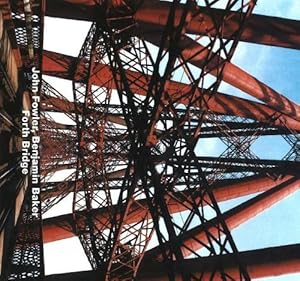
John Fowler, Benjamin Baker, Forth Bridge
Anbieter: Rarewaves.com UK, London, Vereinigtes Königreich
Verkäuferbewertung 5 von 5 Sternen
EUR 33,62
EUR 75,04 Versand
Versand von Vereinigtes Königreich nach USAAnzahl: 6 verfügbar
In den WarenkorbHardback. Zustand: New. When the Forth Bridge opened on 4 March 1890, it was the longest railway bridge in the world and the first large structure made of steel. Crossing the wide Firth of Forth west of Edinburgh in Scotland, it represents one of the greatest engineering triumphs of Victorian Britain, man's victory over the intractable topography of land and water. Not surprisingly, such a vigorous rebuff of the natural order was condemned at the time by those late Victorians who resisted the march of technology, and William Morris described the Bridge as the "supremest specimen of all ugliness". In response, Benjamin Baker insisted that its beauty lay in its functional elegance. Contrasting the bridge with the only comparable structure of the period, the Eiffel Tower, he concluded: "The Eiffel Tower is a foolish piece of work, ugly, ill-proportioned and of no real use to anyone." But the beauty and fascination of the Forth Bridge lies not simply in its functional performance, but in its scale and power. Over a mile long and higher than the dome of St. Peter's in Rome, it rivals the natural phenomena that the philosophers of the 18th century identified as sources of sublime beauty. Immanuel Kant pointed to hurricanes, boundless oceans and high waterfalls as objects of sublime contemplation, "because they raise the forces of the soul above the heights of the vulgar commonplace, and discover within us a power of resistance of quite another kind, which gives us courage to be able to measure ourselves against the seeming omnipotence of nature". In the 19th century the awe-inspiring feats of nature were rivalled by the inventions of the engineers, and the thrill of the waterfall or the lightning flash was eclipsed by the sight of the roaring locomotive dashing across the majestic span of the Forth Bridge.

