

Gesamtpreis (1 Artikel Artikel):
Versandziel:

biologic effects light 2001 (22 Ergebnisse)
Direkt zu den wichtigsten Suchergebnissen
Suchfilter
Produktart
- Alle Product Types
- Bücher (22)
- Magazine & Zeitschriften (Keine weiteren Ergebnisse entsprechen dieser Verfeinerung)
- Comics (Keine weiteren Ergebnisse entsprechen dieser Verfeinerung)
- Noten (Keine weiteren Ergebnisse entsprechen dieser Verfeinerung)
- Kunst, Grafik & Poster (Keine weiteren Ergebnisse entsprechen dieser Verfeinerung)
- Fotografien (Keine weiteren Ergebnisse entsprechen dieser Verfeinerung)
- Karten (Keine weiteren Ergebnisse entsprechen dieser Verfeinerung)
- Manuskripte & Papierantiquitäten (Keine weiteren Ergebnisse entsprechen dieser Verfeinerung)
Zustand Mehr dazu
- Neu (19)
- Wie Neu, Sehr Gut oder Gut Bis Sehr Gut (3)
- Gut oder Befriedigend (Keine weiteren Ergebnisse entsprechen dieser Verfeinerung)
- Ausreichend oder Schlecht (Keine weiteren Ergebnisse entsprechen dieser Verfeinerung)
- Wie beschrieben (Keine weiteren Ergebnisse entsprechen dieser Verfeinerung)
Weitere Eigenschaften
- Erstausgabe (Keine weiteren Ergebnisse entsprechen dieser Verfeinerung)
- Signiert (Keine weiteren Ergebnisse entsprechen dieser Verfeinerung)
- Schutzumschlag (Keine weiteren Ergebnisse entsprechen dieser Verfeinerung)
- Angebotsfoto (14)
- Keine Print-on-Demand Angebote (15)
Sprache (1)
Preis
- Beliebiger Preis
- Weniger als EUR 20 (Keine weiteren Ergebnisse entsprechen dieser Verfeinerung)
- EUR 20 bis EUR 45 (Keine weiteren Ergebnisse entsprechen dieser Verfeinerung)
- Mehr als EUR 45
Gratisversand
Land des Verkäufers
Verkäuferbewertung
-

Biologic Effects of Light 2001: Proceedings of a Symposium Boston, Massachusetts June 16-18, 2001
Anbieter: Ria Christie Collections, Uxbridge, Vereinigtes Königreich
Verkäuferbewertung 5 von 5 Sternen

EUR 159,99
EUR 13,86 Versand
Versand von Vereinigtes Königreich nach USAAnzahl: Mehr als 20 verfügbar
In den WarenkorbZustand: New. In.
-

Biologic Effects of Light 2001: Proceedings of a Symposium Boston, Massachusetts June 16-18, 2001
Anbieter: Ria Christie Collections, Uxbridge, Vereinigtes Königreich
Verkäuferbewertung 5 von 5 Sternen
EUR 159,99
EUR 13,86 Versand
Versand von Vereinigtes Königreich nach USAAnzahl: Mehr als 20 verfügbar
In den WarenkorbZustand: New. In.
-

Biologic Effects of Light 2001 : Proceedings of a Symposium Boston, Massachusetts June 16?18, 2001
Anbieter: GreatBookPricesUK, Woodford Green, Vereinigtes Königreich
Verkäuferbewertung 5 von 5 Sternen
EUR 159,97
EUR 17,35 Versand
Versand von Vereinigtes Königreich nach USAAnzahl: Mehr als 20 verfügbar
In den WarenkorbZustand: New.
-

Biologic Effects of Light 2001 : Proceedings of a Symposium Boston, Massachusetts June 16?18, 2001
Anbieter: GreatBookPrices, Columbia, MD, USA
Verkäuferbewertung 5 von 5 Sternen
EUR 175,47
EUR 2,27 Versand
Versand innerhalb von USAAnzahl: Mehr als 20 verfügbar
In den WarenkorbZustand: New.
-
Biologic Effects of Light 2001: Proceedings of a Symposium Boston, Massachusetts June 16-18, 2001
Anbieter: California Books, Miami, FL, USA
Verkäuferbewertung 5 von 5 Sternen
Zustand: New.
-
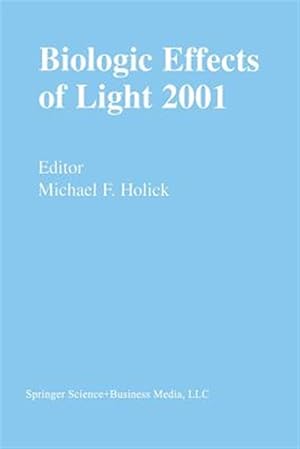
Biologic Effects of Light 2001 : Proceedings of a Symposium Boston, Massachusetts June 16?18, 2001
Anbieter: GreatBookPrices, Columbia, MD, USA
Verkäuferbewertung 5 von 5 Sternen
EUR 179,62
EUR 2,27 Versand
Versand innerhalb von USAAnzahl: Mehr als 20 verfügbar
In den WarenkorbZustand: As New. Unread book in perfect condition.
-
Zustand: New. pp. 524.
-

Biologic Effects of Light 2001 : Proceedings of a Symposium Boston, Massachusetts June 16?18, 2001
Anbieter: GreatBookPricesUK, Woodford Green, Vereinigtes Königreich
Verkäuferbewertung 5 von 5 Sternen
EUR 181,49
EUR 17,35 Versand
Versand von Vereinigtes Königreich nach USAAnzahl: Mehr als 20 verfügbar
In den WarenkorbZustand: As New. Unread book in perfect condition.
-
Biologic Effects of Light 2001
Anbieter: Majestic Books, Hounslow, Vereinigtes Königreich
Verkäuferbewertung 4 von 5 Sternen

EUR 198,38
EUR 7,52 Versand
Versand von Vereinigtes Königreich nach USAAnzahl: 1 verfügbar
In den WarenkorbZustand: New. pp. 524 Illus.
-
Biologic Effects of Light 2001
Anbieter: Biblios, Frankfurt am main, HESSE, Deutschland
Verkäuferbewertung 4 von 5 Sternen
Zustand: New. pp. 524.
-
Taschenbuch. Zustand: Neu. Biologic Effects of Light 2001 | Proceedings of a Symposium Boston, Massachusetts June 16-18, 2001 | Michael F. Holick | Taschenbuch | xx | Englisch | 2012 | Springer US | EAN 9781461353133 | Verantwortliche Person für die EU: Springer Verlag GmbH, Tiergartenstr. 17, 69121 Heidelberg, juergen[dot]hartmann[at]springer[dot]com | Anbieter: preigu.
-

Biologic Effects of Light 2001
Sprache: Englisch
Verlag: Springer US, Springer New York Mär 2002, 2002
ISBN 10: 0792376692 ISBN 13: 9780792376699
Anbieter: buchversandmimpf2000, Emtmannsberg, BAYE, Deutschland
Verkäuferbewertung 5 von 5 Sternen
Buch. Zustand: Neu. Neuware -As humans ventured into the twentieth century, the industrialized countries were confronted with the scourge of rickets. Although solariums were becoming common in the early 1900s and phototherapy was gaining popularity as a result of the awarding of a Nobel Prize to Finsen in 1903, it wasn't until 1921 when Hess and Unger demonstrated that rickets could be cured by exposure to sunlight that the healthful benefit of sun exposure appreciated. In 1941, Apperly (Cancer Research; 1: 191-195, 1941) noted that the occasional increased risk of skin cancer was associated with a decreased risk of many other more common and serious cancers. The alarming increase in the number of cases of skin cancer, especially melanoma, has caused great concern about the negative role of sunlight in health. The Sixth International Arnold Rikli Symposium on the Biologic Effects of Light was held in Boston, Massachusetts from June 16th - 18th, 2001. The goal of this Symposium was to focus on the very popular practice of tanning either by sunlight or by artificial light sources and the overall impact this practice has on health and disease. The program was organized by members of the Scientific Advisory Committee and my co-chair emeritus, Professor Ernst G. Jung. The Program Committee organized an outstanding state-of-the-art program that was enthusiastically received by the participants.Springer Verlag GmbH, Tiergartenstr. 17, 69121 Heidelberg 524 pp. Englisch.
-
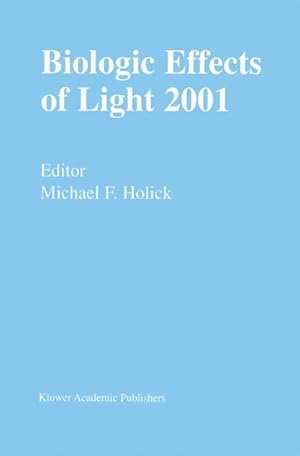
Biologic Effects of Light 2001 : Proceedings of a Symposium Boston, Massachusetts June 16-18, 2001
Sprache: Englisch
Verlag: Springer US, Springer New York, 2002
ISBN 10: 0792376692 ISBN 13: 9780792376699
Anbieter: AHA-BUCH GmbH, Einbeck, Deutschland
Verkäuferbewertung 5 von 5 Sternen
Buch. Zustand: Neu. Druck auf Anfrage Neuware - Printed after ordering - As humans ventured into the twentieth century, the industrialized countries were confronted with the scourge of rickets. Although solariums were becoming common in the early 1900s and phototherapy was gaining popularity as a result of the awarding of a Nobel Prize to Finsen in 1903, it wasn't until 1921 when Hess and Unger demonstrated that rickets could be cured by exposure to sunlight that the healthful benefit of sun exposure appreciated. In 1941, Apperly (Cancer Research; 1: 191-195, 1941) noted that the occasional increased risk of skin cancer was associated with a decreased risk of many other more common and serious cancers. The alarming increase in the number of cases of skin cancer, especially melanoma, has caused great concern about the negative role of sunlight in health. The Sixth International Arnold Rikli Symposium on the Biologic Effects of Light was held in Boston, Massachusetts from June 16th - 18th, 2001. The goal of this Symposium was to focus on the very popular practice of tanning either by sunlight or by artificial light sources and the overall impact this practice has on health and disease. The program was organized by members of the Scientific Advisory Committee and my co-chair emeritus, Professor Ernst G. Jung. The Program Committee organized an outstanding state-of-the-art program that was enthusiastically received by the participants.
-

Biologic Effects of Light 2001 : Proceedings of a Symposium Boston, Massachusetts June 16¿18, 2001
Anbieter: AHA-BUCH GmbH, Einbeck, Deutschland
Verkäuferbewertung 5 von 5 Sternen
Taschenbuch. Zustand: Neu. Druck auf Anfrage Neuware - Printed after ordering - As humans ventured into the twentieth century, the industrialized countries were confronted with the scourge of rickets. Although solariums were becoming common in the early 1900s and phototherapy was gaining popularity as a result of the awarding of a Nobel Prize to Finsen in 1903, it wasn't until 1921 when Hess and Unger demonstrated that rickets could be cured by exposure to sunlight that the healthful benefit of sun exposure appreciated. In 1941, Apperly (Cancer Research; 1: 191-195, 1941) noted that the occasional increased risk of skin cancer was associated with a decreased risk of many other more common and serious cancers. The alarming increase in the number of cases of skin cancer, especially melanoma, has caused great concern about the negative role of sunlight in health. The Sixth International Arnold Rikli Symposium on the Biologic Effects of Light was held in Boston, Massachusetts from June 16th - 18th, 2001. The goal of this Symposium was to focus on the very popular practice of tanning either by sunlight or by artificial light sources and the overall impact this practice has on health and disease. The program was organized by members of the Scientific Advisory Committee and my co-chair emeritus, Professor Ernst G. Jung. The Program Committee organized an outstanding state-of-the-art program that was enthusiastically received by the participants.
-
Biologic Effects of Light 2001: Proceedings of a Symposium Boston, Massachusetts June 1618, 2001
Anbieter: Mispah books, Redhill, SURRE, Vereinigtes Königreich
Verkäuferbewertung 4 von 5 Sternen
EUR 259,69
EUR 28,91 Versand
Versand von Vereinigtes Königreich nach USAAnzahl: 1 verfügbar
In den WarenkorbHardcover. Zustand: Like New. Like New. book.
-
Biologic Effects of Light 2001 (eng)
Anbieter: Brook Bookstore On Demand, Napoli, NA, Italien
Verkäuferbewertung 4 von 5 Sternen
EUR 126,26
EUR 8,00 Versand
Versand von Italien nach USAAnzahl: Mehr als 20 verfügbar
In den WarenkorbZustand: new. Questo è un articolo print on demand.
-
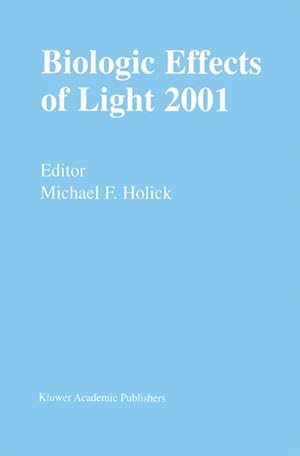
Biologic Effects of Light 2001
Anbieter: BuchWeltWeit Ludwig Meier e.K., Bergisch Gladbach, Deutschland
Verkäuferbewertung 5 von 5 Sternen
Buch. Zustand: Neu. This item is printed on demand - it takes 3-4 days longer - Neuware -As humans ventured into the twentieth century, the industrialized countries were confronted with the scourge of rickets. Although solariums were becoming common in the early 1900s and phototherapy was gaining popularity as a result of the awarding of a Nobel Prize to Finsen in 1903, it wasn't until 1921 when Hess and Unger demonstrated that rickets could be cured by exposure to sunlight that the healthful benefit of sun exposure appreciated. In 1941, Apperly (Cancer Research; 1: 191-195, 1941) noted that the occasional increased risk of skin cancer was associated with a decreased risk of many other more common and serious cancers. The alarming increase in the number of cases of skin cancer, especially melanoma, has caused great concern about the negative role of sunlight in health. The Sixth International Arnold Rikli Symposium on the Biologic Effects of Light was held in Boston, Massachusetts from June 16th - 18th, 2001. The goal of this Symposium was to focus on the very popular practice of tanning either by sunlight or by artificial light sources and the overall impact this practice has on health and disease. The program was organized by members of the Scientific Advisory Committee and my co-chair emeritus, Professor Ernst G. Jung. The Program Committee organized an outstanding state-of-the-art program that was enthusiastically received by the participants. 524 pp. Englisch.
-

Biologic Effects of Light 2001
Sprache: Englisch
Verlag: Springer US, Springer US Nov 2012, 2012
ISBN 10: 1461353130 ISBN 13: 9781461353133
Anbieter: BuchWeltWeit Ludwig Meier e.K., Bergisch Gladbach, Deutschland
Verkäuferbewertung 5 von 5 Sternen
Taschenbuch. Zustand: Neu. This item is printed on demand - it takes 3-4 days longer - Neuware -As humans ventured into the twentieth century, the industrialized countries were confronted with the scourge of rickets. Although solariums were becoming common in the early 1900s and phototherapy was gaining popularity as a result of the awarding of a Nobel Prize to Finsen in 1903, it wasn't until 1921 when Hess and Unger demonstrated that rickets could be cured by exposure to sunlight that the healthful benefit of sun exposure appreciated. In 1941, Apperly (Cancer Research; 1: 191-195, 1941) noted that the occasional increased risk of skin cancer was associated with a decreased risk of many other more common and serious cancers. The alarming increase in the number of cases of skin cancer, especially melanoma, has caused great concern about the negative role of sunlight in health. The Sixth International Arnold Rikli Symposium on the Biologic Effects of Light was held in Boston, Massachusetts from June 16th - 18th, 2001. The goal of this Symposium was to focus on the very popular practice of tanning either by sunlight or by artificial light sources and the overall impact this practice has on health and disease. The program was organized by members of the Scientific Advisory Committee and my co-chair emeritus, Professor Ernst G. Jung. The Program Committee organized an outstanding state-of-the-art program that was enthusiastically received by the participants. 524 pp. Englisch.
-

EUR 136,16
EUR 48,99 Versand
Versand von Deutschland nach USAAnzahl: Mehr als 20 verfügbar
In den WarenkorbZustand: New. Dieser Artikel ist ein Print on Demand Artikel und wird nach Ihrer Bestellung fuer Sie gedruckt. As humans ventured into the twentieth century, the industrialized countries were confronted with the scourge of rickets. Although solariums were becoming common in the early 1900s and phototherapy was gaining popularity as a result of the awarding of a Nobe.
-

EUR 136,16
EUR 48,99 Versand
Versand von Deutschland nach USAAnzahl: Mehr als 20 verfügbar
In den WarenkorbGebunden. Zustand: New. Dieser Artikel ist ein Print on Demand Artikel und wird nach Ihrer Bestellung fuer Sie gedruckt. As humans ventured into the twentieth century, the industrialized countries were confronted with the scourge of rickets. Although solariums were becoming common in the early 1900s and phototherapy was gaining popularity as a result of the awarding of a Nobe.
-
Buch. Zustand: Neu. Biologic Effects of Light 2001 | Proceedings of a Symposium Boston, Massachusetts June 16-18, 2001 | Michael F. Holick | Buch | xx | Englisch | 2002 | Springer US | EAN 9780792376699 | Verantwortliche Person für die EU: Springer Verlag GmbH, Tiergartenstr. 17, 69121 Heidelberg, juergen[dot]hartmann[at]springer[dot]com | Anbieter: preigu Print on Demand.
-

Biologic Effects of Light 2001
Sprache: Englisch
Verlag: Springer US, Springer US Nov 2012, 2012
ISBN 10: 1461353130 ISBN 13: 9781461353133
Anbieter: buchversandmimpf2000, Emtmannsberg, BAYE, Deutschland
Verkäuferbewertung 5 von 5 Sternen
Taschenbuch. Zustand: Neu. This item is printed on demand - Print on Demand Titel. Neuware -As humans ventured into the twentieth century, the industrialized countries were confronted with the scourge of rickets. Although solariums were becoming common in the early 1900s and phototherapy was gaining popularity as a result of the awarding of a Nobel Prize to Finsen in 1903, it wasn't until 1921 when Hess and Unger demonstrated that rickets could be cured by exposure to sunlight that the healthful benefit of sun exposure appreciated. In 1941, Apperly (Cancer Research; 1: 191-195, 1941) noted that the occasional increased risk of skin cancer was associated with a decreased risk of many other more common and serious cancers. The alarming increase in the number of cases of skin cancer, especially melanoma, has caused great concern about the negative role of sunlight in health. The Sixth International Arnold Rikli Symposium on the Biologic Effects of Light was held in Boston, Massachusetts from June 16th - 18th, 2001. The goal of this Symposium was to focus on the very popular practice of tanning either by sunlight or by artificial light sources and the overall impact this practice has on health and disease. The program was organized by members of the Scientific Advisory Committee and my co-chair emeritus, Professor Ernst G. Jung. The Program Committee organized an outstanding state-of-the-art program that was enthusiastically received by the participants.Springer Verlag GmbH, Tiergartenstr. 17, 69121 Heidelberg 524 pp. Englisch.


