
Gesamtpreis (1 Artikel Artikel):
Versandziel:

calixarenes versatile class macrocyclic (18 Ergebnisse)
Direkt zu den wichtigsten Suchergebnissen
Suchfilter
Produktart
- Alle Product Types
- Bücher (18)
- Magazine & Zeitschriften (Keine weiteren Ergebnisse entsprechen dieser Verfeinerung)
- Comics (Keine weiteren Ergebnisse entsprechen dieser Verfeinerung)
- Noten (Keine weiteren Ergebnisse entsprechen dieser Verfeinerung)
- Kunst, Grafik & Poster (Keine weiteren Ergebnisse entsprechen dieser Verfeinerung)
- Fotografien (Keine weiteren Ergebnisse entsprechen dieser Verfeinerung)
- Karten (Keine weiteren Ergebnisse entsprechen dieser Verfeinerung)
- Manuskripte & Papierantiquitäten (Keine weiteren Ergebnisse entsprechen dieser Verfeinerung)
Zustand Mehr dazu
- Neu (15)
- Wie Neu, Sehr Gut oder Gut Bis Sehr Gut (2)
- Gut oder Befriedigend (1)
- Ausreichend oder Schlecht (Keine weiteren Ergebnisse entsprechen dieser Verfeinerung)
- Wie beschrieben (Keine weiteren Ergebnisse entsprechen dieser Verfeinerung)
Einband
Weitere Eigenschaften
- Erstausgabe (Keine weiteren Ergebnisse entsprechen dieser Verfeinerung)
- Signiert (Keine weiteren Ergebnisse entsprechen dieser Verfeinerung)
- Schutzumschlag (Keine weiteren Ergebnisse entsprechen dieser Verfeinerung)
- Angebotsfoto (10)
- Keine Print-on-Demand Angebote (11)
Sprache (1)
Gratisversand
Land des Verkäufers
Verkäuferbewertung
-
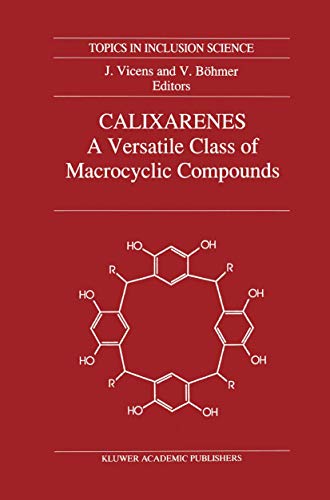
Calixarenes: A Versatile Class of Macrocyclic Compounds
Anbieter: ThriftBooks-Atlanta, AUSTELL, GA, USA
Verkäuferbewertung 5 von 5 Sternen

Hardcover. Zustand: Good. No Jacket. Pages can have notes/highlighting. Spine may show signs of wear. ~ ThriftBooks: Read More, Spend Less.
-
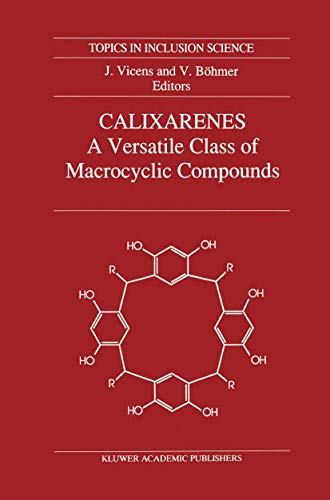
Calixarenes: A Versatile Class of Macrocyclic Compounds (Topics in Inclusion Science)
Anbieter: Lucky's Textbooks, Dallas, TX, USA
Verkäuferbewertung 5 von 5 Sternen
EUR 155,47
EUR 3,37 Versand
Versand innerhalb von USAAnzahl: Mehr als 20 verfügbar
In den WarenkorbZustand: New.
-
Calixarenes: A Versatile Class of Macrocyclic Compounds (Topics in Inclusion Science)
Anbieter: Ria Christie Collections, Uxbridge, Vereinigtes Königreich
Verkäuferbewertung 5 von 5 Sternen
EUR 159,18
EUR 13,79 Versand
Versand von Vereinigtes Königreich nach USAAnzahl: Mehr als 20 verfügbar
In den WarenkorbZustand: New. In.
-
Calixarenes: A Versatile Class of Macrocyclic Compounds (Topics in Inclusion Science, 3)
Anbieter: Ria Christie Collections, Uxbridge, Vereinigtes Königreich
Verkäuferbewertung 5 von 5 Sternen
EUR 159,56
EUR 13,79 Versand
Versand von Vereinigtes Königreich nach USAAnzahl: Mehr als 20 verfügbar
In den WarenkorbZustand: New. In.
-
Calixarenes: A Versatile Class of Macrocyclic Compounds (Topics in Inclusion Science)
Anbieter: California Books, Miami, FL, USA
Verkäuferbewertung 5 von 5 Sternen
Zustand: New.
-

Calixarenes: A Versatile Class of Macrocyclic Compounds
Sprache: Englisch
Verlag: Springer Netherlands, Springer Netherlands Nov 1990, 1990
ISBN 10: 0792307143 ISBN 13: 9780792307143
Anbieter: buchversandmimpf2000, Emtmannsberg, BAYE, Deutschland
Verkäuferbewertung 5 von 5 Sternen
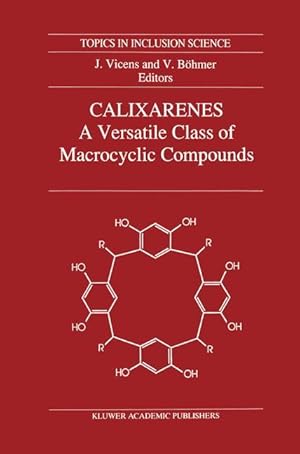
Buch. Zustand: Neu. Neuware -The tenn 'calixarenes', introduced in 1978 by D. Gutsche to describe the cyclic oligomers produced by condensation of p-substituted phenols with fonnaldehyde, is now universally accepted in the chemical community. The condensation of phenol with fonnaldehyde was studied in the last century by A. von Baeyer. Early in this century, L. Baekeland produced the first entirely synthetic polymers from phenol-fonnaldehyde condensates and the possibility that cyclic condensation products could be obtained from t-butylphenol, and fonnaldehyde was mentioned as early as in the beginning of the 1940's by A. Zinke. Despite their long history, the realisation that calixarenes may have very significant applications and uses in supramolecular chemistry is a relatively recent phenomenon. Calixarene chemistry, in contrast to their discovery, started slowly in the 1970's but rapidly gained momentum throughout the 1980's. Following C. Pedersens discovery of the crown ethers and the seminal developments of J. -M. Lehn and D. Cram with cryptands and spherands - all three honoured with the 1987 Nobel Chemistry Prize - the time was right for a surge of interest in research areas, frequently referred to as host-guest chemistry, receptor or supramolecular chemistry, and including important comparisons with biological processes and the development of new advanced materials. Now, the cyclic, bowl or basket-shaped calixarene molecules were looked on in a different light. Rather than 'having developed from harmful by-products of phenoplasts manufacture' they were now seen as potentially valuable macrocyclic receptor molecules.Springer Verlag GmbH, Tiergartenstr. 17, 69121 Heidelberg 280 pp. Englisch.
-

Calixarenes: A Versatile Class of Macrocyclic Compounds
Anbieter: AHA-BUCH GmbH, Einbeck, Deutschland
Verkäuferbewertung 5 von 5 Sternen
Taschenbuch. Zustand: Neu. Druck auf Anfrage Neuware - Printed after ordering - The tenn 'calixarenes', introduced in 1978 by D. Gutsche to describe the cyclic oligomers produced by condensation of p-substituted phenols with fonnaldehyde, is now universally accepted in the chemical community. The condensation of phenol with fonnaldehyde was studied in the last century by A. von Baeyer. Early in this century, L. Baekeland produced the first entirely synthetic polymers from phenol-fonnaldehyde condensates and the possibility that cyclic condensation products could be obtained from t-butylphenol, and fonnaldehyde was mentioned as early as in the beginning of the 1940's by A. Zinke. Despite their long history, the realisation that calixarenes may have very significant applications and uses in supramolecular chemistry is a relatively recent phenomenon. Calixarene chemistry, in contrast to their discovery, started slowly in the 1970's but rapidly gained momentum throughout the 1980's. Following C. Pedersens discovery of the crown ethers and the seminal developments of J. -M. Lehn and D. Cram with cryptands and spherands - all three honoured with the 1987 Nobel Chemistry Prize - the time was right for a surge of interest in research areas, frequently referred to as host-guest chemistry, receptor or supramolecular chemistry, and including important comparisons with biological processes and the development of new advanced materials. Now, the cyclic, bowl or basket-shaped calixarene molecules were looked on in a different light. Rather than 'having developed from harmful by-products of phenoplasts manufacture' they were now seen as potentially valuable macrocyclic receptor molecules.
-

Calixarenes: A Versatile Class of Macrocyclic Compounds
Sprache: Englisch
Verlag: Springer Netherlands, Springer Netherlands, 1990
ISBN 10: 0792307143 ISBN 13: 9780792307143
Anbieter: AHA-BUCH GmbH, Einbeck, Deutschland
Verkäuferbewertung 5 von 5 Sternen
Buch. Zustand: Neu. Druck auf Anfrage Neuware - Printed after ordering - The tenn 'calixarenes', introduced in 1978 by D. Gutsche to describe the cyclic oligomers produced by condensation of p-substituted phenols with fonnaldehyde, is now universally accepted in the chemical community. The condensation of phenol with fonnaldehyde was studied in the last century by A. von Baeyer. Early in this century, L. Baekeland produced the first entirely synthetic polymers from phenol-fonnaldehyde condensates and the possibility that cyclic condensation products could be obtained from t-butylphenol, and fonnaldehyde was mentioned as early as in the beginning of the 1940's by A. Zinke. Despite their long history, the realisation that calixarenes may have very significant applications and uses in supramolecular chemistry is a relatively recent phenomenon. Calixarene chemistry, in contrast to their discovery, started slowly in the 1970's but rapidly gained momentum throughout the 1980's. Following C. Pedersens discovery of the crown ethers and the seminal developments of J. -M. Lehn and D. Cram with cryptands and spherands - all three honoured with the 1987 Nobel Chemistry Prize - the time was right for a surge of interest in research areas, frequently referred to as host-guest chemistry, receptor or supramolecular chemistry, and including important comparisons with biological processes and the development of new advanced materials. Now, the cyclic, bowl or basket-shaped calixarene molecules were looked on in a different light. Rather than 'having developed from harmful by-products of phenoplasts manufacture' they were now seen as potentially valuable macrocyclic receptor molecules.
-
Calixarenes: A Versatile Class of Macrocyclic Compounds
Anbieter: Revaluation Books, Exeter, Vereinigtes Königreich
Verkäuferbewertung 5 von 5 Sternen
EUR 229,79
EUR 11,51 Versand
Versand von Vereinigtes Königreich nach USAAnzahl: 2 verfügbar
In den WarenkorbPaperback. Zustand: Brand New. 1991 edition. 280 pages. 9.25x6.10x0.64 inches. In Stock.
-
Calixarenes: A Versatile Class of Macrocyclic Compounds (Topics in Inclusion Science, 3)
Anbieter: Mispah books, Redhill, SURRE, Vereinigtes Königreich
Verkäuferbewertung 4 von 5 Sternen

EUR 227,57
EUR 28,77 Versand
Versand von Vereinigtes Königreich nach USAAnzahl: 1 verfügbar
In den WarenkorbPaperback. Zustand: Like New. LIKE NEW. SHIPS FROM MULTIPLE LOCATIONS. book.
-
Calixarenes, a Versatile Class of Macrocyclic Compounds (Topics in Inclusion Science) (Topics in Inclusion Science)
Anbieter: Mispah books, Redhill, SURRE, Vereinigtes Königreich
Verkäuferbewertung 4 von 5 Sternen
EUR 259,57
EUR 28,77 Versand
Versand von Vereinigtes Königreich nach USAAnzahl: 1 verfügbar
In den WarenkorbHardcover. Zustand: Like New. LIKE NEW. SHIPS FROM MULTIPLE LOCATIONS. book.
-
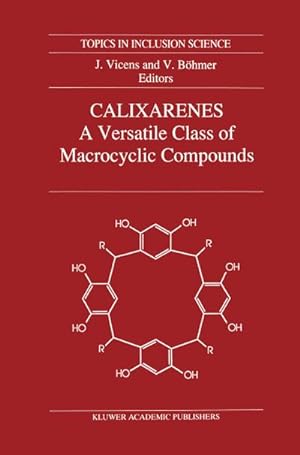
Calixarenes: A Versatile Class of Macrocyclic Compounds
Sprache: Englisch
Verlag: Springer Netherlands Nov 1990, 1990
ISBN 10: 0792307143 ISBN 13: 9780792307143
Anbieter: BuchWeltWeit Ludwig Meier e.K., Bergisch Gladbach, Deutschland
Verkäuferbewertung 5 von 5 Sternen
Buch. Zustand: Neu. This item is printed on demand - it takes 3-4 days longer - Neuware -The tenn 'calixarenes', introduced in 1978 by D. Gutsche to describe the cyclic oligomers produced by condensation of p-substituted phenols with fonnaldehyde, is now universally accepted in the chemical community. The condensation of phenol with fonnaldehyde was studied in the last century by A. von Baeyer. Early in this century, L. Baekeland produced the first entirely synthetic polymers from phenol-fonnaldehyde condensates and the possibility that cyclic condensation products could be obtained from t-butylphenol, and fonnaldehyde was mentioned as early as in the beginning of the 1940's by A. Zinke. Despite their long history, the realisation that calixarenes may have very significant applications and uses in supramolecular chemistry is a relatively recent phenomenon. Calixarene chemistry, in contrast to their discovery, started slowly in the 1970's but rapidly gained momentum throughout the 1980's. Following C. Pedersens discovery of the crown ethers and the seminal developments of J. -M. Lehn and D. Cram with cryptands and spherands - all three honoured with the 1987 Nobel Chemistry Prize - the time was right for a surge of interest in research areas, frequently referred to as host-guest chemistry, receptor or supramolecular chemistry, and including important comparisons with biological processes and the development of new advanced materials. Now, the cyclic, bowl or basket-shaped calixarene molecules were looked on in a different light. Rather than 'having developed from harmful by-products of phenoplasts manufacture' they were now seen as potentially valuable macrocyclic receptor molecules. 280 pp. Englisch.
-
EUR 136,16
EUR 48,99 Versand
Versand von Deutschland nach USAAnzahl: Mehr als 20 verfügbar
In den WarenkorbGebunden. Zustand: New. Dieser Artikel ist ein Print on Demand Artikel und wird nach Ihrer Bestellung fuer Sie gedruckt. One: History and Synthesis of Calixarenes.- Single Step Synthesis and Properties of Calixarenes.- 1. Introduction.- 2. Single Step Synthesis of Calixarenes.- 2.1. Base-Induced Procedures.- 2.2. Acid-Catalyzed Procedures.- 2.3. Thermally Induced Procedures.-.
-
EUR 136,16
EUR 48,99 Versand
Versand von Deutschland nach USAAnzahl: Mehr als 20 verfügbar
In den WarenkorbZustand: New. Dieser Artikel ist ein Print on Demand Artikel und wird nach Ihrer Bestellung fuer Sie gedruckt. One: History and Synthesis of Calixarenes.- Single Step Synthesis and Properties of Calixarenes.- 1. Introduction.- 2. Single Step Synthesis of Calixarenes.- 2.1. Base-Induced Procedures.- 2.2. Acid-Catalyzed Procedures.- 2.3. Thermally Induced Procedures.-.
-
Buch. Zustand: Neu. Calixarenes: A Versatile Class of Macrocyclic Compounds | Volker Böhmer (u. a.) | Buch | xii | Englisch | 1990 | Springer Netherland | EAN 9780792307143 | Verantwortliche Person für die EU: Springer Verlag GmbH, Tiergartenstr. 17, 69121 Heidelberg, juergen[dot]hartmann[at]springer[dot]com | Anbieter: preigu Print on Demand.
-
Taschenbuch. Zustand: Neu. Calixarenes: A Versatile Class of Macrocyclic Compounds | Volker Böhmer (u. a.) | Taschenbuch | xii | Englisch | 2011 | Springer Netherland | EAN 9789401074025 | Verantwortliche Person für die EU: Springer Verlag GmbH, Tiergartenstr. 17, 69121 Heidelberg, juergen[dot]hartmann[at]springer[dot]com | Anbieter: preigu Print on Demand.
-

Calixarenes: A Versatile Class of Macrocyclic Compounds
Sprache: Englisch
Verlag: Springer Netherlands, Springer Netherlands Sep 2011, 2011
ISBN 10: 940107402X ISBN 13: 9789401074025
Anbieter: buchversandmimpf2000, Emtmannsberg, BAYE, Deutschland
Verkäuferbewertung 5 von 5 Sternen
Taschenbuch. Zustand: Neu. This item is printed on demand - Print on Demand Titel. Neuware -The tenn 'calixarenes', introduced in 1978 by D. Gutsche to describe the cyclic oligomers produced by condensation of p-substituted phenols with fonnaldehyde, is now universally accepted in the chemical community. The condensation of phenol with fonnaldehyde was studied in the last century by A. von Baeyer. Early in this century, L. Baekeland produced the first entirely synthetic polymers from phenol-fonnaldehyde condensates and the possibility that cyclic condensation products could be obtained from t-butylphenol, and fonnaldehyde was mentioned as early as in the beginning of the 1940's by A. Zinke. Despite their long history, the realisation that calixarenes may have very significant applications and uses in supramolecular chemistry is a relatively recent phenomenon. Calixarene chemistry, in contrast to their discovery, started slowly in the 1970's but rapidly gained momentum throughout the 1980's. Following C. Pedersens discovery of the crown ethers and the seminal developments of J. -M. Lehn and D. Cram with cryptands and spherands - all three honoured with the 1987 Nobel Chemistry Prize - the time was right for a surge of interest in research areas, frequently referred to as host-guest chemistry, receptor or supramolecular chemistry, and including important comparisons with biological processes and the development of new advanced materials. Now, the cyclic, bowl or basket-shaped calixarene molecules were looked on in a different light. Rather than 'having developed from harmful by-products of phenoplasts manufacture' they were now seen as potentially valuable macrocyclic receptor molecules.Springer Verlag GmbH, Tiergartenstr. 17, 69121 Heidelberg 280 pp. Englisch.
-
Calixarenes: A Versatile Class of Macrocyclic Compounds
Sprache: Englisch
Verlag: Springer Netherlands Sep 2011, 2011
ISBN 10: 940107402X ISBN 13: 9789401074025
Anbieter: BuchWeltWeit Ludwig Meier e.K., Bergisch Gladbach, Deutschland
Verkäuferbewertung 5 von 5 Sternen
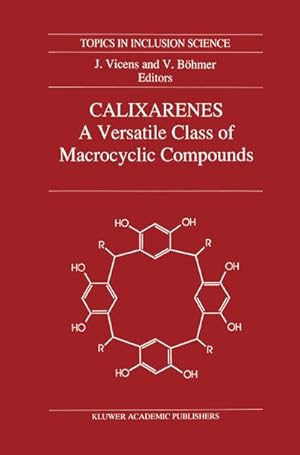
Taschenbuch. Zustand: Neu. This item is printed on demand - it takes 3-4 days longer - Neuware -The tenn 'calixarenes', introduced in 1978 by D. Gutsche to describe the cyclic oligomers produced by condensation of p-substituted phenols with fonnaldehyde, is now universally accepted in the chemical community. The condensation of phenol with fonnaldehyde was studied in the last century by A. von Baeyer. Early in this century, L. Baekeland produced the first entirely synthetic polymers from phenol-fonnaldehyde condensates and the possibility that cyclic condensation products could be obtained from t-butylphenol, and fonnaldehyde was mentioned as early as in the beginning of the 1940's by A. Zinke. Despite their long history, the realisation that calixarenes may have very significant applications and uses in supramolecular chemistry is a relatively recent phenomenon. Calixarene chemistry, in contrast to their discovery, started slowly in the 1970's but rapidly gained momentum throughout the 1980's. Following C. Pedersens discovery of the crown ethers and the seminal developments of J. -M. Lehn and D. Cram with cryptands and spherands - all three honoured with the 1987 Nobel Chemistry Prize - the time was right for a surge of interest in research areas, frequently referred to as host-guest chemistry, receptor or supramolecular chemistry, and including important comparisons with biological processes and the development of new advanced materials. Now, the cyclic, bowl or basket-shaped calixarene molecules were looked on in a different light. Rather than 'having developed from harmful by-products of phenoplasts manufacture' they were now seen as potentially valuable macrocyclic receptor molecules. 280 pp. Englisch.


