

Gesamtpreis (1 Artikel Artikel):
Versandziel:

verification validation testing engineered von engel avner (21 Ergebnisse)
Direkt zu den wichtigsten Suchergebnissen
Suchfilter
Produktart
- Alle Product Types
- Bücher (21)
- Magazine & Zeitschriften (Keine weiteren Ergebnisse entsprechen dieser Verfeinerung)
- Comics (Keine weiteren Ergebnisse entsprechen dieser Verfeinerung)
- Noten (Keine weiteren Ergebnisse entsprechen dieser Verfeinerung)
- Kunst, Grafik & Poster (Keine weiteren Ergebnisse entsprechen dieser Verfeinerung)
- Fotografien (Keine weiteren Ergebnisse entsprechen dieser Verfeinerung)
- Karten (Keine weiteren Ergebnisse entsprechen dieser Verfeinerung)
- Manuskripte & Papierantiquitäten (Keine weiteren Ergebnisse entsprechen dieser Verfeinerung)
Zustand Mehr dazu
- Neu (18)
- Wie Neu, Sehr Gut oder Gut Bis Sehr Gut (2)
- Gut oder Befriedigend (1)
- Ausreichend oder Schlecht (Keine weiteren Ergebnisse entsprechen dieser Verfeinerung)
- Wie beschrieben (Keine weiteren Ergebnisse entsprechen dieser Verfeinerung)
Einband
- alle Einbände
- Hardcover (21)
- Softcover (Keine weiteren Ergebnisse entsprechen dieser Verfeinerung)
Weitere Eigenschaften
- Erstausgabe (5)
- Signiert (Keine weiteren Ergebnisse entsprechen dieser Verfeinerung)
- Schutzumschlag (Keine weiteren Ergebnisse entsprechen dieser Verfeinerung)
- Angebotsfoto (10)
- Keine Print-on-Demand Angebote (21)
Sprache (1)
Preis
- Beliebiger Preis
- Weniger als EUR 20 (Keine weiteren Ergebnisse entsprechen dieser Verfeinerung)
- EUR 20 bis EUR 45 (Keine weiteren Ergebnisse entsprechen dieser Verfeinerung)
- Mehr als EUR 45
Gratisversand
Land des Verkäufers
Verkäuferbewertung
-
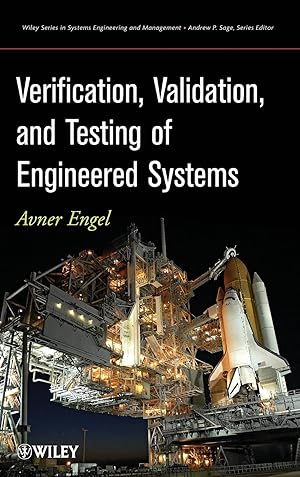
Zustand: very_good. Book is in very good condition. Clean with little to no signs of wear or markings highlights.
-

Verification, Validation, and Testing of Engineered Systems
Anbieter: Textbooks_Source, Columbia, MO, USA
Verkäuferbewertung 5 von 5 Sternen

Erstausgabe
hardcover. Zustand: New. 1st Edition. Ships in a BOX from Central Missouri! UPS shipping for most packages, (Priority Mail for AK/HI/APO/PO Boxes).
-

Verification, Validation, and Testing of Engineered Systems
Anbieter: GreatBookPrices, Columbia, MD, USA
Verkäuferbewertung 5 von 5 Sternen
EUR 150,25
EUR 2,25 Versand
Versand innerhalb von USAAnzahl: Mehr als 20 verfügbar
In den WarenkorbZustand: New.
-
Verification, Validation, and Testing of Engineered Systems (Hardcover)
Sprache: Englisch
Verlag: John Wiley & Sons Inc, New York, 2010
ISBN 10: 047052751X ISBN 13: 9780470527511
Anbieter: Grand Eagle Retail, Bensenville, IL, USA
Verkäuferbewertung 5 von 5 Sternen
Erstausgabe
Hardcover. Zustand: new. Hardcover. Systems' Verification Validation and Testing (VVT) are carried out throughout systems' lifetimes. Notably, quality-cost expended on performing VVT activities and correcting system defects consumes about half of the overall engineering cost. Verification, Validation and Testing of Engineered Systems provides a comprehensive compendium of VVT activities and corresponding VVT methods for implementation throughout the entire lifecycle of an engineered system. In addition, the book strives to alleviate the fundamental testing conundrum, namely: What should be tested? How should one test? When should one test? And, when should one stop testing? In other words, how should one select a VVT strategy and how it be optimized? The book is organized in three parts: The first part provides introductory material about systems and VVT concepts. This part presents a comprehensive explanation of the role of VVT in the process of engineered systems (Chapter-1). The second part describes 40 systems' development VVT activities (Chapter-2) and 27 systems' post-development activities (Chapter-3). Corresponding to these activities, this part also describes 17 non-testing systems' VVT methods (Chapter-4) and 33 testing systems' methods (Chapter-5). The third part of the book describes ways to model systems' quality cost, time and risk (Chapter-6), as well as ways to acquire quality data and optimize the VVT strategy in the face of funding, time and other resource limitations as well as different business objectives (Chapter-7). Finally, this part describes the methodology used to validate the quality model along with a case study describing a system's quality improvements (Chapter-8). Fundamentally, this book is written with two categories of audience in mind. The first category is composed of VVT practitioners, including Systems, Test, Production and Maintenance engineers as well as first and second line managers. The second category is composed of students and faculties of Systems, Electrical, Aerospace, Mechanical and Industrial Engineering schools. This book may be fully covered in two to three graduate level semesters; although parts of the book may be covered in one semester. University instructors will most likely use the book to provide engineering students with knowledge about VVT, as well as to give students an introduction to formal modeling and optimization of VVT strategy. Systems' Verification Validation and Testing (VVT) are carried out throughout systems' lifetimes. Notably, quality-cost expended on performing VVT activities and correcting system defects consumes about half of the overall engineering cost. Shipping may be from multiple locations in the US or from the UK, depending on stock availability.
-
Verification, Validation, and Testing of Engineered Systems
Anbieter: PBShop.store UK, Fairford, GLOS, Vereinigtes Königreich
Verkäuferbewertung 4 von 5 Sternen

EUR 157,35
EUR 8,81 Versand
Versand von Vereinigtes Königreich nach USAAnzahl: 15 verfügbar
In den WarenkorbHRD. Zustand: New. New Book. Shipped from UK. Established seller since 2000.
-
Verification, Validation, and Testing of Engineered Systems (eng)
Anbieter: Brook Bookstore On Demand, Napoli, NA, Italien
Verkäuferbewertung 3 von 5 Sternen

EUR 157,29
EUR 11,00 Versand
Versand von Italien nach USAAnzahl: Mehr als 20 verfügbar
In den WarenkorbZustand: new.
-

Verification, Validation, and Testing of Engineered Systems
Anbieter: GreatBookPrices, Columbia, MD, USA
Verkäuferbewertung 5 von 5 Sternen
EUR 172,68
EUR 2,25 Versand
Versand innerhalb von USAAnzahl: Mehr als 20 verfügbar
In den WarenkorbZustand: As New. Unread book in perfect condition.
-

Verification, Validation, and Testing of Engineered Systems
Anbieter: GreatBookPricesUK, Woodford Green, Vereinigtes Königreich
Verkäuferbewertung 5 von 5 Sternen
EUR 157,21
EUR 17,32 Versand
Versand von Vereinigtes Königreich nach USAAnzahl: Mehr als 20 verfügbar
In den WarenkorbZustand: New.
-
Verification, Validation, and Testing of Engineered Systems (Wiley Series in Systems Engineering and Management)
Anbieter: California Books, Miami, FL, USA
Verkäuferbewertung 4 von 5 Sternen
Zustand: New.
-

Verification, Validation, and Testing of Engineered Systems
Anbieter: GreatBookPricesUK, Woodford Green, Vereinigtes Königreich
Verkäuferbewertung 5 von 5 Sternen
EUR 171,39
EUR 17,32 Versand
Versand von Vereinigtes Königreich nach USAAnzahl: Mehr als 20 verfügbar
In den WarenkorbZustand: As New. Unread book in perfect condition.
-
Verification, Validation, and Testing of Engineered Systems (Hardcover)
Sprache: Englisch
Verlag: John Wiley & Sons Inc, New York, 2010
ISBN 10: 047052751X ISBN 13: 9780470527511
Anbieter: CitiRetail, Stevenage, Vereinigtes Königreich
Verkäuferbewertung 5 von 5 Sternen
Erstausgabe
EUR 157,19
EUR 42,72 Versand
Versand von Vereinigtes Königreich nach USAAnzahl: 1 verfügbar
In den WarenkorbHardcover. Zustand: new. Hardcover. Systems' Verification Validation and Testing (VVT) are carried out throughout systems' lifetimes. Notably, quality-cost expended on performing VVT activities and correcting system defects consumes about half of the overall engineering cost. Verification, Validation and Testing of Engineered Systems provides a comprehensive compendium of VVT activities and corresponding VVT methods for implementation throughout the entire lifecycle of an engineered system. In addition, the book strives to alleviate the fundamental testing conundrum, namely: What should be tested? How should one test? When should one test? And, when should one stop testing? In other words, how should one select a VVT strategy and how it be optimized? The book is organized in three parts: The first part provides introductory material about systems and VVT concepts. This part presents a comprehensive explanation of the role of VVT in the process of engineered systems (Chapter-1). The second part describes 40 systems' development VVT activities (Chapter-2) and 27 systems' post-development activities (Chapter-3). Corresponding to these activities, this part also describes 17 non-testing systems' VVT methods (Chapter-4) and 33 testing systems' methods (Chapter-5). The third part of the book describes ways to model systems' quality cost, time and risk (Chapter-6), as well as ways to acquire quality data and optimize the VVT strategy in the face of funding, time and other resource limitations as well as different business objectives (Chapter-7). Finally, this part describes the methodology used to validate the quality model along with a case study describing a system's quality improvements (Chapter-8). Fundamentally, this book is written with two categories of audience in mind. The first category is composed of VVT practitioners, including Systems, Test, Production and Maintenance engineers as well as first and second line managers. The second category is composed of students and faculties of Systems, Electrical, Aerospace, Mechanical and Industrial Engineering schools. This book may be fully covered in two to three graduate level semesters; although parts of the book may be covered in one semester. University instructors will most likely use the book to provide engineering students with knowledge about VVT, as well as to give students an introduction to formal modeling and optimization of VVT strategy. Systems' Verification Validation and Testing (VVT) are carried out throughout systems' lifetimes. Notably, quality-cost expended on performing VVT activities and correcting system defects consumes about half of the overall engineering cost. Shipping may be from our UK warehouse or from our Australian or US warehouses, depending on stock availability.
-

Verification, Validation, and Testing of Engineered Systems
Sprache: Englisch
Verlag: John Wiley and Sons Inc, US, 2010
ISBN 10: 047052751X ISBN 13: 9780470527511
Hardback. Zustand: New. Systems' Verification Validation and Testing (VVT) are carried out throughout systems' lifetimes. Notably, quality-cost expended on performing VVT activities and correcting system defects consumes about half of the overall engineering cost. Verification, Validation and Testing of Engineered Systems provides a comprehensive compendium of VVT activities and corresponding VVT methods for implementation throughout the entire lifecycle of an engineered system. In addition, the book strives to alleviate the fundamental testing conundrum, namely: What should be tested? How should one test? When should one test? And, when should one stop testing? In other words, how should one select a VVT strategy and how it be optimized? The book is organized in three parts: The first part provides introductory material about systems and VVT concepts. This part presents a comprehensive explanation of the role of VVT in the process of engineered systems (Chapter-1). The second part describes 40 systems' development VVT activities (Chapter-2) and 27 systems' post-development activities (Chapter-3). Corresponding to these activities, this part also describes 17 non-testing systems' VVT methods (Chapter-4) and 33 testing systems' methods (Chapter-5). The third part of the book describes ways to model systems' quality cost, time and risk (Chapter-6), as well as ways to acquire quality data and optimize the VVT strategy in the face of funding, time and other resource limitations as well as different business objectives (Chapter-7). Finally, this part describes the methodology used to validate the quality model along with a case study describing a system's quality improvements (Chapter-8). Fundamentally, this book is written with two categories of audience in mind. The first category is composed of VVT practitioners, including Systems, Test, Production and Maintenance engineers as well as first and second line managers. The second category is composed of students and faculties of Systems, Electrical, Aerospace, Mechanical and Industrial Engineering schools. This book may be fully covered in two to three graduate level semesters; although parts of the book may be covered in one semester. University instructors will most likely use the book to provide engineering students with knowledge about VVT, as well as to give students an introduction to formal modeling and optimization of VVT strategy.
-
Verification, Validation, and Testing of Engineered Systems
Anbieter: Majestic Books, Hounslow, Vereinigtes Königreich
Verkäuferbewertung 4 von 5 Sternen
EUR 206,68
EUR 7,50 Versand
Versand von Vereinigtes Königreich nach USAAnzahl: 3 verfügbar
In den WarenkorbZustand: New. pp. xix + 687 Illus.
-
Verification, Validation, and Testing of Engineered Systems
Anbieter: Kennys Bookshop and Art Galleries Ltd., Galway, GY, Irland
Verkäuferbewertung 5 von 5 Sternen
Erstausgabe
EUR 211,72
EUR 10,50 Versand
Versand von Irland nach USAAnzahl: Mehr als 20 verfügbar
In den WarenkorbZustand: New. Systems' Verification Validation and Testing (VVT) are carried out throughout systems' lifetimes. Notably, quality-cost expended on performing VVT activities and correcting system defects consumes about half of the overall engineering cost. Series: Wiley Series in Systems Engineering and Management. Num Pages: 712 pages, Illustrations. BIC Classification: TBC. Category: (P) Professional & Vocational. Dimension: 241 x 169 x 43. Weight in Grams: 1110. . 2010. 1st Edition. Hardcover. . . . .
-
Verification, Validation, and Testing of Engineered Systems (Hardcover)
Sprache: Englisch
Verlag: John Wiley & Sons Inc, New York, 2010
ISBN 10: 047052751X ISBN 13: 9780470527511
Anbieter: AussieBookSeller, Truganina, VIC, Australien
Verkäuferbewertung 5 von 5 Sternen
Erstausgabe
Hardcover. Zustand: new. Hardcover. Systems' Verification Validation and Testing (VVT) are carried out throughout systems' lifetimes. Notably, quality-cost expended on performing VVT activities and correcting system defects consumes about half of the overall engineering cost. Verification, Validation and Testing of Engineered Systems provides a comprehensive compendium of VVT activities and corresponding VVT methods for implementation throughout the entire lifecycle of an engineered system. In addition, the book strives to alleviate the fundamental testing conundrum, namely: What should be tested? How should one test? When should one test? And, when should one stop testing? In other words, how should one select a VVT strategy and how it be optimized? The book is organized in three parts: The first part provides introductory material about systems and VVT concepts. This part presents a comprehensive explanation of the role of VVT in the process of engineered systems (Chapter-1). The second part describes 40 systems' development VVT activities (Chapter-2) and 27 systems' post-development activities (Chapter-3). Corresponding to these activities, this part also describes 17 non-testing systems' VVT methods (Chapter-4) and 33 testing systems' methods (Chapter-5). The third part of the book describes ways to model systems' quality cost, time and risk (Chapter-6), as well as ways to acquire quality data and optimize the VVT strategy in the face of funding, time and other resource limitations as well as different business objectives (Chapter-7). Finally, this part describes the methodology used to validate the quality model along with a case study describing a system's quality improvements (Chapter-8). Fundamentally, this book is written with two categories of audience in mind. The first category is composed of VVT practitioners, including Systems, Test, Production and Maintenance engineers as well as first and second line managers. The second category is composed of students and faculties of Systems, Electrical, Aerospace, Mechanical and Industrial Engineering schools. This book may be fully covered in two to three graduate level semesters; although parts of the book may be covered in one semester. University instructors will most likely use the book to provide engineering students with knowledge about VVT, as well as to give students an introduction to formal modeling and optimization of VVT strategy. Systems' Verification Validation and Testing (VVT) are carried out throughout systems' lifetimes. Notably, quality-cost expended on performing VVT activities and correcting system defects consumes about half of the overall engineering cost. Shipping may be from our Sydney, NSW warehouse or from our UK or US warehouse, depending on stock availability.
-
Zustand: New. pp. xix + 687 Index.
-

Verification, Validation, and Testing of Engineered Systems
Sprache: Englisch
Verlag: John Wiley and Sons Inc, US, 2010
ISBN 10: 047052751X ISBN 13: 9780470527511
Anbieter: Rarewaves.com USA, London, LONDO, Vereinigtes Königreich
Verkäuferbewertung 5 von 5 Sternen
EUR 249,09
Versand gratis
Versand von Vereinigtes Königreich nach USAAnzahl: Mehr als 20 verfügbar
In den WarenkorbHardback. Zustand: New. Systems' Verification Validation and Testing (VVT) are carried out throughout systems' lifetimes. Notably, quality-cost expended on performing VVT activities and correcting system defects consumes about half of the overall engineering cost. Verification, Validation and Testing of Engineered Systems provides a comprehensive compendium of VVT activities and corresponding VVT methods for implementation throughout the entire lifecycle of an engineered system. In addition, the book strives to alleviate the fundamental testing conundrum, namely: What should be tested? How should one test? When should one test? And, when should one stop testing? In other words, how should one select a VVT strategy and how it be optimized? The book is organized in three parts: The first part provides introductory material about systems and VVT concepts. This part presents a comprehensive explanation of the role of VVT in the process of engineered systems (Chapter-1). The second part describes 40 systems' development VVT activities (Chapter-2) and 27 systems' post-development activities (Chapter-3). Corresponding to these activities, this part also describes 17 non-testing systems' VVT methods (Chapter-4) and 33 testing systems' methods (Chapter-5). The third part of the book describes ways to model systems' quality cost, time and risk (Chapter-6), as well as ways to acquire quality data and optimize the VVT strategy in the face of funding, time and other resource limitations as well as different business objectives (Chapter-7). Finally, this part describes the methodology used to validate the quality model along with a case study describing a system's quality improvements (Chapter-8). Fundamentally, this book is written with two categories of audience in mind. The first category is composed of VVT practitioners, including Systems, Test, Production and Maintenance engineers as well as first and second line managers. The second category is composed of students and faculties of Systems, Electrical, Aerospace, Mechanical and Industrial Engineering schools. This book may be fully covered in two to three graduate level semesters; although parts of the book may be covered in one semester. University instructors will most likely use the book to provide engineering students with knowledge about VVT, as well as to give students an introduction to formal modeling and optimization of VVT strategy.
-

Verification, Validation, and Testing of Engineered Systems
Sprache: Englisch
Verlag: John Wiley and Sons Inc, US, 2010
ISBN 10: 047052751X ISBN 13: 9780470527511
Anbieter: Rarewaves USA United, OSWEGO, IL, USA
Verkäuferbewertung 5 von 5 Sternen
EUR 208,24
EUR 42,68 Versand
Versand innerhalb von USAAnzahl: Mehr als 20 verfügbar
In den WarenkorbHardback. Zustand: New. Systems' Verification Validation and Testing (VVT) are carried out throughout systems' lifetimes. Notably, quality-cost expended on performing VVT activities and correcting system defects consumes about half of the overall engineering cost. Verification, Validation and Testing of Engineered Systems provides a comprehensive compendium of VVT activities and corresponding VVT methods for implementation throughout the entire lifecycle of an engineered system. In addition, the book strives to alleviate the fundamental testing conundrum, namely: What should be tested? How should one test? When should one test? And, when should one stop testing? In other words, how should one select a VVT strategy and how it be optimized? The book is organized in three parts: The first part provides introductory material about systems and VVT concepts. This part presents a comprehensive explanation of the role of VVT in the process of engineered systems (Chapter-1). The second part describes 40 systems' development VVT activities (Chapter-2) and 27 systems' post-development activities (Chapter-3). Corresponding to these activities, this part also describes 17 non-testing systems' VVT methods (Chapter-4) and 33 testing systems' methods (Chapter-5). The third part of the book describes ways to model systems' quality cost, time and risk (Chapter-6), as well as ways to acquire quality data and optimize the VVT strategy in the face of funding, time and other resource limitations as well as different business objectives (Chapter-7). Finally, this part describes the methodology used to validate the quality model along with a case study describing a system's quality improvements (Chapter-8). Fundamentally, this book is written with two categories of audience in mind. The first category is composed of VVT practitioners, including Systems, Test, Production and Maintenance engineers as well as first and second line managers. The second category is composed of students and faculties of Systems, Electrical, Aerospace, Mechanical and Industrial Engineering schools. This book may be fully covered in two to three graduate level semesters; although parts of the book may be covered in one semester. University instructors will most likely use the book to provide engineering students with knowledge about VVT, as well as to give students an introduction to formal modeling and optimization of VVT strategy.
-
Verification, Validation, and Testing of Engineered Systems
Anbieter: Kennys Bookstore, Olney, MD, USA
Verkäuferbewertung 5 von 5 Sternen
EUR 263,25
EUR 8,96 Versand
Versand innerhalb von USAAnzahl: Mehr als 20 verfügbar
In den WarenkorbZustand: New. Systems' Verification Validation and Testing (VVT) are carried out throughout systems' lifetimes. Notably, quality-cost expended on performing VVT activities and correcting system defects consumes about half of the overall engineering cost. Series: Wiley Series in Systems Engineering and Management. Num Pages: 712 pages, Illustrations. BIC Classification: TBC. Category: (P) Professional & Vocational. Dimension: 241 x 169 x 43. Weight in Grams: 1110. . 2010. 1st Edition. Hardcover. . . . . Books ship from the US and Ireland.
-

Verification, Validation, and Testing of Engineered Systems
Sprache: Englisch
Verlag: John Wiley and Sons Inc, US, 2010
ISBN 10: 047052751X ISBN 13: 9780470527511
Anbieter: Rarewaves.com UK, London, Vereinigtes Königreich
Verkäuferbewertung 5 von 5 Sternen
EUR 233,57
EUR 75,05 Versand
Versand von Vereinigtes Königreich nach USAAnzahl: Mehr als 20 verfügbar
In den WarenkorbHardback. Zustand: New. Systems' Verification Validation and Testing (VVT) are carried out throughout systems' lifetimes. Notably, quality-cost expended on performing VVT activities and correcting system defects consumes about half of the overall engineering cost. Verification, Validation and Testing of Engineered Systems provides a comprehensive compendium of VVT activities and corresponding VVT methods for implementation throughout the entire lifecycle of an engineered system. In addition, the book strives to alleviate the fundamental testing conundrum, namely: What should be tested? How should one test? When should one test? And, when should one stop testing? In other words, how should one select a VVT strategy and how it be optimized? The book is organized in three parts: The first part provides introductory material about systems and VVT concepts. This part presents a comprehensive explanation of the role of VVT in the process of engineered systems (Chapter-1). The second part describes 40 systems' development VVT activities (Chapter-2) and 27 systems' post-development activities (Chapter-3). Corresponding to these activities, this part also describes 17 non-testing systems' VVT methods (Chapter-4) and 33 testing systems' methods (Chapter-5). The third part of the book describes ways to model systems' quality cost, time and risk (Chapter-6), as well as ways to acquire quality data and optimize the VVT strategy in the face of funding, time and other resource limitations as well as different business objectives (Chapter-7). Finally, this part describes the methodology used to validate the quality model along with a case study describing a system's quality improvements (Chapter-8). Fundamentally, this book is written with two categories of audience in mind. The first category is composed of VVT practitioners, including Systems, Test, Production and Maintenance engineers as well as first and second line managers. The second category is composed of students and faculties of Systems, Electrical, Aerospace, Mechanical and Industrial Engineering schools. This book may be fully covered in two to three graduate level semesters; although parts of the book may be covered in one semester. University instructors will most likely use the book to provide engineering students with knowledge about VVT, as well as to give students an introduction to formal modeling and optimization of VVT strategy.
-

Verification, Validation, and Testing of Engineered Systems
Anbieter: AHA-BUCH GmbH, Einbeck, Deutschland
Verkäuferbewertung 5 von 5 Sternen
Buch. Zustand: Neu. Neuware - Systems' Verification Validation and Testing (VVT) are carried out throughout systems' lifetimes. Notably, quality-cost expended on performing VVT activities and correcting system defects consumes about half of the overall engineering cost. Verification, Validation and Testing of Engineered Systems provides a comprehensive compendium of VVT activities and corresponding VVT methods for implementation throughout the entire lifecycle of an engineered system. In addition, the book strives to alleviate the fundamental testing conundrum, namely: What should be tested How should one test When should one test And, when should one stop testing In other words, how should one select a VVT strategy and how it be optimized The book is organized in three parts: The first part provides introductory material about systems and VVT concepts. This part presents a comprehensive explanation of the role of VVT in the process of engineered systems (Chapter-1). The second part describes 40 systems' development VVT activities (Chapter-2) and 27 systems' post-development activities (Chapter-3). Corresponding to these activities, this part also describes 17 non-testing systems' VVT methods (Chapter-4) and 33 testing systems' methods (Chapter-5). The third part of the book describes ways to model systems' quality cost, time and risk (Chapter-6), as well as ways to acquire quality data and optimize the VVT strategy in the face of funding, time and other resource limitations as well as different business objectives (Chapter-7). Finally, this part describes the methodology used to validate the quality model along with a case study describing a system's quality improvements (Chapter-8).Fundamentally, this book is written with two categories of audience in mind. The first category is composed of VVT practitioners, including Systems, Test, Production and Maintenance engineers as well as first and second line managers. The second category is composed of students and faculties of Systems, Electrical, Aerospace, Mechanical and Industrial Engineering schools. This book may be fully covered in two to three graduate level semesters; although parts of the book may be covered in one semester. University instructors will most likely use the book to provide engineering students with knowledge about VVT, as well as to give students an introduction to formal modeling and optimization of VVT strategy.


