Gesamtpreis (1 Artikel Artikel):
Versandziel:

tunnell (11 Ergebnisse)
Direkt zu den wichtigsten Suchergebnissen
Suchfilter
Produktart
- Alle Product Types
- Bücher (10)
- Magazine & Zeitschriften (Keine weiteren Ergebnisse entsprechen dieser Verfeinerung)
- Comics (Keine weiteren Ergebnisse entsprechen dieser Verfeinerung)
- Noten (Keine weiteren Ergebnisse entsprechen dieser Verfeinerung)
- Kunst, Grafik & Poster (Keine weiteren Ergebnisse entsprechen dieser Verfeinerung)
- Fotografien (Keine weiteren Ergebnisse entsprechen dieser Verfeinerung)
- Karten (1)
- Manuskripte & Papierantiquitäten (Keine weiteren Ergebnisse entsprechen dieser Verfeinerung)
Zustand Mehr dazu
- Neu (Keine weiteren Ergebnisse entsprechen dieser Verfeinerung)
- Wie Neu, Sehr Gut oder Gut Bis Sehr Gut (2)
- Gut oder Befriedigend (8)
- Ausreichend oder Schlecht (Keine weiteren Ergebnisse entsprechen dieser Verfeinerung)
- Wie beschrieben (1)
Einband
Weitere Eigenschaften
- Erstausgabe (1)
- Signiert (Keine weiteren Ergebnisse entsprechen dieser Verfeinerung)
- Schutzumschlag (Keine weiteren Ergebnisse entsprechen dieser Verfeinerung)
- Angebotsfoto (6)
- Keine Print-on-Demand Angebote (11)
Sprache (2)
Gratisversand
Land des Verkäufers
Verkäuferbewertung
-

SPC for the Rest of Us
Sprache: Englisch
Verlag: K. W. Tunnell Company, Inc., 1999
ISBN 10: 0966952006 ISBN 13: 9780966952001
Anbieter: Zoom Books East, Glendale Heights, IL, USA
Verkäuferbewertung 5 von 5 Sternen

Zustand: good. Book is in good condition and may include underlining highlighting and minimal wear. The book can also include "From the library of" labels. May not contain miscellaneous items toys, dvds, etc. . We offer 100% money back guarantee and 24 7 customer service.
-

SPC for the Rest of Us
Sprache: Englisch
Verlag: K. W. Tunnell Company, Inc., 1999
ISBN 10: 0966952006 ISBN 13: 9780966952001
Anbieter: World of Books (was SecondSale), Montgomery, IL, USA
Verkäuferbewertung 5 von 5 Sternen
Zustand: Very Good. Item in very good condition! Textbooks may not include supplemental items i.e. CDs, access codes etc.
-
SPC for the Rest of Us
Sprache: Englisch
Verlag: K. W. Tunnell Company, Inc., 1999
ISBN 10: 0966952006 ISBN 13: 9780966952001
Anbieter: Better World Books, Mishawaka, IN, USA
Verkäuferbewertung 5 von 5 Sternen
Zustand: Fine. Used book that is in almost brand-new condition. May contain a remainder mark. Better World Books: Buy Books. Do Good.
-
SPC for the Rest of Us
Sprache: Englisch
Verlag: K. W. Tunnell Company, Inc., 1999
ISBN 10: 0966952006 ISBN 13: 9780966952001
Anbieter: ThriftBooks-Atlanta, AUSTELL, GA, USA
Verkäuferbewertung 5 von 5 Sternen
Paperback. Zustand: As New. No Jacket. Pages are clean and are not marred by notes or folds of any kind. ~ ThriftBooks: Read More, Spend Less.
-
SPC for the Rest of Us : A Personal Path to Statistical Process Control
Anbieter: Charles Berry, Bookseller, Lakeport, CA, USA
Verkäuferbewertung 5 von 5 Sternen
Soft cover. Zustand: Very Good. 1999 second edition softcover in glossy, excellent condition. 429 pages. Unmarked. [2 lbs]. Book.
-
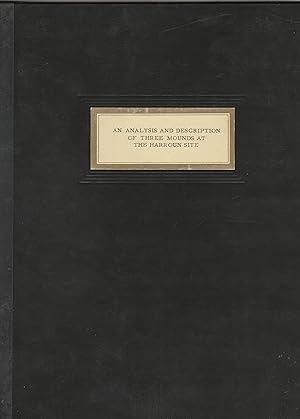
AN ANALYSIS AND DESCRIPTION OF THREE MOUNDS AT THE HARROUN SITE
Sprache: Englisch
Verlag: Curtis Tunnell, Austin TX, 1958
Anbieter: Whitledge Books, Austin, TX, USA
Verkäuferbewertung 5 von 5 Sternen
Soft cover. Zustand: Very Good. AN ANALYSIS AND DESCRIPTION OF THREE MOUNDS AT THE HARROUN SITE (an original paper for Anthropology 380K, Topics in Archaeological Method and Theory, University of Texas at Austin, Fall 1958), Curtis Tunnell, softcover, illustrated with B/W photos and maps, 1958, BOOK CONDITION: very good. The text block and illustrations are in very good condition, with no marks, tears, or dog-ears, but the tape along the edges of the photos has turned brown. Not a library book nor a remainder. No bookplate nor signature of a prior owner. Typescript printed on onionskin paper. Good metal-clasp folder binding. The black wraps are in good condition (intact but rubbed and smudged). 11 ½ x 9, 43 pages, 10 ounces. XX [From the introduction] The Harround Site, situated on the floodplain of Cypress Creek in Upshur County, Texas, is one of several sites excavated in the Ferrells Bridge Reservoir area as part of the Inter-Agency Archaeological Salvage Project. The principle features of the site were four small mounds, all of which were excavated in 1957 and 1958. This study is divided into 3 parts. The first section is a description of the site which includes the excavation and structural details of each mound; the second section comprises the description and distribution of the artifacts; the final section is a brief summary which includes comparisons and conclusions. The Harroun Site is scheduled to disappear beneath the waters of "Lake o' the Pines" in the spring of 1959.
-
Evidence of a Late Archaic Horizon at Three Sites in the McGee Bend Reservoir, San Augustine County, Texas (Thesis for M.A. at University of Texas)
Verlag: Curtis Tunnell, 1961
Anbieter: Whitledge Books, Austin, TX, USA
Verkäuferbewertung 5 von 5 Sternen
Hardcover. Zustand: Very Good. No Jacket. Tunnell, Curtis Dale (photographer) (illustrator). EVIDENCE OF A LATE ARCHAIC HORIZON AT THREE SITES IN THE MCGEE BEND RESERVOIR, SAN AUGUSTINE COUNTY, TEXAS (Thesis for M.A. at University of Texas), written and photographed by Curtis Dale Tunnell, hardcover, illustrated with B/W photos of arrowheads and other implements, 1961. BOOK CONDITION: very good. The text block and photos are in fine condition, with no tears, dogears, or marks, but the pages on which the photos have been affixed have rippled. No bookplate or signature of a prior owner. Not a library book or remainder. The red boards are in very good condition (cover rubbing and smudging, slightly faded spine). 11 ¼ x 9, 68 pages, 24 ounces XX [From the author's obituary] Longtime archeologist, preservationist, oral historian, and folklorist Curtis Tunnell passed away in Austin at the age of 67 in 2001. A native of Turkey, Texas, Tunnell recalled his homeland of the Texas rolling plains as a beautiful place for a boy to grow up in the years before World War II. The land had a tremendous impact on Tunnell, as did his encounters with various cultures, both ancient and modern. By the time he left home for West Texas State College in Canyon, his interests in geology, paleontology, and anthropology were already developing. At West Texas, Tunnell worked in the Panhandle-Plains Historical Museum. There, he met his lifelong mentor, Jack Hughes. Together, they covered vast areas of the Texas Panhandle, conducting archeological investigations on rock shelters, pit burials, bison kill sites, and countless other projects. Following military service, Tunnell returned to Texas and began working with archeologist Ed Jelks on the Texas River Basins Survey project funded by the Smithsonian Institution. Their first investigations took place along the McGee Bend of the Angelina River in East Texas, later impounded as part of Sam Rayburn Reservoir. He also worked in the Lake Amistad area along the Rio Grande. Tunnell followed his fieldwork with graduate studies at The University of Texas at Austin, receiving a master's degree in anthropology. From there, he became a field researcher for the University of Illinois and worked on such sites as the famed Cahokia Mounds, as well as projects in Kansas and Arizona. He then returned to Austin as Curator of Anthropology for the Texas Memorial Museum. There, he and W. W. Newcomb undertook pioneering work at a site that proved to be the location of Mission San Lorenzo de la Santa Cruz, established by the Spanish in 1762 to minister to the Lipan Apache. In 1965, public demand for historic and archeological preservation led the Texas Legislature to create the position of State Archeologist. For the first time, Texas had a formal public archeology program, and the person selected to fill the new position was Curtis Tunnell. First assigned to the Texas State Building Commission, the State Archeologist was transferred to the Texas State Historical Survey Committee (later the Texas Historical Commission) in 1969.
-
![Bild des Verkäufers für [Photograph] U.S.S. Melville in San Diego, Calif zum Verkauf von Kaaterskill Books, ABAA/ILAB](https://pictures.abebooks.com/inventory/md/md22765844228.jpg)
[Photograph] U.S.S. Melville in San Diego, Calif
Sprache: Englisch
Verlag: [O.A. Tunnell], [San Diego], 1920
Anbieter: Kaaterskill Books, ABAA/ILAB, East Jewett, NY, USA
Verbandsmitglied: ABAA ILAB IOBA
Verkäuferbewertung 5 von 5 Sternen
6.5 x 10.5 inches on 11x 15 inch board. Silver gelatin print. Decorative caption title in print. USS Melville, a 7150-ton destroyer tender, named for Rear Admiral George W. Melville (1841-1912), a noted Arctic explorer, was built at Camden, New Jersey and commissioned in early December 1915. In July 1919 she was transferred to the Pacific Coast, and on station at San Diego, California, maintaining the Fleet's destroyers. O.A. Tunnell was active as a photographer in San Diego, California, from the second to fifth decades of the twentieth century, with photographs dated between 1919 and 1945. The main bulk of his known work relates to the navy, with numerous shots of the naval vessels stationed in San Diego. To the framed image has been added a small 1926 calendar. Some spotting and scratching to image, though still quite sharp, calendar intact with closed tear on last page, boards edge worn. Pebbled gray card mount frame with embossed borders, with small gilt-titled calendar attached to lower margin of frame.
-

Ian Gardner, Davide Willetts - Drawings As Prints
Verlag: Blue Tunnell, 1974
Anbieter: Shadow Books, Norwich, Vereinigtes Königreich
Verkäuferbewertung 5 von 5 Sternen
EUR 116,34
EUR 10,37 Versand
Versand von Vereinigtes Königreich nach USAAnzahl: 1 verfügbar
In den WarenkorbSoft cover. Zustand: Very Good. Impeccable , With Slipped In A4 Notice From The Thumb Gallery Dated 1975 Containing A Biographical Note And Price Lit For Work By Ian Gardner. Rare.
-

The Canadian Who's Who, with Which is Incorporated "Canadian Men and Women of the Time" - Vol. V (5), 1949-1951
Verlag: Trans-Canada Press / Arthur L. Tunnell, Toronto, 1951
Anbieter: RareNonFiction, IOBA, Ladysmith, BC, Kanada
Verbandsmitglied: IOBA
Verkäuferbewertung 5 von 5 Sternen
Erstausgabe
Hardcover. Zustand: Good. First Edition. 1159 pages. A biographical dictionary of notable living men and women. Library binding intact. Usual library markings. A sound copy.
-
![Bild des Verkäufers für [San Diego Panoramic Photograph] U.S. Marine Barracks [Panoramic photograph of San Diego Marine Corps Recruiting Depot (MCRD)] zum Verkauf von Barry Lawrence Ruderman](https://pictures.abebooks.com/inventory/md/md31754927877.jpg)
[San Diego Panoramic Photograph] U.S. Marine Barracks [Panoramic photograph of San Diego Marine Corps Recruiting Depot (MCRD)]
Verlag: O.A. Tunnell, 1925
Anbieter: Barry Lawrence Ruderman, La Jolla, CA, USA
Verkäuferbewertung 5 von 5 Sternen
Karte
No Binding. Zustand: good. Panoramic Photograph of Bertram Goodhue's San Diego Marine Corps Base Handsome 1920s panoramic photograph with views of San Diego's iconic Marine Corps Recruiting Depot buildings. The top image is a bird's-eye. Original panoramic silver gelatin photograph with two views on single sheet. Three 1-inch tears at margins, two of which barely touch the image on left side. Overall condition is excellent, with the photographic views very sharp and clean. Panoramic Photograph of Bertram Goodhue's San Diego Marine Corps Base Handsome 1920s panoramic photograph with views of San Diego's iconic Marine Corps Recruiting Depot buildings. The top image is a bird's-eye view which shows the entire Marine Corps compound with a fine vista of San Diego Bay and Point Loma very clearly visible in the background. The lower image is a close-up view of the distinctive arched colonnade of the Spanish Colonial Revival buildings that comprise the MCRD. The latter view shows an airplane in midair, perhaps about to land on North Island. The photograph is captioned "U.S. Marine Barracks."Bertram Goodhue and the Spanish Colonial RevivalThe MCRD buildings were designed by noted architect Bertram Goodhue, who also designed most of the buildings of the Panama Pacific Exposition in San Diego's Balboa Park. Goodhue's largescale commissions in San Diego influenced local building styles and helped popularize the Spanish Colonial Revival. For the MCRD he used a somewhat stripped-down version of the Spanish style, with minimal decoration, incorporating the Mission-style arches more characteristic of his local architectural rival Irving Gill. Goodhue also designed buildings for the United States Military Academy in Westpoint, New York.MCRD opened in 1921 as Marine Base San Diego and the present panoramic photograph was likely made soon after the opening, certainly in the first part of the 1920s.O. A. Tunnell was active as a photographer in San Diego during the 1920s. He is noted for his panoramic views.The Marines and San DiegoThe story of MCRD San Diego began with Colonel Joseph Pendleton, who, after experiencing unsatisfactory conditions at Camp Howard on North Island, San Diego, advocated for a permanent Marine Corps base in the region. His speech on September 6, 1914, at the U.S. Grant Hotel in downtown San Diego, titled "San Diego, An Ideal Location for a Permanent Marine Corps Base," highlighted the need for better facilities for his men and staff. Around the same time, he wrote to the Commandant of the Marine Corps in Washington D.C., stressing the deplorable conditions at Camp Howard and proposing the idea of establishing a permanent base in San Diego.The proposal gained traction, and the Navy General Board approved the establishment of a base on January 8, 1916. Subsequently, the Dutch Flats area was authorized for the Marine Corps base by a Naval appropriation bill on August 29, 1916, largely due to Congressman William Kettner's efforts. Groundbreaking on the 232-acre site occurred on March 2, 1919, with construction and occupation extending through 1926.On December 1, 1921, Pendleton, now a General, officially commissioned the facility as the Marine Advanced Expeditionary Base, San Diego. In 1923, the Marine Recruit Depot for the west coast was relocated from the Mare Island Navy Shipyards in Vallejo, California, to the San Diego Marine Base. By March 1, 1924, the base was officially named Marine Corps Base, San Diego.RarityThis panorama is rare in the market. No examples recorded in OCLC, which only notes a handful of Tunnell's photographs, notably a 1919 panorama of President Woodrow Wilson greeting 50,000 people at Balboa Stadium in San Diego, held in the Library of Congress. Map.