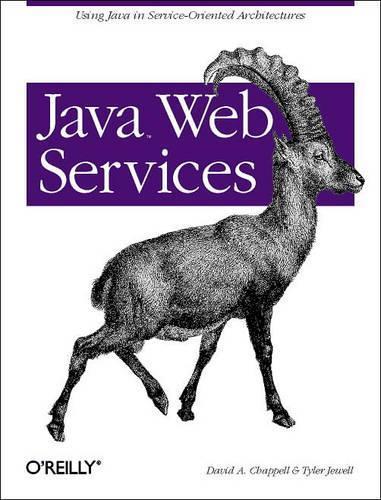
Java Web Services

David A. Chappell and Tyler Jewell

ISBN 10: 0596002696 ISBN 13: 9780596002695
Verlag: O'Reilly Media, US, 2002
Neu Paperback

Verkäufer Rarewaves.com UK, London, Vereinigtes Königreich Verkäuferbewertung 5 von 5 Sternen 5 Sterne, Erfahren Sie mehr über Verkäufer-Bewertungen

AbeBooks-Verkäufer seit 11. Juni 2025


Beschreibung

Beschreibung:

For many Java developers, web services appeared to come out of nowhere. Its advantages are clear: web services are platform-independent (like Java itself), language-agnostic (a clear advantage over Java RMI), can easily be tunneled through firewalls (an obvious benefit to anyone who has dealt with modern enterprise networks), object-oriented (we all know about that), and tends to be loosely coupled (allowing more flexible application development). But these advantages have been obscured by a cloud of hype and a proliferation of jargon that are difficult to penetrate. What are SOAP, UDDI, WSDL, and JAXM? To say nothing of JAXR, tModels, category bags, WSFL, and other friends? And assuming that you understand what they are, how do you do anything with them? Do they live up to their promises? Are they really the future of network computing, or a dead end? Java Web Services gives the experienced Java developer a way into the Web Services world. It helps you to understand what's going on, what the technologies mean and how they relate, and shows Java developers how to put them to use to solve real problems.You'll learn what's real and what isn't; what the technologies are really supposed to do, and how they do it. Java Web Services shows you how to use SOAP to perform remote method calls and message passing; how to use WSDL to describe the interface to a web service or understand the interface of someone else's service; and how to use UDDI to advertise (publish) and look up services in each local or global registry. Java Web Services also discusses security issues, interoperability issues, integration with other Java enterprise technologies like EJB; the work being done on the JAXM and JAX-RPC packages, and integration with Microsoft's .NET services. The web services picture is still taking shape; there are many platforms and APIs to consider, and many conflicting claims from different marketing groups. And although web services are inherently language-independent, the fit between the fundamental principles on which Java and web services are based means that Java will almost certainly be the predominant language for web services development.If you're a Java developer and want to climb on the web services bandwagon, or if you only want to "kick the tires" and find out what web services has to offer, you will find this book indispensable. Bestandsnummer des Verkäufers LU-9780596002695

Diesen Artikel melden

Inhaltsangabe:

For many Java developers, web services appeared to come out of nowhere. Its advantages are clear: web services are platform-independent (like Java itself), language-agnostic (a clear advantage over Java RMI), can easily be tunneled through firewalls (an obvious benefit to anyone who has dealt with modern enterprise networks), object-oriented (we all know about that), and tends to be loosely coupled (allowing more flexible application development). But these advantages have been obscured by a cloud of hype and a proliferation of jargon that are difficult to penetrate. What are SOAP, UDDI, WSDL, and JAXM? To say nothing of JAXR, tModels, category bags, WSFL, and other friends? And assuming that you understand what they are, how do you do anything with them? Do they live up to their promises? Are they really the future of network computing, or a dead end? Java Web Services gives the experienced Java developer a way into the Web Services world. It helps you to understand what's going on, what the technologies mean and how they relate, and shows Java developers how to put them to use to solve real problems. You'll learn what's real and what isn't; what the technologies are really supposed to do, and how they do it. Java Web Services shows you how to use SOAP to perform remote method calls and message passing; how to use WSDL to describe the interface to a web service or understand the interface of someone else's service; and how to use UDDI to advertise (publish) and look up services in each local or global registry. Java Web Services also discusses security issues, interoperability issues, integration with other Java enterprise technologies like EJB; the work being done on the JAXM and JAX-RPC packages, and integration with Microsoft's .NET services. The web services picture is still taking shape; there are many platforms and APIs to consider, and many conflicting claims from different marketing groups. And although web services are inherently language-independent, the fit between the fundamental principles on which Java and web services are based means that Java will almost certainly be the predominant language for web services development. If you're a Java developer and want to climb on the web services bandwagon, or if you only want to "kick the tires" and find out what web services has to offer, you will find this book indispensable.

Über die Autorin bzw. den Autor:

Tyler Jewell, Director, Technical Evangelism, BEA Systems Tyler oversees BEA's technology evangelism efforts that are focused on driving early adoption of strategic BEA technologies into the ISV and developer community. He is the key figure for creating the joint technical alignment with many partners. He is also a technologist with expertise in Web Services, large-scale system design, and application infrastructures. Tyler is author of Java Web Services (O'Reilly, 2002), Mastering Enterprise JavaBeans 2.0 (Wiley, 2001) and Professional Java Server Programming J2EE 1.3 (Wrox, 2001). Tyler is a member of O'Reilly's Editorial Masthead and maintains a monthly J2EE column at www.onjava.com. He is also on the editorial boards of Sys-Con's WebLogic Developer's Journal and Web Services Journal and is the technology advisor to www.theserverside.com

„Über diesen Titel“ kann sich auf eine andere Ausgabe dieses Titels beziehen.

Bibliografische Details

Titel: Java Web Services
Verlag: O'Reilly Media, US
Erscheinungsdatum: 2002
Einband: Paperback
Zustand: New
Auflage: 1st.

Beste Suchergebnisse bei AbeBooks

Foto des Verkäufers

David A. Chappell and Tyler Jewell
Verlag: O'Reilly Media, US, 2002
ISBN 10: 0596002696 ISBN 13: 9780596002695
Neu Paperback Erstausgabe

Anbieter: Rarewaves USA, OSWEGO, IL, USA

Verkäuferbewertung 5 von 5 Sternen 5 Sterne, Erfahren Sie mehr über Verkäufer-Bewertungen

Paperback. Zustand: New. 1st. For many Java developers, web services appeared to come out of nowhere. Its advantages are clear: web services are platform-independent (like Java itself), language-agnostic (a clear advantage over Java RMI), can easily be tunneled through firewalls (an obvious benefit to anyone who has dealt with modern enterprise networks), object-oriented (we all know about that), and tends to be loosely coupled (allowing more flexible application development). But these advantages have been obscured by a cloud of hype and a proliferation of jargon that are difficult to penetrate. What are SOAP, UDDI, WSDL, and JAXM? To say nothing of JAXR, tModels, category bags, WSFL, and other friends? And assuming that you understand what they are, how do you do anything with them? Do they live up to their promises? Are they really the future of network computing, or a dead end? Java Web Services gives the experienced Java developer a way into the Web Services world. It helps you to understand what's going on, what the technologies mean and how they relate, and shows Java developers how to put them to use to solve real problems.You'll learn what's real and what isn't; what the technologies are really supposed to do, and how they do it. Java Web Services shows you how to use SOAP to perform remote method calls and message passing; how to use WSDL to describe the interface to a web service or understand the interface of someone else's service; and how to use UDDI to advertise (publish) and look up services in each local or global registry. Java Web Services also discusses security issues, interoperability issues, integration with other Java enterprise technologies like EJB; the work being done on the JAXM and JAX-RPC packages, and integration with Microsoft's .NET services. The web services picture is still taking shape; there are many platforms and APIs to consider, and many conflicting claims from different marketing groups. And although web services are inherently language-independent, the fit between the fundamental principles on which Java and web services are based means that Java will almost certainly be the predominant language for web services development.If you're a Java developer and want to climb on the web services bandwagon, or if you only want to "kick the tires" and find out what web services has to offer, you will find this book indispensable. Bestandsnummer des Verkäufers LU-9780596002695

Verkäufer kontaktieren

Neu kaufen

EUR 42,47
Versand gratis
Versand innerhalb von USA

Anzahl: Mehr als 20 verfügbar

In den Warenkorb

Foto des Verkäufers

David A. Chappell and Tyler Jewell
Verlag: O'Reilly Media, US, 2002
ISBN 10: 0596002696 ISBN 13: 9780596002695
Neu Paperback Erstausgabe

Anbieter: Rarewaves USA United, OSWEGO, IL, USA

Verkäuferbewertung 5 von 5 Sternen 5 Sterne, Erfahren Sie mehr über Verkäufer-Bewertungen

Paperback. Zustand: New. 1st. For many Java developers, web services appeared to come out of nowhere. Its advantages are clear: web services are platform-independent (like Java itself), language-agnostic (a clear advantage over Java RMI), can easily be tunneled through firewalls (an obvious benefit to anyone who has dealt with modern enterprise networks), object-oriented (we all know about that), and tends to be loosely coupled (allowing more flexible application development). But these advantages have been obscured by a cloud of hype and a proliferation of jargon that are difficult to penetrate. What are SOAP, UDDI, WSDL, and JAXM? To say nothing of JAXR, tModels, category bags, WSFL, and other friends? And assuming that you understand what they are, how do you do anything with them? Do they live up to their promises? Are they really the future of network computing, or a dead end? Java Web Services gives the experienced Java developer a way into the Web Services world. It helps you to understand what's going on, what the technologies mean and how they relate, and shows Java developers how to put them to use to solve real problems.You'll learn what's real and what isn't; what the technologies are really supposed to do, and how they do it. Java Web Services shows you how to use SOAP to perform remote method calls and message passing; how to use WSDL to describe the interface to a web service or understand the interface of someone else's service; and how to use UDDI to advertise (publish) and look up services in each local or global registry. Java Web Services also discusses security issues, interoperability issues, integration with other Java enterprise technologies like EJB; the work being done on the JAXM and JAX-RPC packages, and integration with Microsoft's .NET services. The web services picture is still taking shape; there are many platforms and APIs to consider, and many conflicting claims from different marketing groups. And although web services are inherently language-independent, the fit between the fundamental principles on which Java and web services are based means that Java will almost certainly be the predominant language for web services development.If you're a Java developer and want to climb on the web services bandwagon, or if you only want to "kick the tires" and find out what web services has to offer, you will find this book indispensable. Bestandsnummer des Verkäufers LU-9780596002695

Verkäufer kontaktieren

Neu kaufen

EUR 43,99
EUR 43,09 Versand
Versand innerhalb von USA

Anzahl: Mehr als 20 verfügbar

In den Warenkorb