
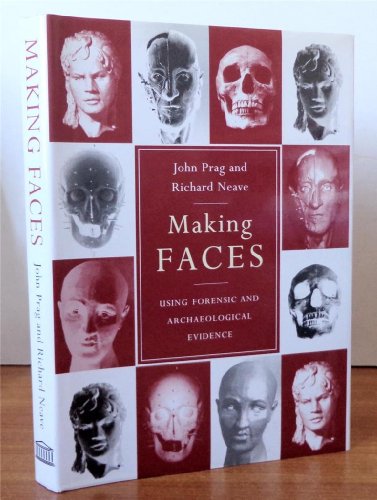
Making Faces : Using Forensic and Archaeological Evidence
Prag, John, Neave, Richard
ISBN 10: 0714117439 ISBN 13: 9780714117430
Verlag: British Museum Press, 1997
Gebraucht
Hardcover
Verkäufer
Better World Books Ltd, Dunfermline, Vereinigtes Königreich
Verkäuferbewertung 5 von 5 Sternen

AbeBooks-Verkäufer seit 13. Oktober 2008
Dieser Artikel ist nicht mehr verfügbar.
Beschreibung
Beschreibung:
Former library copy. Pages intact with minimal writing/highlighting. The binding may be loose and creased. Dust jackets/supplements are not included. Includes library markings. Stock photo provided. Product includes identifying sticker. Better World Books: Buy Books. Do Good. Bestandsnummer des Verkäufers 7967932-6
Inhaltsangabe:
In recent years, the authors have performed pioneering work reconstructing the facial appearance of ancient people using the evidence provided by their remains. Some were victims of sudden death, like the Minoan priest and priestess crushed in an earthquake while carrying out a human sacrifice around 1700 BC, or Lindow Man, the Iron Age body found in a peat bog near Manchester in 1984. Others have died peacefully, like Seianti, an Etruscan woman whose remains are in the British Museum, and some are famous, like the great King Midas of Phrygia. Facial reconstruction brings together numerous specialists, from dentists to geneticists, archaeologists to radiologists. Here, both archaeologist and medical artist explain the historical circumstances surrounding each body, and give first hand accounts of the search for evidence to recreate a likeness. The historical implications of such work are revealed in their confirmation that the body in tomb II at Vergina was that of Philip II, the father of Alexander the Great. Step-by-step illustrations accompany a full explanation of technique.
„Über diesen Titel“ kann sich auf eine andere Ausgabe dieses Titels beziehen.
Bibliografische Details
Titel: Making Faces : Using Forensic and ...
Verlag: British Museum Press
Erscheinungsdatum: 1997
Einband: Hardcover
Zustand: Good
Auflage: First Edition.