Inhaltsangabe
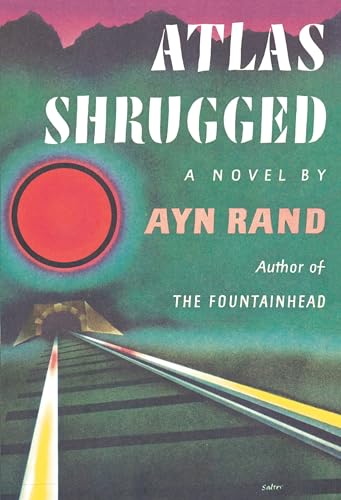
Peopled by larger-than-life heroes and villains, charged with towering questions of good and evil, Atlas Shrugged is Ayn Rand’s magnum opus: a philosophical revolution told in the form of an action thriller—nominated as one of America’s best-loved novels by PBS’s The Great American Read.
Who is John Galt? When he says that he will stop the motor of the world, is he a destroyer or a liberator? Why does he have to fight his battles not against his enemies but against those who need him most? Why does he fight his hardest battle against the woman he loves?
You will know the answer to these questions when you discover the reason behind the baffling events that play havoc with the lives of the amazing men and women in this book. You will discover why a productive genius becomes a worthless playboy...why a great steel industrialist is working for his own destruction...why a composer gives up his career on the night of his triumph...why a beautiful woman who runs a transcontinental railroad falls in love with the man she has sworn to kill.
Atlas Shrugged, a modern classic and Rand’s most extensive statement of Objectivism—her groundbreaking philosophy—offers the reader the spectacle of human greatness, depicted with all the poetry and power of one of the twentieth century’s leading artists.
Die Inhaltsangabe kann sich auf eine andere Ausgabe dieses Titels beziehen.
Über die Autorin bzw. den Autor
Born February 2, 1905, Ayn Rand published her first novel, We the Living, in 1936. Anthem followed in 1938. It was with the publication of The Fountainhead (1943) and Atlas Shrugged (1957) that she achieved her spectacular success. Rand’s unique philosophy, Objectivism, has gained a worldwide audience. The fundamentals of her philosophy are put forth in three nonfiction books, Introduction to Objectivist Epistemology, The Virtues of Selfishness, and Capitalism: The Unknown Ideal. They are all available in Signet editions, as is the magnificent statement of her artistic credo, The Romantic Manifesto.
Auszug. © Genehmigter Nachdruck. Alle Rechte vorbehalten.
PART ONE
NON-CONTRADICTION
Chapter I
THE THEME
“Who is John Galt?”
The light was ebbing, and Eddie Willers could not distinguish the bum’s face. The bum had said it simply, without expression. But from the sunset far at the end of the street, yellow glints caught his eyes, and the eyes looked straight at Eddie Willers, mocking and still—as if the question had been addressed to the causeless uneasiness within him.
“Why did you say that?” asked Eddie Willers, his voice tense.
The bum leaned against the side of the doorway; a wedge of broken glass behind him reflected the metal yellow of the sky.
“Why does it bother you?” he asked.
“It doesn’t,” snapped Eddie Willers.
He reached hastily into his pocket. The bum had stopped him and asked for a dime, then had gone on talking, as if to kill that moment and postpone the problem of the next. Pleas for dimes were so frequent in the streets these days that it was not necessary to listen to explanations and he had no desire to hear the details of this bum’s particular despair.
“Go get your cup of coffee,” he said, handing the dime to the shadow that had no face.
“Thank you, sir,” said the voice, without interest, and the face leaned forward for a moment. The face was wind-browned, cut by lines of weariness and cynical resignation; the eyes were intelligent.
Eddie Willers walked on, wondering why he always felt it at this time of day, this sense of dread without reason. No, he thought, not dread, there’s nothing to fear: just an immense, diffused apprehension, with no source or object. He had become accustomed to the feeling, but he could find no explanation for it; yet the bum had spoken as if he knew that Eddie felt it, as if he thought that one should feel it, and more: as if he knew the reason.
Eddie Willers pulled his shoulders straight, in conscientious self-discipline. He had to stop this, he thought; he was beginning to imagine things. Had he always felt it? He was thirty-two years old. He tried to think back. No, he hadn’t; but he could not remember when it had started. The feeling came to him suddenly, at random intervals, and now it was coming more often than ever. It’s the twilight, he thought; I hate the twilight.
The clouds and the shafts of skyscrapers against them were turning brown, like an old painting in oil, the color of a fading masterpiece. Long streaks of grime ran from under the pinnacles down the slender, soot-eaten walls. High on the side of a tower there was a crack in the shape of a motionless lightning, the length of ten stories. A jagged object cut the sky above the roofs; it was half a spire, still holding the glow of the sunset; the gold leaf had long since peeled off the other half. The glow was red and still, like the reflection of a fire: not an active fire, but a dying one which it is too late to stop.
No, thought Eddie Willers, there was nothing disturbing in the sight of the city. It looked as it had always looked.
He walked on, reminding himself that he was late in returning to the office. He did not like the task which he had to perform on his return, but it had to be done. So he did not attempt to delay it, but made himself walk faster.
He turned a corner. In the narrow space between the dark silhouettes of two buildings, as in the crack of a door, he saw the page of a gigantic calendar suspended in the sky.
It was the calendar that the mayor of New York had erected last year on the top of a building, so that citizens might tell the day of the month as they told the hours of the day, by glancing up at a public tower. A white rectangle hung over the city, imparting the date to the men in the streets below. In the rusty light of this evening’s sunset, the rectangle said: September 2.
Eddie Willers looked away. He had never liked the sight of that calendar. It disturbed him, in a manner he could not explain or define. The feeling seemed to blend with his sense of uneasiness; it had the same quality.
He thought suddenly that there was some phrase, a kind of quotation, that expressed what the calendar seemed to suggest. But he could not recall it. He walked, groping for a sentence that hung in his mind as an empty shape. He could neither fill it nor dismiss it. He glanced back. The white rectangle stood above the roofs, saying in immovable finality: September 2.
Eddie Willers shifted his glance down to the street, to a vegetable pushcart at the stoop of a brownstone house. He saw a pile of bright gold carrots and the fresh green of onions. He saw a clean white curtain blowing at an open window. He saw a bus turning a corner, expertly steered. He wondered why he felt reassured—and then, why he felt the sudden, inexplicable wish that these things were not left in the open, unprotected against the empty space above.
When he came to Fifth Avenue, he kept his eyes on the windows of the stores he passed. There was nothing he needed or wished to buy; but he liked to see the display of goods, any goods, objects made by men, to be used by men. He enjoyed the sight of a prosperous street; not more than every fourth one of the stores was out of business, its windows dark and empty.
He did not know why he suddenly thought of the oak tree. Nothing had recalled it. But he thought of it—and of his childhood summers on the Taggart estate. He had spent most of his childhood with the Taggart children, and now he worked for them, as his father and grandfather had worked for their father and grandfather.
The great oak tree had stood on a hill over the Hudson, in a lonely spot on the Taggart estate. Eddie Willers, aged seven, liked to come and look at that tree. It had stood there for hundreds of years, and he thought it would always stand there. Its roots clutched the hill like a fist with fingers sunk into the soil, and he thought that if a giant were to seize it by the top, he would not be able to uproot it, but would swing the hill and the whole of the earth with it, like a ball at the end of a string. He felt safe in the oak tree’s presence; it was a thing that nothing could change or threaten; it was his greatest symbol of strength.
One night, lightning struck the oak tree. Eddie saw it the next morning. It lay broken in half, and he looked into its trunk as into the mouth of a black tunnel. The trunk was only an empty shell; its heart had rotted away long ago; there was nothing inside—just a thin gray dust that was being dispersed by the whim of the faintest wind. The living power had gone, and the shape it left had not been able to stand without it.
Years later, he heard it said that children should be protected from shock, from their first knowledge of death, pain or fear. But these had never scarred him; his shock came when he stood very quietly, looking into the black hole of the trunk. It was an immense betrayal—the more terrible because he could not grasp what it was that had been betrayed. It was not himself, he knew, nor his trust; it was something else. He stood there for a while, making no sound, then he walked back to the house. He never spoke about it to anyone, then or since.
Eddie Willers shook his head, as the screech of a rusty mechanism changing a traffic light stopped him on the edge of a curb. He felt anger at himself. There was no reason that he had to remember the oak tree tonight. It meant nothing to him any longer, only a faint tinge of sadness—and somewhere within him, a drop of pain moving briefly and vanishing, like a raindrop on the glass of a window, its course in the shape of a question mark.
He wanted no sadness attached to his childhood; he loved its memories: any day of it he...
„Über diesen Titel“ kann sich auf eine andere Ausgabe dieses Titels beziehen.
Weitere beliebte Ausgaben desselben Titels

Suchergebnisse für Atlas Shrugged: (Centennial Edition)

Beispielbild für diese ISBN
Atlas Shrugged: (Centennial Edition)
Anbieter: Orion Tech, Kingwood, TX, USA
Verkäuferbewertung 5 von 5 Sternen

Paperback. Zustand: Good. Bestandsnummer des Verkäufers 0452286360-3-22518639
Gebraucht kaufen
EUR 5,49
Versand gratis
Versand innerhalb von USA
Versand innerhalb von USA
Anzahl: 1 verfügbar
Beispielbild für diese ISBN
Atlas Shrugged: (Centennial Edition)
Anbieter: World of Books (was SecondSale), Montgomery, IL, USA
Verkäuferbewertung 5 von 5 Sternen
Zustand: Good. Item in good condition. Textbooks may not include supplemental items i.e. CDs, access codes etc. Bestandsnummer des Verkäufers 00097423402
Gebraucht kaufen
EUR 5,50
Versand gratis
Versand innerhalb von USA
Versand innerhalb von USA
Anzahl: 1 verfügbar
Beispielbild für diese ISBN
Atlas Shrugged: (Centennial Edition)
Anbieter: Evergreen Goodwill, Seattle, WA, USA
Verkäuferbewertung 5 von 5 Sternen
paperback. Zustand: Good. Bestandsnummer des Verkäufers mon0000196281
Gebraucht kaufen
EUR 2,29
EUR 3,40 shipping
Versand innerhalb von USA
Versand innerhalb von USA
Anzahl: 2 verfügbar
Beispielbild für diese ISBN
Atlas Shrugged: (Centennial Edition)
Anbieter: ThriftBooks-Dallas, Dallas, TX, USA
Verkäuferbewertung 5 von 5 Sternen
Paperback. Zustand: Good. No Jacket. Pages can have notes/highlighting. Spine may show signs of wear. ~ ThriftBooks: Read More, Spend Less. Bestandsnummer des Verkäufers G0452286360I3N00
Gebraucht kaufen
EUR 6,01
Versand gratis
Versand innerhalb von USA
Versand innerhalb von USA
Anzahl: 1 verfügbar
Beispielbild für diese ISBN
Atlas Shrugged: (Centennial Edition)
Anbieter: ThriftBooks-Reno, Reno, NV, USA
Verkäuferbewertung 5 von 5 Sternen
Paperback. Zustand: Fair. No Jacket. Readable copy. Pages may have considerable notes/highlighting. ~ ThriftBooks: Read More, Spend Less. Bestandsnummer des Verkäufers G0452286360I5N00
Gebraucht kaufen
EUR 6,01
Versand gratis
Versand innerhalb von USA
Versand innerhalb von USA
Anzahl: 4 verfügbar
Beispielbild für diese ISBN
Atlas Shrugged: (Centennial Edition)
Anbieter: ThriftBooks-Dallas, Dallas, TX, USA
Verkäuferbewertung 5 von 5 Sternen
Paperback. Zustand: Fair. No Jacket. Readable copy. Pages may have considerable notes/highlighting. ~ ThriftBooks: Read More, Spend Less. Bestandsnummer des Verkäufers G0452286360I5N00
Gebraucht kaufen
EUR 6,01
Versand gratis
Versand innerhalb von USA
Versand innerhalb von USA
Anzahl: 5 verfügbar
Beispielbild für diese ISBN
Atlas Shrugged: (Centennial Edition)
Anbieter: ThriftBooks-Atlanta, AUSTELL, GA, USA
Verkäuferbewertung 5 von 5 Sternen
Paperback. Zustand: Fair. No Jacket. Readable copy. Pages may have considerable notes/highlighting. ~ ThriftBooks: Read More, Spend Less. Bestandsnummer des Verkäufers G0452286360I5N00
Gebraucht kaufen
EUR 6,01
Versand gratis
Versand innerhalb von USA
Versand innerhalb von USA
Anzahl: 4 verfügbar
Beispielbild für diese ISBN
Atlas Shrugged: (Centennial Edition)
Anbieter: ThriftBooks-Reno, Reno, NV, USA
Verkäuferbewertung 5 von 5 Sternen
Paperback. Zustand: Good. No Jacket. Pages can have notes/highlighting. Spine may show signs of wear. ~ ThriftBooks: Read More, Spend Less. Bestandsnummer des Verkäufers G0452286360I3N00
Gebraucht kaufen
EUR 6,01
Versand gratis
Versand innerhalb von USA
Versand innerhalb von USA
Anzahl: 1 verfügbar
Beispielbild für diese ISBN
Atlas Shrugged: (Centennial Edition)
Anbieter: ThriftBooks-Phoenix, Phoenix, AZ, USA
Verkäuferbewertung 5 von 5 Sternen
Paperback. Zustand: Fair. No Jacket. Readable copy. Pages may have considerable notes/highlighting. ~ ThriftBooks: Read More, Spend Less. Bestandsnummer des Verkäufers G0452286360I5N00
Gebraucht kaufen
EUR 6,01
Versand gratis
Versand innerhalb von USA
Versand innerhalb von USA
Anzahl: 4 verfügbar
Beispielbild für diese ISBN
Atlas Shrugged: (Centennial Edition)
Anbieter: ThriftBooks-Atlanta, AUSTELL, GA, USA
Verkäuferbewertung 5 von 5 Sternen
Paperback. Zustand: Good. No Jacket. Pages can have notes/highlighting. Spine may show signs of wear. ~ ThriftBooks: Read More, Spend Less. Bestandsnummer des Verkäufers G0452286360I3N00
Gebraucht kaufen
EUR 6,01
Versand gratis
Versand innerhalb von USA
Versand innerhalb von USA
Anzahl: 1 verfügbar