
Verwandte Artikel zu Apes and Human Evolution
Inhaltsangabe
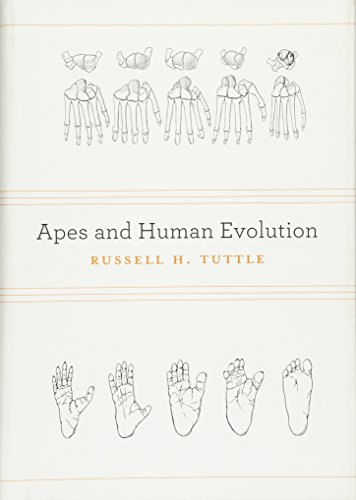
Russell Tuttle synthesizes a vast literature in primate evolution and behavior to explain how apes and humans evolved in relation to one another and why humans became a bipedal, tool-making, culture-inventing species distinct from other hominoids. He refutes the theory that we are sophisticated, instinctively aggressive and destructive killer apes.
Die Inhaltsangabe kann sich auf eine andere Ausgabe dieses Titels beziehen.
Über die Autorin bzw. den Autor
Russell H. Tuttle is Professor of Anthropology on the Committee on Evolutionary Biology, at the Morris Fishbein Center for the History of Science and Medicine, and in the College at the University of Chicago.
„Über diesen Titel“ kann sich auf eine andere Ausgabe dieses Titels beziehen.
Suchergebnisse für Apes and Human Evolution

Beispielbild für diese ISBN
Apes and Human Evolution
Verlag:
Harvard University Press, 2014
ISBN 10: 0674073169
ISBN 13: 9780674073166
Gebraucht
Hardcover
Anbieter: HPB-Red, Dallas, TX, USA
Verkäuferbewertung 5 von 5 Sternen

Hardcover. Zustand: Good. Connecting readers with great books since 1972! Used textbooks may not include companion materials such as access codes, etc. May have some wear or writing/highlighting. We ship orders daily and Customer Service is our top priority! Bestandsnummer des Verkäufers S_408356459
Gebraucht kaufen
EUR 32,82
EUR 3,25 Versand
Versand innerhalb von USA
Versand innerhalb von USA
Anzahl: 1 verfügbar
Beispielbild für diese ISBN
Apes and Human Evolution
Verlag:
Harvard University Press, 2014
ISBN 10: 0674073169
ISBN 13: 9780674073166
Gebraucht
Hardcover
Anbieter: ThriftBooks-Atlanta, AUSTELL, GA, USA
Verkäuferbewertung 5 von 5 Sternen
Hardcover. Zustand: Very Good. No Jacket. May have limited writing in cover pages. Pages are unmarked. ~ ThriftBooks: Read More, Spend Less. Bestandsnummer des Verkäufers G0674073169I4N00
Gebraucht kaufen
EUR 36,38
Versand gratis
Versand innerhalb von USA
Versand innerhalb von USA
Anzahl: 1 verfügbar
Foto des Verkäufers
Apes and Human Evolution
Verlag:
Harvard University Press, 2014
ISBN 10: 0674073169
ISBN 13: 9780674073166
Gebraucht
Hardcover
Anbieter: Solr Books, Lincolnwood, IL, USA
Verkäuferbewertung 5 von 5 Sternen
Zustand: good. This book is in Good condition. There may be some notes and highligting but otherwise the book is in overall good condition. Bestandsnummer des Verkäufers BCV.0674073169.G
Gebraucht kaufen
EUR 36,41
EUR 6,91 Versand
Versand innerhalb von USA
Versand innerhalb von USA
Anzahl: 1 verfügbar
Beispielbild für diese ISBN
Apes and Human Evolution
Verlag:
Harvard University Press, 2014
ISBN 10: 0674073169
ISBN 13: 9780674073166
Gebraucht
Hardcover
Anbieter: HPB Inc., Dallas, TX, USA
Verkäuferbewertung 5 von 5 Sternen
hardcover. Zustand: Very Good. Connecting readers with great books since 1972! Used books may not include companion materials, and may have some shelf wear or limited writing. We ship orders daily and Customer Service is our top priority! Bestandsnummer des Verkäufers S_478559463
Gebraucht kaufen
EUR 44,15
EUR 3,25 Versand
Versand innerhalb von USA
Versand innerhalb von USA
Anzahl: 1 verfügbar
Beispielbild für diese ISBN
Apes and Human Evolution
Verlag:
Harvard University Press, 2014
ISBN 10: 0674073169
ISBN 13: 9780674073166
Gebraucht
Hardcover
Erstausgabe
Anbieter: Indianabookbuyer, Bloomington, IN, USA
Verkäuferbewertung 5 von 5 Sternen
Hardcover. Zustand: Very Good. Zustand des Schutzumschlags: Very Good. 1st Edition. hardcover, fine, clean, unmarked pages/text, solid binding, good clean covers, fast shipping daily M-Sat. Bestandsnummer des Verkäufers F139 10062025
Gebraucht kaufen
EUR 50,99
EUR 4,98 Versand
Versand innerhalb von USA
Versand innerhalb von USA
Anzahl: 1 verfügbar
Beispielbild für diese ISBN
Apes and Human Evolution
Anbieter: PBShop.store UK, Fairford, GLOS, Vereinigtes Königreich
Verkäuferbewertung 5 von 5 Sternen
HRD. Zustand: New. New Book. Shipped from UK. Established seller since 2000. Bestandsnummer des Verkäufers WH-9780674073166
Neu kaufen
EUR 89,10
EUR 9,92 Versand
Versand von Vereinigtes Königreich nach USA
Versand von Vereinigtes Königreich nach USA
Anzahl: 6 verfügbar
Beispielbild für diese ISBN
Apes and Human Evolution (Hardcover)
Verlag:
Harvard University Press, Cambridge, Mass, 2014
ISBN 10: 0674073169
ISBN 13: 9780674073166
Neu
Hardcover
Anbieter: Grand Eagle Retail, Bensenville, IL, USA
Verkäuferbewertung 5 von 5 Sternen
Hardcover. Zustand: new. Hardcover. In this masterwork, Russell H. Tuttle synthesizes a vast research literature in primate evolution and behavior to explain how apes and humans evolved in relation to one another, and why humans became a bipedal, tool-making, culture-inventing species distinct from other hominoids. Along the way, he refutes the influential theory that men are essentially killer apes--sophisticated but instinctively aggressive and destructive beings.Situating humans in a broad context, Tuttle musters convincing evidence from morphology and recent fossil discoveries to reveal what early primates ate, where they slept, how they learned to walk upright, how brain and hand anatomy evolved simultaneously, and what else happened evolutionarily to cause humans to diverge from their closest relatives. Despite our genomic similarities with bonobos, chimpanzees, and gorillas, humans are unique among primates in occupying a symbolic niche of values and beliefs based on symbolically mediated cognitive processes. Although apes exhibit behaviors that strongly suggest they can think, salient elements of human culture--speech, mating proscriptions, kinship structures, and moral codes--are symbolic systems that are not manifest in ape niches.This encyclopedic volume is both a milestone in primatological research and a critique of what is known and yet to be discovered about human and ape potential. Russell Tuttle synthesizes a vast literature in primate evolution and behavior to explain how apes and humans evolved in relation to one another and why humans became a bipedal, tool-making, culture-inventing species distinct from other hominoids. He refutes the theory that we are sophisticated, instinctively aggressive and destructive killer apes. Shipping may be from multiple locations in the US or from the UK, depending on stock availability. Bestandsnummer des Verkäufers 9780674073166
Beispielbild für diese ISBN
Apes and Human Evolution (eng)
Anbieter: Brook Bookstore On Demand, Napoli, NA, Italien
Verkäuferbewertung 5 von 5 Sternen
Zustand: new. Bestandsnummer des Verkäufers 1b203aad460652d4b9bc423f0d0c877b
Neu kaufen
EUR 89,32
EUR 13,50 Versand
Versand von Italien nach USA
Versand von Italien nach USA
Anzahl: 6 verfügbar
Beispielbild für diese ISBN
Apes and Human Evolution
Anbieter: Kennys Bookshop and Art Galleries Ltd., Galway, GY, Irland
Verkäuferbewertung 5 von 5 Sternen
Zustand: New. Synthesizes a vast literature in primate evolution and behavior to explain how apes and humans evolved in relation to one another and why humans became a bipedal, tool-making, culture-inventing species distinct from other hominoids. The author refutes the theory that we are sophisticated, instinctively aggressive and destructive killer apes. Num Pages: 934 pages, Illustrations, maps. BIC Classification: PSAJ; PSVW79; PSX. Category: (G) General (US: Trade). Dimension: 240 x 164 x 58. Weight in Grams: 1542. . 2014. null. Hardcover. . . . . Bestandsnummer des Verkäufers V9780674073166
Neu kaufen
EUR 96,61
EUR 9,50 Versand
Versand von Irland nach USA
Versand von Irland nach USA
Anzahl: 1 verfügbar
Foto des Verkäufers
Apes and Human Evolution
Anbieter: Rarewaves.com USA, London, LONDO, Vereinigtes Königreich
Verkäuferbewertung 5 von 5 Sternen
Hardback. Zustand: New. In this masterwork, Russell H. Tuttle synthesizes a vast research literature in primate evolution and behavior to explain how apes and humans evolved in relation to one another, and why humans became a bipedal, tool-making, culture-inventing species distinct from other hominoids. Along the way, he refutes the influential theory that men are essentially killer apes-sophisticated but instinctively aggressive and destructive beings.Situating humans in a broad context, Tuttle musters convincing evidence from morphology and recent fossil discoveries to reveal what early primates ate, where they slept, how they learned to walk upright, how brain and hand anatomy evolved simultaneously, and what else happened evolutionarily to cause humans to diverge from their closest relatives. Despite our genomic similarities with bonobos, chimpanzees, and gorillas, humans are unique among primates in occupying a symbolic niche of values and beliefs based on symbolically mediated cognitive processes. Although apes exhibit behaviors that strongly suggest they can think, salient elements of human culture-speech, mating proscriptions, kinship structures, and moral codes-are symbolic systems that are not manifest in ape niches.This encyclopedic volume is both a milestone in primatological research and a critique of what is known and yet to be discovered about human and ape potential. Bestandsnummer des Verkäufers LU-9780674073166
Neu kaufen
EUR 109,98
Versand gratis
Versand von Vereinigtes Königreich nach USA
Versand von Vereinigtes Königreich nach USA
Anzahl: 3 verfügbar