
Verwandte Artikel zu Anabasis (Loeb Classical Library, Band 3)
Anabasis (Loeb Classical Library, Band 3) - Hardcover
Buch 6 von 7: Loeb Classical Library: Xenophon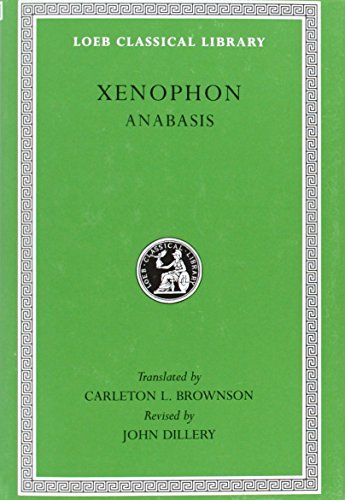
Inhaltsangabe
Xenophon (ca. 430 to ca. 354 BCE) was a wealthy Athenian and friend of Socrates. He left Athens in 401 and joined an expedition including ten thousand Greeks led by the Persian governor Cyrus against the Persian king. After the defeat of Cyrus, it fell to Xenophon to lead the Greeks from the gates of Babylon back to the coast through inhospitable lands. Later he wrote the famous vivid account of this 'March Up-Country' (Anabasis); but meanwhile he entered service under the Spartans against the Persian king, married happily, and joined the staff of the Spartan king, Agesilaus. But Athens was at war with Sparta in 394 and so exiled Xenophon. The Spartans gave him an estate near Elis where he lived for years writing and hunting and educating his sons. Reconciled to Sparta, Athens restored Xenophon to honour but he preferred to retire to Corinth.
Xenophon's Anabasis is a true story of remarkable adventures. Hellenica, a history of Greek affairs from 411 to 362, begins as a continuation of Thucydides' account. There are four works on Socrates (collected in Volume IV of the Loeb Xenophon edition). In Memorabilia Xenophon adds to Plato's picture of Socrates from a different viewpoint. The Apology is an interesting complement to Plato's account of Socrates' defense at his trial. Xenophon's Symposium portrays a dinner party at which Socrates speaks of love; and Oeconomicus has him giving advice on household management and married life. Cyropaedia, a historical romance on the education of Cyrus (the Elder), reflects Xenophon's ideas about rulers and government; the Loeb edition is in two volumes.
We also have his Hiero, a dialogue on government; Agesilaus, in praise of that king; Constitution of Lacedaemon (on the Spartan system); Ways and Means (on the finances of Athens); Manual for a Cavalry Commander; a good manual of Horsemanship; and a lively Hunting with Hounds. The Constitution of the Athenians, though clearly not by Xenophon, is an interesting document on politics at Athens. These eight books are collected in the last of the seven volumes of the Loeb Classical Library edition of Xenophon.
Die Inhaltsangabe kann sich auf eine andere Ausgabe dieses Titels beziehen.
Über die Autorinnen und Autoren
Carleton Lewis Brownson (1866-1948) was Professor of Classical Languages at the City College of New York.
John Dillery is Professor of Classics at the University of Virginia.
„Über diesen Titel“ kann sich auf eine andere Ausgabe dieses Titels beziehen.
Suchergebnisse für Anabasis (Loeb Classical Library, Band 3)

Foto des Verkäufers
Xenophon Anabasis
ISBN 10: 067499101X
ISBN 13: 9780674991019
Gebraucht
Hardcover
Anbieter: Aspen Book Co., Denver, CO, USA
Verkäuferbewertung 5 von 5 Sternen

Hardcover. Zustand: Like New. Revised edition 1998. This hardcover edition of "Anabasis" is in excellent condition. The binding is firm, and the pages are clean and free from inscriptions. There is no evidence of library markings. The cover shows minimal signs of wear, maintaining its structural integrity and aesthetic appeal. The absence of a dust jacket is noted, but the book itself remains well-preserved. Bestandsnummer des Verkäufers A5-B4-SAL-1228
Gebraucht kaufen
EUR 19,36
Versand gratis
Versand innerhalb von USA
Versand innerhalb von USA
Anzahl: 1 verfügbar
Beispielbild für diese ISBN
Xenophon: Anabasis (Loeb Classical Library) (English and Greek Edition)
Verlag:
Harvard University Press, 1998
ISBN 10: 067499101X
ISBN 13: 9780674991019
Gebraucht
Hardcover
Anbieter: HPB-Red, Dallas, TX, USA
Verkäuferbewertung 5 von 5 Sternen
Hardcover. Zustand: Good. Connecting readers with great books since 1972! Used textbooks may not include companion materials such as access codes, etc. May have some wear or writing/highlighting. We ship orders daily and Customer Service is our top priority! Bestandsnummer des Verkäufers S_484697883
Gebraucht kaufen
EUR 20,14
EUR 3,35 Versand
Versand innerhalb von USA
Versand innerhalb von USA
Anzahl: 1 verfügbar
Beispielbild für diese ISBN
Anabasis
Verlag:
Harvard University Press (edition Revised), 1998
ISBN 10: 067499101X
ISBN 13: 9780674991019
Gebraucht
Hardcover
Anbieter: BooksRun, Philadelphia, PA, USA
Verkäuferbewertung 5 von 5 Sternen
Hardcover. Zustand: Very Good. Revised. With dust jacket. It's a well-cared-for item that has seen limited use. The item may show minor signs of wear. All the text is legible, with all pages included. It may have slight markings and/or highlighting. Bestandsnummer des Verkäufers 067499101X-11-1-29
Gebraucht kaufen
EUR 23,89
Versand gratis
Versand innerhalb von USA
Versand innerhalb von USA
Anzahl: 1 verfügbar
Beispielbild für diese ISBN
Anabasis
Verlag:
Harvard University Press, 1998
ISBN 10: 067499101X
ISBN 13: 9780674991019
Gebraucht
Hardcover
Anbieter: ThriftBooks-Atlanta, AUSTELL, GA, USA
Verkäuferbewertung 5 von 5 Sternen
Hardcover. Zustand: Very Good. No Jacket. May have limited writing in cover pages. Pages are unmarked. ~ ThriftBooks: Read More, Spend Less. Bestandsnummer des Verkäufers G067499101XI4N00
Gebraucht kaufen
EUR 24,81
Versand gratis
Versand innerhalb von USA
Versand innerhalb von USA
Anzahl: 1 verfügbar
Beispielbild für diese ISBN
Anabasis (Rev)
Verlag:
Harvard University Press December 1998, 1998
ISBN 10: 067499101X
ISBN 13: 9780674991019
Gebraucht
Hardcover
Anbieter: Old Goat Books, Waterloo, ON, Kanada
Verkäuferbewertung 3 von 5 Sternen

Hardcover. Zustand: Near Fine. Zustand des Schutzumschlags: No DJ. Binding is square, tight, and solid. Pages are clean, unmarked, and not bent. Missing dustjacket. Bestandsnummer des Verkäufers 22373
Gebraucht kaufen
EUR 18,39
EUR 14,28 Versand
Versand von Kanada nach USA
Versand von Kanada nach USA
Anzahl: 1 verfügbar
Foto des Verkäufers
Xenophon : Anabasis
Anbieter: GreatBookPrices, Columbia, MD, USA
Verkäuferbewertung 5 von 5 Sternen
Zustand: New. Bestandsnummer des Verkäufers 414493-n
Neu kaufen
EUR 31,66
EUR 2,36 Versand
Versand innerhalb von USA
Versand innerhalb von USA
Anzahl: Mehr als 20 verfügbar
Foto des Verkäufers
Anabasis
Anbieter: Rarewaves.com USA, London, LONDO, Vereinigtes Königreich
Verkäuferbewertung 5 von 5 Sternen
Hardback. Zustand: New. Greek mercenaries on the march.Xenophon (ca. 430 to ca. 354 BC) was a wealthy Athenian and friend of Socrates. He left Athens in 401 and joined an expedition including ten thousand Greeks led by the Persian governor Cyrus against the Persian king. After the defeat of Cyrus, it fell to Xenophon to lead the Greeks from the gates of Babylon back to the coast through inhospitable lands. Later he wrote the famous vivid account of this "March Up-Country" (Anabasis); but meanwhile he entered service under the Spartans against the Persian king, married happily, and joined the staff of the Spartan king, Agesilaus. But Athens was at war with Sparta in 394 and so exiled Xenophon. The Spartans gave him an estate near Elis where he lived for years writing and hunting and educating his sons. Reconciled to Sparta, Athens restored Xenophon to honor, but he preferred to retire to Corinth. Xenophon's Anabasis is a true story of remarkable adventures. Hellenica, a history of Greek affairs from 411 to 362, begins as a continuation of Thucydides' account. There are four works on Socrates (collected in LCL 168). In Memorabilia Xenophon adds to Plato's picture of Socrates from a different viewpoint. The Apology is an interesting complement to Plato's account of Socrates' defense at his trial. Xenophon's Symposium portrays a dinner party at which Socrates speaks of love; and Oeconomicus has him giving advice on household management and married life. Cyropaedia, a historical romance on the education of Cyrus (the Elder), reflects Xenophon's ideas about rulers and government; the Loeb edition is in two volumes. We also have his Hiero, a dialogue on government; Agesilaus, in praise of that king; Constitution of Lacedaemon (on the Spartan system); Ways and Means (on the finances of Athens); Manual for a Cavalry Commander; a good manual of Horsemanship; and a lively Hunting with Hounds. The Constitution of the Athenians, though clearly not by Xenophon, is an interesting document on politics at Athens. These eight books are collected in the last of the seven volumes of the Loeb Classical Library edition of Xenophon. Bestandsnummer des Verkäufers LU-9780674991019
Neu kaufen
EUR 34,10
Versand gratis
Versand von Vereinigtes Königreich nach USA
Versand von Vereinigtes Königreich nach USA
Anzahl: Mehr als 20 verfügbar
Beispielbild für diese ISBN
Anabasis (Loeb Classical Library 90): 090
Anbieter: Chiron Media, Wallingford, Vereinigtes Königreich
Verkäuferbewertung 5 von 5 Sternen
hardcover. Zustand: New. Brand new book, sourced directly from publisher. Dispatch time is 24-48 hours from our warehouse. Book will be sent in robust, secure packaging to ensure it reaches you securely. Bestandsnummer des Verkäufers 6666-GRD-9780674991019
Neu kaufen
EUR 29,99
EUR 5,96 Versand
Versand von Vereinigtes Königreich nach USA
Versand von Vereinigtes Königreich nach USA
Anzahl: 2 verfügbar
Beispielbild für diese ISBN
Anabasis: 3 (Loeb Classical Library)
Verlag:
Harvard University Press 2001-07-01, 2001
ISBN 10: 067499101X
ISBN 13: 9780674991019
Neu
Hardcover
Anbieter: Chiron Media, Wallingford, Vereinigtes Königreich
Verkäuferbewertung 5 von 5 Sternen
Hardcover. Zustand: New. Brand new book, sourced directly from publisher. Dispatch time is 3-4 days from our warehouse. Book will be sent in robust, secure packaging to ensure it reaches you securely. Bestandsnummer des Verkäufers 6666-WLY-9780674991019
Neu kaufen
EUR 31,02
EUR 5,96 Versand
Versand von Vereinigtes Königreich nach USA
Versand von Vereinigtes Königreich nach USA
Anzahl: 20 verfügbar
Foto des Verkäufers
Anabasis (Hardcover)
Verlag:
Harvard University Press, Cambridge, Mass, 1998
ISBN 10: 067499101X
ISBN 13: 9780674991019
Neu
Hardcover
Anbieter: Grand Eagle Retail, Bensenville, IL, USA
Verkäuferbewertung 5 von 5 Sternen
Hardcover. Zustand: new. Hardcover. Xenophon (ca. 430 to ca. 354 BCE) was a wealthy Athenian and friend of Socrates. He left Athens in 401 and joined an expedition including ten thousand Greeks led by the Persian governor Cyrus against the Persian king. After the defeat of Cyrus, it fell to Xenophon to lead the Greeks from the gates of Babylon back to the coast through inhospitable lands. Later he wrote the famous vivid account of this 'March Up-Country' (Anabasis); but meanwhile he entered service under the Spartans against the Persian king, married happily, and joined the staff of the Spartan king, Agesilaus. But Athens was at war with Sparta in 394 and so exiled Xenophon. The Spartans gave him an estate near Elis where he lived for years writing and hunting and educating his sons. Reconciled to Sparta, Athens restored Xenophon to honour but he preferred to retire to Corinth.Xenophon's Anabasis is a true story of remarkable adventures. Hellenica, a history of Greek affairs from 411 to 362, begins as a continuation of Thucydides' account. There are four works on Socrates (collected in Volume IV of the Loeb Xenophon edition). In Memorabilia Xenophon adds to Plato's picture of Socrates from a different viewpoint. The Apology is an interesting complement to Plato's account of Socrates' defense at his trial. Xenophon's Symposium portrays a dinner party at which Socrates speaks of love; and Oeconomicus has him giving advice on household management and married life. Cyropaedia, a historical romance on the education of Cyrus (the Elder), reflects Xenophon's ideas about rulers and government; the Loeb edition is in two volumes.We also have his Hiero, a dialogue on government; Agesilaus, in praise of that king; Constitution of Lacedaemon (on the Spartan system); Ways and Means (on the finances of Athens); Manual for a Cavalry Commander; a good manual of Horsemanship; and a lively Hunting with Hounds. The Constitution of the Athenians, though clearly not by Xenophon, is an interesting document on politics at Athens. These eight books are collected in the last of the seven volumes of the Loeb Classical Library edition of Xenophon. The Anabasis by Xenophon (c. 430 c. 354 BCE) is an eyewitness account of Greek mercenaries' challenging 'March Up-Country' from Babylon back to the coast of Asia Minor under Xenophon s guidance in 401 BCE, after their leader Cyrus the Younger fell in a failed campaign against his brother. Shipping may be from multiple locations in the US or from the UK, depending on stock availability. Bestandsnummer des Verkäufers 9780674991019