
Verwandte Artikel zu Metaphysics: Books 1-9 (Loeb Classical Library)
Metaphysics: Books 1-9 (Loeb Classical Library) - Hardcover
Buch 2 von 23: Loeb Classical Library: Aristotle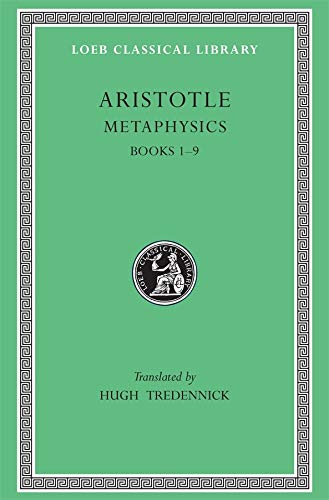
Inhaltsangabe
Aristotle, great Greek philosopher, researcher, reasoner, and writer, born at Stagirus in 384 BCE, was the son of Nicomachus, a physician, and Phaestis. He studied under Plato at Athens and taught there (367–47); subsequently he spent three years at the court of a former pupil, Hermeias, in Asia Minor and at this time married Pythias, one of Hermeias’s relations. After some time at Mitylene, in 343–2 he was appointed by King Philip of Macedon to be tutor of his teen-aged son Alexander. After Philip’s death in 336, Aristotle became head of his own school (of “Peripatetics”), the Lyceum at Athens. Because of anti-Macedonian feeling there after Alexander’s death in 323, he withdrew to Chalcis in Euboea, where he died in 322.Nearly all the works Aristotle prepared for publication are lost; the priceless ones extant are lecture-materials, notes, and memoranda (some are spurious). They can be categorized as follows:I. Practical: Nicomachean Ethics; Great Ethics (Magna Moralia); Eudemian Ethics; Politics; Oeconomica (on the good of the family); Virtues and Vices.
II. Logical: Categories; On Interpretation; Analytics (Prior and Posterior); On Sophistical Refutations; Topica.
III. Physical: Twenty-six works (some suspect) including astronomy, generation and destruction, the senses, memory, sleep, dreams, life, facts about animals, etc.
IV. Metaphysics: on being as being.
V. On Art: Art of Rhetoric and Poetics.
VI. Other works including the Athenian Constitution; more works also of doubtful authorship.
VII. Fragments of various works such as dialogues on philosophy and literature; and of treatises on rhetoric, politics and metaphysics.The Loeb Classical Library® edition of Aristotle is in twenty-three volumes.
Die Inhaltsangabe kann sich auf eine andere Ausgabe dieses Titels beziehen.
Über die Autorin bzw. den Autor
Hugh Tredennick (1899-1982) was Professor of Classics at Royal Holloway College and Dean of the Faculty of Arts at London University.
„Über diesen Titel“ kann sich auf eine andere Ausgabe dieses Titels beziehen.
Suchergebnisse für Metaphysics: Books 1-9 (Loeb Classical Library)

Beispielbild für diese ISBN
Metaphysics, Volume I
Anbieter: Open Books, Chicago, IL, USA
Verkäuferbewertung 5 von 5 Sternen

Hardcover. Zustand: Acceptable. 1989 printing. Contains pencil notes and underlining. Jacket wear. Previous owner's name written inside book. Open Books is a nonprofit social venture that provides literacy experiences for thousands of readers each year through inspiring programs and creative capitalization of books. Bestandsnummer des Verkäufers mon0000846610
Gebraucht kaufen
EUR 13,41
EUR 3,58 Versand
Versand innerhalb von USA
Versand innerhalb von USA
Anzahl: 1 verfügbar
Beispielbild für diese ISBN
ARISTOTLE: METAPHYICS, BOOKS I-IX
Verlag:
William Heinemann & G. P. Putnam's Sons, 1933
ISBN 10: 0674992997
ISBN 13: 9780674992993
Gebraucht
Hardcover
Anbieter: Ancient World Books, Toronto, ON, Kanada
Verkäuferbewertung 5 von 5 Sternen
Hardcover. Zustand: Very Good. Zustand des Schutzumschlags: No Dust Jacket. Scholar's name to ffep (A. R. Littlewood) with additional name. Bookprize plate to inner cover. Top edges gilt.; Loeb Classical Library No. 271; 704 pages. Bestandsnummer des Verkäufers 45121
Gebraucht kaufen
EUR 21,23
EUR 6,72 Versand
Versand von Kanada nach USA
Versand von Kanada nach USA
Anzahl: 1 verfügbar
Foto des Verkäufers
Aristotle : Metaphysics, Books I-IX
Anbieter: GreatBookPrices, Columbia, MD, USA
Verkäuferbewertung 5 von 5 Sternen
Zustand: New. Bestandsnummer des Verkäufers 414470-n
Neu kaufen
EUR 29,40
EUR 2,37 Versand
Versand innerhalb von USA
Versand innerhalb von USA
Anzahl: 2 verfügbar
Beispielbild für diese ISBN
ARISTOTLE XVII: Metaphysics, Volume I: Books I-IX (Loeb Classical Library)
Verlag:
Loeb Classical Library, Harvard University Press, 1933
ISBN 10: 0674992997
ISBN 13: 9780674992993
Neu
Hardcover
Erstausgabe
Anbieter: Mnemosyne, New Haven, CT, USA
Verkäuferbewertung 5 von 5 Sternen
Hardcover. Zustand: New. Zustand des Schutzumschlags: New. 1st Edition. NEW First Edition (Orig.1937, Revised Second Edition 1957) Ninth Printing (1989): NEW mylar-protected jacket * 4.26" x 6.62" x 1.00", 0.36 kg, xl+476 (516) pp * ABOUT THE PHILOSOPHER; ARISTOTLE, great Greek philosopher, researcher, reasoner, & writer, born at Stagirus in 384 BC, was the son of a physician. He studied under Plato at Athens & taught there (367-347); subsequently he spent 3 yrs at the court of a former pupil in Asia Minor. After some time at Mitylene, in 343-342 he was appointed by King Philip of Macedon to be tutor of his teen-aged son Alexander. After Philip's death in 336, Aristotle became head of his own school (of "Peripatetics"), the Lyceum at Athens. Because of anti-Macedonian feeling there after Alexander's death in 323, he withdrew to Chalcis in Euboea, where he died in 322. * ABOUT THE WORKS OF ARISTOTLE: Nearly all the works Aristotle prepared for publication are lost; the priceless ones extant are lecture-materials, notes, & memoranda (some are spurious). They can be categorized as follows: I. PRACTICAL: Nicomachean Ethics; Great Ethics (Magna Moralia); Eudemian Ethics; Politics; Economics (on the good of the family); On Virtues & Vices. II. LOGICAL: Categories; Analytics (Prior, Posterior); Interpretation; Refutations used by Sophists; Topica. III. PHYSICAL: 26 works (some suspect) including astronomy, generation & destruction, the senses, memory, sleep, dreams, life, facts about animals, etc. IV. METAPHYSICS: on being as being. V. ART: Rhetoric & Poetics. VI. OTHER WORKS: including the Constitution of Athens; more works also of doubtful authorship.VII. FRAGMENTS of various works such as dialogues on philosophy and literature; and of treatises on rhetoric, politics, and metaphysics. * The LOEB CLASSICAL LIBRARY Edition of Aristotle is in 23 volumes. * ABOUT THE TRANSLATOR: HUGH TREDDENICK (1899-1982) was Professor of Classics at Royal Holloway College and Dean of the Faculty of Arts at London University * THE LOEB CLASSICAL LIBRARY is the only existing series of books which, through original texts & facing English translations, give access to all that is important in Greek & Latin literature. A complete list of titles is available on request. * SHIPPING: MNEMOSYNE carefully wraps, labels & custom-packages this fine book for FREE domestic shipment via USPS MEDIA MAIL or USPS PRIORITY MAIL for a nominal additional fee & via efficient USPS FIRST CLASS MAIL to all international shipments at our posted rates. Bestandsnummer des Verkäufers 011564
Foto des Verkäufers
Metaphysics, Volume I
Anbieter: Rarewaves.com USA, London, LONDO, Vereinigtes Königreich
Verkäuferbewertung 5 von 5 Sternen
Hardback. Zustand: New. First things.Aristotle, great Greek philosopher, researcher, reasoner, and writer, born at Stagirus in 384 BC, was the son of a physician. He studied under Plato at Athens and taught there (367-347); subsequently he spent three years at the court of a former pupil in Asia Minor. After some time at Mitylene, in 343-342 he was appointed by King Philip of Macedon to be tutor of his teen-aged son Alexander. After Philip's death in 336, Aristotle became head of his own school (of "Peripatetics"), the Lyceum at Athens. Because of anti-Macedonian feeling there after Alexander's death in 323, he withdrew to Chalcis in Euboea, where he died in 322.Nearly all the works Aristotle prepared for publication are lost; the priceless ones extant are lecture-materials, notes, and memoranda (some are spurious). They can be categorized as follows:I Practical: Nicomachean Ethics; Great Ethics (Magna Moralia); Eudemian Ethics; Politics; Economics (on the good of the family); On Virtues and Vices.II Logical: Categories; Analytics (Prior and Posterior); Interpretation; Refutations used by Sophists; Topica.III Physical: Twenty-six works (some suspect) including astronomy, generation and destruction, the senses, memory, sleep, dreams, life, facts about animals, etc.IV Metaphysics: on being as being.V Art: Rhetoric and Poetics.VI Other works including the Constitution of Athens; more works also of doubtful authorship.VII Fragments of various works such as dialogues on philosophy and literature; and of treatises on rhetoric, politics, and metaphysics.The Loeb Classical Library edition of Aristotle is in twenty-three volumes. Bestandsnummer des Verkäufers LU-9780674992993
Neu kaufen
EUR 32,85
Versand gratis
Versand von Vereinigtes Königreich nach USA
Versand von Vereinigtes Königreich nach USA
Anzahl: Mehr als 20 verfügbar
Beispielbild für diese ISBN
Metaphysics, Volume I: Books 19
Anbieter: Time-Honored Books, Franklin, IN, USA
Verkäuferbewertung 4 von 5 Sternen

Hardcover. Zustand: Fine. Zustand des Schutzumschlags: Near Fine. 5th or later Edition. ex libris stamp only. Greek-English. Aristotle, great Greek philosopher, researcher, reasoner, and writer, born at Stagirus in 384 BC, was the son of a physician. He studied under Plato at Athens and taught there (367347); subsequently he spent three years at the court of a former pupil in Asia Minor. After some time at Mitylene, in 343342 he was appointed by King Philip of Macedon to be tutor of his teen-aged son Alexander. After Philip's death in 336, Aristotle became head of his own school (of "Peripatetics"), the Lyceum at Athens. Because of anti-Macedonian feeling there after Alexander's death in 323, he withdrew to Chalcis in Euboea, where he died in 322. Nearly all the works Aristotle prepared for publication are lost; the priceless ones extant are lecture-materials, notes, and memoranda (some are spurious). They can be categorized as follows: I Practical: Nicomachean Ethics; Great Ethics (Magna Moralia); Eudemian Ethics; Politics; Economics (on the good of the family); On Virtues and Vices. II Logical: Categories; Analytics (Prior and Posterior); Interpretation; Refutations used by Sophists; Topica. III Physical: Twenty-six works (some suspect) including astronomy, generation and destruction, the senses, memory, sleep, dreams, life, facts about animals, etc. IV Metaphysics: on being as being. V Art: Rhetoric and Poetics. VI Other works including the Constitution of Athens; more works also of doubtful authorship. VII Fragments of various works such as dialogues on philosophy and literature; and of treatises on rhetoric, politics, and metaphysics. Bestandsnummer des Verkäufers ABE-1771939391885
Gebraucht kaufen
EUR 27,68
EUR 6,94 Versand
Versand innerhalb von USA
Versand innerhalb von USA
Anzahl: 1 verfügbar
Foto des Verkäufers
Aristotle : Metaphysics, Books I-IX
Verlag:
Harvard University Press, 1933
ISBN 10: 0674992997
ISBN 13: 9780674992993
Gebraucht
Hardcover
Anbieter: GreatBookPrices, Columbia, MD, USA
Verkäuferbewertung 5 von 5 Sternen
Zustand: As New. Unread book in perfect condition. Bestandsnummer des Verkäufers 414470
Gebraucht kaufen
EUR 33,18
EUR 2,37 Versand
Versand innerhalb von USA
Versand innerhalb von USA
Anzahl: 2 verfügbar
Beispielbild für diese ISBN
Metaphysics, Volume I
Anbieter: PBShop.store UK, Fairford, GLOS, Vereinigtes Königreich
Verkäuferbewertung 5 von 5 Sternen
HRD. Zustand: New. New Book. Shipped from UK. Established seller since 2000. Bestandsnummer des Verkäufers WL-9780674992993
Neu kaufen
EUR 30,65
EUR 4,99 Versand
Versand von Vereinigtes Königreich nach USA
Versand von Vereinigtes Königreich nach USA
Anzahl: 15 verfügbar
Beispielbild für diese ISBN
Metaphysics, Volume I: Books 1-9 (Loeb Classical Library 271)
Anbieter: Chiron Media, Wallingford, Vereinigtes Königreich
Verkäuferbewertung 5 von 5 Sternen
Hardcover. Zustand: New. Brand new book, sourced directly from publisher. Dispatch time is 24-48 hours from our warehouse. Book will be sent in robust, secure packaging to ensure it reaches you securely. Bestandsnummer des Verkäufers 6666-GRD-9780674992993
Neu kaufen
EUR 30,11
EUR 5,99 Versand
Versand von Vereinigtes Königreich nach USA
Versand von Vereinigtes Königreich nach USA
Anzahl: 2 verfügbar
Foto des Verkäufers
Metaphysics, Volume I (Hardcover)
Verlag:
Harvard University Press, Cambridge, Mass, 1933
ISBN 10: 0674992997
ISBN 13: 9780674992993
Neu
Hardcover
Anbieter: Grand Eagle Retail, Bensenville, IL, USA
Verkäuferbewertung 5 von 5 Sternen
Hardcover. Zustand: new. Hardcover. Aristotle, great Greek philosopher, researcher, reasoner, and writer, born at Stagirus in 384 BCE, was the son of Nicomachus, a physician, and Phaestis. He studied under Plato at Athens and taught there (36747); subsequently he spent three years at the court of a former pupil, Hermeias, in Asia Minor and at this time married Pythias, one of Hermeias's relations. After some time at Mitylene, in 3432 he was appointed by King Philip of Macedon to be tutor of his teen-aged son Alexander. After Philip's death in 336, Aristotle became head of his own school (of "Peripatetics"), the Lyceum at Athens. Because of anti-Macedonian feeling there after Alexander's death in 323, he withdrew to Chalcis in Euboea, where he died in 322.Nearly all the works Aristotle prepared for publication are lost; the priceless ones extant are lecture-materials, notes, and memoranda (some are spurious). They can be categorized as follows:I. Practical: Nicomachean Ethics; Great Ethics (Magna Moralia); Eudemian Ethics; Politics; Oeconomica (on the good of the family); Virtues and Vices.II. Logical: Categories; On Interpretation; Analytics (Prior and Posterior); On Sophistical Refutations; Topica.III. Physical: Twenty-six works (some suspect) including astronomy, generation and destruction, the senses, memory, sleep, dreams, life, facts about animals, etc.IV. Metaphysics: on being as being.V. On Art: Art of Rhetoric and Poetics.VI. Other works including the Athenian Constitution; more works also of doubtful authorship.VII. Fragments of various works such as dialogues on philosophy and literature; and of treatises on rhetoric, politics and metaphysics.The Loeb Classical Library? edition of Aristotle is in twenty-three volumes. Nearly all the works Aristotle (384322 BC) prepared for publication are lost; the priceless ones extant are lecture-materials, notes, and memoranda (some are spurious). They can be categorized as practical; logical; physical; metaphysical; on art; other; fragments. Shipping may be from multiple locations in the US or from the UK, depending on stock availability. Bestandsnummer des Verkäufers 9780674992993