
Verwandte Artikel zu A Bone to Pick: The good and bad news about food, with...
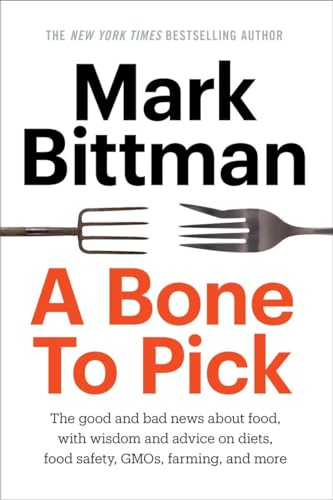
A Bone to Pick: The good and bad news about food, with wisdom and advice on diets, food safety, GMOs, farming, and more - Hardcover
Inhaltsangabe
Since his New York Times op-ed column debuted in 2011, Mark Bittman has emerged as one of our most impassioned and opinionated observers of the food landscape. The Times’ only dedicated opinion columnist covering the food beat, Bittman routinely makes readers think twice about how the food we eat is produced, distributed, and cooked, and shines a bright light on the profound impact that diet—both good and bad—can have on our health and that of the planet.
In A Bone to Pick, Mark’s most memorable and thought-provoking columns are compiled into a single volume for the first time. As abundant and safe as the American food supply appears to be, the state of our health reveals the presence of staggering deficiencies in both the system that produces food and the forces that regulate it. Bittman leaves no issue unexamined; agricultural practices, government legislation, fad diets, and corporate greed all come under scrutiny and show that the issues governing what ends up in our market basket and on our tables are both complex and often deliberately confusing. Unabashedly opinionated and invariably thought provoking, Bittman’s columns have helped readers decipher arcane policy, unpack scientific studies, and deflate affronts to common sense when it comes to determining what “eating well” truly means. As urgent as the situation is, Mark contends that we can be optimistic about the future of our food and its impact on our health, as slow-food movements, better school-lunch programs, and even “healthy fast food” become part of the norm.
At once inspiring, enraging, and enlightening, A Bone to Pick is an essential resource for every reader eager to understand not only the complexities inherent in the American food system, but also the many opportunities that exist to improve it.
Die Inhaltsangabe kann sich auf eine andere Ausgabe dieses Titels beziehen.
Über die Autorin bzw. den Autor
MARK BITTMAN is one of the country’s best-known and most widely respected food writers. His How to Cook Everything books, with over a million copies in print, are a mainstay of the modern kitchen, and his manifesto on pursuing a part-time vegan diet, VB6, debuted at #1 on the New York Times bestseller list. Bittman's writings on food policy and cooking appear in the Dining, Op-Ed, and Magazine sections of the New York Times.
Auszug. © Genehmigter Nachdruck. Alle Rechte vorbehalten.
1
Big Ag, Sustainability, and What’s in Between
You can eat without farms, but for the last 10,000 years few humans have. For about 9,900 of those years, though, all farms were small and--at least arguably--more or less sustainable. That is, they put back into the earth, in the form of animal and even human waste and plant matter, just about as much as they took out. There were no synthetic fertilizers, pesticides, and so on, and everything was pretty much what we’d now call organic.
Much has changed. The dominant form of agriculture in the West is industrial, large-scale, fossil fuel and chemical dependent, and heavy on water use. It isn’t sustainable--that is, it uses far more in resources than it returns to the land--and it poisons land, sea, animals, workers, and consumers. It’s used primarily to grow a half dozen crops, among them corn and soybeans, much of which, sadly, are fed to animals, used as fuel (ethanol), or converted into the kind of junk that’s largely responsible for obesity. And despite the fact that there’s enough food produced to feed everyone on the planet adequately, tens of millions of Americans, and more than a billion people worldwide, struggle with hunger.
In short, it’s a terrible “system,” and one that could be improved almost immeasurably if just a little bit of care were taken.
How to Feed the World
It’s been 50 years since President John F. Kennedy spoke of ending world hunger, yet on the eve of World Food Day, Oct. 16, the situation remains dire. The question “How will we feed the world?” implies that we have no choice but to intensify industrial agriculture, with more high-tech seeds, chemicals, and collateral damage. Yet there are other, better options.
Something approaching a billion people are hungry, a number that’s been fairly stable for more than 50 years, although it has declined as a percentage of the total population.
“Feeding the world” might as well be a marketing slogan for Big Ag, a euphemism for “Let’s ramp up sales,” as if producing more cars would guarantee that everyone had one. But if it worked that way, surely the rate of hunger in the United States would not be the highest percentage of any developed nation, a rate closer to that of Indonesia than of Britain.
The world has long produced enough calories, around 2,700 per day per human, more than enough to meet the United Nations projection of a population of nine billion in 2050, up from the current seven billion. There are hungry people not because food is lacking, but because not all of those calories go to feed humans (a third go to feed animals, nearly 5 percent are used to produce biofuels, and as much as a third is wasted, all along the food chain).
The current system is neither environmentally nor economically sustainable, dependent as it is on fossil fuels and routinely resulting in environmental damage. It’s geared to letting the half of the planet with money eat well while everyone else scrambles to eat as cheaply as possible.
While a billion people are hungry, about three billion people are not eating well, according to the United Nations Food and Agriculture Organization, if you count obese and overweight people alongside those with micronutrient deficiencies. Paradoxically, as increasing numbers of people can afford to eat well, food for the poor will become scarcer, because demand for animal products will surge, and they require more resources like grain to produce. A global population growth of less than 30 percent is projected to double the demand for animal products. But there is not the land, water, or fertilizer--let alone the health care funding--for the world to consume Western levels of meat.
If we want to ensure that poor people eat and also do a better job than “modern” farming does at preserving the earth’s health and productivity, we must stop assuming that the industrial model of food production and its accompanying disease-producing diet is both inevitable and desirable. I have dozens of friends and colleagues who say things like, “I hate industrial ag, but how will we feed the poor?”
Let’s at last recognize that there are two food systems, one industrial and one of small landholders, or peasants if you prefer. The peasant system is not only here for good, it’s arguably more efficient than the industrial model. According to the ETC Group, a research and advocacy organization based in Ottawa, the industrial food chain uses 70 percent of agricultural resources to provide 30 percent of the world’s food, whereas what ETC calls “the peasant food web” produces the remaining 70 percent using only 30 percent of the resources.
Yes, it is true that high-yielding varieties of any major commercial monoculture crop will produce more per acre than peasant-bred varieties of the same crop. But by diversifying crops, mixing plants and animals, planting trees--which provide not only fruit but shelter for birds, shade, fertility through nutrient recycling, and more--small landholders can produce more food (and more kinds of food) with fewer resources and lower transportation costs (which means a lower carbon footprint), while providing greater food security, maintaining greater biodiversity, and even better withstanding the effects of climate change. (Not only that: their techniques have been demonstrated to be effective on larger-scale farms, even in the Corn Belt of the United States.) And all of this without the level of subsidies and other support that industrial agriculture has received in the last half-century, and despite the efforts of Big Ag to become even more dominant.
In fact if you define “productivity” not as pounds per acre but as the number of people fed per that same area, you find that the United States ranks behind both China and India (and indeed the world average), and roughly the same as Bangladesh, because so much of what we grow goes to animals and biofuels. (Regardless of how food is produced, delivered, and consumed, waste remains at about one third.) Thus, as the ETC’s research director, Kathy Jo Wetter, says, “It would be lunacy to hold that the current production paradigm based on multinational agribusiness is the only credible starting point for achieving food security.” This is especially true given all of its downsides.
As Raj Patel, a fellow at the Institute for Food and Development Policy, puts it, “The playing field has been tilted against peasants for centuries, and they’ve still managed to feed more people than industrial agriculture. With the right kinds of agroecological training and the freedom to shape the food system on fair terms, it’s a safe bet that they’ll be able to feed themselves, and others as well.”
Yet obviously not all poor people feed themselves well, because they lack the essentials: land, water, energy, and nutrients. Often that’s a result of cruel dictatorship (North Korea) or war, displacement and strife (the Horn of Africa, Haiti, and many other places), or drought or other calamities. But it can also be an intentional and direct result of land and food speculation and land and water grabs, which make it impossible for peasants to remain in their home villages. (Governments of many developing countries may also act as agents for industrial agriculture, seeing peasant farming as “inefficient.”)
The result is forced flight to cities, where peasants become poorly paid laborers, enter the cash market for (increasingly mass produced) food, and eat worse. (They’re no longer “peasants,” at this point, but more akin to the working poor of the United States, who also often cannot afford to...
„Über diesen Titel“ kann sich auf eine andere Ausgabe dieses Titels beziehen.
Suchergebnisse für A Bone to Pick: The good and bad news about food, with...

Beispielbild für diese ISBN
A Bone to Pick: The good and bad news about food, with wisdom and advice on diets, food safety, GMOs, farming, and more
Anbieter: World of Books (was SecondSale), Montgomery, IL, USA
Verkäuferbewertung 5 von 5 Sternen

Hardback. Zustand: Fair. Since his New York Times op-ed column debuted in 2011, Mark Bittman has emerged as one of our most impassioned and opinionated observers of the food landscape. The Times' only dedicated opinion columnist covering the food beat, Bittman routinely makes readers think twice about how the food we eat is produced, distributed, and cooked, and shines a bright light on the profound impact that diet--both good and bad--can have on our health and that of the planet. In A Bone to Pick, Mark's most memorable and thought-provoking columns are compiled into a single volume for the first time. As abundant and safe as the American food supply appears to be, the state of our health reveals the presence of staggering deficiencies in both the system that produces food and the forces that regulate it. Bittman leaves no issue unexamined; agricultural practices, government legislation, fad diets, and corporate greed all come under scrutiny and show that the issues governing what ends up in our market basket and on our tables are both complex and often deliberately confusing. Unabashedly opinionated and invariably thought provoking, Bittman's columns have helped readers decipher arcane policy, unpack scientific studies, and deflate affronts to common sense when it comes to determining what eating well truly means. As urgent as the situation is, Mark contends that we can be optimistic about the future of our food and its impact on our health, as slow-food movements, better school-lunch programs, and even healthy fast food become part of the norm. At once inspiring, enraging, and enlightening, A Bone to Pick is an essential resource for every reader eager to understand not only the complexities inherent in the American food system, but also the many opportunities that exist to improve it. Bestandsnummer des Verkäufers 00040406848
Gebraucht kaufen
EUR 3,73
Versand gratis
Versand innerhalb von USA
Versand innerhalb von USA
Anzahl: 2 verfügbar
Beispielbild für diese ISBN
A Bone to Pick: The good and bad news about food, with wisdom and advice on diets, food safety, GMOs, farming, and more
Anbieter: World of Books (was SecondSale), Montgomery, IL, USA
Verkäuferbewertung 5 von 5 Sternen
Hardback. Zustand: Good. Since his New York Times op-ed column debuted in 2011, Mark Bittman has emerged as one of our most impassioned and opinionated observers of the food landscape. The Times' only dedicated opinion columnist covering the food beat, Bittman routinely makes readers think twice about how the food we eat is produced, distributed, and cooked, and shines a bright light on the profound impact that diet--both good and bad--can have on our health and that of the planet. In A Bone to Pick, Mark's most memorable and thought-provoking columns are compiled into a single volume for the first time. As abundant and safe as the American food supply appears to be, the state of our health reveals the presence of staggering deficiencies in both the system that produces food and the forces that regulate it. Bittman leaves no issue unexamined; agricultural practices, government legislation, fad diets, and corporate greed all come under scrutiny and show that the issues governing what ends up in our market basket and on our tables are both complex and often deliberately confusing. Unabashedly opinionated and invariably thought provoking, Bittman's columns have helped readers decipher arcane policy, unpack scientific studies, and deflate affronts to common sense when it comes to determining what eating well truly means. As urgent as the situation is, Mark contends that we can be optimistic about the future of our food and its impact on our health, as slow-food movements, better school-lunch programs, and even healthy fast food become part of the norm. At once inspiring, enraging, and enlightening, A Bone to Pick is an essential resource for every reader eager to understand not only the complexities inherent in the American food system, but also the many opportunities that exist to improve it. Bestandsnummer des Verkäufers 00020276951
Gebraucht kaufen
EUR 3,73
Versand gratis
Versand innerhalb von USA
Versand innerhalb von USA
Anzahl: 3 verfügbar
Foto des Verkäufers
Bone to Pick
Anbieter: CMyBooks2, Macon, GA, USA
Verkäuferbewertung 5 von 5 Sternen
Hardcover. Zustand: As New. Zustand des Schutzumschlags: As New. "A Bone to Pick" by Mark Bittman is a nonfiction book that explores the good and bad news about food in the United States. The book covers a range of topics related to diets, food safety, GMOs, farming, and more. Published in 2015 by Potter/Ten SPEED/Harmony/Rodale, this hardcover book is 272 pages long and written in English. It is intended for an adult audience and delves into subjects such as nutrition, weight control, agriculture policy, and the food industry. With a mix of cooking, health & fitness, business & economics, and political science genres, "A Bone to Pick" offers wisdom and advice on various aspects of the food system. MOST ORDERS SHIP WITHIN 24 HOURS. Remainder mark on bottom page edge. Bestandsnummer des Verkäufers ABE-1756476961808
Gebraucht kaufen
EUR 3,74
Versand gratis
Versand innerhalb von USA
Versand innerhalb von USA
Anzahl: 5 verfügbar
Beispielbild für diese ISBN
A Bone to Pick: The good and bad news about food, with wisdom and advice on diets, food safety, GMOs, farming, and more
Anbieter: Gulf Coast Books, Cypress, TX, USA
Verkäuferbewertung 5 von 5 Sternen
Hardcover. Zustand: Good. Bestandsnummer des Verkäufers 0804186545-3-25296202
Gebraucht kaufen
EUR 3,83
Versand gratis
Versand innerhalb von USA
Versand innerhalb von USA
Anzahl: 1 verfügbar
Foto des Verkäufers
A Bone to Pick: The good and bad news about food, with wisdom and advice on diets, food safety, GMOs, farming, and more
Anbieter: Dream Books Co., Denver, CO, USA
Verkäuferbewertung 5 von 5 Sternen
Zustand: very_good. Pages are clean with no markings. May show minor signs of wear or cosmetic defects marks, cuts, bends, or scuffs on the cover, spine, pages, or dust jacket. May have remainder marks on edges. Bestandsnummer des Verkäufers DBV.0804186545.VG
Gebraucht kaufen
EUR 3,87
Versand gratis
Versand innerhalb von USA
Versand innerhalb von USA
Anzahl: 1 verfügbar
Foto des Verkäufers
A Bone to Pick: The good and bad news about food, with wisdom and advice on diets, food safety, GMOs, farming, and more
Anbieter: Zoom Books East, Glendale Heights, IL, USA
Verkäuferbewertung 5 von 5 Sternen
Zustand: very_good. Book is in very good condition and may include minimal underlining highlighting. The book can also include "From the library of" labels. May not contain miscellaneous items toys, dvds, etc. . We offer 100% money back guarantee and 24 7 customer service. Bestandsnummer des Verkäufers ZEV.0804186545.VG
Gebraucht kaufen
EUR 4,04
Versand gratis
Versand innerhalb von USA
Versand innerhalb von USA
Anzahl: 1 verfügbar
Foto des Verkäufers
A Bone to Pick: The good and bad news about food, with wisdom and advice on diets, food safety, GMOs, farming, and more
Anbieter: Greenworld Books, Arlington, TX, USA
Verkäuferbewertung 5 von 5 Sternen
Zustand: very_good. Fast Free Shipping â" Very Good condition book with a firm cover and clean pages. Shows normal use and some light wear or limited notes markings. A solid, nice copy to enjoy. Bestandsnummer des Verkäufers GWV.0804186545.VG
Gebraucht kaufen
EUR 4,67
Versand gratis
Versand innerhalb von USA
Versand innerhalb von USA
Anzahl: 1 verfügbar
Beispielbild für diese ISBN
A Bone to Pick: The good and bad news about food, with wisdom and advice on diets, food safety, GMOs, farming, and more
Anbieter: World of Books Inc, Montgomery, IL, USA
Verkäuferbewertung 4 von 5 Sternen

Hardback. Zustand: Good. Since his New York Times op-ed column debuted in 2011, Mark Bittman has emerged as one of our most impassioned and opinionated observers of the food landscape. The Times' only dedicated opinion columnist covering the food beat, Bittman routinely makes readers think twice about how the food we eat is produced, distributed, and cooked, and shines a bright light on the profound impact that diet--both good and bad--can have on our health and that of the planet. In A Bone to Pick, Mark's most memorable and thought-provoking columns are compiled into a single volume for the first time. As abundant and safe as the American food supply appears to be, the state of our health reveals the presence of staggering deficiencies in both the system that produces food and the forces that regulate it. Bittman leaves no issue unexamined; agricultural practices, government legislation, fad diets, and corporate greed all come under scrutiny and show that the issues governing what ends up in our market basket and on our tables are both complex and often deliberately confusing. Unabashedly opinionated and invariably thought provoking, Bittman's columns have helped readers decipher arcane policy, unpack scientific studies, and deflate affronts to common sense when it comes to determining what eating well truly means. As urgent as the situation is, Mark contends that we can be optimistic about the future of our food and its impact on our health, as slow-food movements, better school-lunch programs, and even healthy fast food become part of the norm. At once inspiring, enraging, and enlightening, A Bone to Pick is an essential resource for every reader eager to understand not only the complexities inherent in the American food system, but also the many opportunities that exist to improve it. Bestandsnummer des Verkäufers CIN0804186545G
Gebraucht kaufen
EUR 5,56
Versand gratis
Versand innerhalb von USA
Versand innerhalb von USA
Anzahl: 3 verfügbar
Beispielbild für diese ISBN
A Bone to Pick: The good and bad news about food, with wisdom and advice on diets, food safety, GMOs, farming, and more
Anbieter: World of Books Inc, Montgomery, IL, USA
Verkäuferbewertung 4 von 5 Sternen
Hardback. Zustand: Fair. Since his New York Times op-ed column debuted in 2011, Mark Bittman has emerged as one of our most impassioned and opinionated observers of the food landscape. The Times' only dedicated opinion columnist covering the food beat, Bittman routinely makes readers think twice about how the food we eat is produced, distributed, and cooked, and shines a bright light on the profound impact that diet--both good and bad--can have on our health and that of the planet. In A Bone to Pick, Mark's most memorable and thought-provoking columns are compiled into a single volume for the first time. As abundant and safe as the American food supply appears to be, the state of our health reveals the presence of staggering deficiencies in both the system that produces food and the forces that regulate it. Bittman leaves no issue unexamined; agricultural practices, government legislation, fad diets, and corporate greed all come under scrutiny and show that the issues governing what ends up in our market basket and on our tables are both complex and often deliberately confusing. Unabashedly opinionated and invariably thought provoking, Bittman's columns have helped readers decipher arcane policy, unpack scientific studies, and deflate affronts to common sense when it comes to determining what eating well truly means. As urgent as the situation is, Mark contends that we can be optimistic about the future of our food and its impact on our health, as slow-food movements, better school-lunch programs, and even healthy fast food become part of the norm. At once inspiring, enraging, and enlightening, A Bone to Pick is an essential resource for every reader eager to understand not only the complexities inherent in the American food system, but also the many opportunities that exist to improve it. Bestandsnummer des Verkäufers CIN0804186545A
Gebraucht kaufen
EUR 5,56
Versand gratis
Versand innerhalb von USA
Versand innerhalb von USA
Anzahl: 2 verfügbar
Beispielbild für diese ISBN
A Bone to Pick: The good and bad news about food, with wisdom and advice on diets, food safety, GMOs, farming, and more
Verlag:
Clarkson Potter (edition First Edition), 2015
ISBN 10: 0804186545
ISBN 13: 9780804186544
Gebraucht
Hardcover
Erstausgabe
Anbieter: BooksRun, Philadelphia, PA, USA
Verkäuferbewertung 5 von 5 Sternen
Hardcover. Zustand: Very Good. First Edition. With dust jacket. It's a well-cared-for item that has seen limited use. The item may show minor signs of wear. All the text is legible, with all pages included. It may have slight markings and/or highlighting. Bestandsnummer des Verkäufers 0804186545-8-1-29
Gebraucht kaufen
EUR 5,58
Versand gratis
Versand innerhalb von USA
Versand innerhalb von USA
Anzahl: 2 verfügbar