Inhaltsangabe
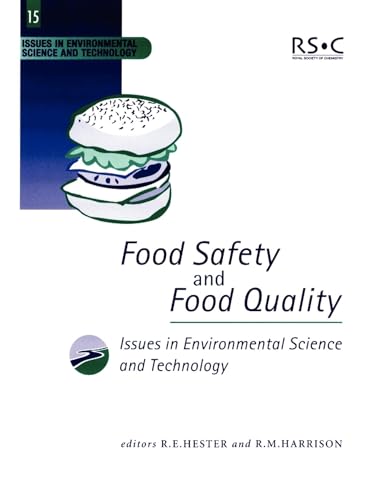
The quality and safety of the food we eat attracts a great deal of publicity and is high on the list of public concerns. This highly emotive issue is discussed in this timely book, which brings together a group of experts to present up-to-date and balanced overviews on a wide range of topics including GM crops; hazardous microorganisms such as E. coli; the BSE/CJD problem; and cancer-causing chemicals, both natural and synthetic. Thought-provoking and of interest to a wide readership, this authoritative review will be welcomed by food scientists, legislators, government officials and advisors. Students of food science or environmental science will also find it essential reading.
Die Inhaltsangabe kann sich auf eine andere Ausgabe dieses Titels beziehen.
Über die Autorin bzw. den Autor
The series has been edited by Professors Hester and Harrison since it began in 1994.
Professor Roy Harrison OBE is listed by ISI Thomson Scientific (on ISI Web of Knowledge) as a Highly Cited Researcher in the Environmental Science/Ecology category. He has an h-index of 54 (i.e. 54 of his papers have received 54 or more citations in the literature). In 2004 he was appointed OBE for services to environmental science in the New Year Honours List. He was profiled by the Journal of Environmental Monitoring (Vol 5, pp 39N-41N, 2003). Professor Harrison’s research interests lie in the field of environment and human health. His main specialism is in air pollution, from emissions through atmospheric chemical and physical transformations to exposure and effects on human health. Much of this work is designed to inform the development of policy.
Now an emeritus professor, Professor Ron Hester's current activities in chemistry are mainly as an editor and as an external examiner and assessor. He also retains appointments as external examiner and assessor / adviser on courses, individual promotions, and departmental / subject area evaluations both in the UK and abroad.
Auszug. © Genehmigter Nachdruck. Alle Rechte vorbehalten.
Food Safety and Food Quality
Issues in Environmental Science and Technology
By R.E. Hester, R. M. HarrisonThe Royal Society of Chemistry
Copyright © 2001 The Royal Society of Chemistry
All rights reserved.
ISBN: 978-0-85404-270-8All rights reserved.
Contents
Assessing the Safety of GM Food Crops Andrew Chesson, 1,
Safety and Quality Research Priorities in the Food Industry Geoff Andrews, Alastair Penman and Chris Hart, 25,
Biosolid Recycling and Food Safety Issues Jim Wright, 43,
Mad Cows, Demented Humans and Food David M. Taylor, 79,
Natural and Synthetic Chemicals in the Diet: a Critical Analysis of Possible Cancer Hazards Lois Swirsky Gold, Thomas H. Slone and Bruce N. Ames, 95,
The MAFF Food LINK Research Programmes Christina Goodacre, 129,
Sensory Assessment of Food Qualities Peter J. Lillford, 143,
Subject Index, 163,
CHAPTER 1
Assessing the Safety of GM Food Crops
ANDREW CHESSON
1 Introduction
None of the crops currently used as food plants resemble their wild progenitors; all have been modified over the centuries to improve aspects of their quality and productivity. Selection of new traits initially was a pragmatic reaction to random mutational events that gave rise to 'sports', crop plants that differed in some way from the norm. With the development of an understanding of Mendelian inheritance, crosses could be made in a more deliberate and systematic manner and plant breeding and the development of new varieties became a more directed activity. The existing variation within the genetic stock proved inadequate and so irradiation and chemical methods were used to introduce random and often multiple mutations to provide greater diversity from which selections could be made and novel traits introduced. However, all such developments remained within a single species or at least a closely related group of species. Genes were modified or deleted but no new genetic material was introduced. Natural outcrossing was prevented by the highly effective physical and chemical barriers present in plants that restrict cross-fertilization and, in most instances, prevent hybridization.
It was not until the 20th century that species barriers finally were breached, allowing introduction of genetic material from a genetically unrelated plant. The crucial technological breakthrough was not the use of recombinant DNA technology, but the development of tissue culture methods. Tissue culture enabled various single-cell fusion methods to be used which overcame the natural barriers operating at the whole plant level. Such techniques are now considered to fall within the broad description of GM technology and have, retrospectively, been included in the legislation governing the use and introduction of products of GM technology. Modern recombinant DNA methods, the ability to excise a gene from a donor genome and introduce it into a recipient organism in a manner that allows its expression, has now largely made these earlier and far less selective fusion techniques redundant.
Some have argued that recombinant DNA technology applied to crops is simply a logical continuation of the manipulations applied since plants were first deliberately cultivated for food use. As such, the novel phenotypes produced are no different in principle from the varieties produced through conventional breeding and should be considered in the same manner. However, once the species barrier was crossed it became possible to introduce genetic material coding for products that have never been part and, with conventional breeding, never could be part of the food supply. For such traits, the security provided by a long history of use by humans is not available and the recognition and knowledge of safe levels of the natural toxicants present in most foods is not automatic. For this reason alone it is necessary to establish regulatory systems able to recognize any hazard introduced by foreign genes and assess the associated risks. Industry concerns that over-stringent requirements for evidence of safety will stifle development of a vital technology have limited validity. It is better to start with rigorous requirements for safety evaluation and then to relax the specifications in the light of experience, rather than having to tighten regulations once evidence of damage to human health has occurred.
The Risk Analysis Framework
Most assessors of risk base their approach on the framework set out in the 1997 FAO/WHO Consultation on Risk Management in which risk analysis is seen to consist of three interlocking components:
• Risk assessment
• Risk management
• Risk communication
The identification and characterization of possible hazards is the starting point for risk assessment which, when coupled with the likelihood of occurrence or exposure, gives a measure of risk. Whenever possible this risk is quantified, although this has proved difficult with many of the hazards suggested for GM foods because of difficulty in establishing measurable outcomes. Risk management then considers how any assessed risk could be reduced, either by removal of the hazard or by a reduction in exposure. Finally, in an ideal and wholly rational world, the process is completed by a cost–benefit analysis in which economic, social and ethical issues are considered and introductions weighed against the cost of inaction. As has become abundantly clear during the GM food debate, since this process requires value judgements, it is essential that those most affected are directly involved in this decision making process.
Recombinant DNA technology is described as a precise tool in which only the intended genes are introduced into the modified host. If this were the only issue then the process of safety assessment would be made easier since only the transgene(s) and their expressed product(s) would need to be considered. Unfortunately, while the nature of the vector and the tDNA may be closely defined, the same is not true of the manner and extent of its incorporation. With the present methods of transformation there is virtually no control over where in a genome the tDNA is introduced, how many copies are integrated, or whether introductions involve the entire gene sequence or just fragments of a gene. Since random insertions could disrupt and silence existing genes or lead to expression of otherwise non-expressed sequences, much has been made of the need to take account of possible 'inadvertent' and therefore unpredictable effects in any safety assessment. While this is a potential hazard, it should be recognized that unintended effects are just as much a problem in conventional breeding as with GM technology. Inadvertent effects have been documented for conventional crops on many occasions without triggering a need for a safety assessment of all new varieties being introduced.
2 GMOs already in the Food Chain
It has been estimated that some 60% of manufactured food items in American supermarkets contain genetically modified ingredients. The equivalent figure for the UK, before food manufacturers and retail outlets began deliberately to source non-GM ingredients, was somewhat lower at 40% of manufactured items. While the presence of GM ingredients in US products might have been expected, the extensive presence on the shelves of European supermarkets came as a considerable surprise to many European consumers. Few recognized the extent to which products of maize (maize starch or maize gluten) and soybean (soya protein, soya grits, soyabean oil, lecithin)...
„Über diesen Titel“ kann sich auf eine andere Ausgabe dieses Titels beziehen.
Suchergebnisse für Food Safety and Food Quality (Issues in Environmental...

Beispielbild für diese ISBN
Food Safety and Food Quality
Verlag:
Royal Society of Chemistry, 2001
ISBN 10: 0854042709
ISBN 13: 9780854042708
Gebraucht
Softcover
Anbieter: Anybook.com, Lincoln, Vereinigtes Königreich
Verkäuferbewertung 5 von 5 Sternen

Zustand: Good. This is an ex-library book and may have the usual library/used-book markings inside.This book has soft covers. With usual stamps and markings, In good all round condition. Please note the Image in this listing is a stock photo and may not match the covers of the actual item,450grams, ISBN:9780854042708. Bestandsnummer des Verkäufers 7439677
Gebraucht kaufen
EUR 3,07
EUR 15,33 shipping
Versand von Vereinigtes Königreich nach USA
Versand von Vereinigtes Königreich nach USA
Anzahl: 1 verfügbar
Beispielbild für diese ISBN
Food Safety and Food Quality (Issues in Environmental Science and Technology, Volume 15)
Verlag:
Royal Society of Chemistry, 2001
ISBN 10: 0854042709
ISBN 13: 9780854042708
Gebraucht
Softcover
Anbieter: Phatpocket Limited, Waltham Abbey, HERTS, Vereinigtes Königreich
Verkäuferbewertung 5 von 5 Sternen
Zustand: Good. Your purchase helps support Sri Lankan Children's Charity 'The Rainbow Centre'. Ex-library, so some stamps and wear, but in good overall condition. Our donations to The Rainbow Centre have helped provide an education and a safe haven to hundreds of children who live in appalling conditions. Bestandsnummer des Verkäufers Z1-E-028-02410
Gebraucht kaufen
EUR 23,05
EUR 12,17 shipping
Versand von Vereinigtes Königreich nach USA
Versand von Vereinigtes Königreich nach USA
Anzahl: 2 verfügbar
Foto des Verkäufers
Food Safety and Food Quality Issues in Environmental Science and Technology Volume 15
Verlag:
Royal Society of Chemistry, Cambridge, MA, 2001
ISBN 10: 0854042709
ISBN 13: 9780854042708
Gebraucht
Trade Size Paperback
Anbieter: Ye Old Bookworm, Odessa, TX, USA
Verkäuferbewertung 4 von 5 Sternen

Trade Size Paperback. Zustand: Very Good. Small 4to 9" - 11" tall; 166 pages; Soft Cover Paperback, No Dust Jacket, Shows Little Wear, Text is clean no markings seen; BX223. Bestandsnummer des Verkäufers w6437
Gebraucht kaufen
EUR 32,34
EUR 5,59 shipping
Versand innerhalb von USA
Versand innerhalb von USA
Anzahl: 1 verfügbar
Beispielbild für diese ISBN
Food Safety and Food Quality (Issues in Environmental Science and Technology, Volume 15)
Anbieter: Lucky's Textbooks, Dallas, TX, USA
Verkäuferbewertung 5 von 5 Sternen
Zustand: New. Bestandsnummer des Verkäufers ABLIING23Mar2317530011479
Neu kaufen
EUR 44,76
EUR 3,43 shipping
Versand innerhalb von USA
Versand innerhalb von USA
Anzahl: Mehr als 20 verfügbar
Foto des Verkäufers
Food Safety and Food Quality
Anbieter: GreatBookPrices, Columbia, MD, USA
Verkäuferbewertung 5 von 5 Sternen
Zustand: New. Bestandsnummer des Verkäufers 168059-n
Neu kaufen
EUR 45,95
EUR 2,27 shipping
Versand innerhalb von USA
Versand innerhalb von USA
Anzahl: Mehr als 20 verfügbar
Foto des Verkäufers
Food Safety and Food Quality
Verlag:
Royal Society of Chemistry, GB, 2001
ISBN 10: 0854042709
ISBN 13: 9780854042708
Neu
Paperback
Anbieter: Rarewaves USA, OSWEGO, IL, USA
Verkäuferbewertung 5 von 5 Sternen
Paperback. Zustand: New. The quality and safety of the food we eat attracts a great deal of publicity and is high on the list of public concerns. This highly emotive issue is discussed in this timely book, which brings together a group of experts to present up-to-date and balanced overviews on a wide range of topics including GM crops; hazardous microorganisms such as E. coli; the BSE/CJD problem; and cancer-causing chemicals, both natural and synthetic. Thought-provoking and of interest to a wide readership, this authoritative review will be welcomed by food scientists, legislators, government officials and advisors. Students of food science or environmental science will also find it essential reading. Bestandsnummer des Verkäufers LU-9780854042708
Neu kaufen
EUR 51,86
Versand gratis
Versand innerhalb von USA
Versand innerhalb von USA
Anzahl: Mehr als 20 verfügbar
Beispielbild für diese ISBN
Food Safety and Food Quality
Anbieter: J J Basset Books, bassettbooks, bookfarm.co.uk, Peter Tavy, Vereinigtes Königreich
Verkäuferbewertung 2 von 5 Sternen

Glossy Card. Zustand: FINE ( AS NEW). No Jacket. Illustrated Cover (illustrator). This book is part of a large purchase from a Public Sector Library and except where mentioned are for the most part LIKE NEW! MOSTLY the ONLY flaws are the blacked out (they insisted) Library stamps which show many of them to be UNUSED! FEEL FREE TO E-MAIL FOR PHOTOGRAPHS AND FURTHER DETAILS. FROM A DEALER WHO TELLS YOU WHO THEY ARE AND WHAT THEIR TELEPHONE AND ADDRESS CONTACT DETAILS ARE! Size: 8vo - over 7¾" - 9¾". EX PUBLIC SECTOR LIBRARY BLACK. Bestandsnummer des Verkäufers 33333334671
Gebraucht kaufen
EUR 29,46
EUR 22,88 shipping
Versand von Vereinigtes Königreich nach USA
Versand von Vereinigtes Königreich nach USA
Anzahl: 1 verfügbar
Foto des Verkäufers
Food Safety and Food Quality
Verlag:
Royal Society of Chemistry, 2001
ISBN 10: 0854042709
ISBN 13: 9780854042708
Gebraucht
Softcover
Anbieter: GreatBookPrices, Columbia, MD, USA
Verkäuferbewertung 5 von 5 Sternen
Zustand: As New. Unread book in perfect condition. Bestandsnummer des Verkäufers 168059
Gebraucht kaufen
EUR 51,66
EUR 2,27 shipping
Versand innerhalb von USA
Versand innerhalb von USA
Anzahl: Mehr als 20 verfügbar
Foto des Verkäufers
Food Safety and Food Quality
Verlag:
Royal Society of Chemistry, GB, 2001
ISBN 10: 0854042709
ISBN 13: 9780854042708
Neu
Paperback
Anbieter: Rarewaves.com USA, London, LONDO, Vereinigtes Königreich
Verkäuferbewertung 5 von 5 Sternen
Paperback. Zustand: New. The quality and safety of the food we eat attracts a great deal of publicity and is high on the list of public concerns. This highly emotive issue is discussed in this timely book, which brings together a group of experts to present up-to-date and balanced overviews on a wide range of topics including GM crops; hazardous microorganisms such as E. coli; the BSE/CJD problem; and cancer-causing chemicals, both natural and synthetic. Thought-provoking and of interest to a wide readership, this authoritative review will be welcomed by food scientists, legislators, government officials and advisors. Students of food science or environmental science will also find it essential reading. Bestandsnummer des Verkäufers LU-9780854042708
Neu kaufen
EUR 55,92
Versand gratis
Versand von Vereinigtes Königreich nach USA
Versand von Vereinigtes Königreich nach USA
Anzahl: 6 verfügbar
Beispielbild für diese ISBN
Food Safety and Food Quality (Paperback)
Verlag:
Royal Society of Chemistry, Cambridge, 2001
ISBN 10: 0854042709
ISBN 13: 9780854042708
Neu
Paperback
Erstausgabe
Anbieter: Grand Eagle Retail, Bensenville, IL, USA
Verkäuferbewertung 5 von 5 Sternen
Paperback. Zustand: new. Paperback. The quality and safety of the food we eat attracts a great deal of publicity and is high on the list of public concerns. This highly emotive issue is discussed in this timely book, which brings together a group of experts to present up-to-date and balanced overviews on a wide range of topics including GM crops; hazardous microorganisms such as E. coli, the BSE/CJD problem; and cancer-causing chemicals, both natural and synthetic. Thought-provoking and of interest to a wide readership, this authoritative review will be welcomed by food scientists, legislators, government officials and advisors. Students of food science or environmental science will also find it essential reading. Thought-provoking and of interest to a wide readership, this authoritative review will be welcomed by food scientists, legislators, government officials and advisors. Shipping may be from multiple locations in the US or from the UK, depending on stock availability. Bestandsnummer des Verkäufers 9780854042708