
Verwandte Artikel zu Causal Inference in Statistics: A Primer
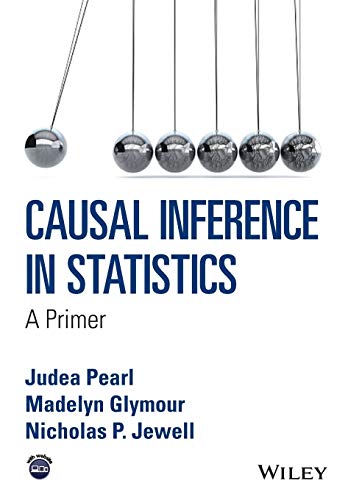
Inhaltsangabe
CAUSAL INFERENCE IN STATISTICS
A Primer
Causality is central to the understanding and use of data. Without an understanding of cause–effect relationships, we cannot use data to answer questions as basic as "Does this treatment harm or help patients?" But though hundreds of introductory texts are available on statistical methods of data analysis, until now, no beginner-level book has been written about the exploding arsenal of methods that can tease causal information from data.
Causal Inference in Statistics fills that gap. Using simple examples and plain language, the book lays out how to define causal parameters; the assumptions necessary to estimate causal parameters in a variety of situations; how to express those assumptions mathematically; whether those assumptions have testable implications; how to predict the effects of interventions; and how to reason counterfactually. These are the foundational tools that any student of statistics needs to acquire in order to use statistical methods to answer causal questions of interest.
This book is accessible to anyone with an interest in interpreting data, from undergraduates, professors, researchers, or to the interested layperson. Examples are drawn from a wide variety of fields, including medicine, public policy, and law; a brief introduction to probability and statistics is provided for the uninitiated; and each chapter comes with study questions to reinforce the readers understanding.
Die Inhaltsangabe kann sich auf eine andere Ausgabe dieses Titels beziehen.
Über die Autorin bzw. den Autor
Judea Pearl, Computer Science and Statistics, University of California, Los Angeles, USA.
Madelyn Glymour, Philosophy, Carnegie Mellon University, Pittsburgh, USA.
Nicholas P. Jewell, Biostatistics and Statistics, University of California, Berkeley, USA.
Von der hinteren Coverseite
CAUSAL INFERENCE IN STATISTICS
A Primer
Causality is central to the understanding and use of data. Without an understanding of cause effect relationships, we cannot use data to answer questions as basic as "Does this treatment harm or help patients?" But though hundreds of introductory texts are available on statistical methods of data analysis, until now, no beginner-level book has been written about the exploding arsenal of methods that can tease causal information from data.
Causal Inference in Statistics fills that gap. Using simple examples and plain language, the book lays out how to define causal parameters; the assumptions necessary to estimate causal parameters in a variety of situations; how to express those assumptions mathematically; whether those assumptions have testable implications; how to predict the effects of interventions; and how to reason counterfactually. These are the foundational tools that any student of statistics needs to acquire in order to use statistical methods to answer causal questions of interest.
This book is accessible to anyone with an interest in interpreting data, from undergraduates, professors, researchers, or to the interested layperson. Examples are drawn from a wide variety of fields, including medicine, public policy, and law; a brief introduction to probability and statistics is provided for the uninitiated; and each chapter comes with study questions to reinforce the readers understanding.
Aus dem Klappentext
CAUSAL INFERENCE IN STATISTICS
A Primer
Causality is central to the understanding and use of data. Without an understanding of cause–effect relationships, we cannot use data to answer questions as basic as "Does this treatment harm or help patients?" But though hundreds of introductory texts are available on statistical methods of data analysis, until now, no beginner-level book has been written about the exploding arsenal of methods that can tease causal information from data.
Causal Inference in Statistics fills that gap. Using simple examples and plain language, the book lays out how to define causal parameters; the assumptions necessary to estimate causal parameters in a variety of situations; how to express those assumptions mathematically; whether those assumptions have testable implications; how to predict the effects of interventions; and how to reason counterfactually. These are the foundational tools that any student of statistics needs to acquire in order to use statistical methods to answer causal questions of interest.
This book is accessible to anyone with an interest in interpreting data, from undergraduates, professors, researchers, or to the interested layperson. Examples are drawn from a wide variety of fields, including medicine, public policy, and law; a brief introduction to probability and statistics is provided for the uninitiated; and each chapter comes with study questions to reinforce the readers understanding.
„Über diesen Titel“ kann sich auf eine andere Ausgabe dieses Titels beziehen.
Suchergebnisse für Causal Inference in Statistics: A Primer

Beispielbild für diese ISBN
Causal Inference in Statistics: A Primer
Anbieter: World of Books (was SecondSale), Montgomery, IL, USA
Verkäuferbewertung 5 von 5 Sternen

Paperback. Zustand: Fair. Many of the concepts and terminology surrounding modern causal inference can be quite intimidating to the novice. Judea Pearl presents a book ideal for beginners in statistics, providing a comprehensive introduction to the field of causality. Bestandsnummer des Verkäufers 00108214327
Gebraucht kaufen
EUR 24,41
Versand gratis
Versand innerhalb von USA
Versand innerhalb von USA
Anzahl: 1 verfügbar
Beispielbild für diese ISBN
Causal Inference in Statistics: A Primer
Anbieter: World of Books (was SecondSale), Montgomery, IL, USA
Verkäuferbewertung 5 von 5 Sternen
Paperback. Zustand: Good. Many of the concepts and terminology surrounding modern causal inference can be quite intimidating to the novice. Judea Pearl presents a book ideal for beginners in statistics, providing a comprehensive introduction to the field of causality. Bestandsnummer des Verkäufers 00107713750
Gebraucht kaufen
EUR 24,41
Versand gratis
Versand innerhalb von USA
Versand innerhalb von USA
Anzahl: 2 verfügbar
Beispielbild für diese ISBN
Causal Inference in Statistics: A Primer
Anbieter: BooksRun, Philadelphia, PA, USA
Verkäuferbewertung 5 von 5 Sternen
Paperback. Zustand: Very Good. 1. It's a well-cared-for item that has seen limited use. The item may show minor signs of wear. All the text is legible, with all pages included. It may have slight markings and/or highlighting. Bestandsnummer des Verkäufers 1119186846-8-1
Gebraucht kaufen
EUR 25,86
Versand gratis
Versand innerhalb von USA
Versand innerhalb von USA
Anzahl: 1 verfügbar
Beispielbild für diese ISBN
Causal Inference in Statistics: A Primer
Anbieter: World of Books Inc, Montgomery, IL, USA
Verkäuferbewertung 4 von 5 Sternen

Paperback. Zustand: Fair. Many of the concepts and terminology surrounding modern causal inference can be quite intimidating to the novice. Judea Pearl presents a book ideal for beginners in statistics, providing a comprehensive introduction to the field of causality. Bestandsnummer des Verkäufers CIN1119186846A
Gebraucht kaufen
EUR 26,25
Versand gratis
Versand innerhalb von USA
Versand innerhalb von USA
Anzahl: 1 verfügbar
Beispielbild für diese ISBN
Causal Inference in Statistics: A Primer
Anbieter: World of Books Inc, Montgomery, IL, USA
Verkäuferbewertung 4 von 5 Sternen
Paperback. Zustand: Good. Many of the concepts and terminology surrounding modern causal inference can be quite intimidating to the novice. Judea Pearl presents a book ideal for beginners in statistics, providing a comprehensive introduction to the field of causality. Bestandsnummer des Verkäufers CIN1119186846G
Gebraucht kaufen
EUR 26,25
Versand gratis
Versand innerhalb von USA
Versand innerhalb von USA
Anzahl: 2 verfügbar
Beispielbild für diese ISBN
Causal Inference in Statistics: A Primer
Anbieter: medimops, Berlin, Deutschland
Verkäuferbewertung 5 von 5 Sternen
Zustand: good. Befriedigend/Good: Durchschnittlich erhaltenes Buch bzw. Schutzumschlag mit Gebrauchsspuren, aber vollständigen Seiten. / Describes the average WORN book or dust jacket that has all the pages present. Bestandsnummer des Verkäufers M01119186846-G
Gebraucht kaufen
EUR 31,95
EUR 10,00 Versand
Versand von Deutschland nach USA
Versand von Deutschland nach USA
Anzahl: 1 verfügbar
Foto des Verkäufers
Causal Inference in Statistics : A Primer
Anbieter: GreatBookPrices, Columbia, MD, USA
Verkäuferbewertung 5 von 5 Sternen
Zustand: New. Bestandsnummer des Verkäufers 23953083-n
Neu kaufen
EUR 39,70
EUR 2,35 Versand
Versand innerhalb von USA
Versand innerhalb von USA
Anzahl: Mehr als 20 verfügbar
Foto des Verkäufers
Causal Inference in Statistics (Paperback)
Verlag:
John Wiley & Sons Inc, New York, 2016
ISBN 10: 1119186846
ISBN 13: 9781119186847
Neu
Paperback
Anbieter: Grand Eagle Retail, Bensenville, IL, USA
Verkäuferbewertung 5 von 5 Sternen
Paperback. Zustand: new. Paperback. CAUSAL INFERENCE IN STATISTICS A Primer Causality is central to the understanding and use of data. Without an understanding of causeeffect relationships, we cannot use data to answer questions as basic as "Does this treatment harm or help patients?" But though hundreds of introductory texts are available on statistical methods of data analysis, until now, no beginner-level book has been written about the exploding arsenal of methods that can tease causal information from data. Causal Inference in Statistics fills that gap. Using simple examples and plain language, the book lays out how to define causal parameters; the assumptions necessary to estimate causal parameters in a variety of situations; how to express those assumptions mathematically; whether those assumptions have testable implications; how to predict the effects of interventions; and how to reason counterfactually. These are the foundational tools that any student of statistics needs to acquire in order to use statistical methods to answer causal questions of interest. This book is accessible to anyone with an interest in interpreting data, from undergraduates, professors, researchers, or to the interested layperson. Examples are drawn from a wide variety of fields, including medicine, public policy, and law; a brief introduction to probability and statistics is provided for the uninitiated; and each chapter comes with study questions to reinforce the readers understanding. Many of the concepts and terminology surrounding modern causal inference can be quite intimidating to the novice. Judea Pearl presents a book ideal for beginners in statistics, providing a comprehensive introduction to the field of causality. Shipping may be from multiple locations in the US or from the UK, depending on stock availability. Bestandsnummer des Verkäufers 9781119186847
Foto des Verkäufers
Causal Inference in Statistics
Anbieter: Rarewaves.com USA, London, LONDO, Vereinigtes Königreich
Verkäuferbewertung 5 von 5 Sternen
Paperback. Zustand: New. CAUSAL INFERENCE IN STATISTICS A Primer Causality is central to the understanding and use of data. Without an understanding of cause-effect relationships, we cannot use data to answer questions as basic as "Does this treatment harm or help patients?" But though hundreds of introductory texts are available on statistical methods of data analysis, until now, no beginner-level book has been written about the exploding arsenal of methods that can tease causal information from data. Causal Inference in Statistics fills that gap. Using simple examples and plain language, the book lays out how to define causal parameters; the assumptions necessary to estimate causal parameters in a variety of situations; how to express those assumptions mathematically; whether those assumptions have testable implications; how to predict the effects of interventions; and how to reason counterfactually. These are the foundational tools that any student of statistics needs to acquire in order to use statistical methods to answer causal questions of interest. This book is accessible to anyone with an interest in interpreting data, from undergraduates, professors, researchers, or to the interested layperson. Examples are drawn from a wide variety of fields, including medicine, public policy, and law; a brief introduction to probability and statistics is provided for the uninitiated; and each chapter comes with study questions to reinforce the readers understanding. Bestandsnummer des Verkäufers LU-9781119186847
Neu kaufen
EUR 44,16
Versand gratis
Versand von Vereinigtes Königreich nach USA
Versand von Vereinigtes Königreich nach USA
Anzahl: Mehr als 20 verfügbar
Foto des Verkäufers
Causal Inference in Statistics : A Primer
Anbieter: GreatBookPrices, Columbia, MD, USA
Verkäuferbewertung 5 von 5 Sternen
Zustand: As New. Unread book in perfect condition. Bestandsnummer des Verkäufers 23953083
Gebraucht kaufen
EUR 42,75
EUR 2,35 Versand
Versand innerhalb von USA
Versand innerhalb von USA
Anzahl: Mehr als 20 verfügbar