
Verwandte Artikel zu Analyzing Multidimensional Well-Being: A Quantitative...
Inhaltsangabe
“An indispensable reference for all researchers interested in the measurement of social welfare. . .”
―François Bourguignon, Emeritus Professor at Paris School of Economics, Former Chief Economist of the World Bank.
“. . .a detailed, insightful, and pedagogical presentation of the theoretical grounds of multidimensional well-being, inequality, and poverty measurement. Any student, researcher, and practitioner interested in the multidimensional approach should begin their journey into such a fascinating theme with this wonderful book.”
―François Maniquet, Professor, Catholic University of Louvain, Belgium.
A Review of the Multidimensional Approaches to the Measurement of Welfare, Inequality, and Poverty
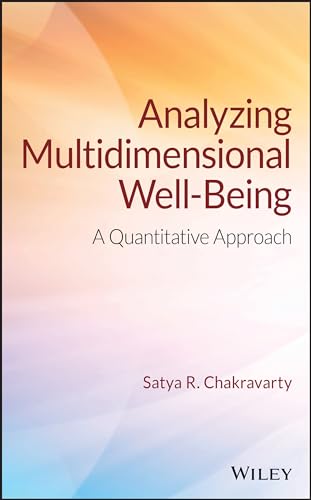
Analyzing Multidimensional Well-Being: A Quantitative Approach offers a comprehensive approach to the measurement of well-being that includes characteristics such as income, health, literacy, and housing. The author presents a systematic comparison of the alternative approaches to the measurement of multidimensional welfare, inequality, poverty, and vulnerability. The text contains real-life applications of some multidimensional aggregations (most of which have been designed by international organizations such as the United Nations
Development Program and the Organization for Economic Co-operation and Development) that help to judge the performance of a country in the various dimensions of well-being.
The text offers an evaluation of how well a society is doing with respect to achievements of all the individuals in the dimensions considered and clearly investigates how achievements in the dimensions can be evaluated from different perspectives. The author includes a detailed scrutiny of alternative techniques for setting weights to individual dimensional metrics and offers an extensive analysis into both the descriptive and welfare theoretical approaches to the concerned multi-attribute measurement and related issues. This important resource:
• Contains a synthesis of multidimensional welfare, inequality, poverty, and vulnerability analysis
• Examines aggregations of achievement levels in the concerned dimensions of well-being from various standpoints
• Shows how to measure poverty using panel data instead of restricting attention to a single period and when we have imprecise information on dimensional achievements
• Argues that multidimensional analysis is intrinsically different from marginal distributions-based analysis
Written for students, teachers, researchers, and scholars, Analyzing Multidimensional Well-Being: A Quantitative Approach puts the focus on various approaches to the measurementof the many aspects of well-being and quality of life.
Satya R. Chakravarty is a Professor of Economics at the Indian Statistical Institute, Kolkata, India. He is an Editor of Social Choice and Welfare and a member of the Editorial Board of Journal of Economic Inequality.
Die Inhaltsangabe kann sich auf eine andere Ausgabe dieses Titels beziehen.
Über die Autorin bzw. den Autor
Satya R. Chakravarty is a Professor of Economics at the Indian Statistical Institute, Kolkata, India. He is an Editor of Social Choice and Welfare and a member of the Editorial Board of Journal of Economic Inequality.
Von der hinteren Coverseite
"An indispensable reference for all researchers interested in the measurement of social welfare. . ."
François Bourguignon, Emeritus Professor at Paris School of Economics, Former Chief Economist of the World Bank.
". . .a detailed, insightful, and pedagogical presentation of the theoretical grounds of multidimensional well-being, inequality, and poverty measurement. Any student, researcher, and practitioner interested in the multidimensional approach should begin their journey into such a fascinating theme with this wonderful book."
François Maniquet, Professor, Catholic University of Louvain, Belgium.
A Review of the Multidimensional Approaches to the Measurement of Welfare, Inequality, and Poverty
Analyzing Multidimensional Well-Being: A Quantitative Approach offers a comprehensive approach to the measurement of well-being that includes characteristics such as income, health, literacy, and housing. The author presents a systematic comparison of the alternative approaches to the measurement of multidimensional welfare, inequality, poverty, and vulnerability. The text contains real-life applications of some multidimensional aggregations (most of which have been designed by international organizations such as the United Nations Development Program and the Organization for Economic Co-operation and Development) that help to judge the performance of a country in the various dimensions of well-being.
The text offers an evaluation of how well a society is doing with respect to achievements of all the individuals in the dimensions considered and clearly investigates how achievements in the dimensions can be evaluated from different perspectives. The author includes a detailed scrutiny of alternative techniques for setting weights to individual dimensional metrics and offers an extensive analysis into both the descriptive and welfare theoretical approaches to the concerned multi-attribute measurement and related issues. This important resource:
- Contains a synthesis of multidimensional welfare, inequality, poverty, and vulnerability analysis
- Examines aggregations of achievement levels in the concerned dimensions of well-being from various standpoints
- Shows how to measure poverty using panel data instead of restricting attention to a single period and when we have imprecise information on dimensional achievements
- Argues that multidimensional analysis is intrinsically different from marginal distributions-based analysis
Written for students, teachers, researchers, and scholars, Analyzing Multidimensional Well-Being: A Quantitative Approach puts the focus on various approaches to the measurement of the many aspects of well-being and quality of life.
Aus dem Klappentext
"An indispensable reference for all researchers interested in the measurement of social welfare. . ."
—François Bourguignon, Emeritus Professor at Paris School of Economics, Former Chief Economist of the World Bank.
". . .a detailed, insightful, and pedagogical presentation of the theoretical grounds of multidimensional well-being, inequality, and poverty measurement. Any student, researcher, and practitioner interested in the multidimensional approach should begin their journey into such a fascinating theme with this wonderful book."
—François Maniquet, Professor, Catholic University of Louvain, Belgium.
A Review of the Multidimensional Approaches to the Measurement of Welfare, Inequality, and Poverty
Analyzing Multidimensional Well-Being: A Quantitative Approach offers a comprehensive approach to the measurement of well-being that includes characteristics such as income, health, literacy, and housing. The author presents a systematic comparison of the alternative approaches to the measurement of multidimensional welfare, inequality, poverty, and vulnerability. The text contains real-life applications of some multidimensional aggregations (most of which have been designed by international organizations such as the United Nations Development Program and the Organization for Economic Co-operation and Development) that help to judge the performance of a country in the various dimensions of well-being.
The text offers an evaluation of how well a society is doing with respect to achievements of all the individuals in the dimensions considered and clearly investigates how achievements in the dimensions can be evaluated from different perspectives. The author includes a detailed scrutiny of alternative techniques for setting weights to individual dimensional metrics and offers an extensive analysis into both the descriptive and welfare theoretical approaches to the concerned multi-attribute measurement and related issues. This important resource:
- Contains a synthesis of multidimensional welfare, inequality, poverty, and vulnerability analysis
- Examines aggregations of achievement levels in the concerned dimensions of well-being from various standpoints
- Shows how to measure poverty using panel data instead of restricting attention to a single period and when we have imprecise information on dimensional achievements
- Argues that multidimensional analysis is intrinsically different from marginal distributions-based analysis
Written for students, teachers, researchers, and scholars, Analyzing Multidimensional Well-Being: A Quantitative Approach puts the focus on various approaches to the measurement of the many aspects of well-being and quality of life.
„Über diesen Titel“ kann sich auf eine andere Ausgabe dieses Titels beziehen.
Suchergebnisse für Analyzing Multidimensional Well-Being: A Quantitative...

Foto des Verkäufers
Analyzing Multidimensional Well-Being : A Quantitative Approach
Anbieter: GreatBookPrices, Columbia, MD, USA
Verkäuferbewertung 5 von 5 Sternen

Zustand: New. Bestandsnummer des Verkäufers 27914656-n
Neu kaufen
EUR 94,15
EUR 2,28 Versand
Versand innerhalb von USA
Versand innerhalb von USA
Anzahl: Mehr als 20 verfügbar
Foto des Verkäufers
Analyzing Multidimensional Well-Being (Hardcover)
Verlag:
John Wiley & Sons Inc, New York, 2018
ISBN 10: 1119256909
ISBN 13: 9781119256908
Neu
Hardcover
Anbieter: Grand Eagle Retail, Bensenville, IL, USA
Verkäuferbewertung 5 von 5 Sternen
Hardcover. Zustand: new. Hardcover. An indispensable reference for all researchers interested in the measurement of social welfare. . . Francois Bourguignon, Emeritus Professor at Paris School of Economics, Former Chief Economist of the World Bank. . . .a detailed, insightful, and pedagogical presentation of the theoretical grounds of multidimensional well-being, inequality, and poverty measurement. Any student, researcher, and practitioner interested in the multidimensional approach should begin their journey into such a fascinating theme with this wonderful book. Francois Maniquet, Professor, Catholic University of Louvain, Belgium. A Review of the Multidimensional Approaches to the Measurement of Welfare, Inequality, and Poverty Analyzing Multidimensional Well-Being: A Quantitative Approach offers a comprehensive approach to the measurement of well-being that includes characteristics such as income, health, literacy, and housing. The author presents a systematic comparison of the alternative approaches to the measurement of multidimensional welfare, inequality, poverty, and vulnerability. The text contains real-life applications of some multidimensional aggregations (most of which have been designed by international organizations such as the United Nations Development Program and the Organization for Economic Co-operation and Development) that help to judge the performance of a country in the various dimensions of well-being. The text offers an evaluation of how well a society is doing with respect to achievements of all the individuals in the dimensions considered and clearly investigates how achievements in the dimensions can be evaluated from different perspectives. The author includes a detailed scrutiny of alternative techniques for setting weights to individual dimensional metrics and offers an extensive analysis into both the descriptive and welfare theoretical approaches to the concerned multi-attribute measurement and related issues. This important resource: Contains a synthesis of multidimensional welfare, inequality, poverty, and vulnerability analysis Examines aggregations of achievement levels in the concerned dimensions of well-being from various standpoints Shows how to measure poverty using panel data instead of restricting attention to a single period and when we have imprecise information on dimensional achievements Argues that multidimensional analysis is intrinsically different from marginal distributions-based analysis Written for students, teachers, researchers, and scholars, Analyzing Multidimensional Well-Being: A Quantitative Approach puts the focus on various approaches to the measurementof the many aspects of well-being and quality of life. Satya R. Chakravarty is a Professor of Economics at the Indian Statistical Institute, Kolkata, India. He is an Editor of Social Choice and Welfare and a member of the Editorial Board of Journal of Economic Inequality. An indispensable reference for all researchers interested in the measurement of social welfare. . . Francois Bourguignon, Emeritus Professor at Paris School of Economics, Former Chief Economist of the World Bank. . . . Shipping may be from multiple locations in the US or from the UK, depending on stock availability. Bestandsnummer des Verkäufers 9781119256908
Beispielbild für diese ISBN
Analyzing Multidimensional Well-Being: A Quantitative Approach Format: Hardcover
Anbieter: INDOO, Avenel, NJ, USA
Verkäuferbewertung 5 von 5 Sternen
Zustand: New. Bestandsnummer des Verkäufers 9781119256908
Neu kaufen
EUR 96,48
Versand gratis
Versand innerhalb von USA
Versand innerhalb von USA
Anzahl: Mehr als 20 verfügbar
Beispielbild für diese ISBN
Analyzing Multidimensional Well-Being: A Quantitative Approach (eng)
Anbieter: Brook Bookstore On Demand, Napoli, NA, Italien
Verkäuferbewertung 5 von 5 Sternen
Zustand: new. Bestandsnummer des Verkäufers 4d5657d1aa15f253eda3ec21d88586a2
Neu kaufen
EUR 101,34
EUR 6,80 Versand
Versand von Italien nach USA
Versand von Italien nach USA
Anzahl: 7 verfügbar
Beispielbild für diese ISBN
Analyzing Multidimensional Well-Being
Anbieter: PBShop.store UK, Fairford, GLOS, Vereinigtes Königreich
Verkäuferbewertung 5 von 5 Sternen
HRD. Zustand: New. New Book. Shipped from UK. Established seller since 2000. Bestandsnummer des Verkäufers FW-9781119256908
Neu kaufen
EUR 103,05
EUR 5,85 Versand
Versand von Vereinigtes Königreich nach USA
Versand von Vereinigtes Königreich nach USA
Anzahl: 7 verfügbar
Foto des Verkäufers
Analyzing Multidimensional Well-Being : A Quantitative Approach
Anbieter: GreatBookPrices, Columbia, MD, USA
Verkäuferbewertung 5 von 5 Sternen
Zustand: As New. Unread book in perfect condition. Bestandsnummer des Verkäufers 27914656
Gebraucht kaufen
EUR 109,62
EUR 2,28 Versand
Versand innerhalb von USA
Versand innerhalb von USA
Anzahl: Mehr als 20 verfügbar
Foto des Verkäufers
Analyzing Multidimensional Well-Being : A Quantitative Approach
Anbieter: GreatBookPricesUK, Woodford Green, Vereinigtes Königreich
Verkäuferbewertung 5 von 5 Sternen
Zustand: New. Bestandsnummer des Verkäufers 27914656-n
Neu kaufen
EUR 100,21
EUR 17,48 Versand
Versand von Vereinigtes Königreich nach USA
Versand von Vereinigtes Königreich nach USA
Anzahl: 8 verfügbar
Foto des Verkäufers
Analyzing Multidimensional Well-Being
Anbieter: Rarewaves.com USA, London, LONDO, Vereinigtes Königreich
Verkäuferbewertung 5 von 5 Sternen
Hardback. Zustand: New. "An indispensable reference for all researchers interested in the measurement of social welfare. . ." -François Bourguignon, Emeritus Professor at Paris School of Economics, Former Chief Economist of the World Bank. ". . .a detailed, insightful, and pedagogical presentation of the theoretical grounds of multidimensional well-being, inequality, and poverty measurement. Any student, researcher, and practitioner interested in the multidimensional approach should begin their journey into such a fascinating theme with this wonderful book." -François Maniquet, Professor, Catholic University of Louvain, Belgium. A Review of the Multidimensional Approaches to the Measurement of Welfare, Inequality, and Poverty Analyzing Multidimensional Well-Being: A Quantitative Approach offers a comprehensive approach to the measurement of well-being that includes characteristics such as income, health, literacy, and housing. The author presents a systematic comparison of the alternative approaches to the measurement of multidimensional welfare, inequality, poverty, and vulnerability. The text contains real-life applications of some multidimensional aggregations (most of which have been designed by international organizations such as the United Nations Development Program and the Organization for Economic Co-operation and Development) that help to judge the performance of a country in the various dimensions of well-being. The text offers an evaluation of how well a society is doing with respect to achievements of all the individuals in the dimensions considered and clearly investigates how achievements in the dimensions can be evaluated from different perspectives. The author includes a detailed scrutiny of alternative techniques for setting weights to individual dimensional metrics and offers an extensive analysis into both the descriptive and welfare theoretical approaches to the concerned multi-attribute measurement and related issues. This important resource: . Contains a synthesis of multidimensional welfare, inequality, poverty, and vulnerability analysis . Examines aggregations of achievement levels in the concerned dimensions of well-being from various standpoints . Shows how to measure poverty using panel data instead of restricting attention to a single period and when we have imprecise information on dimensional achievements . Argues that multidimensional analysis is intrinsically different from marginal distributions-based analysis Written for students, teachers, researchers, and scholars, Analyzing Multidimensional Well-Being: A Quantitative Approach puts the focus on various approaches to the measurementof the many aspects of well-being and quality of life. Satya R. Chakravarty is a Professor of Economics at the Indian Statistical Institute, Kolkata, India. He is an Editor of Social Choice and Welfare and a member of the Editorial Board of Journal of Economic Inequality. Bestandsnummer des Verkäufers LU-9781119256908
Neu kaufen
EUR 127,54
Versand gratis
Versand von Vereinigtes Königreich nach USA
Versand von Vereinigtes Königreich nach USA
Anzahl: 4 verfügbar
Foto des Verkäufers
Analyzing Multidimensional Well-Being : A Quantitative Approach
Anbieter: GreatBookPricesUK, Woodford Green, Vereinigtes Königreich
Verkäuferbewertung 5 von 5 Sternen
Zustand: As New. Unread book in perfect condition. Bestandsnummer des Verkäufers 27914656
Gebraucht kaufen
EUR 116,16
EUR 17,48 Versand
Versand von Vereinigtes Königreich nach USA
Versand von Vereinigtes Königreich nach USA
Anzahl: 8 verfügbar
Beispielbild für diese ISBN
Analyzing Multidimensional Well-Being: A Quantitative Approach
Verlag:
John Wiley and Sons Ltd, 2018
ISBN 10: 1119256909
ISBN 13: 9781119256908
Neu
Hardcover
Erstausgabe
Anbieter: Kennys Bookshop and Art Galleries Ltd., Galway, GY, Irland
Verkäuferbewertung 5 von 5 Sternen
Zustand: New. 2017. 1st Edition. Hardcover. . . . . . Bestandsnummer des Verkäufers V9781119256908
Neu kaufen
EUR 128,91
EUR 9,50 Versand
Versand von Irland nach USA
Versand von Irland nach USA
Anzahl: 15 verfügbar