
Verwandte Artikel zu Handbook of Enology, Volume 2: The Chemistry of Wine...
Inhaltsangabe
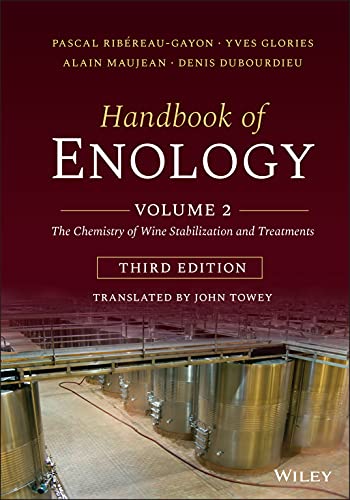
As an applied science, Enology is a collection of knowledge from the fundamental sciences including chemistry, biochemistry, microbiology, bioengineering, psychophysics, cognitive psychology, etc., and nourished by empirical observations. The approach used in the Handbook of Enology is thus the same. It aims to provide practitioners, winemakers, technicians and enology students with foundational knowledge and the most recent research results. This knowledge can be used to contribute to a better definition of the quality of grapes and wine, a greater understanding of chemical and microbiological parameters, with the aim of ensuring satisfactory fermentations and predicting the evolution of wines, and better mastery of wine stabilization processes. As a result, the purpose of this publication is to guide readers in their thought processes with a view to preserving and optimizing the identity and taste of wine and its aging potential.
This third English edition of The Handbook of Enology, is an enhanced translation from the 7th French 2017 edition, and is published as a two-volume set describing aspects of winemaking using a detailed, scientific approach. The authors, who are highly-respected enologists, examine winemaking processes, theorizing what constitutes a perfect technique and the proper combination of components necessary to produce a quality vintage. They also illustrate methodologies of common problems, revealing the mechanism behind the disorder, thus enabling a diagnosis and solution.
Volume 2: The Chemistry of Wine and Stabilization and Treatments looks at the wine itself in two parts. Part One analyzes the chemical makeup of wine, including organic acids, alcoholic, volatile and phenolic compounds, carbohydrates, and aromas. Part Two describes the procedures necessary to achieve a perfect wine: the clarification processes of fining, filtering and centrifuging, stabilization, and aging.
Coverage includes: Wine chemistry; Organic acids; Alcohols and other volatile products; Carbohydrates; Dry extract and mineral matter; Nitrogen substances; Phenolic compounds; The aroma of grape varieties; The chemical nature, origin and consequences of the main organoleptic defects; Stabilization and treatment of wines; The chemical nature, origin and consequences of the main organoleptic defects; The concept of clarity and colloidal phenomena; Clarification and stabilization treatments; Clarification of wines by filtration and centrifugation; The stabilization of wines by physical processes; The aging of wines in vats and in barrels and aging phenomena.
The target audience includes advanced viticulture and enology students, professors and researchers, and practicing grape growers and vintners.
Die Inhaltsangabe kann sich auf eine andere Ausgabe dieses Titels beziehen.
Über die Autorin bzw. den Autor
Authors: Pascal Ribéreau-Gayon, Yves Glories, Alain Maujean and Denis Dubourdieu
Coordinator: Philippe Darriet
With contributions from Patricia Ballestra, Jean-Christophe Barbe, Marguerite Dols-Laffargue, Laurence Geny, Rémy Ghidossi, Aline Lonvaud, Patrick Lucas, Axel Marchal, Isabelle Masneuf-Pomarède, Martine Mietton-Peuchot, Claudia Nioi, Alexandre Pons, Sophie Tempère, Cécile Thibon.
Translator: John Towey
Von der hinteren Coverseite
As an applied science, Enology is a collection of knowledge from the fundamental sciences including chemistry, biochemistry, microbiology, bioengineering, psychophysics, cognitive psychology, etc., and nourished by empirical observations. The approach used in the Handbook of Enology is thus the same. It aims to provide practitioners, winemakers, technicians and enology students with foundational knowledge and the most recent research results. This knowledge can be used to contribute to a better definition of the quality of grapes and wine, a greater understanding of chemical and microbiological parameters, with the aim of ensuring satisfactory fermentations and predicting the evolution of wines, and better mastery of wine stabilization processes. As a result, the purpose of this publication is to guide readers in their thought processes with a view to preserving and optimizing the identity and taste of wine and its aging potential.
This third English edition of Handbook of Enology, is an enhanced translation from the 7th French 2017 edition, and is published as a two-volume set describing aspects of winemaking using a detailed, scientific approach. The authors, who are highly-respected enologists, examine winemaking processes, theorizing what constitutes a perfect technique and the proper combination of components necessary to produce a quality vintage. They also illustrate methodologies of common problems, revealing the mechanism behind the disorder, thus enabling a diagnosis and solution.
Volume 2: The Chemistry of Wine Stabilization and Treatments looks at the wine itself in two parts. Part One analyzes the chemical makeup of wine, including organic acids, alcoholic, volatile and phenolic compounds, carbohydrates, and aromas. Part Two describes the procedures necessary to achieve a perfect wine: the clarification processes of fining, filtering and centrifuging, stabilization, and aging.
Coverage includes: Wine chemistry; Organic acids; Alcohols and other volatile products; Carbohydrates; Dry extract and mineral matter; Nitrogen substances; Phenolic compounds; The aroma of grape varieties; The chemical nature, origin and consequences of the main organoleptic defects; Stabilization and treatment of wines; The chemical nature, origin and consequences of the main organoleptic defects; The concept of clarity and colloidal phenomena; Clarification and stabilization treatments; Clarification of wines by filtration and centrifugation; The stabilization of wines by physical processes; The aging of wines in vats and in barrels and aging phenomena.
The target audience includes advanced viticulture and enology students, professors and researchers, and practicing grape growers and vintners.
Aus dem Klappentext
As an applied science, Enology is a collection of knowledge from the fundamental sciences including chemistry, biochemistry, microbiology, bioengineering, psychophysics, cognitive psychology, etc., and nourished by empirical observations. The approach used in the Handbook of Enology is thus the same. It aims to provide practitioners, winemakers, technicians and enology students with foundational knowledge and the most recent research results. This knowledge can be used to contribute to a better definition of the quality of grapes and wine, a greater understanding of chemical and microbiological parameters, with the aim of ensuring satisfactory fermentations and predicting the evolution of wines, and better mastery of wine stabilization processes. As a result, the purpose of this publication is to guide readers in their thought processes with a view to preserving and optimizing the identity and taste of wine and its aging potential.
This third English edition of Handbook of Enology, is an enhanced translation from the 7th French 2017 edition, and is published as a two-volume set describing aspects of winemaking using a detailed, scientific approach. The authors, who are highly-respected enologists, examine winemaking processes, theorizing what constitutes a perfect technique and the proper combination of components necessary to produce a quality vintage. They also illustrate methodologies of common problems, revealing the mechanism behind the disorder, thus enabling a diagnosis and solution.
Volume 2: The Chemistry of Wine Stabilization and Treatments looks at the wine itself in two parts. Part One analyzes the chemical makeup of wine, including organic acids, alcoholic, volatile and phenolic compounds, carbohydrates, and aromas. Part Two describes the procedures necessary to achieve a perfect wine: the clarification processes of fining, filtering and centrifuging, stabilization, and aging.
Coverage includes: Wine chemistry; Organic acids; Alcohols and other volatile products; Carbohydrates; Dry extract and mineral matter; Nitrogen substances; Phenolic compounds; The aroma of grape varieties; The chemical nature, origin and consequences of the main organoleptic defects; Stabilization and treatment of wines; The chemical nature, origin and consequences of the main organoleptic defects; The concept of clarity and colloidal phenomena; Clarification and stabilization treatments; Clarification of wines by filtration and centrifugation; The stabilization of wines by physical processes; The aging of wines in vats and in barrels and aging phenomena.
The target audience includes advanced viticulture and enology students, professors and researchers, and practicing grape growers and vintners.
„Über diesen Titel“ kann sich auf eine andere Ausgabe dieses Titels beziehen.
Suchergebnisse für Handbook of Enology, Volume 2: The Chemistry of Wine...

Beispielbild für diese ISBN
Handbook of Enology, Volume 2 The Chemistry of Wine Stabilization and Treatments
Verlag:
John Wiley & Sons, Limited, 2021
ISBN 10: 111958776X
ISBN 13: 9781119587767
Neu
Hardcover
Anbieter: TextbookRush, Grandview Heights, OH, USA
Verkäuferbewertung 4 von 5 Sternen

Zustand: Brand New. Bestandsnummer des Verkäufers 51863341
Neu kaufen
EUR 139,64
EUR 3,41 Versand
Versand innerhalb von USA
Versand innerhalb von USA
Anzahl: 1 verfügbar
Foto des Verkäufers
Handbook of Enology, Volume 2 (Hardcover)
Verlag:
John Wiley & Sons Inc, New York, 2021
ISBN 10: 111958776X
ISBN 13: 9781119587767
Neu
Hardcover
Anbieter: Grand Eagle Retail, Bensenville, IL, USA
Verkäuferbewertung 5 von 5 Sternen

Hardcover. Zustand: new. Hardcover. As an applied science, Enology is a collection of knowledge from the fundamental sciences including chemistry, biochemistry, microbiology, bioengineering, psychophysics, cognitive psychology, etc., and nourished by empirical observations. The approach used in the Handbook of Enology is thus the same. It aims to provide practitioners, winemakers, technicians and enology students with foundational knowledge and the most recent research results. This knowledge can be used to contribute to a better definition of the quality of grapes and wine, a greater understanding of chemical and microbiological parameters, with the aim of ensuring satisfactory fermentations and predicting the evolution of wines, and better mastery of wine stabilization processes. As a result, the purpose of this publication is to guide readers in their thought processes with a view to preserving and optimizing the identity and taste of wine and its aging potential. This third English edition of The Handbook of Enology, is an enhanced translation from the 7th French 2017 edition, and is published as a two-volume set describing aspects of winemaking using a detailed, scientific approach. The authors, who are highly-respected enologists, examine winemaking processes, theorizing what constitutes a perfect technique and the proper combination of components necessary to produce a quality vintage. They also illustrate methodologies of common problems, revealing the mechanism behind the disorder, thus enabling a diagnosis and solution. Volume 2: The Chemistry of Wine and Stabilization and Treatments looks at the wine itself in two parts. Part One analyzes the chemical makeup of wine, including organic acids, alcoholic, volatile and phenolic compounds, carbohydrates, and aromas. Part Two describes the procedures necessary to achieve a perfect wine: the clarification processes of fining, filtering and centrifuging, stabilization, and aging. Coverage includes: Wine chemistry; Organic acids Alcohols and other volatile products; Carbohydrates; Dry extract and mineral matter; Nitrogen substances; Phenolic compounds; The aroma of grape varieties; The chemical nature, origin and consequences of the main organoleptic defects Stabilization and treatment of wines; The chemical nature, origin and consequences of the main organoleptic defects; The concept of clarity and colloidal phenomena; Clarification and stabilization treatments; Clarification of wines by filtration and centrifugation; The stabilization of wines by physical processes; The aging of wines in vats and in barrels and aging phenomena. The target audience includes advanced viticulture and enology students, professors and researchers, and practicing grape growers and vintners. Shipping may be from multiple locations in the US or from the UK, depending on stock availability. Bestandsnummer des Verkäufers 9781119587767
Beispielbild für diese ISBN
Handbook of Enology, Volume 2
Anbieter: PBShop.store UK, Fairford, GLOS, Vereinigtes Königreich
Verkäuferbewertung 5 von 5 Sternen
HRD. Zustand: New. New Book. Shipped from UK. Established seller since 2000. Bestandsnummer des Verkäufers FW-9781119587767
Neu kaufen
EUR 165,49
EUR 7,89 Versand
Versand von Vereinigtes Königreich nach USA
Versand von Vereinigtes Königreich nach USA
Anzahl: 15 verfügbar
Beispielbild für diese ISBN
Handbook of Enology, Volume 2: The Chemistry of Wine Stabilization and Treatments (eng)
Anbieter: Brook Bookstore On Demand, Napoli, NA, Italien
Verkäuferbewertung 5 von 5 Sternen
Zustand: new. Bestandsnummer des Verkäufers 90d2bf011de0b8d0b5107688f87551c4
Neu kaufen
EUR 164,99
EUR 11,00 Versand
Versand von Italien nach USA
Versand von Italien nach USA
Anzahl: Mehr als 20 verfügbar
Foto des Verkäufers
Handbook of Enology : The Chemistry of Wine Stabilization and Treatments
Anbieter: GreatBookPrices, Columbia, MD, USA
Verkäuferbewertung 5 von 5 Sternen
Zustand: New. Bestandsnummer des Verkäufers 34942030-n
Neu kaufen
EUR 176,29
EUR 2,26 Versand
Versand innerhalb von USA
Versand innerhalb von USA
Anzahl: Mehr als 20 verfügbar
Beispielbild für diese ISBN
Handbook of Enology : The Chemistry of Wine Stabilization and Treatments
Anbieter: GreatBookPricesUK, Woodford Green, Vereinigtes Königreich
Verkäuferbewertung 5 von 5 Sternen
Zustand: New. Bestandsnummer des Verkäufers 34942030-n
Neu kaufen
EUR 165,48
EUR 17,51 Versand
Versand von Vereinigtes Königreich nach USA
Versand von Vereinigtes Königreich nach USA
Anzahl: Mehr als 20 verfügbar
Beispielbild für diese ISBN
Handbook of Enology, Volume 2: The Chemistry of Wine Stabilization and Treatments
Anbieter: Ria Christie Collections, Uxbridge, Vereinigtes Königreich
Verkäuferbewertung 5 von 5 Sternen
Zustand: New. In. Bestandsnummer des Verkäufers ria9781119587767_new
Neu kaufen
EUR 172,62
EUR 13,98 Versand
Versand von Vereinigtes Königreich nach USA
Versand von Vereinigtes Königreich nach USA
Anzahl: Mehr als 20 verfügbar
Foto des Verkäufers
Handbook of Enology, Volume 2 (Hardcover)
Verlag:
John Wiley & Sons Inc, New York, 2021
ISBN 10: 111958776X
ISBN 13: 9781119587767
Neu
Hardcover
Anbieter: CitiRetail, Stevenage, Vereinigtes Königreich
Verkäuferbewertung 5 von 5 Sternen
Hardcover. Zustand: new. Hardcover. As an applied science, Enology is a collection of knowledge from the fundamental sciences including chemistry, biochemistry, microbiology, bioengineering, psychophysics, cognitive psychology, etc., and nourished by empirical observations. The approach used in the Handbook of Enology is thus the same. It aims to provide practitioners, winemakers, technicians and enology students with foundational knowledge and the most recent research results. This knowledge can be used to contribute to a better definition of the quality of grapes and wine, a greater understanding of chemical and microbiological parameters, with the aim of ensuring satisfactory fermentations and predicting the evolution of wines, and better mastery of wine stabilization processes. As a result, the purpose of this publication is to guide readers in their thought processes with a view to preserving and optimizing the identity and taste of wine and its aging potential. This third English edition of The Handbook of Enology, is an enhanced translation from the 7th French 2017 edition, and is published as a two-volume set describing aspects of winemaking using a detailed, scientific approach. The authors, who are highly-respected enologists, examine winemaking processes, theorizing what constitutes a perfect technique and the proper combination of components necessary to produce a quality vintage. They also illustrate methodologies of common problems, revealing the mechanism behind the disorder, thus enabling a diagnosis and solution. Volume 2: The Chemistry of Wine and Stabilization and Treatments looks at the wine itself in two parts. Part One analyzes the chemical makeup of wine, including organic acids, alcoholic, volatile and phenolic compounds, carbohydrates, and aromas. Part Two describes the procedures necessary to achieve a perfect wine: the clarification processes of fining, filtering and centrifuging, stabilization, and aging. Coverage includes: Wine chemistry; Organic acids; Alcohols and other volatile products; Carbohydrates; Dry extract and mineral matter; Nitrogen substances; Phenolic compounds; The aroma of grape varieties; The chemical nature, origin and consequences of the main organoleptic defects; Stabilization and treatment of wines; The chemical nature, origin and consequences of the main organoleptic defects; The concept of clarity and colloidal phenomena; Clarification and stabilization treatments; Clarification of wines by filtration and centrifugation; The stabilization of wines by physical processes; The aging of wines in vats and in barrels and aging phenomena. The target audience includes advanced viticulture and enology students, professors and researchers, and practicing grape growers and vintners. Shipping may be from our UK warehouse or from our Australian or US warehouses, depending on stock availability. Bestandsnummer des Verkäufers 9781119587767
Neu kaufen
EUR 151,48
EUR 43,19 Versand
Versand von Vereinigtes Königreich nach USA
Versand von Vereinigtes Königreich nach USA
Anzahl: 1 verfügbar
Foto des Verkäufers
Handbook of Enology : The Chemistry of Wine Stabilization and Treatments
Anbieter: GreatBookPrices, Columbia, MD, USA
Verkäuferbewertung 5 von 5 Sternen
Zustand: As New. Unread book in perfect condition. Bestandsnummer des Verkäufers 34942030
Gebraucht kaufen
EUR 198,12
EUR 2,26 Versand
Versand innerhalb von USA
Versand innerhalb von USA
Anzahl: Mehr als 20 verfügbar
Foto des Verkäufers
Handbook of Enology : The Chemistry of Wine Stabilization and Treatments
Anbieter: GreatBookPricesUK, Woodford Green, Vereinigtes Königreich
Verkäuferbewertung 5 von 5 Sternen
Zustand: As New. Unread book in perfect condition. Bestandsnummer des Verkäufers 34942030
Gebraucht kaufen
EUR 183,58
EUR 17,51 Versand
Versand von Vereinigtes Königreich nach USA
Versand von Vereinigtes Königreich nach USA
Anzahl: Mehr als 20 verfügbar