

Gesamtpreis (1 Artikel Artikel):
Versandziel:

derek gow robert needham simon (13 Ergebnisse)
Direkt zu den wichtigsten Suchergebnissen
Suchfilter
Produktart
- Alle Product Types
- Bücher (13)
- Magazine & Zeitschriften (Keine weiteren Ergebnisse entsprechen dieser Verfeinerung)
- Comics (Keine weiteren Ergebnisse entsprechen dieser Verfeinerung)
- Noten (Keine weiteren Ergebnisse entsprechen dieser Verfeinerung)
- Kunst, Grafik & Poster (Keine weiteren Ergebnisse entsprechen dieser Verfeinerung)
- Fotografien (Keine weiteren Ergebnisse entsprechen dieser Verfeinerung)
- Karten (Keine weiteren Ergebnisse entsprechen dieser Verfeinerung)
- Manuskripte & Papierantiquitäten (Keine weiteren Ergebnisse entsprechen dieser Verfeinerung)
Zustand Mehr dazu
- Neu (10)
- Wie Neu, Sehr Gut oder Gut Bis Sehr Gut (3)
- Gut oder Befriedigend (Keine weiteren Ergebnisse entsprechen dieser Verfeinerung)
- Ausreichend oder Schlecht (Keine weiteren Ergebnisse entsprechen dieser Verfeinerung)
- Wie beschrieben (Keine weiteren Ergebnisse entsprechen dieser Verfeinerung)
Einband
- alle Einbände
- Hardcover (Keine weiteren Ergebnisse entsprechen dieser Verfeinerung)
- Softcover (13)
Weitere Eigenschaften
- Erstausgabe (Keine weiteren Ergebnisse entsprechen dieser Verfeinerung)
- Signiert (Keine weiteren Ergebnisse entsprechen dieser Verfeinerung)
- Schutzumschlag (Keine weiteren Ergebnisse entsprechen dieser Verfeinerung)
- Angebotsfoto (5)
- Keine Print-on-Demand Angebote (13)
Sprache (1)
Gratisversand
Land des Verkäufers
Verkäuferbewertung
-
Zustand: As New. Unread book in perfect condition.
-
Zustand: New.
-
Zustand: New.
-

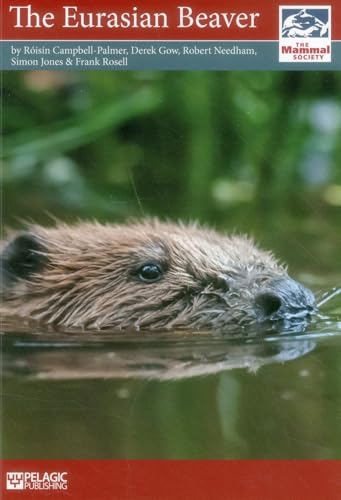
The Eurasian Beaver
Anbieter: Rarewaves.com USA, London, LONDO, Vereinigtes Königreich
Verkäuferbewertung 5 von 5 Sternen

EUR 20,48
Versand gratis
Versand von Vereinigtes Königreich nach USAAnzahl: Mehr als 20 verfügbar
In den WarenkorbPaperback. Zustand: New. The Eurasian beaver was near extinction at the start of the twentieth century, hunted across Europe for its fur, meat and castoreum. But now the beaver is on the brink of a comeback, with wild beaver populations, licensed and unlicensed, emerging all over Britain.As a keystone species, the beaver plays a vital role in the creation of sustainable wetland habitats through its damming activities, providing living opportunities for a broad spectrum of wildlife. Yet as proposals for reintroducing beavers are underway, re-establishing the beaver in Britain is still a controversial issue.This book presents a case for our future coexistence with beavers by providing factual information on this species that has now passed from national memory, covering the biology, behaviour and ecology of the Eurasian beaver in a British context, from their early history in archaeology and folklore to their contemporary field signs in the wild. This book familiarises readers once again, after almost 400 years of its absence, with the Eurasian beaver, providing essential information on its requirements in our human dominated landscape.This book is for those with a specific interest in beavers and their reintroduction, and for anyone with a general curiosity in natural history, ecology or animal behaviour. It can be used as a field guide to identify beaver field signs and observe beavers in the wild by wildlife surveyors or general land users, or as an introductory guide for anyone with an interest in beavers and how to recognise them.The authors have been actively involved in the study of beaver ecology, behaviour and reintroduction for many years. They have a first-hand knowledge of beavers in captivity and in the wild in both Britain and a range of other European countries.
-
The Eurasian Beaver
Anbieter: Revaluation Books, Exeter, Vereinigtes Königreich
Verkäuferbewertung 5 von 5 Sternen
EUR 15,91
EUR 11,59 Versand
Versand von Vereinigtes Königreich nach USAAnzahl: 2 verfügbar
In den WarenkorbPaperback. Zustand: Brand New. 56 pages. 8.00x6.00x0.10 inches. In Stock.
-

Paperback. Zustand: New. The Eurasian beaver was near extinction at the start of the twentieth century, hunted across Europe for its fur, meat and castoreum. But now the beaver is on the brink of a comeback, with wild beaver populations, licensed and unlicensed, emerging all over Britain.As a keystone species, the beaver plays a vital role in the creation of sustainable wetland habitats through its damming activities, providing living opportunities for a broad spectrum of wildlife. Yet as proposals for reintroducing beavers are underway, re-establishing the beaver in Britain is still a controversial issue.This book presents a case for our future coexistence with beavers by providing factual information on this species that has now passed from national memory, covering the biology, behaviour and ecology of the Eurasian beaver in a British context, from their early history in archaeology and folklore to their contemporary field signs in the wild. This book familiarises readers once again, after almost 400 years of its absence, with the Eurasian beaver, providing essential information on its requirements in our human dominated landscape.This book is for those with a specific interest in beavers and their reintroduction, and for anyone with a general curiosity in natural history, ecology or animal behaviour. It can be used as a field guide to identify beaver field signs and observe beavers in the wild by wildlife surveyors or general land users, or as an introductory guide for anyone with an interest in beavers and how to recognise them.The authors have been actively involved in the study of beaver ecology, behaviour and reintroduction for many years. They have a first-hand knowledge of beavers in captivity and in the wild in both Britain and a range of other European countries.
-
Eurasian Beaver
Anbieter: GreatBookPricesUK, Woodford Green, Vereinigtes Königreich
Verkäuferbewertung 5 von 5 Sternen
EUR 18,83
EUR 17,38 Versand
Versand von Vereinigtes Königreich nach USAAnzahl: Mehr als 20 verfügbar
In den WarenkorbZustand: New.
-
The Eurasian Beaver
Anbieter: Ria Christie Collections, Uxbridge, Vereinigtes Königreich
Verkäuferbewertung 5 von 5 Sternen
EUR 24,52
EUR 13,88 Versand
Versand von Vereinigtes Königreich nach USAAnzahl: Mehr als 20 verfügbar
In den WarenkorbZustand: New. In.
-
The Eurasian Beaver
Sprache: Englisch
Verlag: Pelagic Publishing 2015-01-19, 2015
ISBN 10: 1784270342 ISBN 13: 9781784270346
Anbieter: Chiron Media, Wallingford, Vereinigtes Königreich
Verkäuferbewertung 5 von 5 Sternen
EUR 20,71
EUR 17,95 Versand
Versand von Vereinigtes Königreich nach USAAnzahl: 2 verfügbar
In den WarenkorbPaperback. Zustand: New.
-
THE EURASIAN BEAVER
Anbieter: BADGERS BOOKS ONLINE, Littlehampton, Vereinigtes Königreich
Verkäuferbewertung 5 von 5 Sternen
EUR 11,94
EUR 37,66 Versand
Versand von Vereinigtes Königreich nach USAAnzahl: 1 verfügbar
In den WarenkorbPaperback. Zustand: Fine. Rachel Campbell-Palmer (illustrator). Reprint. FINE paperback. 2021 Pelagic PublishIng, Reprint. NO inscriptions. NB: REGRETTABLY NOT AVAILABLE TO SEND TO EU COUNTRIES.
-

The Eurasian Beaver
Anbieter: Rarewaves USA United, OSWEGO, IL, USA
Verkäuferbewertung 5 von 5 Sternen
Paperback. Zustand: New. The Eurasian beaver was near extinction at the start of the twentieth century, hunted across Europe for its fur, meat and castoreum. But now the beaver is on the brink of a comeback, with wild beaver populations, licensed and unlicensed, emerging all over Britain.As a keystone species, the beaver plays a vital role in the creation of sustainable wetland habitats through its damming activities, providing living opportunities for a broad spectrum of wildlife. Yet as proposals for reintroducing beavers are underway, re-establishing the beaver in Britain is still a controversial issue.This book presents a case for our future coexistence with beavers by providing factual information on this species that has now passed from national memory, covering the biology, behaviour and ecology of the Eurasian beaver in a British context, from their early history in archaeology and folklore to their contemporary field signs in the wild. This book familiarises readers once again, after almost 400 years of its absence, with the Eurasian beaver, providing essential information on its requirements in our human dominated landscape.This book is for those with a specific interest in beavers and their reintroduction, and for anyone with a general curiosity in natural history, ecology or animal behaviour. It can be used as a field guide to identify beaver field signs and observe beavers in the wild by wildlife surveyors or general land users, or as an introductory guide for anyone with an interest in beavers and how to recognise them.The authors have been actively involved in the study of beaver ecology, behaviour and reintroduction for many years. They have a first-hand knowledge of beavers in captivity and in the wild in both Britain and a range of other European countries.
-
Eurasian Beaver
Anbieter: GreatBookPricesUK, Woodford Green, Vereinigtes Königreich
Verkäuferbewertung 5 von 5 Sternen
EUR 74,50
EUR 17,38 Versand
Versand von Vereinigtes Königreich nach USAAnzahl: Mehr als 20 verfügbar
In den WarenkorbZustand: As New. Unread book in perfect condition.
-

The Eurasian Beaver
Anbieter: Rarewaves.com UK, London, Vereinigtes Königreich
Verkäuferbewertung 5 von 5 Sternen
EUR 18,82
EUR 75,33 Versand
Versand von Vereinigtes Königreich nach USAAnzahl: Mehr als 20 verfügbar
In den WarenkorbPaperback. Zustand: New. The Eurasian beaver was near extinction at the start of the twentieth century, hunted across Europe for its fur, meat and castoreum. But now the beaver is on the brink of a comeback, with wild beaver populations, licensed and unlicensed, emerging all over Britain.As a keystone species, the beaver plays a vital role in the creation of sustainable wetland habitats through its damming activities, providing living opportunities for a broad spectrum of wildlife. Yet as proposals for reintroducing beavers are underway, re-establishing the beaver in Britain is still a controversial issue.This book presents a case for our future coexistence with beavers by providing factual information on this species that has now passed from national memory, covering the biology, behaviour and ecology of the Eurasian beaver in a British context, from their early history in archaeology and folklore to their contemporary field signs in the wild. This book familiarises readers once again, after almost 400 years of its absence, with the Eurasian beaver, providing essential information on its requirements in our human dominated landscape.This book is for those with a specific interest in beavers and their reintroduction, and for anyone with a general curiosity in natural history, ecology or animal behaviour. It can be used as a field guide to identify beaver field signs and observe beavers in the wild by wildlife surveyors or general land users, or as an introductory guide for anyone with an interest in beavers and how to recognise them.The authors have been actively involved in the study of beaver ecology, behaviour and reintroduction for many years. They have a first-hand knowledge of beavers in captivity and in the wild in both Britain and a range of other European countries.

