

Gesamtpreis (1 Artikel Artikel):
Versandziel:

hebert marcel talar (14 Ergebnisse)
Direkt zu den wichtigsten Suchergebnissen
Suchfilter
Produktart
- Alle Product Types
- Bücher (14)
- Magazine & Zeitschriften (Keine weiteren Ergebnisse entsprechen dieser Verfeinerung)
- Comics (Keine weiteren Ergebnisse entsprechen dieser Verfeinerung)
- Noten (Keine weiteren Ergebnisse entsprechen dieser Verfeinerung)
- Kunst, Grafik & Poster (Keine weiteren Ergebnisse entsprechen dieser Verfeinerung)
- Fotografien (Keine weiteren Ergebnisse entsprechen dieser Verfeinerung)
- Karten (Keine weiteren Ergebnisse entsprechen dieser Verfeinerung)
- Manuskripte & Papierantiquitäten (Keine weiteren Ergebnisse entsprechen dieser Verfeinerung)
Zustand Mehr dazu
- Neu (11)
- Wie Neu, Sehr Gut oder Gut Bis Sehr Gut (2)
- Gut oder Befriedigend (1)
- Ausreichend oder Schlecht (Keine weiteren Ergebnisse entsprechen dieser Verfeinerung)
- Wie beschrieben (Keine weiteren Ergebnisse entsprechen dieser Verfeinerung)
Einband
- alle Einbände
- Hardcover (14)
- Softcover (Keine weiteren Ergebnisse entsprechen dieser Verfeinerung)
Weitere Eigenschaften
- Erstausgabe (Keine weiteren Ergebnisse entsprechen dieser Verfeinerung)
- Signiert (Keine weiteren Ergebnisse entsprechen dieser Verfeinerung)
- Schutzumschlag (Keine weiteren Ergebnisse entsprechen dieser Verfeinerung)
- Angebotsfoto (6)
- Keine Print-on-Demand Angebote (14)
Sprache (1)
Preis
- Beliebiger Preis
- Weniger als EUR 20 (Keine weiteren Ergebnisse entsprechen dieser Verfeinerung)
- EUR 20 bis EUR 45
- Mehr als EUR 45
Gratisversand
Land des Verkäufers
Verkäuferbewertung
-
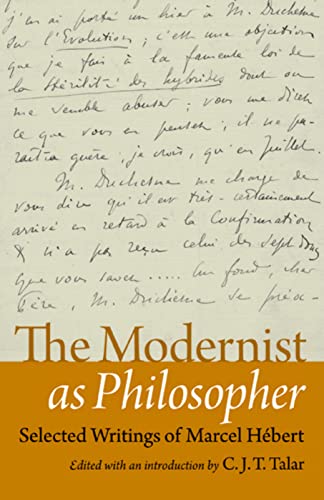
The Modernist as Philosopher: Selected Writings of Marcel HÃ bert
Sprache: Englisch
Verlag: The Catholic University of Ameri, 2011
ISBN 10: 0813218799 ISBN 13: 9780813218793
Anbieter: Gardner's Used Books, Inc., Tulsa, OK, USA
Verkäuferbewertung 5 von 5 Sternen

hardcover. Zustand: Good. Good condition hardback. Pages are clean and unmarked. Dust jacket has very minor rubbing marks. Very nice shape. Tulsa's largest used bookstore. Located on South Mingo Road since 1991. No-hassle return policy if not completely satisfied.
-
The Modernist as Philosopher Selected Writings of Marcel Hebert
Anbieter: Revaluation Books, Exeter, Vereinigtes Königreich
Verkäuferbewertung 5 von 5 Sternen
EUR 53,09
EUR 11,54 Versand
Versand von Vereinigtes Königreich nach USAAnzahl: 1 verfügbar
In den WarenkorbHardcover. Zustand: Brand New. 272 pages. 8.70x5.80x0.90 inches. In Stock.
-

Religious Experience in the Work of Richard Wagner
Sprache: Englisch
Verlag: The Catholic University of America Press, US, 2015
ISBN 10: 0813227410 ISBN 13: 9780813227412
Anbieter: Rarewaves.com USA, London, LONDO, Vereinigtes Königreich
Verkäuferbewertung 5 von 5 Sternen
EUR 66,37
Versand gratis
Versand von Vereinigtes Königreich nach USAAnzahl: 1 verfügbar
In den WarenkorbHardback. Zustand: New. Enthusiasm for the operas of composer Richard Wagner (1813-1883) flourished in fin-de-siècle France, fed by fascination for the medieval history and literature that inspired his work. By the 1890s, ""pilgrimages"" to Wagner's burial city of Bayreuth, Germany, home of a regular festival of his work, were a rite of passage for musicians and the upper crust. French admirers promoted Wagner's ideas in journals such as La Revue wagnérienne, launched in 1885. These writings fueled a mystique about Wagner, his music, and his beliefs.Philosopher Marcel Hébert developed his Religious Experience in the Work of Richard Wagner (1895) from this background of sustained popular interest in Wagner, an interest that had intensified with the return of his operas to the Paris stage. Newspaper debates about the impact of Wagner's ideas on French society often stressed the links between Wagner and religion. These debates inspired works like Hébert's, intended to explain the complex myth and allegory in Wagner's work and to elucidate it for a new generation of French spectators.Hébert's discussion of Wagner, written for a popular audience, might seem an anomaly in light of his better-known academic philosophical writings. Yet Wagner's use of myth and symbol, as well as his ability to write musical dramas that evoked emotional as well as cognitive response, resonated with Hébert's symbolist approach to dogma, and the appeal to religious experience characteristic of Modernist thinkers in general. By writing about Wagner to discuss these themes, Hébert caught the interest of the educated readership who shared his concern about the clash of ancient faith and modern thinking, and who were receptive to his argument that both could be reconciled through his revisionist approach. Thus, Hébert turned Wagner and his work into a vehicle for popularizing the Modernist vision of framing religion through experience as well as knowledge.
-

Religious Experience in the Work Richard Wagner
Sprache: Englisch
Verlag: The Catholic University of America Press, 2015
ISBN 10: 0813227410 ISBN 13: 9780813227412
Anbieter: GreatBookPrices, Columbia, MD, USA
Verkäuferbewertung 5 von 5 Sternen
Zustand: New.
-
Religious Experience in the Work of Richard Wagner (Hardcover)
Sprache: Englisch
Verlag: The Catholic University of America Press, Washington, 2015
ISBN 10: 0813227410 ISBN 13: 9780813227412
Anbieter: Grand Eagle Retail, Bensenville, IL, USA
Verkäuferbewertung 5 von 5 Sternen
Hardcover. Zustand: new. Hardcover. Enthusiasm for the operas of composer Richard Wagner (1813-1883) flourished in fin-de-siecle France, fed by fascination for the medieval history and literature that inspired his work. By the 1890s, ""pilgrimages"" to Wagner's burial city of Bayreuth, Germany, home of a regular festival of his work, were a rite of passage for musicians and the upper crust. French admirers promoted Wagner's ideas in journals such as La Revue wagnerienne, launched in 1885. These writings fueled a mystique about Wagner, his music, and his beliefs.Philosopher Marcel Hebert developed his Religious Experience in the Work of Richard Wagner (1895) from this background of sustained popular interest in Wagner, an interest that had intensified with the return of his operas to the Paris stage. Newspaper debates about the impact of Wagner's ideas on French society often stressed the links between Wagner and religion. These debates inspired works like Hebert's, intended to explain the complex myth and allegory in Wagner's work and to elucidate it for a new generation of French spectators.Hebert's discussion of Wagner, written for a popular audience, might seem an anomaly in light of his better-known academic philosophical writings. Yet Wagner's use of myth and symbol, as well as his ability to write musical dramas that evoked emotional as well as cognitive response, resonated with Hebert's symbolist approach to dogma, and the appeal to religious experience characteristic of Modernist thinkers in general. By writing about Wagner to discuss these themes, Hebert caught the interest of the educated readership who shared his concern about the clash of ancient faith and modern thinking, and who were receptive to his argument that both could be reconciled through his revisionist approach. Thus, Hebert turned Wagner and his work into a vehicle for popularizing the Modernist vision of framing religion through experience as well as knowledge. Enthusiasm for the operas of composer Richard Wagner (1813-1883) flourished in fin-de-siecle France, fed by fascination for the medieval history and literature that inspired his work. Philosopher Marcel Hebert developed his Religious Experience in the Work of Richard Wagner (1895) from this background of sustained popular interest in Wagner. Shipping may be from multiple locations in the US or from the UK, depending on stock availability.
-

Religious Experience in the Work Richard Wagner
Sprache: Englisch
Verlag: The Catholic University of America Press, 2015
ISBN 10: 0813227410 ISBN 13: 9780813227412
Anbieter: GreatBookPrices, Columbia, MD, USA
Verkäuferbewertung 5 von 5 Sternen
Zustand: As New. Unread book in perfect condition.
-
Modernist As Philosopher : Selected Writings of Marcel Hebert
Sprache: Englisch
Verlag: The Catholic University of America Press, 2011
ISBN 10: 0813218799 ISBN 13: 9780813218793
Anbieter: GreatBookPrices, Columbia, MD, USA
Verkäuferbewertung 5 von 5 Sternen
Zustand: New.
-

Modernist As Philosopher : Selected Writings of Marcel Hebert
Sprache: Englisch
Verlag: The Catholic University of America Press, 2011
ISBN 10: 0813218799 ISBN 13: 9780813218793
Anbieter: GreatBookPrices, Columbia, MD, USA
Verkäuferbewertung 5 von 5 Sternen
Zustand: As New. Unread book in perfect condition.
-
Religious Experience in the Work of Richard Wagner
Anbieter: Revaluation Books, Exeter, Vereinigtes Königreich
Verkäuferbewertung 5 von 5 Sternen
EUR 76,91
EUR 11,54 Versand
Versand von Vereinigtes Königreich nach USAAnzahl: 2 verfügbar
In den WarenkorbHardcover. Zustand: Brand New. 192 pages. 9.00x6.00x0.75 inches. In Stock.
-
Religious Experience in the Work of Richard Wagner
Sprache: Englisch
Verlag: The Catholic University of America Press, 2015
ISBN 10: 0813227410 ISBN 13: 9780813227412
Anbieter: THE SAINT BOOKSTORE, Southport, Vereinigtes Königreich
Verkäuferbewertung 5 von 5 Sternen
EUR 84,65
EUR 17,17 Versand
Versand von Vereinigtes Königreich nach USAAnzahl: 2 verfügbar
In den WarenkorbHardback. Zustand: New. New copy - Usually dispatched within 4 working days.
-
Religious Experience Work Richard Wagner
Sprache: Englisch
Verlag: The Catholic University of America Press, 2015
ISBN 10: 0813227410 ISBN 13: 9780813227412
Anbieter: Kennys Bookstore, Olney, MD, USA
Verkäuferbewertung 5 von 5 Sternen
Zustand: New. Enthusiasm for the operas of composer Richard Wagner (1813-1883) flourished in fin-de-siecle France, fed by fascination for the medieval history and literature that inspired his work. Philosopher Marcel Hebert developed his Religious Experience in the Work of Richard Wagner (1895) from this background of sustained popular interest in Wagner. Editor(s): Talar, J. T. Translator(s): Talar, Charles J. T.; Emery, Elizabeth. Num Pages: 192 pages. BIC Classification: HRAB; HRCM. Category: (G) General (US: Trade). Dimension: 216 x 147 x 20. Weight in Grams: 363. . 2015. Hardcover. . . . . Books ship from the US and Ireland.
-

EUR 78,15
EUR 48,99 Versand
Versand von Deutschland nach USAAnzahl: Mehr als 20 verfügbar
In den WarenkorbGebunden. Zustand: New. Enthusiasm for the operas of composer Richard Wagner (1813-1883) flourished in fin-de-siecle France, fed by fascination for the medieval history and literature that inspired his work. Philosopher Marcel Hebert developed his Religious Experience in the Work .
-
Religious Experience in the Work of Richard Wagner (Hardcover)
Sprache: Englisch
Verlag: The Catholic University of America Press, Washington, 2015
ISBN 10: 0813227410 ISBN 13: 9780813227412
Anbieter: AussieBookSeller, Truganina, VIC, Australien
Verkäuferbewertung 5 von 5 Sternen
Hardcover. Zustand: new. Hardcover. Enthusiasm for the operas of composer Richard Wagner (1813-1883) flourished in fin-de-siecle France, fed by fascination for the medieval history and literature that inspired his work. By the 1890s, ""pilgrimages"" to Wagner's burial city of Bayreuth, Germany, home of a regular festival of his work, were a rite of passage for musicians and the upper crust. French admirers promoted Wagner's ideas in journals such as La Revue wagnerienne, launched in 1885. These writings fueled a mystique about Wagner, his music, and his beliefs.Philosopher Marcel Hebert developed his Religious Experience in the Work of Richard Wagner (1895) from this background of sustained popular interest in Wagner, an interest that had intensified with the return of his operas to the Paris stage. Newspaper debates about the impact of Wagner's ideas on French society often stressed the links between Wagner and religion. These debates inspired works like Hebert's, intended to explain the complex myth and allegory in Wagner's work and to elucidate it for a new generation of French spectators.Hebert's discussion of Wagner, written for a popular audience, might seem an anomaly in light of his better-known academic philosophical writings. Yet Wagner's use of myth and symbol, as well as his ability to write musical dramas that evoked emotional as well as cognitive response, resonated with Hebert's symbolist approach to dogma, and the appeal to religious experience characteristic of Modernist thinkers in general. By writing about Wagner to discuss these themes, Hebert caught the interest of the educated readership who shared his concern about the clash of ancient faith and modern thinking, and who were receptive to his argument that both could be reconciled through his revisionist approach. Thus, Hebert turned Wagner and his work into a vehicle for popularizing the Modernist vision of framing religion through experience as well as knowledge. Enthusiasm for the operas of composer Richard Wagner (1813-1883) flourished in fin-de-siecle France, fed by fascination for the medieval history and literature that inspired his work. Philosopher Marcel Hebert developed his Religious Experience in the Work of Richard Wagner (1895) from this background of sustained popular interest in Wagner. Shipping may be from our Sydney, NSW warehouse or from our UK or US warehouse, depending on stock availability.
-

Religious Experience in the Work of Richard Wagner
Sprache: Englisch
Verlag: The Catholic University of America Press, US, 2015
ISBN 10: 0813227410 ISBN 13: 9780813227412
Anbieter: Rarewaves.com UK, London, Vereinigtes Königreich
Verkäuferbewertung 5 von 5 Sternen
EUR 82,83
EUR 75,02 Versand
Versand von Vereinigtes Königreich nach USAAnzahl: 1 verfügbar
In den WarenkorbHardback. Zustand: New. Enthusiasm for the operas of composer Richard Wagner (1813-1883) flourished in fin-de-siècle France, fed by fascination for the medieval history and literature that inspired his work. By the 1890s, ""pilgrimages"" to Wagner's burial city of Bayreuth, Germany, home of a regular festival of his work, were a rite of passage for musicians and the upper crust. French admirers promoted Wagner's ideas in journals such as La Revue wagnérienne, launched in 1885. These writings fueled a mystique about Wagner, his music, and his beliefs.Philosopher Marcel Hébert developed his Religious Experience in the Work of Richard Wagner (1895) from this background of sustained popular interest in Wagner, an interest that had intensified with the return of his operas to the Paris stage. Newspaper debates about the impact of Wagner's ideas on French society often stressed the links between Wagner and religion. These debates inspired works like Hébert's, intended to explain the complex myth and allegory in Wagner's work and to elucidate it for a new generation of French spectators.Hébert's discussion of Wagner, written for a popular audience, might seem an anomaly in light of his better-known academic philosophical writings. Yet Wagner's use of myth and symbol, as well as his ability to write musical dramas that evoked emotional as well as cognitive response, resonated with Hébert's symbolist approach to dogma, and the appeal to religious experience characteristic of Modernist thinkers in general. By writing about Wagner to discuss these themes, Hébert caught the interest of the educated readership who shared his concern about the clash of ancient faith and modern thinking, and who were receptive to his argument that both could be reconciled through his revisionist approach. Thus, Hébert turned Wagner and his work into a vehicle for popularizing the Modernist vision of framing religion through experience as well as knowledge.
